← All services
16 European companies
POS Payments Providers in Europe
Point of sale payment services provide merchants with the hardware and software to accept card and digital payments in physical locations — including countertop terminals, mobile card readers, and integrated POS systems. Modern POS solutions combine payment acceptance with inventory management, sales analytics, and cloud-based reporting, replacing the legacy terminals that previously defined the in-store payment experience.
Typically offered by
European fintech companies offering POS payments
Adyen
Embedded Finance🇳🇱 Netherlands
Pieter van der Does and Arnout Schuijff had already built and sold one payments company when they sat down in 2006 to start again. The result was Adyen — the name literally means "start over" in Surinamese — and the premise was simple: instead of stitching together the same fragmented payment infrastructure everyone else was using, they would build the whole thing themselves from scratch.
That decision, made in an Amsterdam office nearly two decades ago, is still the reason Adyen is different. Most payment companies are assemblers — they buy a gateway here, a processor there, bolt them together and hope for the best. Adyen owns its own technology stack end to end, which means a merchant integrating once gets access to card processing, local payment methods, point-of-sale terminals, and real-time settlement data through a single platform. No middle layers, no reconciliation headaches, no finger-pointing between vendors when something breaks.
The client list tells you everything about where Adyen sits in the market. McDonald's, Spotify, Microsoft, LVMH, H&M — these are companies with serious payment volumes and zero appetite for systems that don't work. Adyen became the default choice for enterprises that had outgrown the limitations of traditional payment stacks and needed something that could handle global scale without buckling.
Since going public on Euronext Amsterdam in 2018, Adyen has grown into one of Europe's most valuable technology companies, with around 4,300 employees across 23 countries and net revenue of just under €2 billion in 2024. It remains headquartered in Amsterdam and consistently profitable — a combination that's rarer in fintech than it should be.
For businesses that treat payments as infrastructure rather than an afterthought, Adyen is the benchmark everything else gets measured against.
Founded 2006
SumUp
Payments🇩🇪 Germany
SumUp is a payments company built for the merchants traditional providers never bothered with. Founded in 2012 and headquartered in London, it sells low-cost card readers and point-of-sale hardware to small businesses — market traders, cafés, hairdressers, tradespeople — who could never justify the monthly fees, multi-year contracts, and cumbersome terminals that legacy processors demanded. The core proposition has barely changed since launch: buy a card reader outright for a modest one-off price, pay a small percentage per transaction, and sign nothing.
That model has scaled a long way past its origins. SumUp now serves more than 4 million merchants across roughly 35 markets, employs around 4,000 people, and was valued at about €8 billion in a 2022 round led by Bain Capital. In 2024 it raised a €1.5 billion private credit facility led by Goldman Sachs, and it has been weighing a stock market listing that could value it as high as $15 billion.
The more significant shift is that SumUp is no longer a card reader company. Through a run of acquisitions — Payleven, the e-commerce platform Shoplo, the core banking provider Paysolut, POS software firm Tiller, and the US loyalty startup Fivestars — it has assembled a full financial stack for micro-businesses: a business account and card, invoicing, an online store, loyalty tools, self-service kiosks, and SDKs for developers who want to embed card acceptance in their own products. The ambition is to be the only software a small merchant needs to run their business.
That leaves SumUp in an unusual competitive position. On hardware and in-person payments it faces Square, Zettle, and Dojo; as a broader business platform it edges toward Stripe, Mollie, and Revolut Business. Its defensibility rests on the segment most of the industry finds too small to serve properly — the micro and nano merchants that make up the long tail of European commerce.
Founded 2012
Nexi
Payments🇮🇹 Italy
Nexi is what happened when Italy decided to build a payments champion. The company's roots run through decades of bank-owned card infrastructure — the CartaSi and ICBPI lineage that processed Italian card payments on behalf of the banking system — before private equity firms Advent, Bain, and Clessidra reshaped it into a company and took it public on Borsa Italiana in 2019. Then came the two deals that defined it: the merger with SIA, Italy's interbank payments infrastructure, and the acquisition of Denmark's Nets, both closed in 2021. The result was "The European PayTech" — a group operating in more than 25 countries with around 9,200 employees, spanning merchant acquiring, card issuing for banks, and national payment infrastructure from Italy to the Nordics to Poland, where Nets' acquisitions of Przelewy24 and Dotpay sit inside the group.
The strategy was scale through consolidation, and for a while the market believed in it. It no longer does, and March 2026 was the moment that became undeniable. Nexi's full-year 2025 results — revenue of €3.58 billion, EBITDA of €1.9 billion, growth of just 2.1% — arrived with a €3.7 billion writedown on previously acquired businesses, chiefly Nets, and guidance that 2026 would be flat, with growth not returning until 2028. The stock fell more than 20% in a day to a record low. CEO Paolo Bertoluzzo's framing to investors was unusually candid for the genre: Nexi was transitioning from a growth company to one that produces steady cash flows — "you don't have to believe we can go to the moon" — with a dividend hiked 20% and €1.1 billion in shareholder returns planned through 2028 as the consolation. His defence of the writedown was equally frank: Nexi bought companies at high prices, but paid in shares that were then worth six times their current value.
The ownership structure completed its own transition in early 2026. Advent and Bain, the private equity firms that built and listed the company, sold their remaining stake in February — leaving Hellman & Friedman and CDP, the Italian state investor, as the two anchor shareholders at roughly a fifth each. The parallel with Worldline is hard to miss: Europe's two great payments roll-ups of the 2019–2021 era have both ended the cycle written down, growth-challenged, and anchored by state-linked capital — Nexi without the compliance scandal, which is a meaningful distinction, but with the same underlying lesson about buying growth with expensive shares. CVC explored a bid in 2024, sending the shares up 19% in a day; nothing came of it, though the episode established that the company is viewed as acquirable.
Leadership turned over with the strategy: Bernardo Mingrone, Nexi's long-serving finance chief, succeeded Bertoluzzo as CEO in 2026, presenting his first half-year results in July. The growth initiatives under way are real if unglamorous — Zippay, a person-to-person payment service built on Nexi infrastructure launching in Ireland with AIB, Bank of Ireland, and PTSB; integration of the European wallet Wero into German e-commerce; a Visa partnership on managed card issuing for German banks; and the €105 million acquisition of Banca Popolare di Sondrio's merchant book, continuing the model of buying banks' payment operations that built the company. Nexi remains one of Europe's largest payment processors and the default infrastructure of Italian digital payments. The question its own guidance poses is whether that is a platform for renewed growth from 2028, or simply a very large utility returning cash to patient shareholders. The current share price says the market has priced the utility.
Founded 2013
Trustpayments
Payments🇬🇧 United Kingdom
Modern enterprise payment infrastructure for the omnichannel era. Trustpayments sits at the intersection of commerce and financial services, handling the plumbing that lets retailers, marketplaces, and platforms accept payments across every surface—online checkouts, physical stores, subscription models, invoices, you name it. Rather than stitching together five different providers, enterprises get a unified orchestration layer that routes transactions intelligently, manages recurring billing without friction, and gives finance teams visibility they actually want.
The company targets the complexity that emerges when scale matters. A retailer with a chain of 200 stores, an e-commerce platform with dozens of payment methods, or a SaaS company billing in 15 currencies—these are the problems Trustpayments solves. It's a European alternative to the Adyens and Stripes of the world, though with particular strength in enterprise clients who need sophistication without the overhead of custom integration.
Trustpayments competes on transparency and control. While many payment processors obscure the mechanics, Trustpayments gives merchants the ability to orchestrate payment flows, customize retry logic, and access real-time settlement data. It's the operating system for payments rather than just a processor.
In the broader fintech landscape, Trustpayments represents the European push to regionalize critical infrastructure. Payment processing has long been dominated by American-born giants, and companies like this are shifting the conversation—proving that European enterprises can build the complexity-handling platforms multinationals actually need.
Founded 2014
Smile and Pay
Payments🇫🇷 France
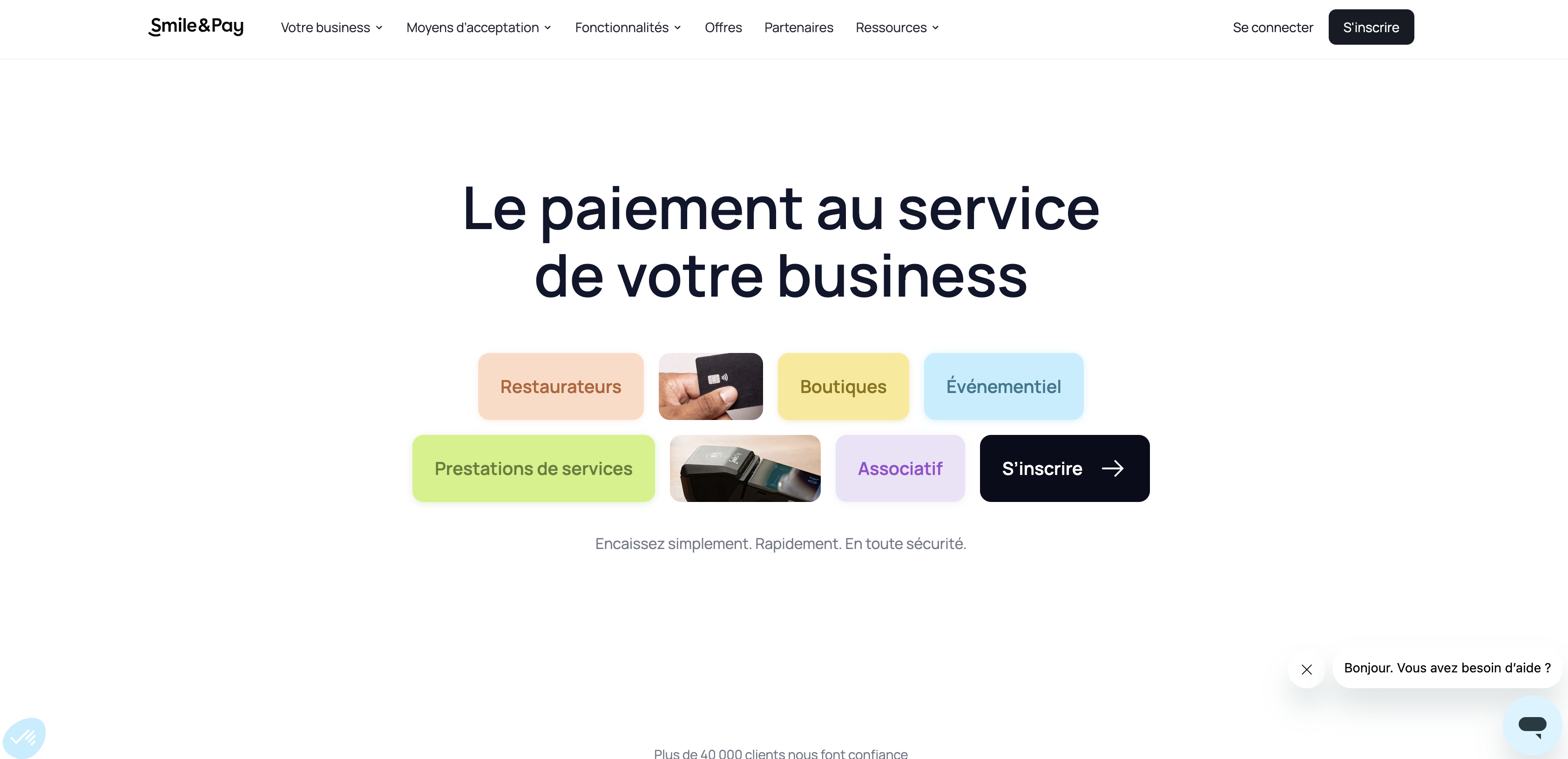
Smile and Pay operates in a curious corner of fintech where payment infrastructure meets merchant empowerment. The company builds point-of-sale and payment processing solutions designed for small retail businesses and merchants who want more control over their transaction flows and customer data. Rather than simply routing payments through legacy acquiring rails, Smile and Pay emphasizes a merchant-first approach to payments—letting retailers integrate flexible payment acceptance across channels without surrendering visibility or margin to traditional payment networks.
The platform combines elements of merchant acquiring, payment gateway functionality, and POS software into a single stack. This matters because most merchants still rely on fragmented tooling: a POS system here, a payment processor there, reporting scattered across multiple dashboards. Smile and Pay attempts to consolidate these functions, making it easier for independent retailers to accept cards, digital wallets, and alternative payment methods from a unified interface.
In the European context, where merchant acquiring remains dominated by large banking groups and a handful of global players, Smile and Pay positions itself as an alternative that respects merchant economics and data ownership. The company operates in a space where fintech adoption is still unevenly distributed—large chains have sophisticated payment infrastructure, while mid-market and independent retailers often lag. Smile and Pay targets this gap, offering both technical capability and commercial terms that treat merchants as stakeholders rather than transaction volume.
For the broader payments ecosystem, Smile and Pay represents the ongoing shift toward API-first, software-driven payment infrastructure that challenges the traditional acquiring model and puts merchant control back at the center of payment experience.
Satispay
Embedded Finance🇮🇹 Italy
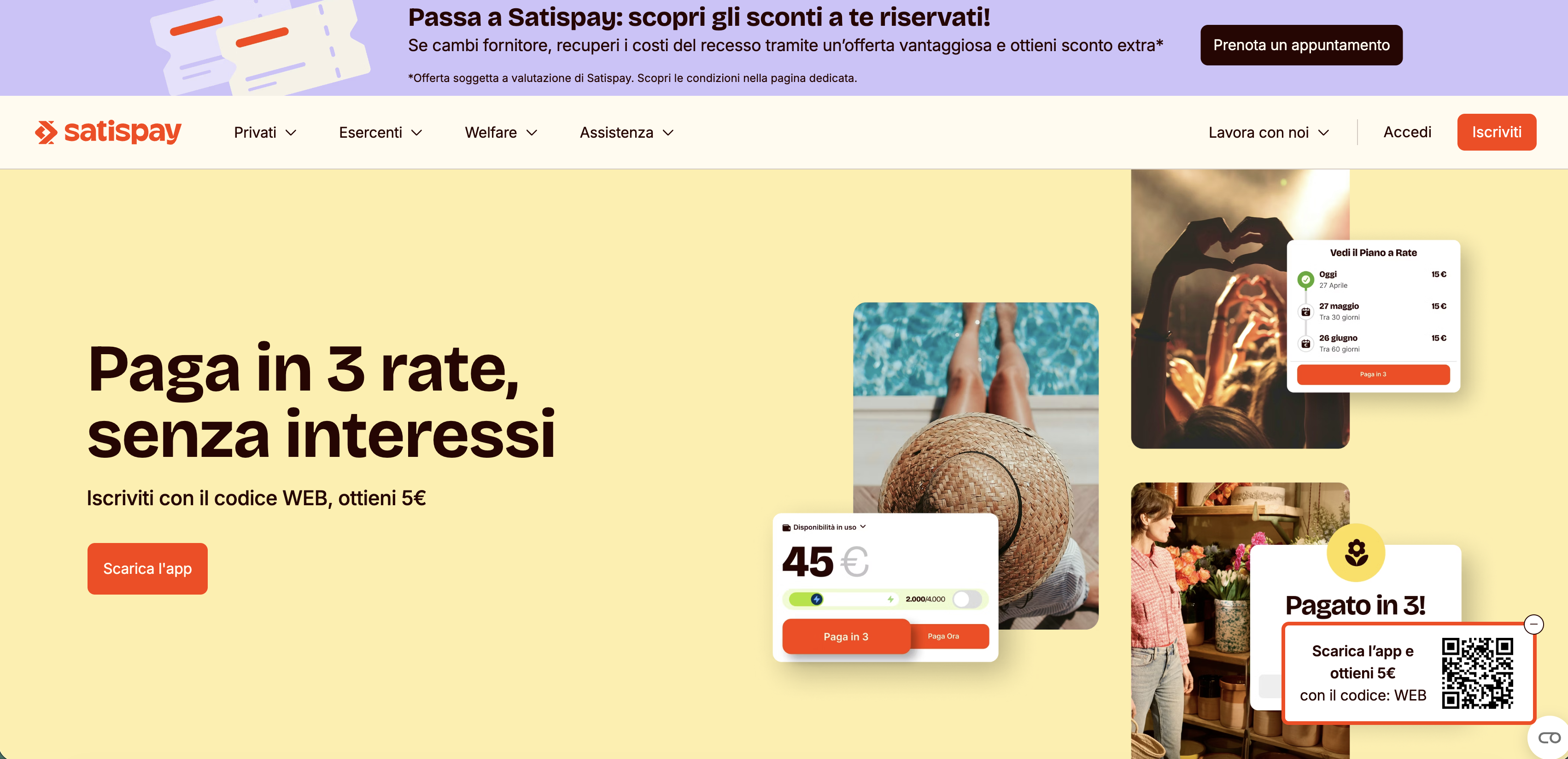
Satispay cuts through the noise of payment processing by letting consumers pay directly from their bank account at checkout, skipping cards entirely. It's a mobile-first payment solution that arrived in Europe when digital wallets were becoming ubiquitous, but with a twist: it works offline and without requiring consumers to pre-load funds or enter card details repeatedly.
The company operates across Italy, France, Belgium, and other European markets, positioning itself as a bridge between traditional banking and modern commerce. Rather than competing head-to-head with card networks, Satispay enables merchants to accept payments through a lightweight app integration, with consumers confirming transactions via their phones in seconds.
What sets Satispay apart is its focus on simplicity and lower merchant costs compared to card acquiring. While payment gateways obsess over feature parity with every major card scheme, Satispay keeps the experience minimal: scan, tap, pay. It appeals to retailers tired of high interchange fees and consumers who prefer direct bank debits over recurring card charges.
In a fragmented European payments landscape, Satispay represents a pragmatic alternative to cards for in-store and online commerce, carving out space by solving a specific friction point rather than trying to be everything.
Founded 2013
ICEPAY
Payments🇳🇱 Netherlands
ICEPAY is a Dutch payment processor that handles everything from card transactions to alternative payment methods across Europe. The company powers checkout experiences for thousands of merchants, managing the complex plumbing of converting customer intent into settled funds. What sets ICEPAY apart is its focus on European merchants—particularly mid-market businesses that need more than a one-size-fits-all gateway. The platform bundles payment processing with risk management, offering fraud detection and chargeback protection alongside the standard card rails. It's built for merchants who want flexibility without complexity, handling both online and in-store payments through a unified infrastructure. ICEPAY operates in a crowded space where most competitors either stay focused on pure payment processing or sprawl into adjacent services. The company positions itself as the European alternative to global juggernauts, with deeper understanding of regional payment preferences and compliance requirements. It's a pragmatic choice for businesses scaling across multiple European markets—less startup energy, more mature operational backbone. In the broader fintech ecosystem, ICEPAY represents the unglamorous but essential layer: the infrastructure that makes European commerce work behind the scenes.
Founded 2007
Paymentsense
Payments🇬🇧 United Kingdom
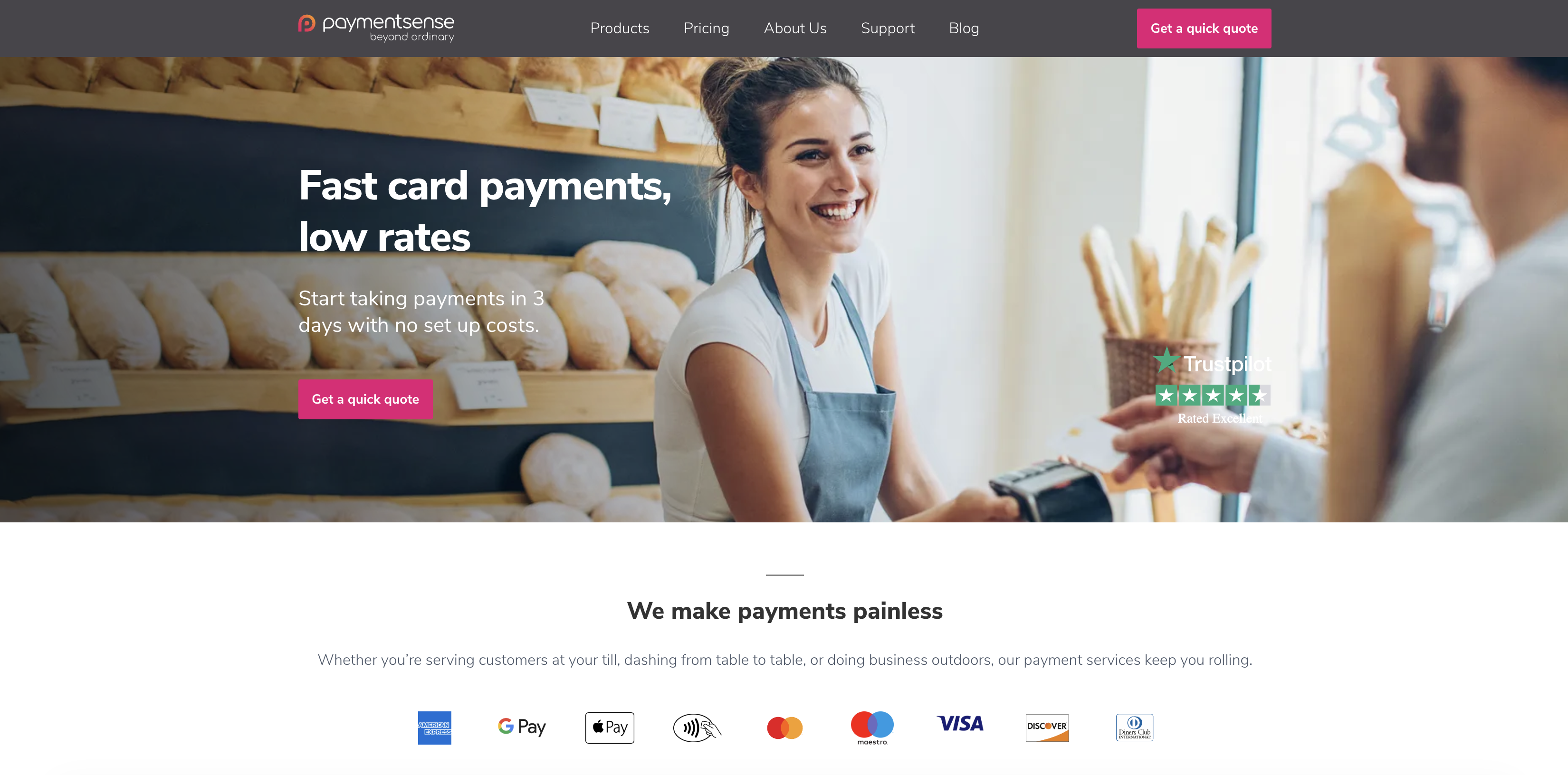
Paymentsense is a UK-based payments processor that handles card transactions for small and mid-sized businesses, from independent retailers to hospitality venues. The company provides point-of-sale solutions, online payment gateways, and mobile card readers—essentially the infrastructure that lets a corner shop or restaurant accept card payments without building their own payment stack.
Founded in the late 2000s, Paymentsense grew by targeting the underserved SME market, offering straightforward pricing and integrated solutions rather than the fragmented, opaque fee structures that dominated the market. They operate across the UK and Europe, processing billions in transaction value annually through a network of acquiring partners and direct merchant relationships.
In a crowded field of payment processors, Paymentsense sits between the legacy providers (with their byzantine fee schedules) and the newer fintech darlings (which often focus on e-commerce). They've maintained relevance by staying practical: decent integration, reliable infrastructure, and merchant support that doesn't require a finance degree to understand. The company was acquired by Ingenico (now Worldline) in 2019, giving it institutional backing while preserving its merchant-focused positioning.
As consolidation reshapes European payments, Paymentsense represents the pragmatic middle ground—not revolutionary, but essential infrastructure for thousands of businesses that need to process cards without the complexity.
Founded 2008
myPOS
Payments🇧🇬 Bulgaria
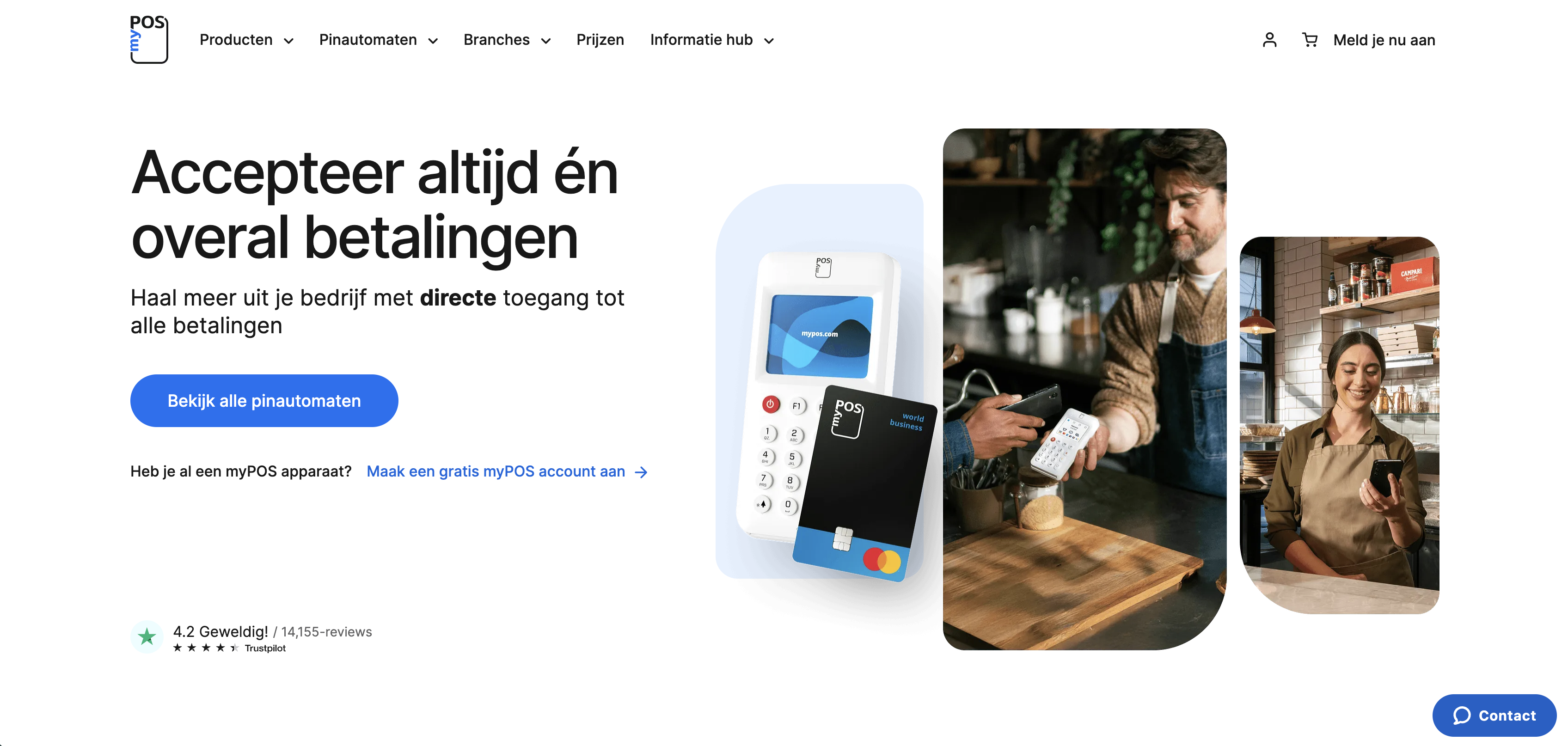
myPOS is a fintech company that sits at the intersection of payments and merchant services, focused on modernizing how small businesses and entrepreneurs handle transactions across Europe. Rather than forcing merchants into legacy payment processing workflows, myPOS bundles hardware, software, and financial services into a seamless ecosystem that feels native to how modern retailers actually operate. The platform combines point-of-sale systems, payment processing, and merchant acquiring into a single integrated offering, with particular strength in high-risk verticals where traditional acquirers have historically been hesitant. What sets myPOS apart in the European market is its commitment to serving the long tail of merchants—from food vendors and boutiques to service providers—without the bureaucratic friction that characterizes incumbent payment processors. The company has built its infrastructure to support cross-border operations across multiple European markets while maintaining competitive pricing that doesn't penalize small transaction volumes. In the broader fintech landscape, myPOS exemplifies the shift toward vertical integration in payments, where success increasingly depends on controlling the full merchant experience rather than being relegated to a single layer of the payment stack.
Founded 2012
Paysafe
Embedded Finance🇬🇧 United Kingdom
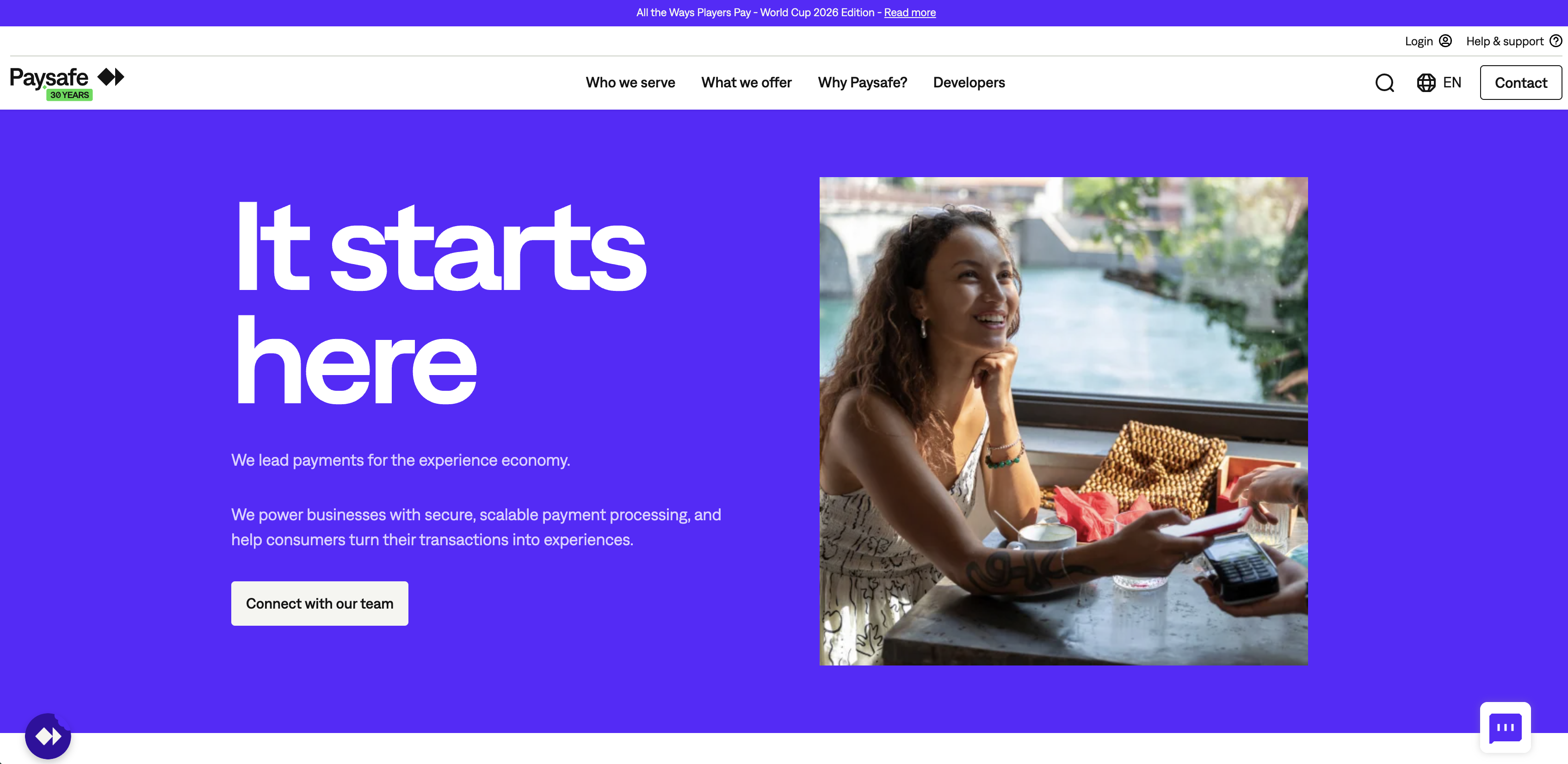
Paysafe is a global payments and digital wallet platform that processes transactions across every channel—online, mobile, and in-store. Built for merchants who need to move money faster and reach customers everywhere, it combines payment processing, merchant acquiring, and digital wallet technology into a single operating system that handles cards, digital wallets, bank transfers, and alternative payment methods across 190+ countries.
The company operates at the intersection of consumer preference and merchant necessity. While most traditional payment processors optimize for a single channel or region, Paysafe bundles acquiring, processing, and risk management into an integrated stack. This means merchants—from mid-market retailers to enterprise platforms—don't juggle multiple vendors; they get a unified dashboard, consistent fraud controls, and seamless settlement across geographies.
Paysafe stands apart through its operating model: it owns its own processing infrastructure and acquiring licenses in key markets, giving it speed and control that pure software plays can't match. The company serves mid-market and enterprise merchants across North America, Europe, and Asia-Pacific, processing billions in transaction volume annually. Its digital wallet product, PaysafeCard, is a trusted brand in Europe for prepaid payments and alternative payment methods.
In the crowded fintech landscape, Paysafe represents the "infrastructure as competitive advantage" thesis—a reminder that sometimes the fastest way to scale payment innovation is to own the pipes, not just the software layer on top of them.
Founded 2000
payever
Embedded Finance🇩🇪 Germany
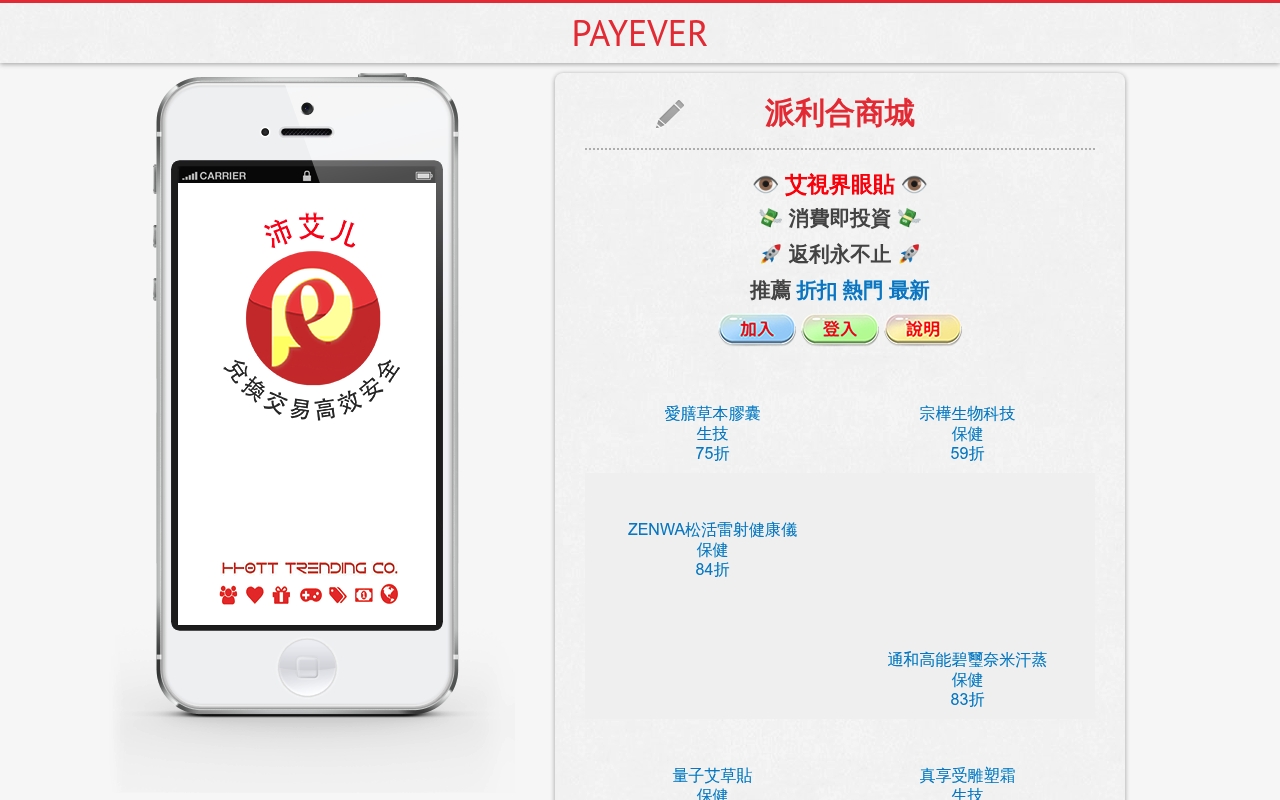
Multi-channel commerce has a payments problem. Selling through a web shop, a physical till, a mobile app, and a B2B portal often means juggling separate payment systems, separate inventories, and separate reporting — a fragmentation that limits what merchants can actually do with their commerce data. payever was founded in Hamburg in 2013 to consolidate that mess into a single platform. Its commerce operating system combines payment processing, point-of-sale software, marketing tools, and shop-building capabilities into one infrastructure, targeting SMEs that want unified commerce capability without integrating dozens of point solutions. The product breadth is unusual — most companies in this space focus on either payments or commerce tools, not both — and reflects a deliberate bet that small merchants want fewer vendors rather than more. payever has expanded across European markets and built a user base in the segment of merchants whose needs are too complex for a basic payment terminal but too modest for an enterprise commerce platform. In the European SME commerce technology landscape, where Shopify dominates the e-commerce side and traditional acquirers dominate physical payments, payever's positioning as a consolidator across both is a genuinely different competitive position.
Founded 2013
Enfuce
Financial Infrastructure🇫🇮 Finland
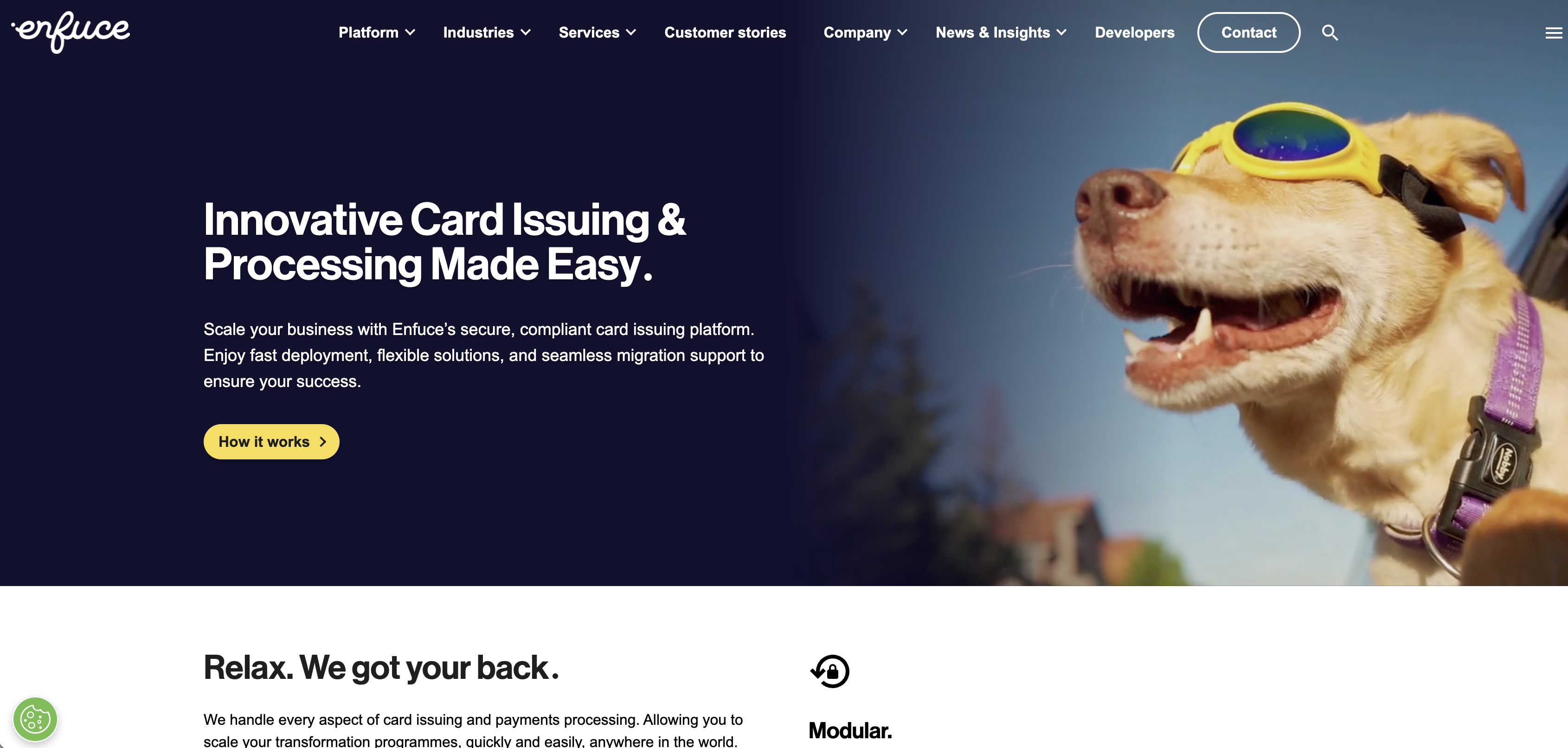
Enfuce is a Finnish fintech powerhouse that turned payment infrastructure into an art form. Rather than build another generic payment processor, they engineered a seamless, cloud-native platform that lets banks and fintechs issue and manage cards at scale without the complexity that usually comes with the territory.
At its core, Enfuce does three things exceptionally well: card issuing, payment processing, and real-time transaction management. The company operates as both a technology provider and a banking infrastructure backbone, meaning they sit at the intersection of legacy banking and modern fintech. Their platform handles everything from corporate expense cards to consumer debit products, all connected through APIs that actually work the way developers expect them to.
What sets Enfuce apart in Europe is their pragmatic approach to solving genuinely hard problems. While competitors often get tangled up in regulatory complexity or technical debt, Enfuce built their stack to accommodate European payment regulations from day one. They're not retrofitting compliance—it's baked in. This makes them particularly valuable for institutions scaling across multiple markets, where harmonizing payments across borders would normally require nightmare-level integration work.
Enfuce occupies a critical middle ground in the financial infrastructure landscape. They're neither a scrappy startup nor a lumbering legacy player, but rather a confident, focused operator helping European banks and fintechs move faster than they ever thought possible. Their presence signals a maturation of the fintech infrastructure layer—less disruption theater, more actual hard engineering.
Founded 2013
Showing 12 of 16 companies. View all in the directory →