Regulatory analytics Companies in Europe
Regulatory analytics platforms process the large volumes of regulatory data, supervisory publications, and compliance reporting that financial institutions generate and receive. This includes tools that monitor regulatory change across multiple jurisdictions, analyse examination findings for patterns, benchmark compliance metrics against peers, and provide intelligence on regulatory trends. As the regulatory environment has grown more complex and data-intensive, analytics tooling has become essential for compliance and risk functions at regulated institutions.
European Regulatory analytics companies in our database
Notable regulatory analytics companies include ION Group, Credit Benchmark, Eilla AI, Fonoa and Koinly.

Andrea Pignataro founded ION in London in 1999, after leaving a trading role at Salomon Brothers with a conviction that the software running global markets was held together with too much manual process. Over the following two and a half decades he built ION into one of the largest, most acquisitive players in capital-markets technology — absorbing dozens of specialist vendors, including Fidessa and Broadway Technology, and folding them into a single group. The core business is still the unglamorous plumbing of institutional finance: trading platforms across equities, fixed income, foreign exchange, and cleared derivatives; risk management; post-trade processing; clearing and settlement; and market data. Investment banks, hedge funds, and corporate treasuries run parts of their daily operations on ION's systems, often without their own customers ever knowing it. Less visible is ION's regulatory technology line. Products including ION LookOut and Fidessa Surveillance handle trade surveillance, market-abuse detection, and regulatory reporting across multiple jurisdictions, and ION's compliance tools have placed in FinTech Global's RegTech 100 list for three consecutive years. It's a smaller part of the business than the trading and post-trade platforms, but a genuine one — which is why ION appears under both Capital Markets and RegTech in this directory, rather than just one. The company is headquartered in London, employs more than 13,000 people across over 50 offices worldwide, and remains privately held under Pignataro's control — a scale most consumer-facing fintechs never approach, built almost entirely on customers who are themselves in finance.
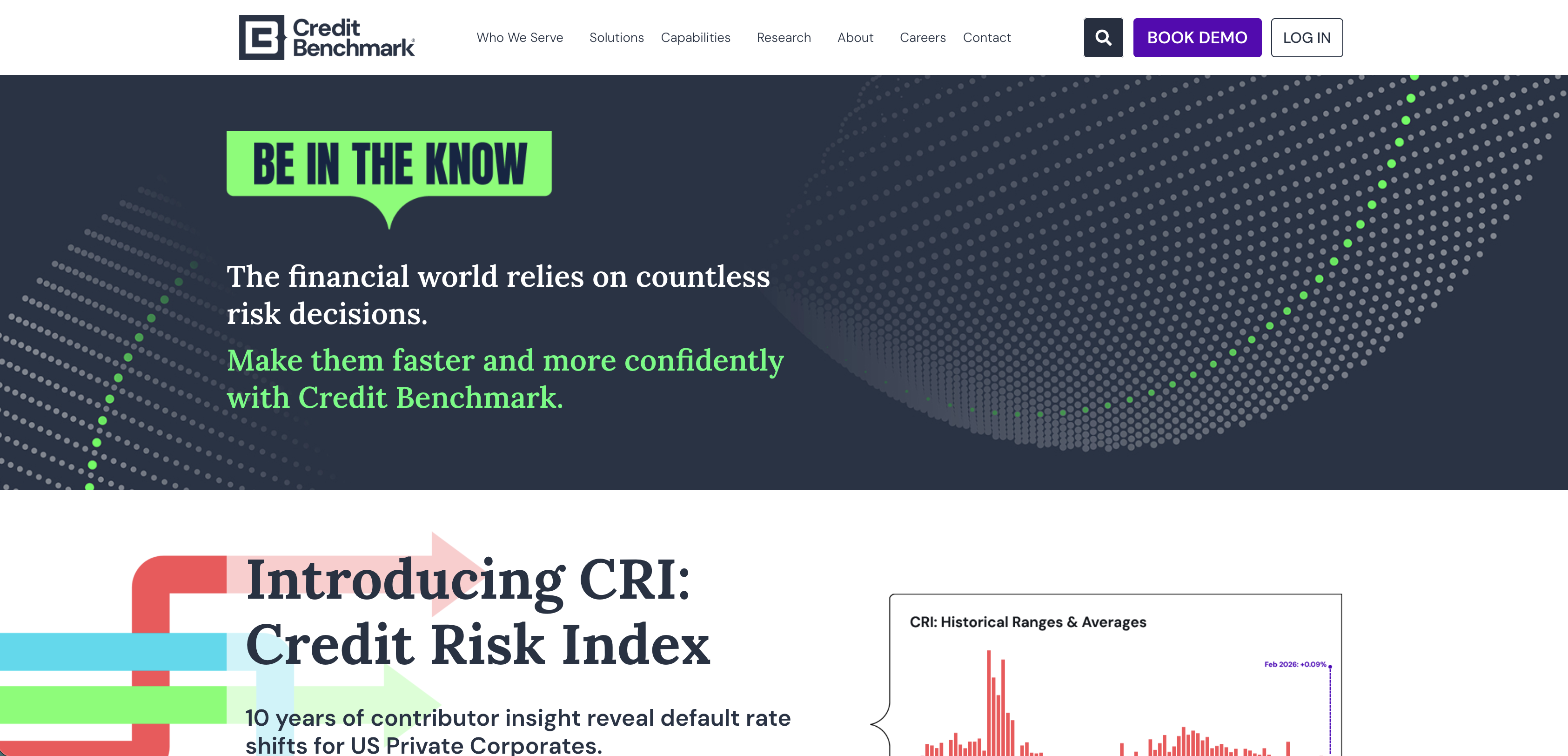
Credit Benchmark sits at the intersection of market transparency and institutional risk management. Founded to solve a specific problem—banks and asset managers couldn't easily benchmark their credit exposures against the broader market—it's evolved into a critical infrastructure play in the institutional credit space. The platform aggregates anonymized credit opinions from major financial institutions, creating a real-time view of how the world's largest investors see credit risk. Rather than relying on traditional ratings agencies or proprietary models, Credit Benchmark lets institutions see how their views stack up against peers, identify outliers, and stress-test assumptions across thousands of corporates and sovereigns. This crowdsourced intelligence has become essential for risk committees, portfolio managers, and regulators navigating an increasingly complex credit landscape. The company operates quietly but with significant reach—used by central banks, pension funds, and major corporates to understand systemic credit risk. In a world where traditional credit signals lag reality, Credit Benchmark offers something rare: a real-time consensus view built on the opinions of sophisticated investors who have real money at stake. It's infrastructure for an industry that desperately needed transparency on how credit risk is actually perceived, not how it's officially rated.

AI for finance has moved quickly from experimental capability to genuine product opportunity, and the early movers building specialised AI tools for financial workflows have a chance to define how the technology integrates with the way finance professionals actually work. Eilla AI was founded in Tallinn in 2022 to apply large language models and AI agents to investment research and financial analysis workflows. Its platform helps investment professionals — analysts, portfolio managers, due diligence teams — process the enormous volume of unstructured information that financial decisions depend on: company filings, transcripts, market reports, news, alternative data sources. The product targets the specific bottleneck that AI is well-suited to address: the time-consuming work of synthesising large amounts of text into the structured insights that human analysts need to make decisions. The Estonian fintech ecosystem has produced a disproportionate number of internationally relevant companies, and Eilla represents the AI-native generation of European fintech infrastructure. In the broader landscape of AI applied to finance, where every major institution is experimenting with internal AI tools, specialist external platforms like Eilla have to demonstrate that their product depth and ongoing model development justify their use over generalist AI tools that everyone has access to.
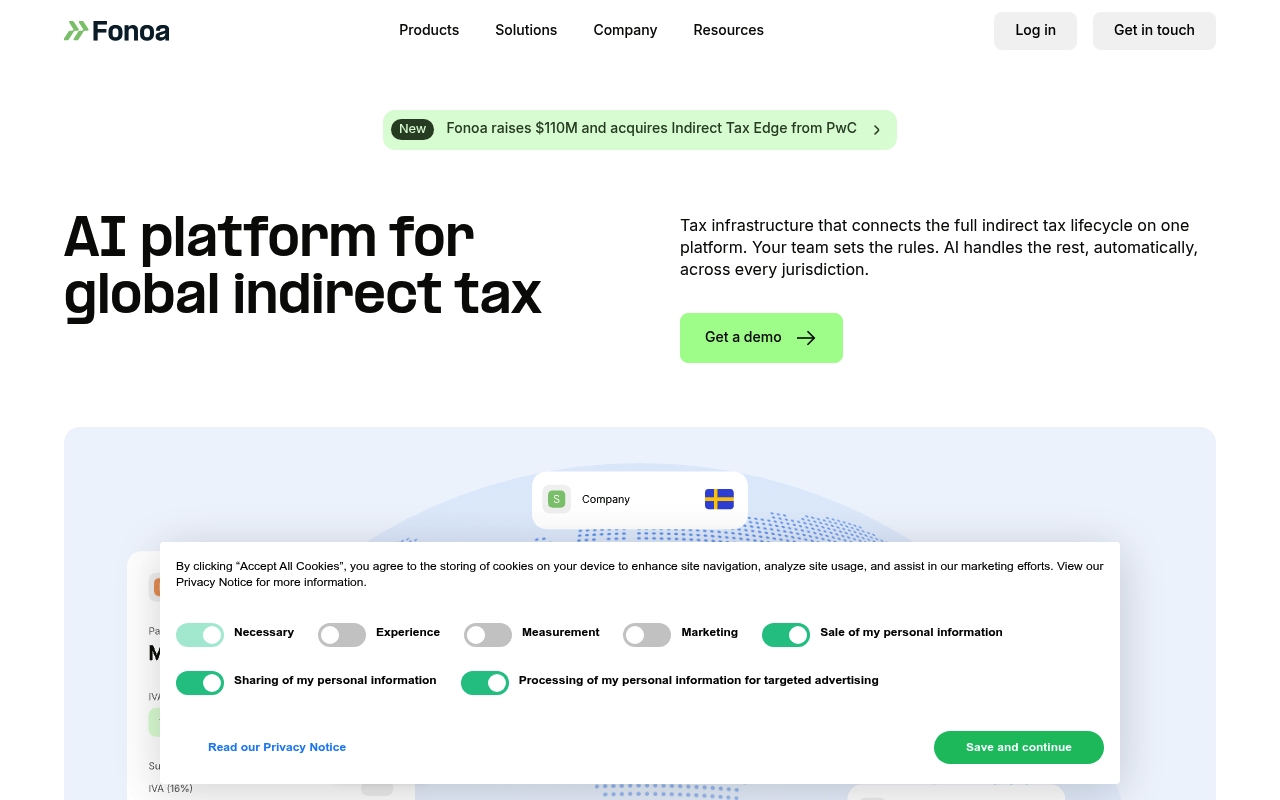
Tax compliance has long been the tedious, error-prone side of fintech—the regulatory checkbox that slows down growth. Fonoa automates indirect tax (VAT, GST, sales tax) for digital businesses operating across multiple jurisdictions, turning what used to be a spreadsheet nightmare into API-driven accuracy. The platform handles tax calculation, compliance reporting, and filing across more than 200 territories, meaning a SaaS company or marketplace doesn't need a dedicated tax accountant just to stay legal. Fonoa integrates directly with billing systems and payment processors, capturing transaction data and determining tax obligations in real time. What sets Fonoa apart is its focus on the messy reality of cross-border digital commerce. While traditional tax software still assumes you're filing locally, Fonoa was built for companies that sell globally by default—the kind of businesses that would otherwise need to hire lawyers and accountants in every market they touch. In the broader European fintech stack, Fonoa occupies the unsexy-but-critical layer between payment platforms and accounting systems. It's the kind of infrastructure that enables other fintechs to scale without regulatory friction, making it essential backbone software for anyone processing payments across borders.
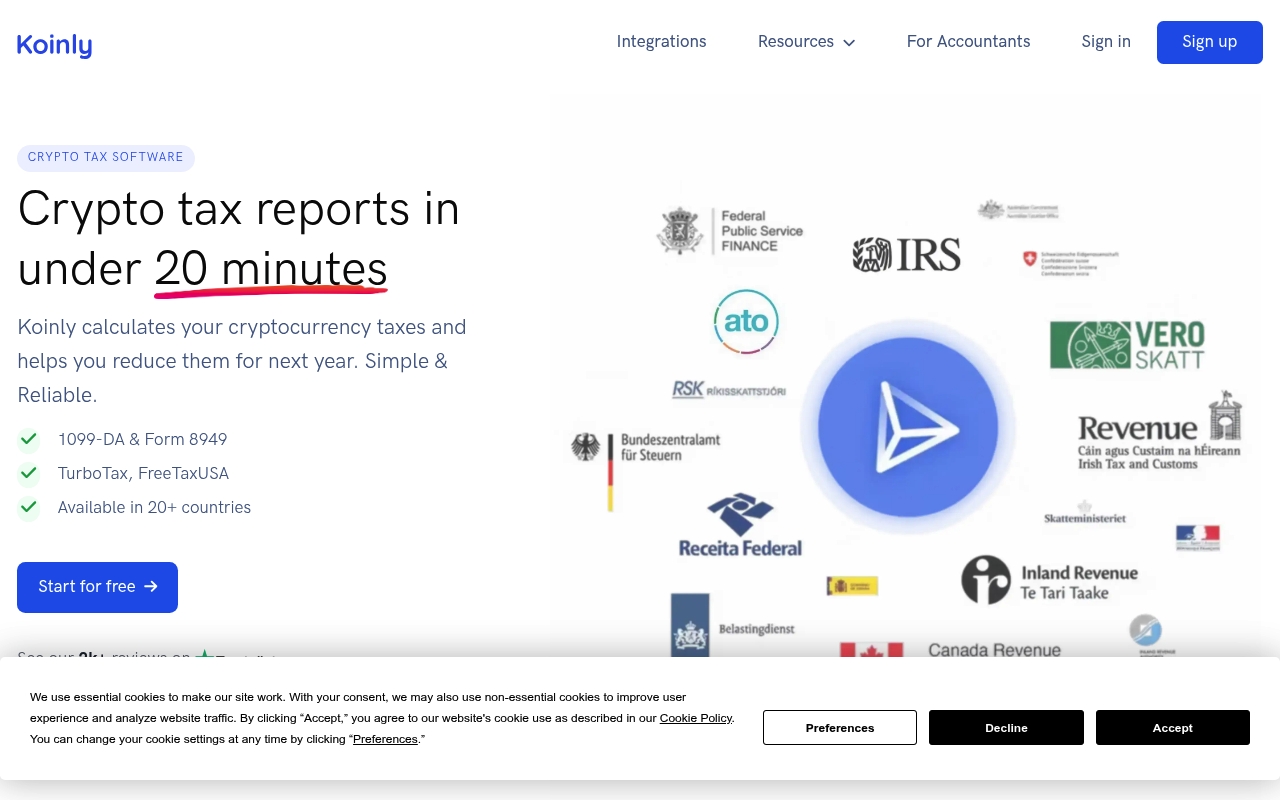
Koinly started as a weekend project by someone annoyed at his own spreadsheet. Robin Singh, a developer and crypto investor, could not find a tool that handled crypto tax reporting better than the manual workbook he was maintaining himself, so he built one — reportedly reaching a working product within four months of starting in 2018. The framing on the company's own about page has not changed since: crypto taxes shouldn't require a finance degree. That origin explains a great deal about the product, which is unusually focused on the specific mechanical problem of getting scattered transaction data into a shape a tax authority will accept, and unusually indifferent to everything else. The mechanism is straightforward and the coverage is the moat. Users connect exchanges via API, add wallet addresses and blockchains, and Koinly reconstructs the full transaction history, classifies each event, calculates capital gains and income, and generates a country-specific report. The integration count is the headline number — the company claims support for several hundred exchanges, wallets and blockchains, with the figure quoted between 800 and 900 depending on the source — and the event coverage extends well past spot trading into DeFi transactions, staking rewards, liquidity pools, NFTs, mining and airdrops, which is where most competing tools break down. Reports are produced for more than 20 tax jurisdictions with local rules encoded per country, including US forms such as 8949 and the newer 1099-DA, and outputs export into TurboTax, TaxAct and Xero. Accountants are a significant customer segment alongside individual investors, and larger crypto businesses use it too. The company is unusual in this directory for how little of its structure is public. Koinly is generally described as London-headquartered, operating through a Singapore entity, with a distributed team; published employee counts vary wildly across data providers, which is a fairly reliable sign that none of them know. Funding is similarly opaque — a single round is recorded, with KuCoin Labs named among investors, and no disclosed amount or valuation. There was a round of staff cuts reported in December 2022, at the bottom of the crypto winter and immediately before tax season, which is the one visible data point about the business running lean through the cycle. The user base is described as several hundred thousand. What matters more than the corporate opacity is the regulatory ratchet the company now sits on. Since 1 January 2026, DAC8 and the OECD's CARF framework require crypto-asset service providers across the EU to report customer transaction data directly to tax authorities. The era of crypto taxes as voluntary compliance is over: tax offices now receive the data automatically, and the reconciliation burden falls on the individual. That is a structural tailwind for every serious tool in this category, and it sharpens the competitive question. Koinly's position is breadth — the most integrations, the widest jurisdictional coverage, a global rather than regional footprint — against Blockpit, which competes on depth of local tax law in the German-speaking markets and has consolidated two European rivals to get there. Koinly is the generalist; Blockpit is the specialist. Which wins probably depends on whether a user's problem is "I traded on eleven venues across four chains" or "I need this to survive scrutiny from the Austrian tax office."