DatabaseCategoriesServicesCountriesArticlesNewsletterRequest listing
HomeCategoriesRegTechRisk monitoring
RegTech

Risk monitoring Companies in Europe

8 companies·7 countries·Updated August 2026

Risk monitoring platforms provide continuous surveillance of the risk exposures that financial institutions and regulated businesses carry — credit risk, market risk, liquidity risk, operational risk, and compliance risk. Rather than periodic risk assessments, modern risk monitoring uses real-time data feeds, automated alerts, and dashboard reporting to give risk managers current visibility into their institution's risk position. Integration with regulatory reporting frameworks means that risk monitoring data increasingly feeds directly into supervisory submissions.

European Risk monitoring companies in our database

Notable risk monitoring companies include Hawk, Credolab, Pliant, Klear Lending and Strise.
Hawk
Hawk🇩🇪
Est. 2019

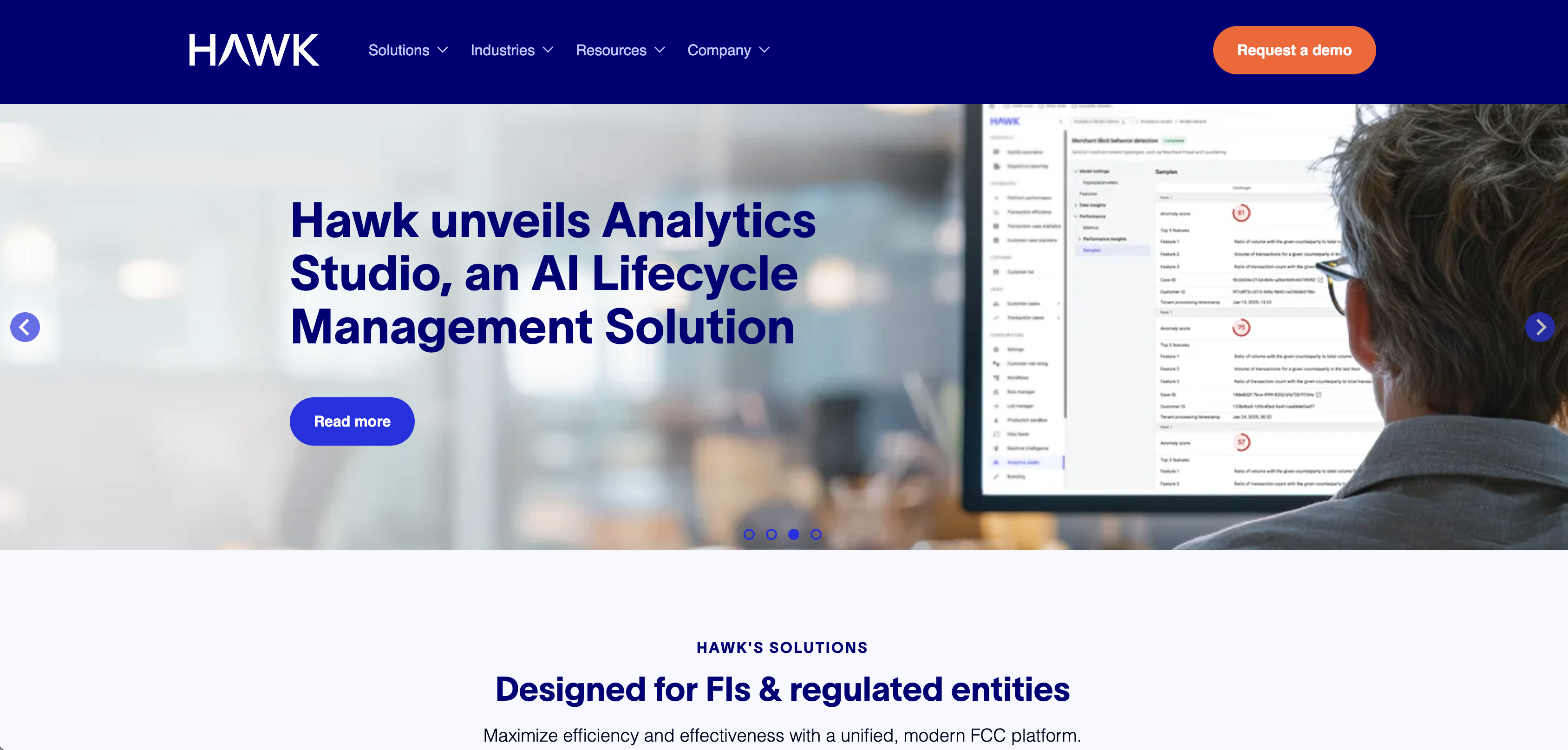
Hawk brings machine learning firepower to financial crime detection, sitting at the intersection of compliance and computational intelligence. Rather than relying on static rule sets that miss novel fraud patterns, Hawk deploys adaptive algorithms that learn from transaction behavior in real time, catching what traditional systems let slip through the cracks. The platform ingests transaction data across multiple channels—payments, transfers, accounts—and surfaces suspicious activity before it becomes a problem. For banks and fintechs drowning in false positives from legacy systems, Hawk promises a different approach: smarter, faster, less noise. Its technology sits on the boundary between compliance necessity and operational efficiency, helping institutions detect actual threats rather than gaming alert thresholds. In an environment where financial crime is increasingly sophisticated and regulatory pressure unrelenting, Hawk positions itself as the thinking alternative to checkbox compliance, offering institutions a genuine competitive edge in the race to stay ahead of bad actors.

Credolab
Credolab🇳🇱
Est. 2016

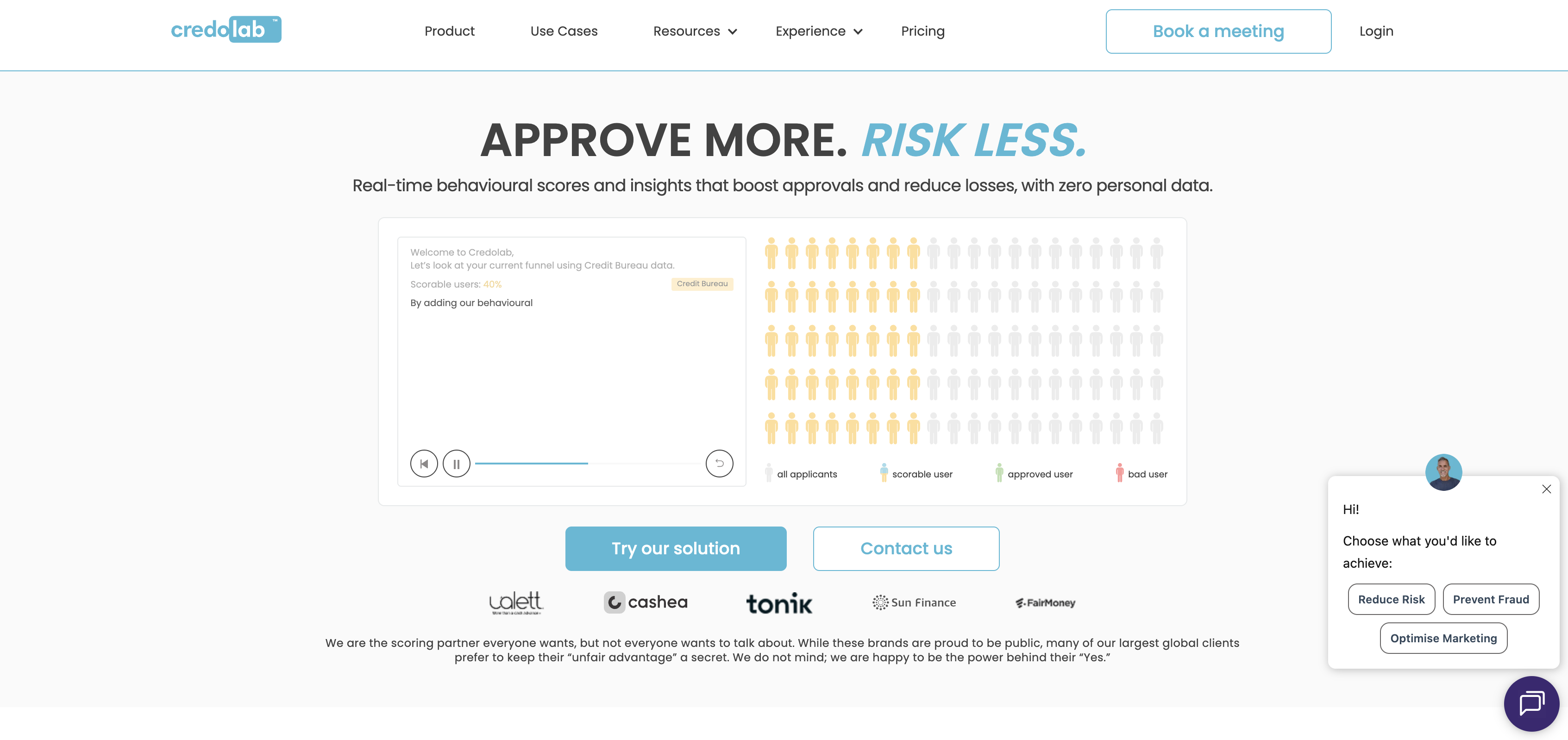
Credit decisions in markets without comprehensive credit bureau coverage have always been hard. The traditional underwriting model relies on credit history, income verification, and identity documents that significant portions of the global population either don't have or can't easily produce. Credolab was founded in 2016 with operations across Asia and Europe to address that gap with an unconventional data source — smartphone metadata. Its platform analyses behavioural patterns from a mobile device — without accessing personal content — to generate credit scores for consumers who have no traditional credit history. The data points are surprisingly predictive: how someone manages their phone storage, the pattern of their app usage, the regularity of their device behaviour all correlate with credit risk in ways that traditional underwriting misses. Credolab serves lenders, telcos, and digital platforms across emerging markets where credit bureau coverage is thin and the demand for digital credit is growing rapidly. In the alternative credit data landscape, where companies are competing to find the data sources that will define the next generation of underwriting, Credolab's behavioural smartphone approach is one of the more distinctive — and one that addresses a genuinely large unmet need in markets where billions of people remain credit-invisible to traditional financial systems.

Pliant
Pliant🇩🇪
Est. 2020

Pliant is a compliance automation platform built for financial services firms that are tired of drowning in spreadsheets and manual processes. Rather than layering another point solution onto an already fragmented tech stack, Pliant unifies risk, compliance, and audit workflows into a single operating system. The platform handles the tedious work—continuous monitoring, policy enforcement, evidence collection, regulatory reporting—that currently consumes entire compliance teams and slows down growth.

Klear Lending
Klear Lending🇧🇬
Est. 2016

Klear Lending is a London-based fintech that automates credit decisions for alternative lenders and financial institutions across Europe. The company has built a machine learning platform that cuts through the complexity of underwriting—replacing outdated credit scoring with algorithmic assessment that learns from lender-specific data and performance patterns. Rather than forcing institutions into rigid scoring boxes, Klear's technology adapts to how different lenders actually price risk, meaning a borrower rejected by one algorithm might be approved by another using the same underlying data. The platform processes loan applications in seconds, reducing the manual review work that traditionally chokes alternative lending operations. Its clients range from peer-to-peer platforms and buy-now-pay-later startups to traditional bank-owned lending divisions looking to modernize their decision engines. Klear sits at the intersection of infrastructure and risk—not quite a lender itself, but the invisible scoring layer that powers decisions across Europe's fragmented credit market. In a landscape where underwriting talent is expensive and credit models age quickly, Klear's bet is that dynamic, data-driven decisioning will eventually become table stakes for any lender serious about competitive underwriting. The company has steadily built a niche serving institutions that can't build these capabilities themselves but can't afford to leave money on the table with overly conservative approval rates either.

Strise
Strise🇳🇴
Est. 2019

Strise is an AI-powered ESG risk platform built for institutional investors tired of spreadsheet-based due diligence. Instead of relying on lagging ESG ratings from traditional providers, Strise uses machine learning to surface real-time supply chain risks, labor violations, and environmental incidents that actually move portfolio companies. The platform aggregates unstructured data from thousands of sources—regulatory filings, news, satellite imagery, worker reports—and turns it into actionable risk scores that investors can trade on. What sets Strise apart is its speed and granularity. While legacy ESG platforms deliver quarterly updates, Strise refreshes daily. It catches supply chain disruptions before they hit earnings calls and identifies geopolitical risks buried in subsidiary networks. The system learns from private investor feedback, getting smarter about what matters for specific asset classes and investment theses. Strise positions itself as the anti-Morningstar approach to ESG—less about moral messaging, more about financial materiality. It's built for asset managers, insurers, and institutional investors who need ESG intelligence that moves faster than the news cycle. In an era where traditional ESG ratings are increasingly criticized for opacity and misalignment with actual risk, Strise offers a data-driven alternative that translates ESG into portfolio language: risk-adjusted returns.

Eilla AI
Eilla AI🇪🇪
Est. 2022

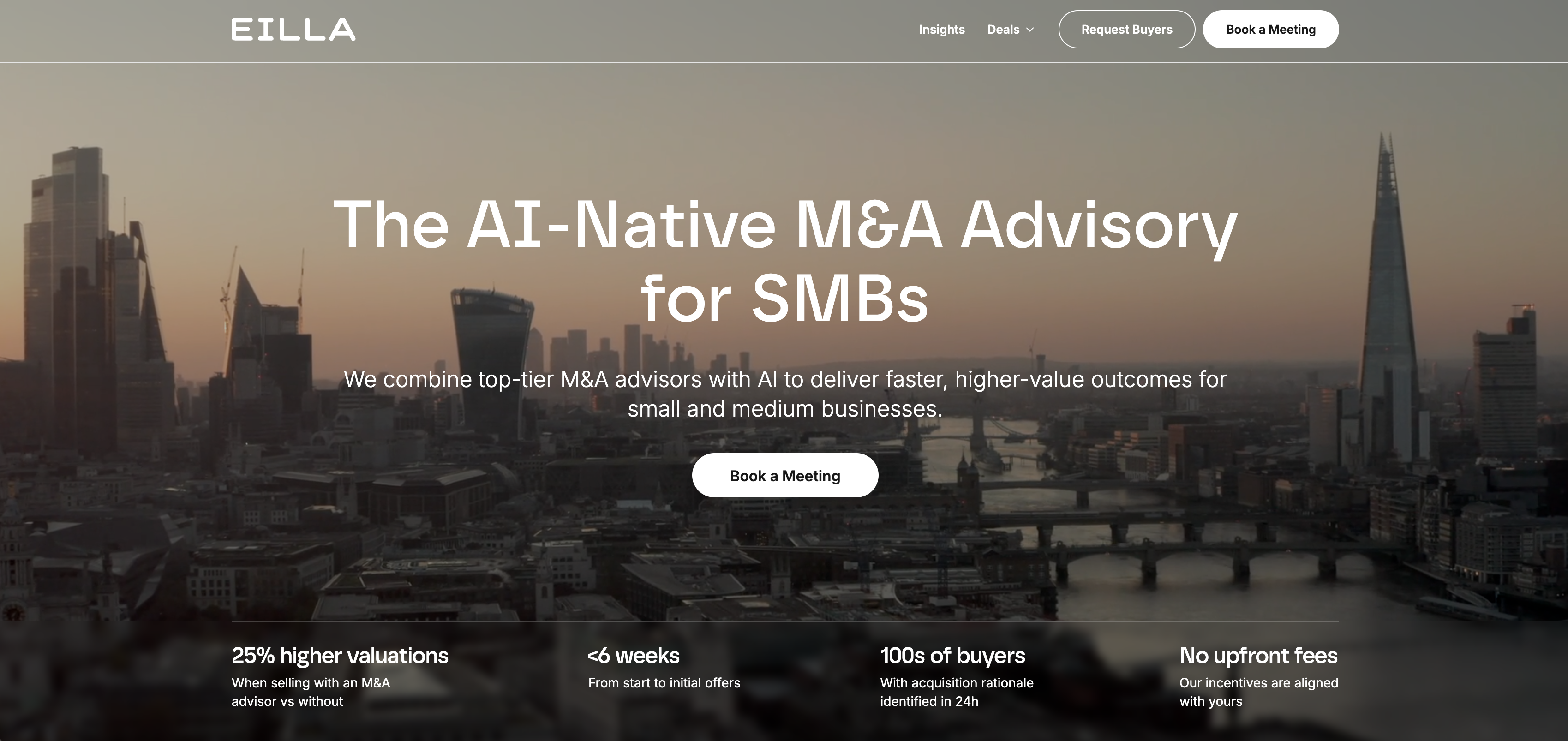
AI for finance has moved quickly from experimental capability to genuine product opportunity, and the early movers building specialised AI tools for financial workflows have a chance to define how the technology integrates with the way finance professionals actually work. Eilla AI was founded in Tallinn in 2022 to apply large language models and AI agents to investment research and financial analysis workflows. Its platform helps investment professionals — analysts, portfolio managers, due diligence teams — process the enormous volume of unstructured information that financial decisions depend on: company filings, transcripts, market reports, news, alternative data sources. The product targets the specific bottleneck that AI is well-suited to address: the time-consuming work of synthesising large amounts of text into the structured insights that human analysts need to make decisions. The Estonian fintech ecosystem has produced a disproportionate number of internationally relevant companies, and Eilla represents the AI-native generation of European fintech infrastructure. In the broader landscape of AI applied to finance, where every major institution is experimenting with internal AI tools, specialist external platforms like Eilla have to demonstrate that their product depth and ongoing model development justify their use over generalist AI tools that everyone has access to.

Related in RegTech
AML compliance (17)Reporting automation (7)Regulatory analytics (5)Audit tools (4)
Browse all RegTech companies →

Frequently asked questions

How many Risk monitoring companies are there in Europe?
The fintechdatabase.eu directory lists 8 Risk monitoring companies across 7 European countries.
What are the biggest Risk monitoring companies in Europe?
The most popular Risk monitoring companies in the directory are Hawk, Credolab and Pliant.
Which European countries have the most Risk monitoring companies?
Germany, Bulgaria and Estonia have the most Risk monitoring companies in Europe.