DatabaseServicesArticlesCountriesGlossaryNewsletterRequest listing
← All countries
🇸🇰

Fintech in Slovakia

3 companies·View all in directory →
About the Slovakia fintech ecosystem

Slovakia shares many characteristics with its Czech neighbour — EU membership, eurozone participation, a growing middle class, and a financial services market that has developed significantly since EU accession in 2004. Bratislava, Slovakia's capital, benefits from its proximity to Vienna and Budapest, sitting at the junction of three Central European markets within an hour's drive.

The National Bank of Slovakia regulates financial services within the ECB and EBA framework, and Slovakia's eurozone membership provides straightforward access to EU payment infrastructure. Finax, a Slovak robo-advisory platform that has expanded across Central Europe, represents the kind of regionally ambitious fintech that Slovakia's position at the heart of CEE enables.

Slovakia's IT sector has grown significantly, with Bratislava in particular attracting technology company investment driven by its proximity to Vienna, relatively lower operational costs, and an increasingly well-educated technical workforce.

Fintech companies based in Slovakia

Fumbi
Fumbi
Embedded Finance
Fumbi is a Slovak-based open banking platform built for the embedded finance era. It strips away the complexity of connecting to fragmented European banking infrastructure by providing a single API layer that lets fintechs and platforms plug financial services directly into their products. Rather than building the plumbing themselves, companies like marketplaces, e-commerce platforms, and SaaS tools use Fumbi to offer payments, lending, and account services without becoming a bank. The platform connects to hundreds of banks across Europe through standardized protocols, handling everything from payment initiation to real-time account data—work that traditionally required months of engineering and compliance headaches. Fumbi's core insight is that the real bottleneck isn't fintech innovation; it's the infrastructure gap between fintechs and incumbent banks. By sitting in that middle ground, Fumbi lets startups and enterprises move at fintech speed while maintaining the regulatory rigor that traditional banking demands. It's the connective tissue that makes embedded finance actually work at scale, turning API calls into real financial transactions without the regulatory liability.
Founded 2021
Finax
Finax
Wealth
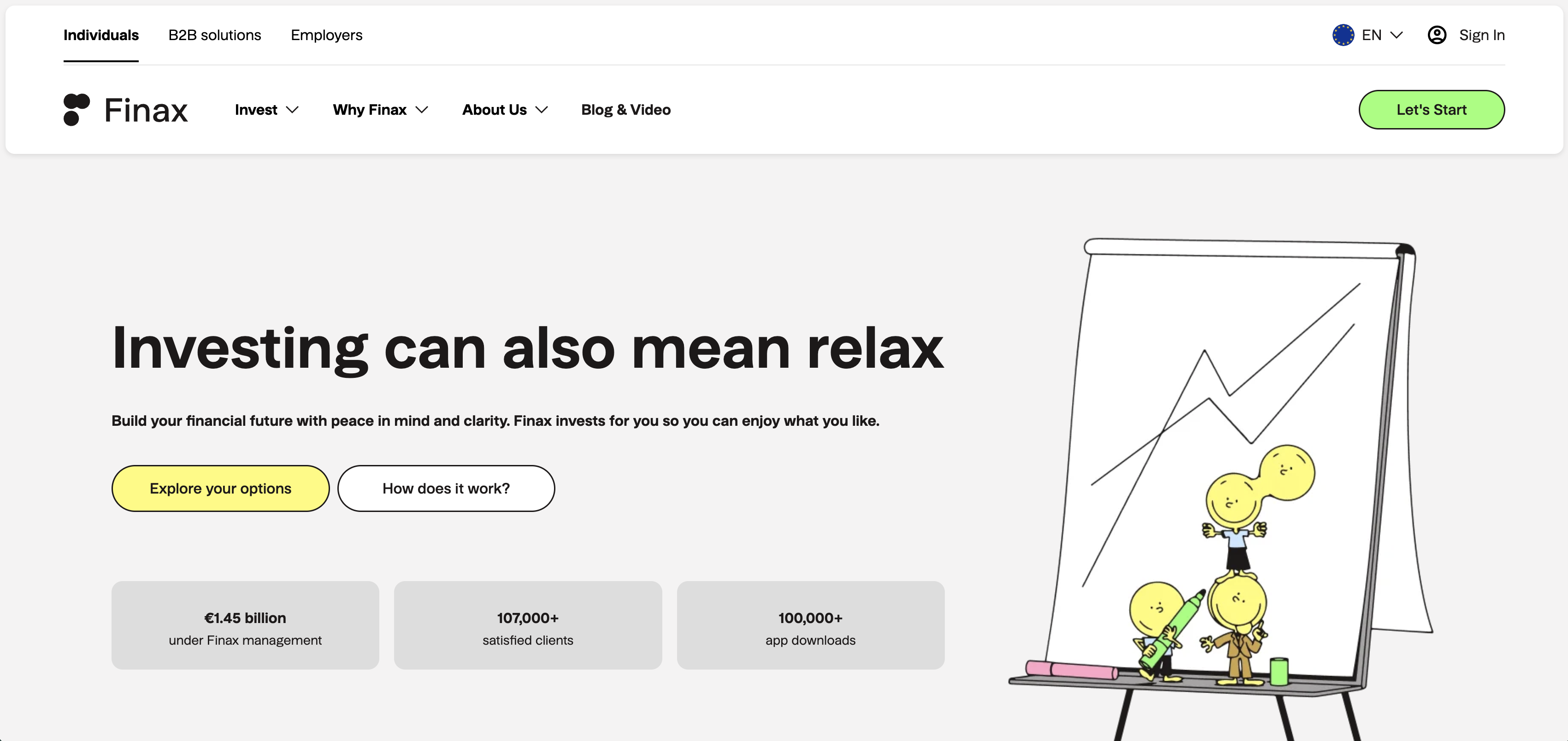
Robo-advisory in Central and Eastern Europe faces a market where investment culture is still developing, financial literacy varies enormously, and the major Western European platforms have shown limited interest in localising their products for markets they consider too small to prioritise. Finax was founded in Bratislava in 2017 to fill that gap with a robo-advisory platform built specifically for the CEE region — Slovakia, Czech Republic, Hungary, Poland, Croatia, Romania, and beyond. Its product offers diversified ETF portfolios with localisation that includes pension account integration where local regulation allows, currency hedging strategies relevant to CEE investors, and content designed to build investment knowledge among first-time investors. Finax holds a Slovak investment firm licence with EU passporting rights, allowing it to operate across the European Economic Area. The company has grown rapidly in Slovakia and the Czech Republic, building from a base in markets that international robo-advisors have largely ignored. In the European wealth tech landscape, Finax represents the model that builds for an underserved regional market rather than following the larger platforms into the most competitive Western European geographies — a strategy that has produced sustainable growth in markets where being the credible local option matters more than being the cheapest international one.
Founded 2017
Finby
Finby
Embedded Finance
Finby is a European embedded finance platform that lets businesses integrate lending, payments, and financial products directly into their applications without building infrastructure from scratch. The company strips away the complexity of launching financial services—whether you're a marketplace, e-commerce platform, or SaaS tool looking to offer credit, buy-now-pay-later, or payment solutions to your customers. Rather than forcing businesses to navigate banking partnerships and regulatory frameworks alone, Finby provides white-label APIs and integration tooling that abstract away the backend plumbing. This positions it as a bridge between traditional financial institutions and the modern software stack. Finby's approach is particularly relevant for European platforms operating across multiple jurisdictions, where regulatory compliance and cross-border payment complexity often stall financial product launches. The company competes in an increasingly crowded embedded finance space, but differentiates through deep focus on European regulatory requirements and multi-market deployment. For software companies wanting to monetize financial services without becoming fintech experts, Finby serves as an operational backbone—letting engineers ship financial features at the speed of code, not banking timelines. Its role in the broader landscape reflects the industry shift toward financial capabilities becoming commoditized infrastructure rather than proprietary moats.