← All services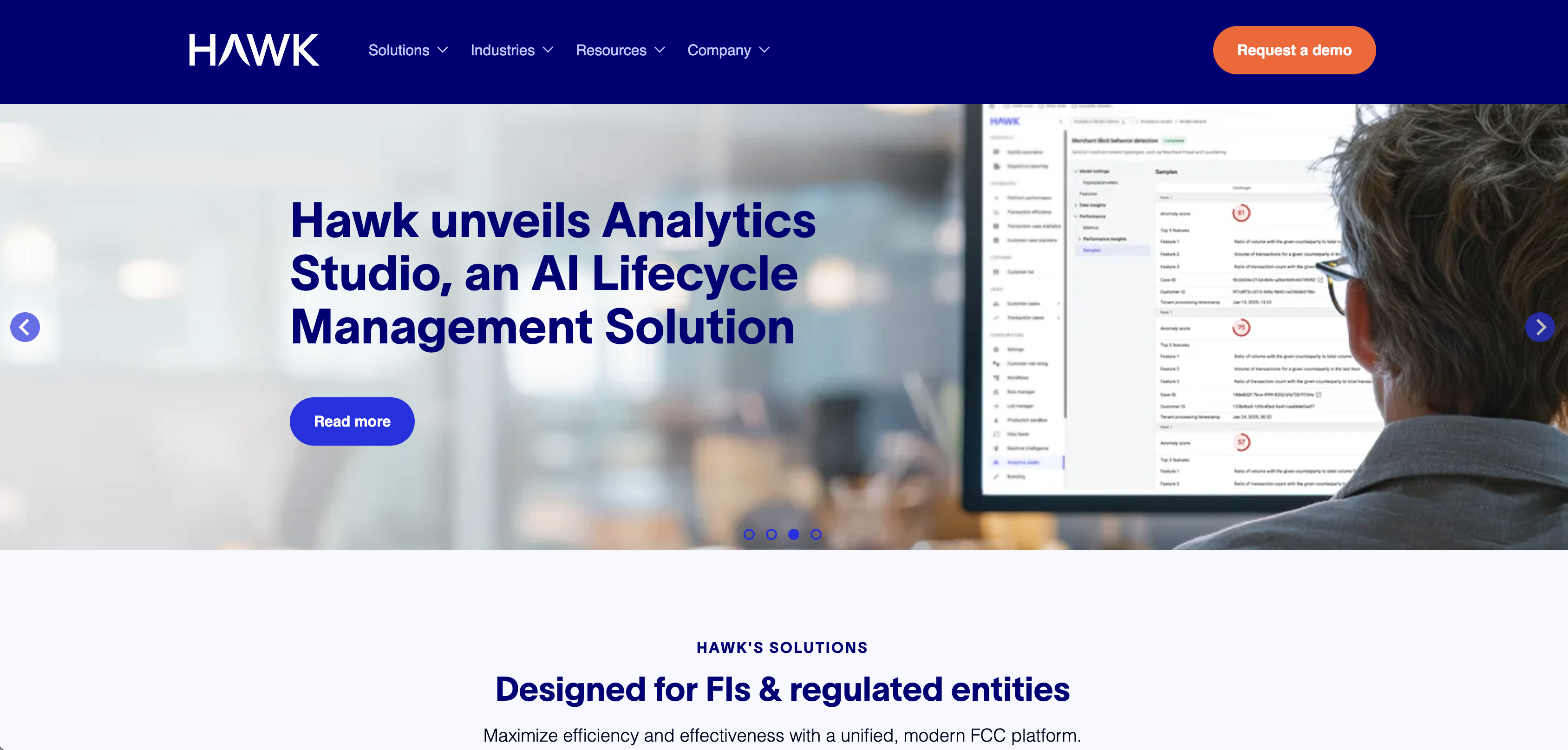

5 European companies
Anomaly Detection Providers in Europe
Anomaly detection uses machine learning to identify unusual patterns in financial transactions, user behaviour, or system activity that deviate from established norms. In fraud and security contexts, anomaly detection catches attacks that rules-based systems miss because they do not match known fraud patterns — making it particularly valuable against novel or sophisticated fraud typologies.
Typically offered by
European fintech companies offering anomaly detection
Hawk
Fraud & Security🇩🇪 Germany
Hawk brings machine learning firepower to financial crime detection, sitting at the intersection of compliance and computational intelligence. Rather than relying on static rule sets that miss novel fraud patterns, Hawk deploys adaptive algorithms that learn from transaction behavior in real time, catching what traditional systems let slip through the cracks. The platform ingests transaction data across multiple channels—payments, transfers, accounts—and surfaces suspicious activity before it becomes a problem. For banks and fintechs drowning in false positives from legacy systems, Hawk promises a different approach: smarter, faster, less noise. Its technology sits on the boundary between compliance necessity and operational efficiency, helping institutions detect actual threats rather than gaming alert thresholds. In an environment where financial crime is increasingly sophisticated and regulatory pressure unrelenting, Hawk positions itself as the thinking alternative to checkbox compliance, offering institutions a genuine competitive edge in the race to stay ahead of bad actors.
Founded 2019
Ravelin
Fraud & Security🇬🇧 United Kingdom
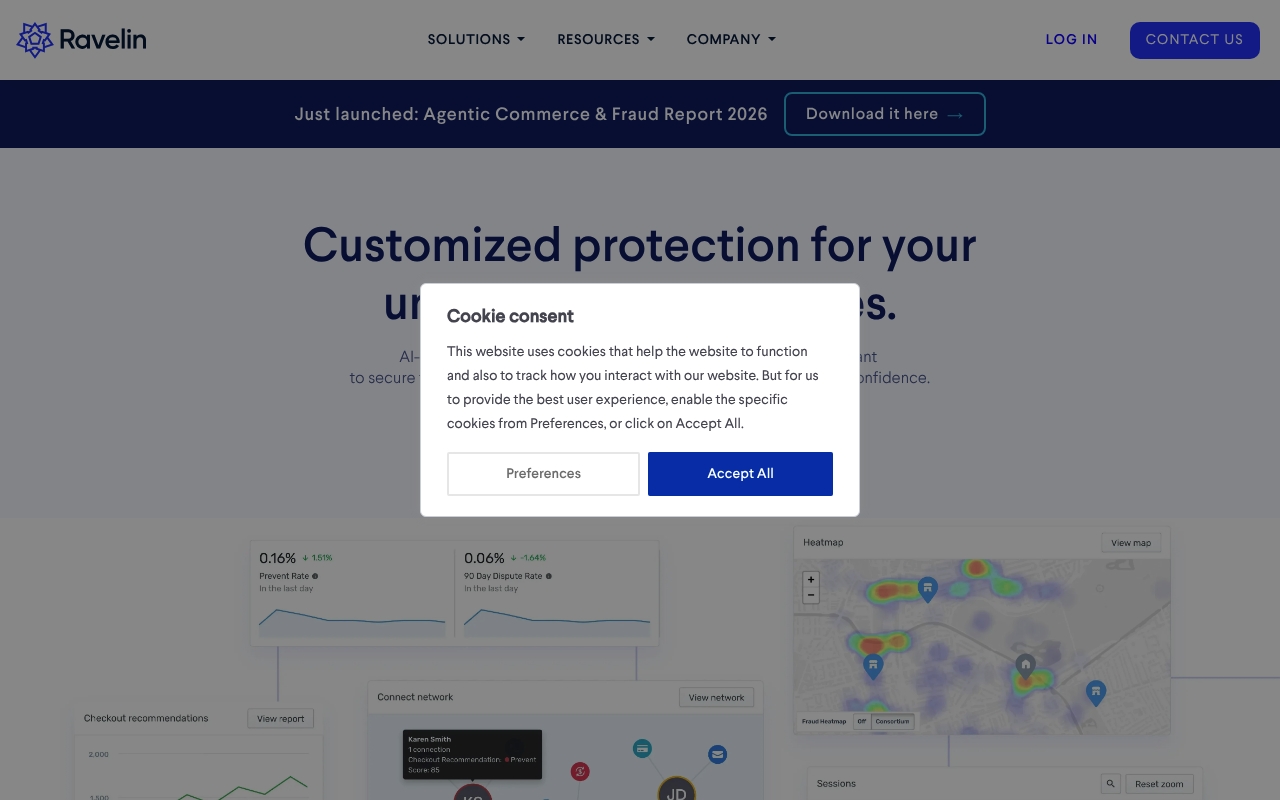
Ravelin is a fraud prevention and risk intelligence platform built for the modern payment landscape. Rather than relying on outdated blacklists and rule engines, the company uses behavioral analytics and machine learning to distinguish legitimate transactions from fraudulent ones in real time.
The platform sits between merchants and payment processors, analyzing transaction patterns, user behavior, and contextual signals to catch fraud before it hits the books. Ravelin's approach acknowledges a fundamental tension in fintech: overly aggressive fraud screening kills conversions, while loose controls breed chargebacks. The company's API-first architecture means it integrates directly into checkout flows without requiring merchants to rebuild their payments infrastructure.
What sets Ravelin apart is its focus on the nuance between fraud risk and business risk. Many competitors offer binary accept-or-decline decisions; Ravelin surfaces risk scores and behavioral indicators, letting merchants make informed decisions about which transactions to challenge, approve, or send to manual review. This flexibility matters especially for high-value or unusual transactions where false positives hurt revenue.
Ravelin operates primarily in the B2B space, serving mid-market and enterprise merchants across e-commerce, travel, and fintech. The company competes in a crowded fraud detection market dominated by established players, but gains ground through superior machine learning models and a merchant-centric product philosophy. As payment volumes continue to surge across Europe and digital fraud becomes increasingly sophisticated, Ravelin's technology sits at a critical chokepoint in the transaction flow.
Founded 2014
Nethone
Fraud & Security🇵🇱 Poland
Fraud detection and prevention used to be reactive—companies would build rule engines and hope for the best, watching transactions after they happened. Nethone inverts that. The platform spots fraudsters before they strike, using behavioral analytics and device intelligence to identify bad actors in real time across payments, lending, and marketplaces. It's not just rule-based flagging; Nethone learns from every interaction, continuously adapting to new fraud tactics as they emerge.
The company serves mid-market and enterprise clients across Europe, particularly in Poland and the broader Central European market, where it's become trusted infrastructure for preventing losses. Unlike generic fraud tools that rely on blacklists and static rules, Nethone combines machine learning with behavioral signals—how someone moves their mouse, types their password, navigates your app—to build a detailed risk picture. This approach catches both account takeovers and credential stuffing before legitimate users even realize something's wrong.
In a market crowded with legacy fraud solutions and newer point tools, Nethone stands apart through device-centric intelligence and a focus on reducing false positives. Most fraud platforms block too much; Nethone aims for precision. For fintech companies, lenders, and payment networks that need fraud prevention without friction, it offers a middle ground between being too permissive and too paranoid. It's become a standard choice for European fintechs building trust at scale.
Founded 2012
Darktrace
Fraud & Security🇬🇧 United Kingdom
Darktrace is a British artificial intelligence company that weaponizes self-learning algorithms against cyber threats in real-time. Founded in 2013 by mathematicians and former Cambridge scholars, it operates at the intersection of enterprise security and AI—teaching machines to recognize the fingerprint of normal behavior, then catching deviation before damage happens.
The platform works differently from traditional cybersecurity. Rather than relying on threat signatures or static rules, Darktrace's core AI engine learns what "normal" looks like inside an organization's network—every user, device, and data flow. When something deviates fundamentally from that baseline, it triggers. This approach has made it essential infrastructure for financial institutions, healthcare operators, and multinational enterprises handling sensitive data.
What separates Darktrace from older guard security providers is speed and scope. While competitors still operate on vulnerability lists and known-bad signatures, Darktrace catches unknown threats in motion. It's become the gold standard for enterprises that treat security as an ongoing conversation with AI, not a compliance checkbox.
In the broader fintech and enterprise tech landscape, Darktrace represents a generation of AI-native security companies that don't just react to attacks—they learn, predict, and evolve. For financial services and regulated industries, this autonomous intelligence has become non-negotiable.
Founded 2013
Strise
Fraud & Security🇳🇴 Norway
Strise is an AI-powered ESG risk platform built for institutional investors tired of spreadsheet-based due diligence. Instead of relying on lagging ESG ratings from traditional providers, Strise uses machine learning to surface real-time supply chain risks, labor violations, and environmental incidents that actually move portfolio companies. The platform aggregates unstructured data from thousands of sources—regulatory filings, news, satellite imagery, worker reports—and turns it into actionable risk scores that investors can trade on.
What sets Strise apart is its speed and granularity. While legacy ESG platforms deliver quarterly updates, Strise refreshes daily. It catches supply chain disruptions before they hit earnings calls and identifies geopolitical risks buried in subsidiary networks. The system learns from private investor feedback, getting smarter about what matters for specific asset classes and investment theses.
Strise positions itself as the anti-Morningstar approach to ESG—less about moral messaging, more about financial materiality. It's built for asset managers, insurers, and institutional investors who need ESG intelligence that moves faster than the news cycle. In an era where traditional ESG ratings are increasingly criticized for opacity and misalignment with actual risk, Strise offers a data-driven alternative that translates ESG into portfolio language: risk-adjusted returns.
Founded 2019