← All services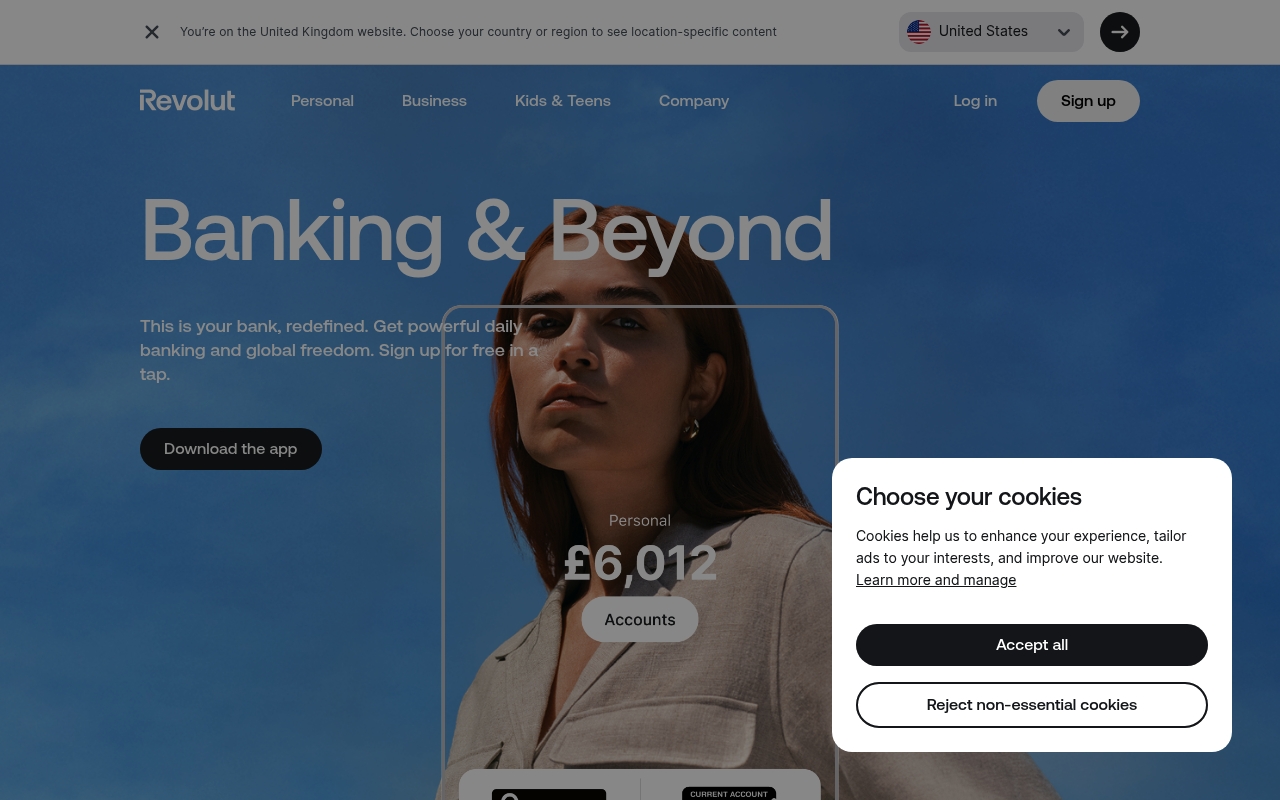


19 European companies
Automated Savings Providers in Europe
Automated savings tools move money into savings automatically based on rules — round-ups on transactions, fixed transfers on payday, or percentage-of-income rules — without requiring ongoing conscious action from the user. Automation dramatically improves savings rates by removing the friction and willpower requirements of manual saving.
Typically offered by
European fintech companies offering automated savings
Revolut
Wealth🇱🇹 Lithuania
Nik Storonsky was born in Dolgoprudny, Russia, and moved to London in 2006 to work as an equity derivatives trader, first at Lehman Brothers and later at Credit Suisse. Vlad Yatsenko was a software engineer who'd spent years building financial systems. In 2015 they sat down and asked a question that should have occurred to banks years earlier: why does spending money abroad still cost so much?
The answer they built was Revolut — initially a prepaid card with no foreign exchange fees, then a multi-currency account, then a trading platform, then an insurance product, then a business banking offering, then something that's increasingly hard to describe as anything other than a full financial operating system. Revolut didn't unbundle banking so much as rebuild it from scratch for people who found the existing version frustrating and expensive.
The numbers now are genuinely striking for a company that started with two people and a card. Revenue reached £4.5 billion in 2025, up 46% year on year, with pre-tax profit rising 57% to £1.7 billion. The customer base has passed 75 million retail users, plus 767,000 businesses. The company employs more than 12,000 people and operates in more than 40 markets. In July 2026, a secondary share sale valued Revolut at $115 billion — up from $75 billion just eight months earlier, and more than the market capitalisation of Barclays. It remains Europe's most valuable private technology company by a wide margin.
The milestone that mattered most arrived in March 2026: a full UK banking licence from the Prudential Regulation Authority, ending a five-year application process that had become one of the most-watched regulatory sagas in European fintech. The licence means Revolut can now protect UK deposits up to £120,000, offer authorised consumer credit, and compete directly with high street banks for mortgage and lending business. It's the piece that transforms Revolut from a very successful payments app into a regulated bank.
The global licensing map is filling in quickly, with one persistent gap. In July 2026 Revolut became the first global fintech granted a full Australian Deposit-taking Institution licence by APRA — a regulator whose capital requirements have defeated several domestic neobanks — and launched Revolut Bank Australia. In August it secured a French banking licence, a significant step given that France is its largest European market outside the UK and that holding a local licence rather than passporting from Lithuania changes how it can compete there on lending and deposits. It has also opened its first bank outside Europe, in Mexico. The exception is the United States, where a banking charter application filed in 2024 remains pending — in a period when the OCC has rejected applications from both Wise and bunq.
Around the licences, the product keeps widening past banking: private markets access for European retail customers through funds from Apollo, Ares and Partners Group; a partnership with OpenAI bringing ChatGPT Go to premium tiers; eSIM data plans; and an airport lounge network starting in Copenhagen. The original thesis — that banking could be cheaper, faster, and simpler — hasn't changed. What has changed is that Revolut is no longer only selling banking.
Founded 2015
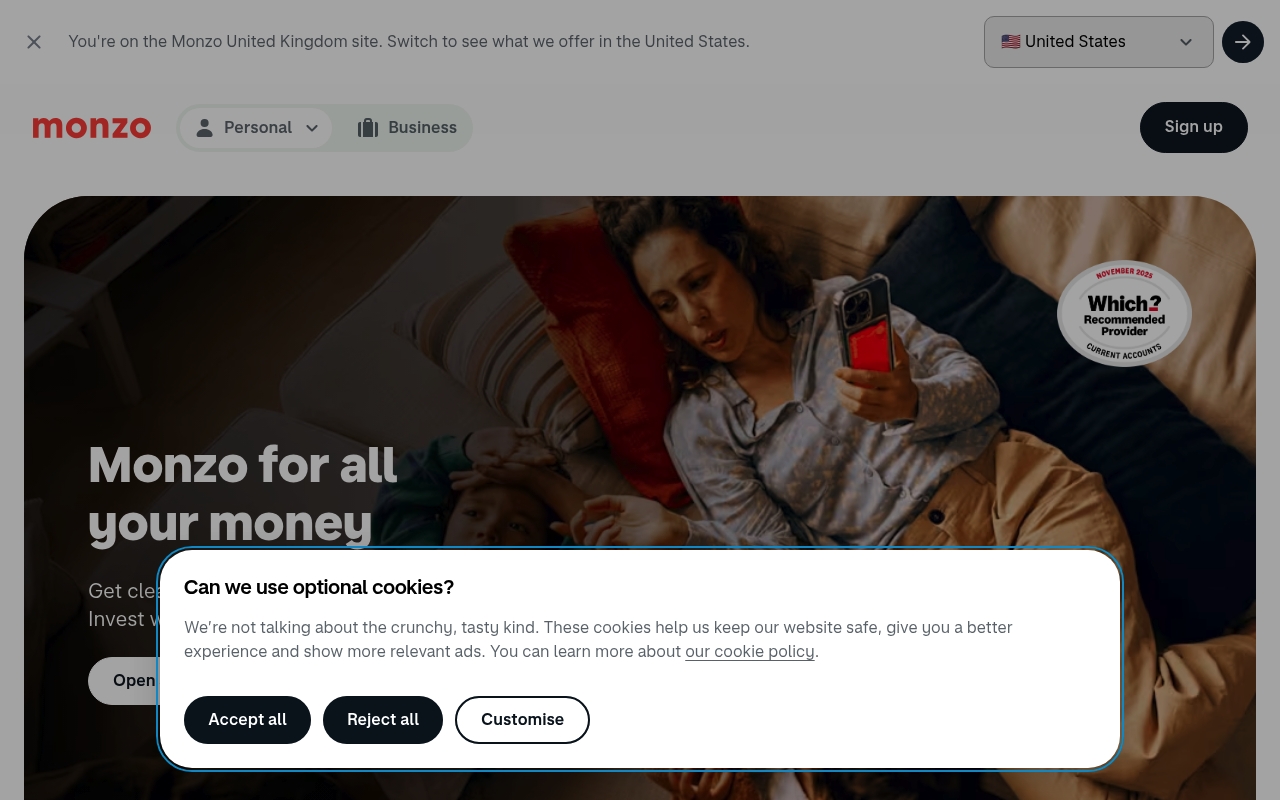
Monzo
Wealth🇬🇧 United Kingdom
The founding team that built Monzo had all worked together before — at Starling Bank, another challenger startup that didn't survive its internal conflicts. Tom Blomfield, Gary Dolman, Jonas Huckestein, Jason Bates, and Paul Rippon left together in 2015 and started again. The product was initially a prepaid card — a coral-coloured piece of plastic that became one of the most recognisable objects in British fintech — before becoming a fully licensed current account in 2017. The early community was unusual for a bank: public engineering blogs, user forums, beta programmes, and a 2016 crowdfunding round that raised £1 million in 96 seconds, a world record. People felt ownership of the product in a way no high street bank had ever achieved, and that emotional connection became a durable competitive advantage.
A decade on, the results have caught up with the mythology. For the year to March 2026, Monzo reported revenue of £1.71 billion, up 39%, with gross profit crossing £1 billion for the first time and a third consecutive year in the black — statutory pre-tax profit of £87.3 million, up 44%, or £172.6 million adjusted for restructuring charges and a roughly £21 million FCA fine over historical financial-crime control failings. The bank added a record three million customers to reach 15.2 million — one in five UK adults — with deposits up 55% to £25.7 billion, 1.6 million paying subscribers, and business banking growing 45% to 905,000 customers and 14% of revenue. Four separate income streams — current account balances, borrowing, payments, and wealth — each now clear £300 million. Half of active customers use Monzo as their primary bank, which shows up in the metric that anchors every valuation conversation: revenue per active personal customer of £167, against Revolut's £66. The gap is the difference between being someone's bank and being their travel card.
Leadership and strategy both turned over during the year. Diana Layfield, a former Google executive, took over as CEO in February 2026 following TS Anil's departure — a transition shaped in part by board tensions over IPO venue and the company's UK concentration. Her first significant moves were decisive: Monzo closed its US operations entirely, and redirected the international ambition at Europe, where it secured a banking licence from the Central Bank of Ireland, launched in Ireland to a 100,000-person waitlist, and named Spain as the next market. The acquisition of digital mortgage broker Habito completed on 1 April 2026, giving the bank a capital-efficient route into mortgages — a product more than 550,000 customers were already tracking in the app. Costs rose with the ambition: the cost-to-income ratio ticked up to 74% as hiring and marketing accelerated.
Monzo remains private, valued at approximately $5.9 billion in its 2024 secondary sale, and Layfield has told the FT she is "not in a hurry" to list. The strategic bet of this chapter is clear and genuinely contestable: that Monzo's deep-relationship, primary-bank model — expensive to build, lucrative per customer — can be exported to European markets where Revolut arrived a decade earlier with the opposite playbook. The UK numbers say the model works. Europe will say whether it travels.
Founded 2015
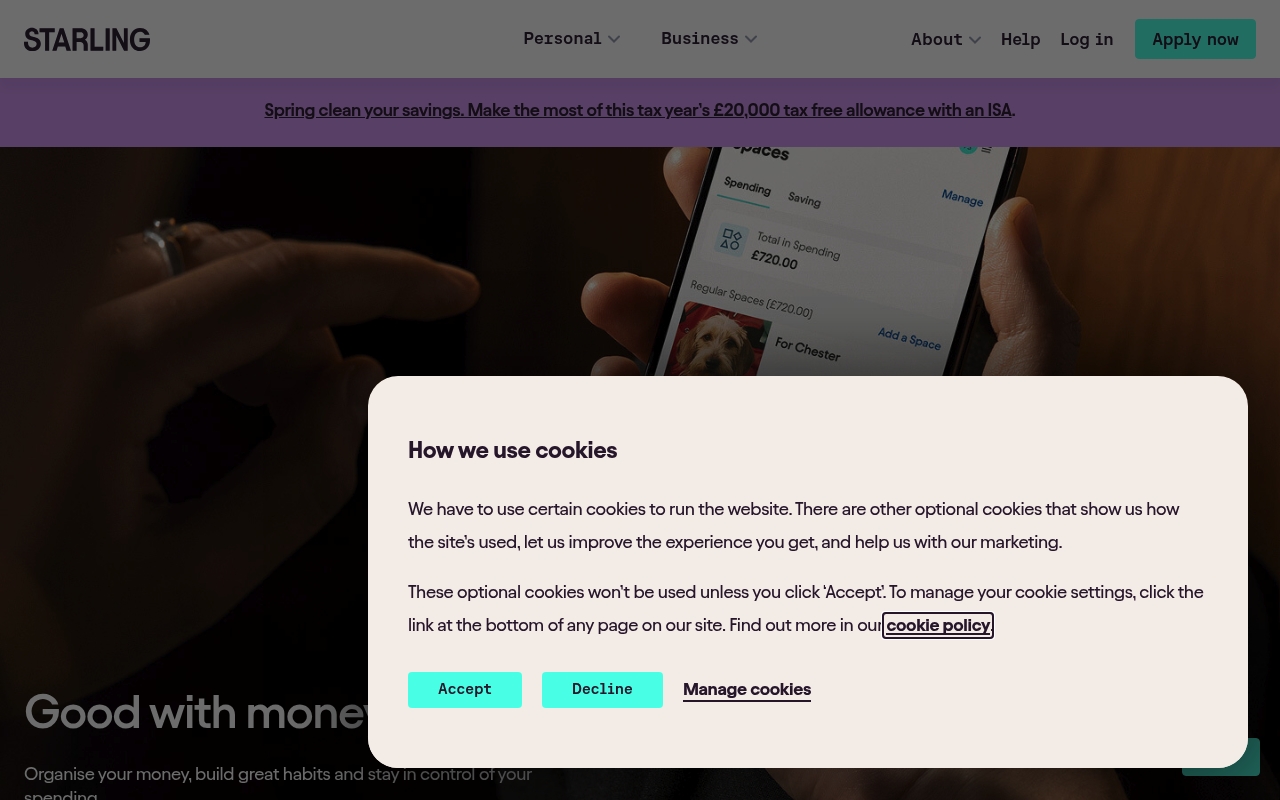
Starling Bank
Digital Banking🇬🇧 United Kingdom
Starling is a UK digital bank offering personal and business current accounts entirely through a mobile app, with no branches. Founded in January 2014 by Anne Boden, a former Allied Irish Banks COO, it secured a full UK banking licence in 2016 — a distinction that matters more than it sounds. Unlike neobanks that operate on a partner institution's licence, Starling is a bank in its own right, regulated by the FCA and PRA, with deposits FSCS-protected.
It also built its own core banking technology rather than licensing someone else's, and that decision turned out to have a second act. Engine by Starling packages that technology as software-as-a-service and sells it to other banks: Salt Bank in Romania and AMP Bank in Australia were the first clients live on the platform, and Starling is now pushing Engine into North America and the Middle East, targeting what CEO Raman Bhatia has called a £100 billion addressable market. For a bank whose retail footprint stops at the UK border, Engine is the international growth story — and the reason Starling turns up in Banking-as-a-Service conversations as often as digital banking ones.
The core bank remains strong but is no longer on a simple upward curve. Starling reported its fifth consecutive profitable year in 2026, with pre-tax profit of roughly £217 million on £887 million of revenue, serving around 3.5 million personal and business customers, and it has been named Which? Banking Brand of the Year three years running. But that result marked a second straight annual decline, after a 26% profit drop the year before, driven by provisions for pandemic-era Bounce Back Loan issues and a regulatory penalty.
That penalty is the part most profiles leave out. In October 2024 the FCA fined Starling £29 million over anti-money laundering and sanctions screening failures, finding the bank had opened more than 54,000 accounts for high-risk customers in breach of an agreed restriction, and that its screening system had been checking customers against only a fraction of the UK sanctions list since 2017. Starling accepted the findings, apologised, and has invested heavily in remediation — but the episode illustrates the defining challenge of the challenger-bank model: compliance infrastructure that struggles to keep pace with customer growth.
Anne Boden stepped down as CEO in 2023 and left the board in 2024. Raman Bhatia, formerly CEO of OVO and head of HSBC's UK and European digital bank, took over in 2024 and has spent his tenure working through the legacy issues while repositioning the company's growth story around Engine. The bank dropped "Bank" from its name in a September 2025 rebrand.
Founded 2014
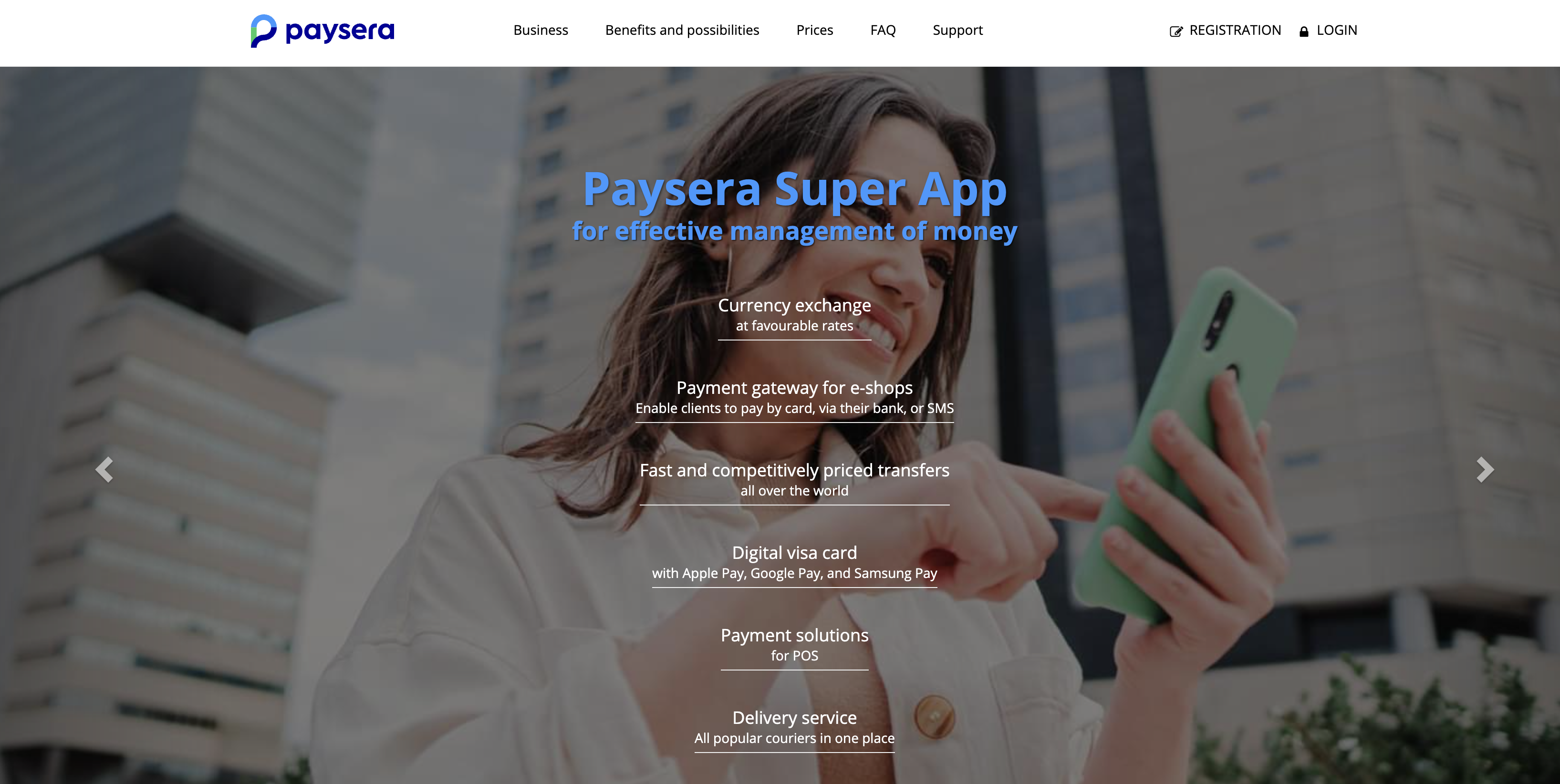
Paysera
Financial Infrastructure🇱🇹 Lithuania
Paysera is a Lithuanian fintech company that has quietly built one of Europe's most comprehensive payment and banking platforms, serving millions of users across the continent. Rather than chasing hype, Paysera focuses on practical utility—combining payment processing, digital accounts, currency exchange, and invoicing tools into a single interface that works across borders and languages. The platform powers everything from freelancers managing invoices to SMEs handling payroll, while also offering consumer-facing services like multi-currency wallets and competitive exchange rates. What sets Paysera apart is its unglamorous pragmatism: it solves real friction in how Europeans move, spend, and manage money across different countries, without the startup theatrics. It's the kind of company that doesn't dominate headlines but has become indispensable infrastructure for a significant portion of the continent's digital economy. In the crowded European fintech landscape, where newer players chase consumer attention and legacy banks chase compliance, Paysera operates in the profitable middle—trusted by businesses and individuals who value reliability and cross-border simplicity over brand prestige.
Founded 2004
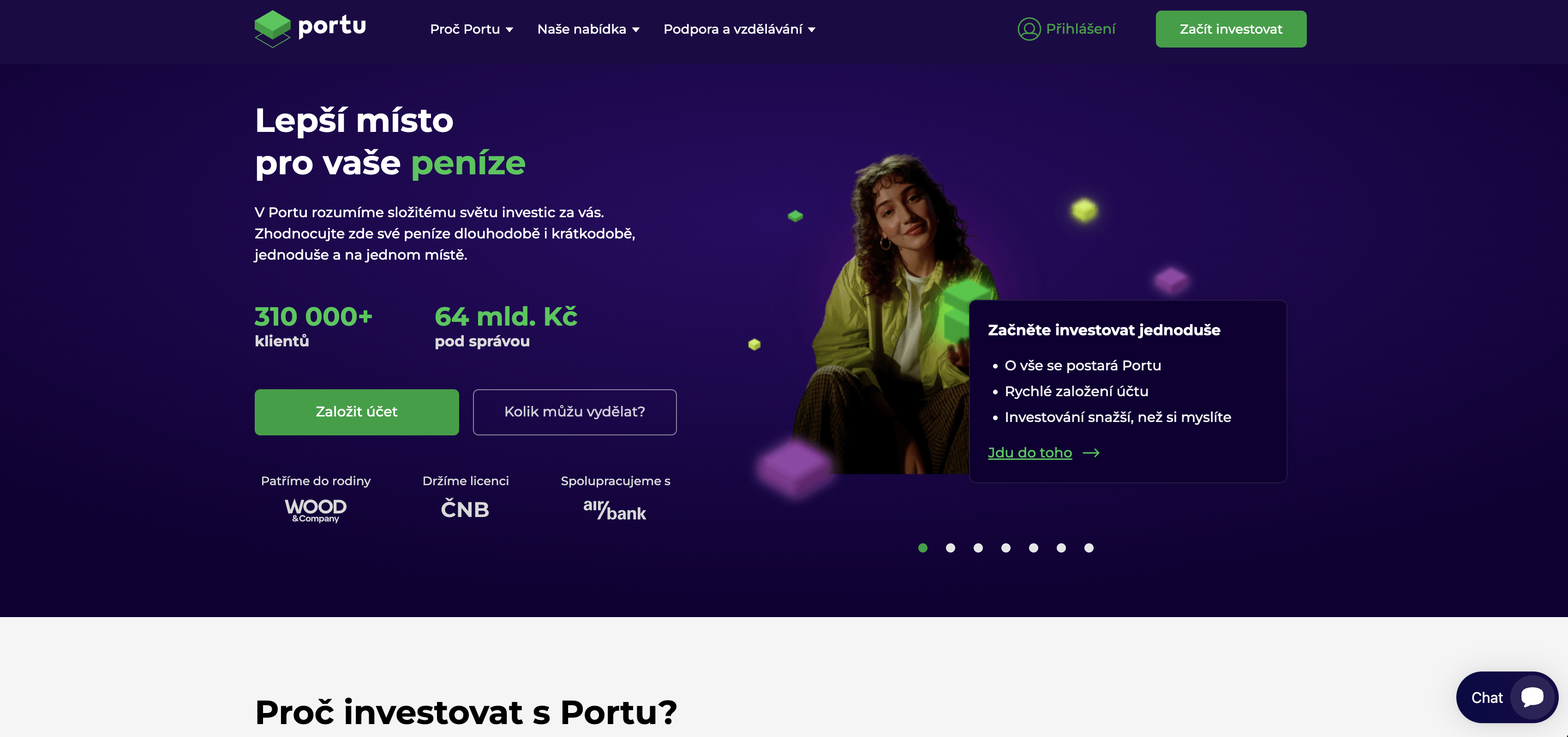
Portu
Wealth🇨🇿 Czech Republic
Czech investment culture has shifted noticeably over the past decade — from a population that primarily held cash savings to one increasingly comfortable with regulated investment products, particularly among the generation that came of age financially after 2010. Portu was founded in Prague in 2018 to serve that emerging investor base with a digital wealth management platform offering diversified ETF portfolios, retirement planning products, and child savings accounts under a single mobile-first interface. The product was deliberately designed for first-time investors — clear language, low minimum investments, transparent fees, and educational content that helps users understand what they are actually buying rather than the opaque advice models of traditional Czech wealth management. Portu is part of the WOOD Group ecosystem, giving it the institutional backing of one of Central Europe's significant investment firms while maintaining the digital-native product experience that its target users expect. In the Czech wealth tech landscape, Portu has built one of the more successful examples of a Central European robo-advisor reaching genuine consumer scale — proof that the broader European thesis about digital wealth management for first-time investors translates well into markets where investment culture is still being formed.
Founded 2018
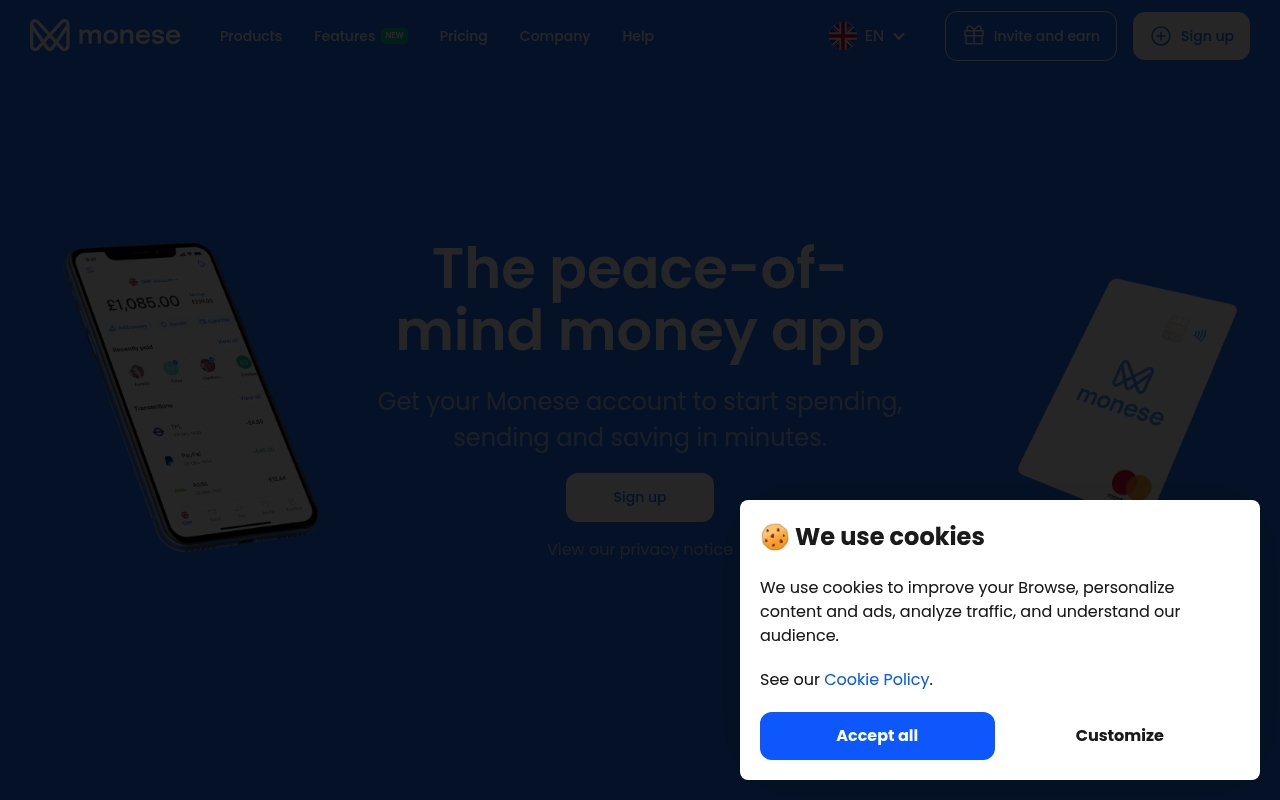
Monese
Payments🇬🇧 United Kingdom
Monese is a mobile-first digital bank built for people outside the traditional banking system. Launched over a decade ago, it's carved out a distinct niche: helping migrants, freelancers, and the underbanked access basic financial services without the gatekeeping of legacy banks. The company operates across Europe with a particular focus on underserved demographics who struggle with conventional account opening or minimum balance requirements.
At its core, Monese offers a straightforward value proposition—a fully digital account accessible via smartphone, with no credit history required and no minimum balances. Customers get a debit card, money transfers, and basic savings features. The company's original mission centered on migrant workers sending money home, and that identity still runs through the product.
What sets Monese apart is its willingness to serve people traditional banks have written off. While challenger banks have become increasingly mainstream, Monese remained focused on financial inclusion rather than chasing the wealthy. The regulatory journey has been steady: it holds a UK banking license and operates under PSD2 across the EU, giving it real credibility as a proper bank, not just a wallet.
Monese represents a quieter type of fintech success—less flashy than neobank unicorns, more durable than trend-chasing startups. It's a blueprint for what happens when you solve a genuine problem for a real, underserved market and stick with it.
Founded 2013
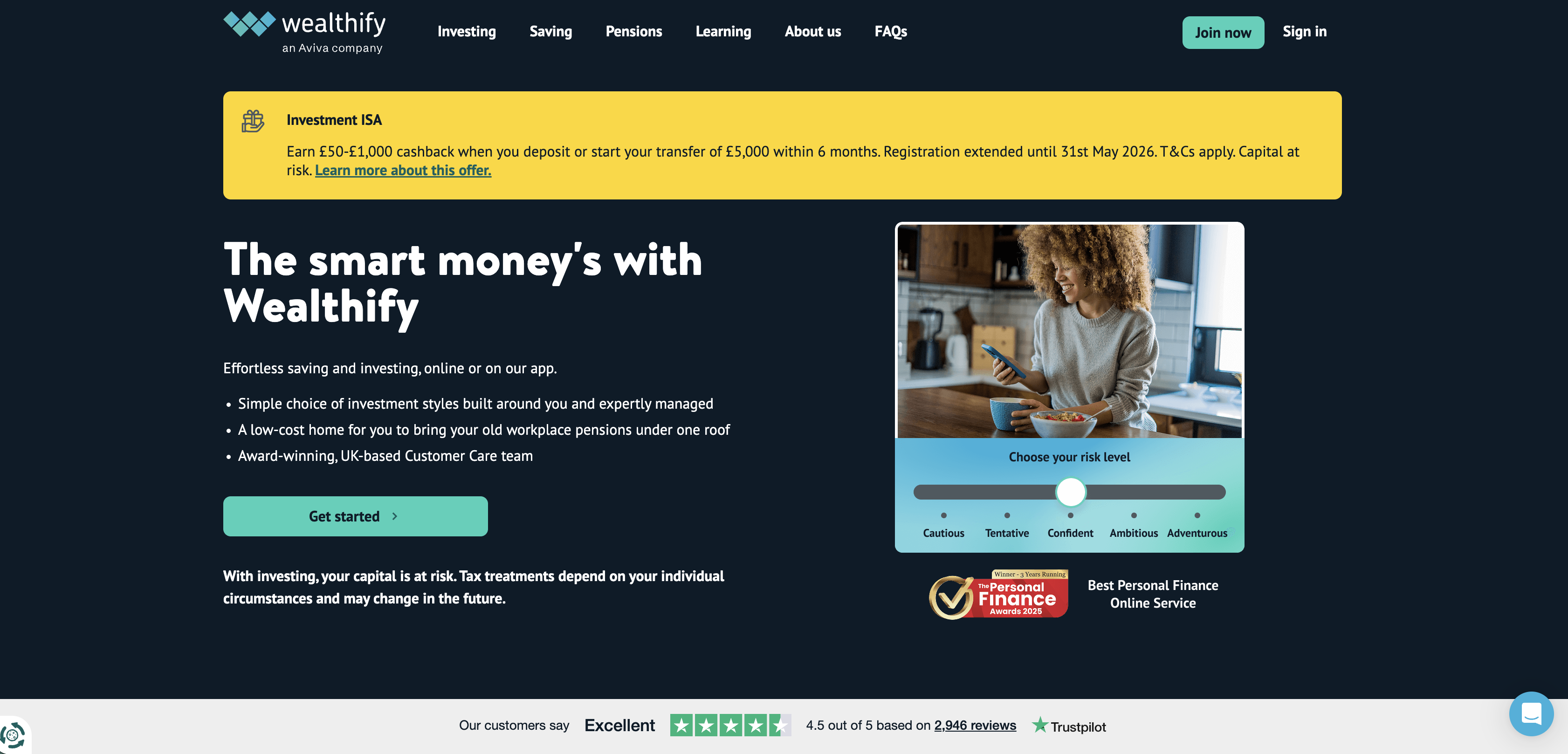
Wealthify
Wealth🇬🇧 United Kingdom
Investing in the UK has historically required either enough money to interest a private bank or enough financial confidence to navigate a self-directed brokerage account — neither of which describes the typical UK saver with a few thousand pounds set aside who would benefit from being invested rather than holding cash in a low-interest savings account. Wealthify was founded in Cardiff in 2015 to serve that customer with a robo-advisory platform that accepted investments from £1, used a short questionnaire to determine risk profile, and managed diversified portfolios automatically. The proposition was deliberately accessible: no minimum investment, transparent fees, no jargon, and an interface designed to make investing feel approachable rather than intimidating. Wealthify was acquired by Aviva in 2017 — one of the UK's largest insurance companies — providing it with both distribution and the institutional credibility that helps newer investment platforms attract conservative savers. The Cardiff-based team has continued operating with significant autonomy as part of Aviva's wealth offering. In the UK robo-advisory landscape — which has been smaller and more fragmented than the US equivalent — Wealthify built a particularly accessible position for first-time investors, and its acquisition by Aviva represents one of the cleaner examples of a robo-advisor finding a strategic home with a major financial services group rather than struggling to build sustainable scale independently.
Founded 2015
FinFrog
Digital Banking🇫🇷 France
FinFrog is a French neobank designed for the Instagram generation—a mobile-first challenger that strips away the pretense of traditional banking and treats financial management like a social experience. Rather than positioning itself as a replacement for your main bank, FinFrog positions as the fun account you actually use, complete with spending analytics that actually make sense and a card that feels like an extension of your lifestyle rather than a financial obligation.
The platform focuses on real-time spending visibility, automated savings mechanisms, and a philosophy that younger Europeans shouldn't have to tolerate clunky interfaces or hidden fees just to manage their money. It's built on the premise that financial literacy and engagement happen through friction-free, mobile-native experiences, not through apps bolted onto legacy systems.
Within the European challenger banking landscape, FinFrog carves out space by leaning heavily into design and user experience clarity rather than attempting to be everything at once. While competitors chase feature bloat, FinFrog has maintained focus on core banking and budgeting fundamentals executed at a level that feels genuinely differentiated.
As part of the broader shift toward mobile-first financial services in continental Europe, FinFrog represents the next wave of neobanks that treat banking as a utility that should be boring, fast, and actually yours—no corporate messaging, no pretense, just money that works.
Founded 2018
Hype
Digital Banking🇮🇹 Italy
Hype is Italy's answer to the mobile banking revolution, a neobank that has spent nearly a decade proving that digital-first doesn't mean stripped-down. Rather than chase global scale with generic features, Hype has built a hyperlocal following by understanding what young Italians actually want from their money: instant transfers, cashback rewards, zero monthly fees, and a sleek app that doesn't feel like it was designed by a committee of compliance officers.
The platform operates as a digital-only current account backed by actual IBAN credentials, so it's not playing at banking—it's the real thing, licensed and regulated. Users get a contactless Mastercard, push-notification alerts for every transaction, and the kind of interface that makes traditional banking feel positively medieval by comparison. Hype's cashback ecosystem is its signature move, offering percentage returns on spending across partner merchants, which transforms the app from a mere account holder into a lifestyle spending companion.
In a market where European neobanks have largely converged around identical feature sets, Hype has chosen to go deep rather than broad, cementing itself as the default neobank for Italian millennials and Gen Z. It's proof that you don't need hundreds of millions in funding or ambitions to be present in every time zone to build something genuinely meaningful. The company represents a particular kind of fintech success: profitable, focused, and beloved by its core audience rather than chased by venture capitalists.
Hype demonstrates that the future of banking in Europe isn't about creating one global super-app, but rather a network of fiercely intelligent regional players, each optimized for the specific financial behaviors and preferences of their home market.
Founded 2014
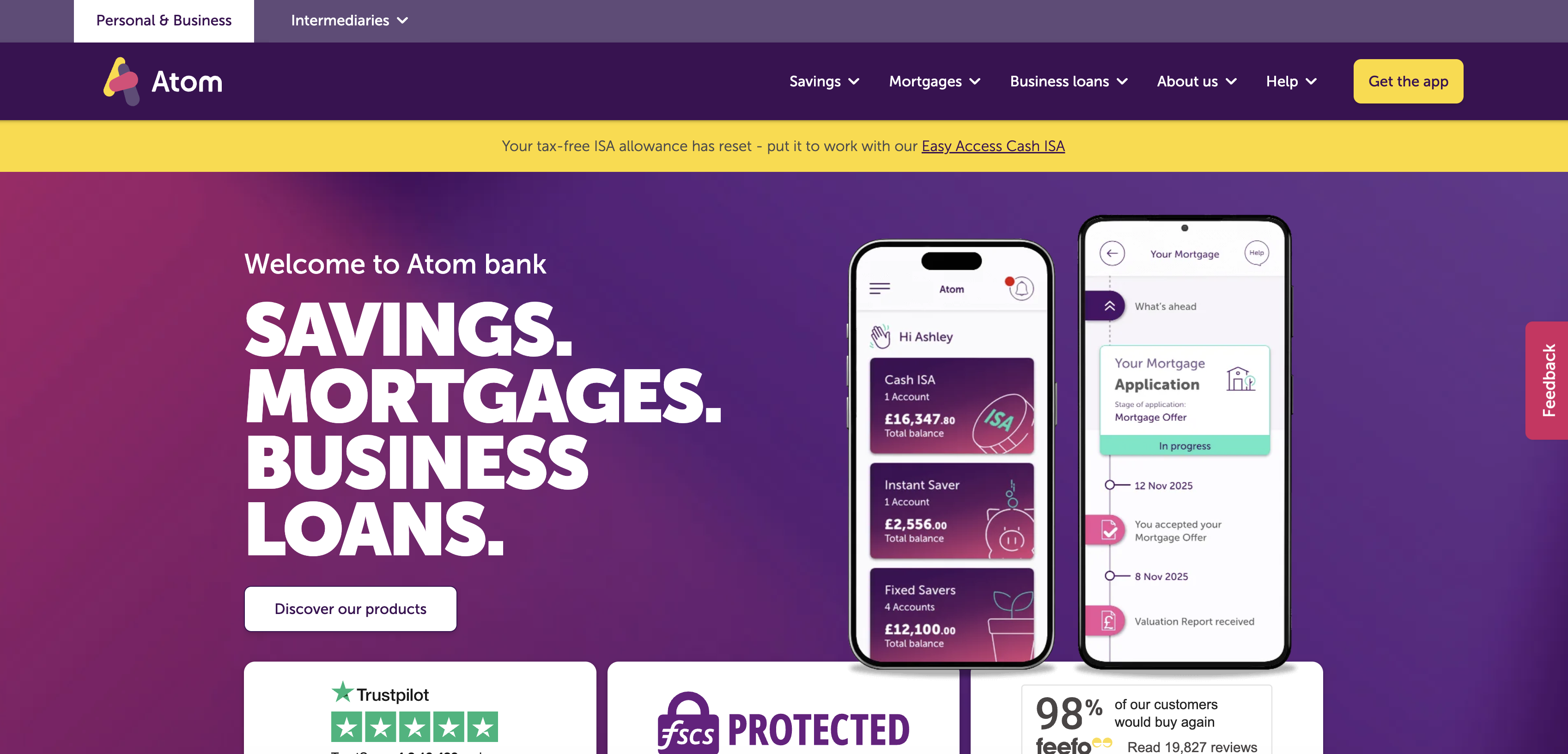
Atom Bank
Digital Banking🇬🇧 United Kingdom
Atom Bank is a British digital bank that strips away the branch infrastructure and legacy systems weighing down traditional lenders. Launched in 2015, it operates as a fully licensed bank—not a fintech wrapper around someone else's platform—meaning it controls its own destiny in a way most digital challengers cannot. The business model is straightforward: mortgages and savings products delivered through mobile and web, with no physical locations to maintain. Atom positions itself as the thinking person's alternative to high street banks, catering to customers who've already abandoned branch visits and prefer rates that reflect efficiency rather than marble foyers. What distinguishes Atom from the crowded challenger space is its focus on residential mortgages rather than chasing the broadest possible customer base.
While most UK digital banks splinter their attention across current accounts, payments, and investing, Atom has doubled down on what it knows—lending and savings—building deeper expertise in those channels. The company serves a particular demographic: digitally native British homebuyers and savers who value transparency and competitive pricing over brand heritage. In the European fintech landscape, Atom represents a different approach than the pan-European payment processors or API-first infrastructure plays; it's a genuine bank competing on execution and simplicity rather than disruption theater. That positioning has proven durable enough to weather a competitive market and regulatory scrutiny that has claimed flashier rivals.
Founded 2015
Kard
Digital Banking🇫🇷 France
Teenagers are the most underserved segment in European retail banking — old enough to spend money, young enough to be ignored by most financial institutions whose products require an adult to co-sign or whose onboarding flows assume a credit history that simply doesn't exist yet. Kard was founded in Paris in 2019 to build a bank account specifically for 10 to 18 year olds, with a Visa card, a parent control interface, and a product designed to be genuinely useful to the generation that has grown up with smartphones but has been handed little more than a prepaid card by the financial system. The parent app allows spending oversight, pocket money automation, and savings goals — turning what could be a restrictive tool into a genuine financial education platform. Kard has grown rapidly in France, building a user base among teenagers and their parents who value the combination of independence and oversight. In the European youth banking segment — where GoHenry, Revolut Junior, and BNP Paribas's own digital youth products compete — Kard's French-first approach and deep understanding of the specific dynamics of teenage financial behaviour give it a local edge that pan-European rollouts often lack.
Founded 2019
ETFmatic
Wealth🇩🇪 Germany
Europe has more languages, more pension regimes, and more tax systems than any other comparable economic bloc — and a Pan-European robo-advisor needs to handle all of that complexity to serve customers who move between countries or hold assets across borders. ETFmatic was founded in London in 2014 with that explicit ambition, building one of the first robo-advisory platforms designed for the European market rather than for a single country. Its platform offered automated portfolio management based on ETFs, with localisation for multiple European markets and the kind of cross-border investment capability that mattered to the European professionals it targeted. ETFmatic was acquired by Aion Bank in 2020, integrating its robo-advisory technology into a broader European banking platform. The acquisition reflects a pattern that has played out repeatedly across European wealth tech — independent robo-advisors building genuinely useful technology and ultimately being absorbed into larger banking or wealth management groups that need digital investment capability. In the European wealth tech landscape, ETFmatic's trajectory illustrates both the difficulty of building sustainable independent robo-advisors at sub-scale and the strategic value that the technology continues to have for the financial institutions that ultimately acquire it.
Founded 2014
Showing 12 of 19 companies. View all in the directory →