← All services
25 European companies
Crypto Wallets Providers in Europe
Crypto wallets store, send, and receive cryptocurrency, with custodial wallets managed by a service provider and non-custodial wallets giving users direct control of their private keys. Hardware wallets store private keys offline for maximum security against hacking. Wallet design is the primary interface through which most people interact with crypto assets.
Typically offered by
European fintech companies offering crypto wallets
Revolut
Wealth🇱🇹 Lithuania
Nik Storonsky was born in Dolgoprudny, Russia, and moved to London in 2006 to work as an equity derivatives trader, first at Lehman Brothers and later at Credit Suisse. Vlad Yatsenko was a software engineer who'd spent years building financial systems. In 2015 they sat down and asked a question that should have occurred to banks years earlier: why does spending money abroad still cost so much?
The answer they built was Revolut — initially a prepaid card with no foreign exchange fees, then a multi-currency account, then a trading platform, then an insurance product, then a business banking offering, then something that's increasingly hard to describe as anything other than a full financial operating system. Revolut didn't unbundle banking so much as rebuild it from scratch for people who found the existing version frustrating and expensive.
The numbers now are genuinely striking for a company that started with two people and a card. Revenue reached £4.5 billion in 2025, up 46% year on year, with pre-tax profit rising 57% to £1.7 billion. The customer base has passed 75 million retail users, plus 767,000 businesses. The company employs more than 12,000 people and operates in more than 40 markets. In July 2026, a secondary share sale valued Revolut at $115 billion — up from $75 billion just eight months earlier, and more than the market capitalisation of Barclays. It remains Europe's most valuable private technology company by a wide margin.
The milestone that mattered most arrived in March 2026: a full UK banking licence from the Prudential Regulation Authority, ending a five-year application process that had become one of the most-watched regulatory sagas in European fintech. The licence means Revolut can now protect UK deposits up to £120,000, offer authorised consumer credit, and compete directly with high street banks for mortgage and lending business. It's the piece that transforms Revolut from a very successful payments app into a regulated bank.
The global licensing map is filling in quickly, with one persistent gap. In July 2026 Revolut became the first global fintech granted a full Australian Deposit-taking Institution licence by APRA — a regulator whose capital requirements have defeated several domestic neobanks — and launched Revolut Bank Australia. In August it secured a French banking licence, a significant step given that France is its largest European market outside the UK and that holding a local licence rather than passporting from Lithuania changes how it can compete there on lending and deposits. It has also opened its first bank outside Europe, in Mexico. The exception is the United States, where a banking charter application filed in 2024 remains pending — in a period when the OCC has rejected applications from both Wise and bunq.
Around the licences, the product keeps widening past banking: private markets access for European retail customers through funds from Apollo, Ares and Partners Group; a partnership with OpenAI bringing ChatGPT Go to premium tiers; eSIM data plans; and an airport lounge network starting in Copenhagen. The original thesis — that banking could be cheaper, faster, and simpler — hasn't changed. What has changed is that Revolut is no longer only selling banking.
Founded 2015
Ledger
Crypto & Blockchain🇫🇷 France
Ledger is the world's most recognizable cryptocurrency hardware wallet manufacturer, though the company has evolved well beyond that single product. Founded in 2014, it pioneered the idea that self-custody of digital assets could be both secure and user-friendly, making crypto accessible to millions who otherwise would have left their holdings on exchanges. The company operates as a full-stack crypto infrastructure provider, offering hardware wallets (Ledger Nano S and X), a software wallet platform, and developer APIs that let third-party services integrate Ledger's security model into their own products.
What sets Ledger apart in the crypto space is its obsessive focus on security through isolation. While competitors often offer software wallets or custodial solutions, Ledger's approach keeps private keys permanently offline, eliminating the attack surface that plagues hot wallets. The company has successfully maintained that zero-breach record for a decade, which matters enormously in an industry built on trust and skepticism. Beyond hardware, Ledger has quietly built a platform ecosystem—Ledger Live (the official app) aggregates portfolio tracking, staking, swaps, and third-party integrations, turning the wallet into something closer to a financial operating system for crypto natives.
Ledger operates at a fascinating intersection of consumer hardware business and B2B infrastructure play. Millions of individual users buy Ledger devices directly, but the company also licenses its technology to banks, exchanges, and other financial institutions looking to offer institutional-grade custody. It's a rare position in fintech: simultaneously a consumer brand (few non-crypto companies sell physical products as recognizable as a Ledger Nano) and an enterprise security provider. That duality has made Ledger one of Europe's most valuable fintech unicorns, though it remains private. In the broader fintech ecosystem, Ledger represents the backbone layer—the infrastructure that makes decentralized finance possible without requiring users to become security experts themselves.
Founded 2014
MoonPay
Embedded Finance🇬🇧 United Kingdom
MoonPay sits at the intersection of crypto and traditional finance, offering on and off-ramps that let people move money between their bank account and crypto wallets with minimal friction. Founded in 2018, the London-based company has quietly become one of Europe's most important infrastructure plays in the emerging crypto economy, handling billions in transactions across more than 150 countries.
What sets MoonPay apart is its unglamorous but essential positioning: it's not trying to be a crypto exchange or a trading platform. Instead, it's the plumbing layer that makes crypto accessible to ordinary people. You buy crypto through MoonPay the same way you'd buy a digital service—seamless, compliant, and fast. The company operates with full EU regulation, holding licenses across multiple jurisdictions while maintaining the kind of compliance rigor that traditional banks expect. MoonPay's API-first approach means startups, wallets, and even traditional fintech apps can embed crypto purchasing directly into their user experience. This white-label capability has attracted partnerships with everyone from music platforms to gaming studios. The company has raised substantial funding and is valued at over a billion dollars, a testament to how critical crypto infrastructure has become. In a market obsessed with trading speculation and yield farming, MoonPay represents something more fundamental: the normalization of crypto as a payment asset class. It's doing for cryptocurrency what Stripe did for online payments—removing the technical and regulatory barriers that kept it confined to specialists.
Founded 2018
Blockchain.com
Financial Infrastructure🇬🇧 United Kingdom
Blockchain.com is one of the oldest and most-visited crypto infrastructure platforms in the world, operating as a bridge between traditional finance and digital assets. The company runs a full-stack crypto ecosystem—a blockchain explorer that millions use to track transactions, a self-custody wallet that puts users in control of their private keys, and a suite of institutional-grade services for serious players. Where most crypto platforms treat blockchain as a trading venue, Blockchain.com treats it as infrastructure. The platform serves retail users seeking transparency and control, developers building on-chain applications, and institutions entering crypto with proper compliance frameworks. The company has maintained a distinctly crypto-native stance while gradually building enterprise services that acknowledge regulatory reality. Its wallet remains one of the most downloaded in the space, offering both simplicity for newcomers and advanced features for power users. Blockchain.com sits at an interesting inflection point in fintech—old enough to have survived multiple market cycles, serious enough to work with regulators, yet still fundamentally aligned with decentralized principles. The platform's role in the broader landscape is foundational: it enables crypto participation across the entire user spectrum, from curious individuals to multinational corporations managing digital asset reserves.
Founded 2011
Tonkeeper
Crypto & Blockchain🇮🇸 Iceland
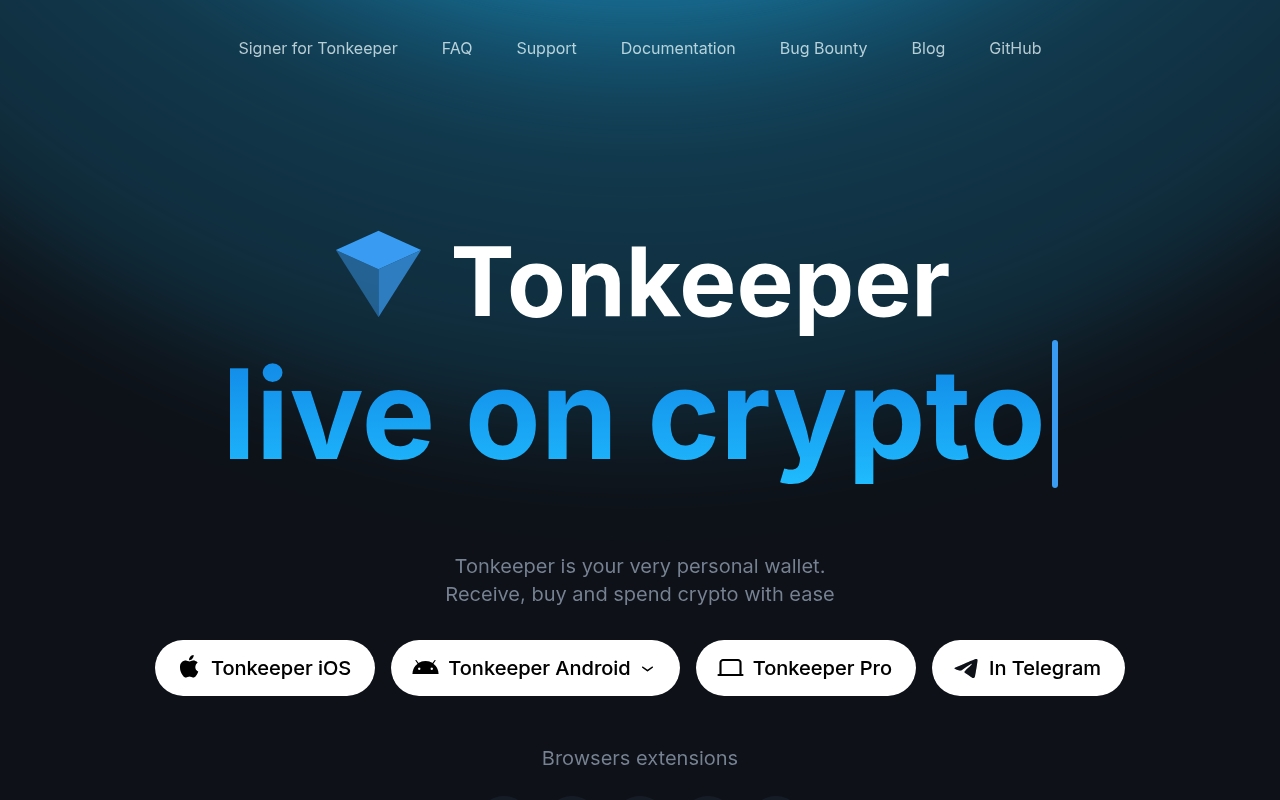
Tonkeeper is a mobile wallet built for the TON blockchain, designed to make crypto accessible to people who've never touched digital assets before. It strips away the complexity that typically comes with self-custody, offering a clean interface for sending, receiving, and storing TON tokens without requiring deep technical knowledge. The app handles key management transparently, so users can focus on their money rather than their keys.
What sets Tonkeeper apart is its unapologetic simplicity. While most wallets load their interfaces with charts, advanced trading features, and portfolio analytics, Tonkeeper keeps things focused and minimal. It's built for people who want a wallet that works, not a platform that tries to be everything. The team clearly understands that friction is the enemy of adoption.
Tonkeeper sits at the intersection of consumer-friendly design and genuine decentralization. It's not a custodial service, so users retain full control of their assets, but the UX suggests that security and usability don't have to be enemies. As the TON ecosystem grows beyond crypto enthusiasts into mainstream use, Tonkeeper's approachable design makes it the natural entry point for newcomers. In a space often dominated by overwrought interfaces and jargon, it feels almost refreshingly straightforward.
Founded 2021
Vivid Money
Wealth🇩🇪 Germany
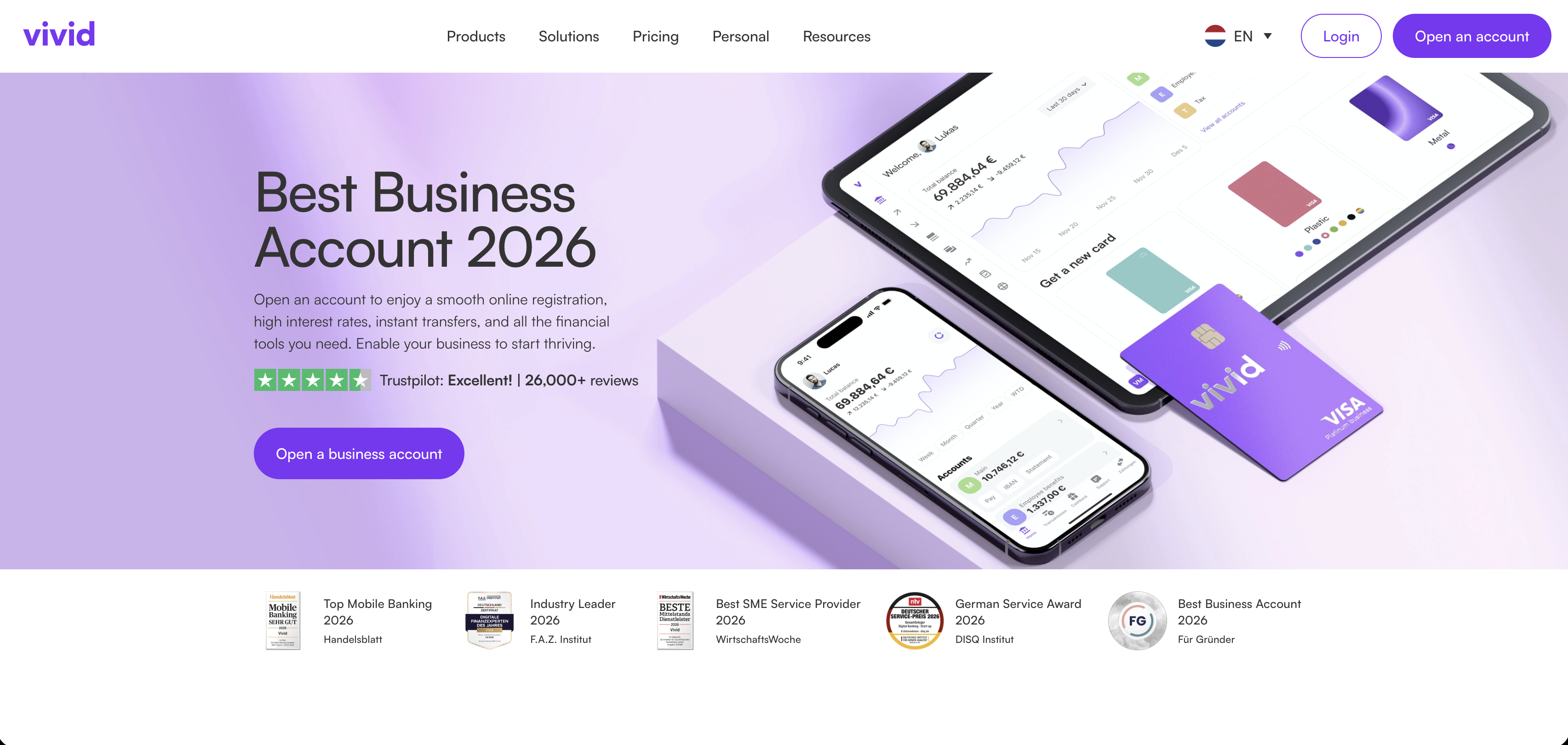
Vivid Money is a Berlin-based fintech that collapsed the traditional distinction between banking, investing, and spending into a single mobile-first experience. Launched in 2020, it positioned itself as the European answer to all-in-one financial apps—a place where you could manage your checking account, invest in fractional shares and crypto, and pay with virtual cards, all without leaving the app.
The platform built its early reputation on speed and accessibility. Account opening took minutes rather than days. The investment side felt more like TradingView-for-consumers than stuffy wealth management. Virtual card creation was instantaneous, and the app's design sensibility leaned toward the minimalist and modern rather than corporate banking's beige aesthetic.
Vivid positioned itself against traditional banks' glacial pace and regulatory burden, while also differentiating from pure-play neobanks that didn't offer investing. It moved quickly to add crypto features when the market demanded them, and secured backing from tier-one investors who believed in the all-in-one thesis.
However, the company faced headwinds from regulatory tightening around crypto and the broader fintech funding winter. In late 2024, reports emerged of operational restructuring and potential insolvency, marking a sobering turn for what had been one of Europe's most closely watched fintech challengers. Vivid's arc—from breakthrough disruptor to distressed turnaround—reflects the volatility of the European fintech landscape and the challenge of building a diversified financial platform without institutional heritage or captive customer bases.
Founded 2020
CEX.IO
Crypto & Blockchain🇬🇧 United Kingdom
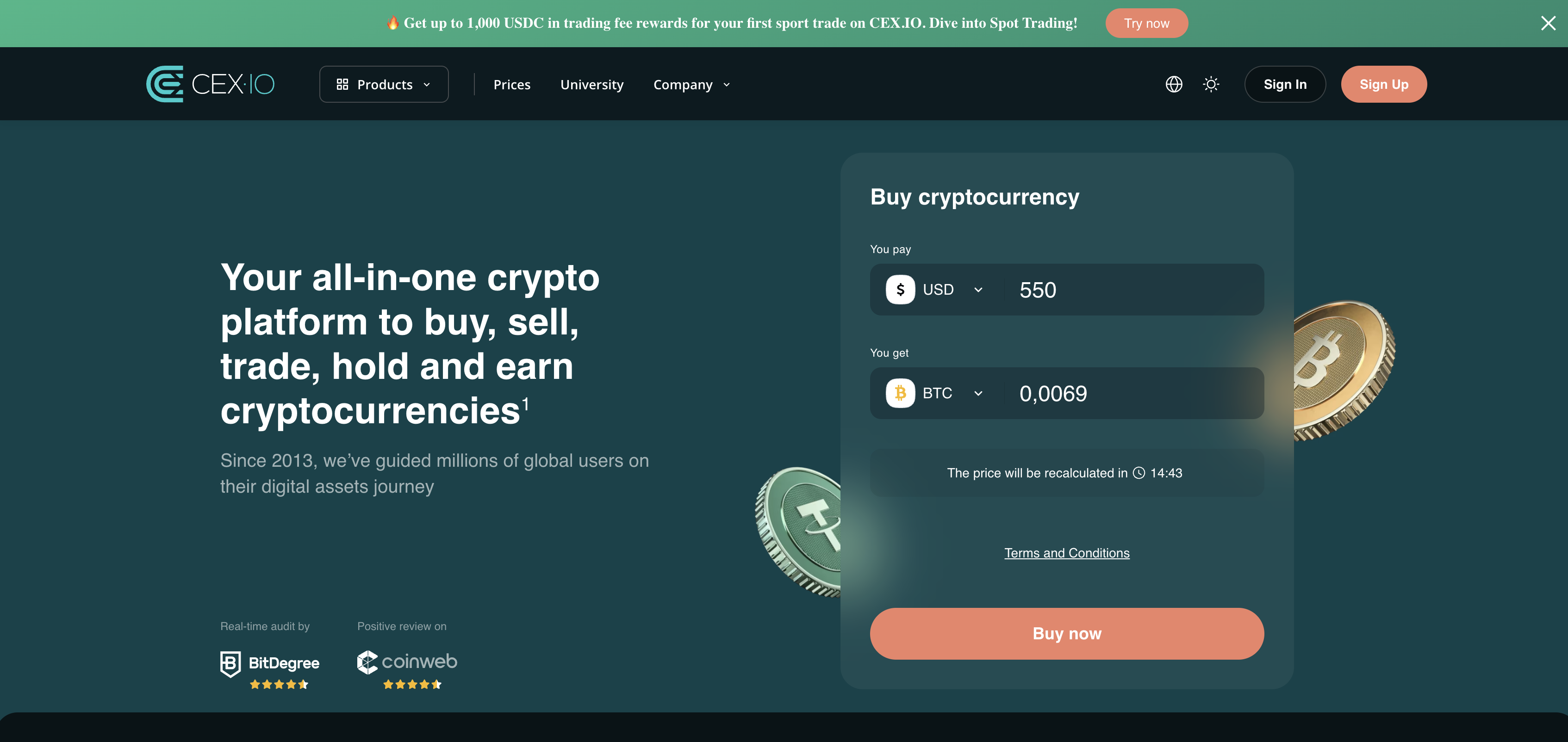
CEX.IO is a cryptocurrency exchange that's been operating since 2013, making it one of Europe's older players in the digital asset space. The platform lets users buy, sell, and trade Bitcoin, Ethereum, and a growing roster of altcoins through a web interface and mobile app. It's positioned itself as a regulated exchange with fiat on-ramps, meaning you can fund your account with euros or other currencies through bank transfers and cards, then move into crypto—a crucial bridge that separates real exchanges from purely peer-to-peer platforms. The company operates across multiple jurisdictions and maintains compliance frameworks that matter to retail traders in Europe who want institutional-grade infrastructure without the complexity of decentralized exchanges. CEX.IO doesn't reinvent fintech architecture; instead, it focuses on being reliable, regulated, and accessible for mainstream users discovering cryptocurrency. In the fragmented European crypto landscape, where regulation remains patchy and trust is everything, CEX.IO represents the pragmatic middle ground between full decentralization and traditional finance's gatekeeping.
Founded 2013
YouHodler
Crypto & Blockchain🇨🇭 Switzerland
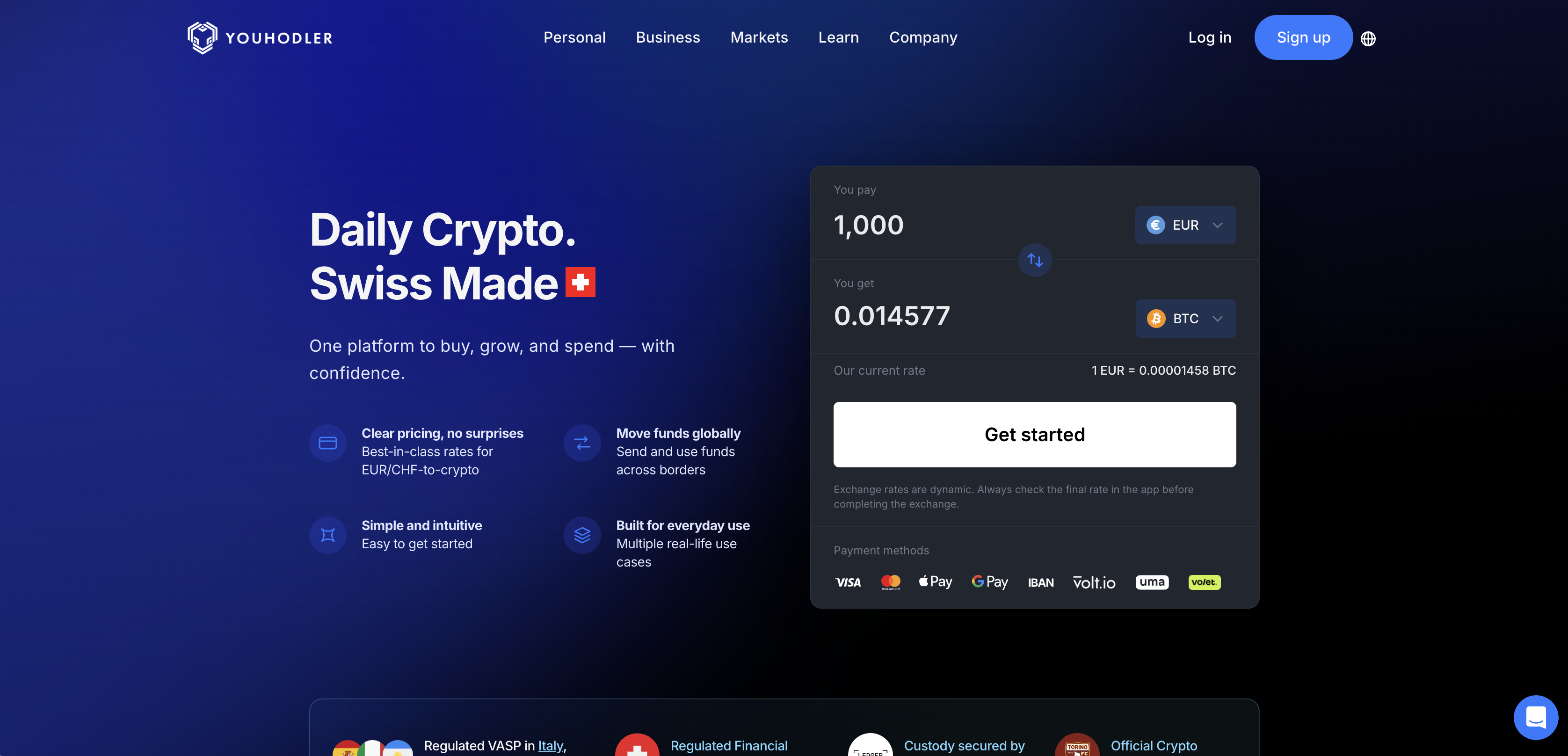
Swiss-regulated crypto financial products combine the technical innovation of crypto lending with the regulatory standing of Swiss financial services regulation — a combination that has appealed to international users who value regulatory clarity over the more permissive frameworks of some other crypto jurisdictions. YouHodler was founded in 2017 with operations in Switzerland and offers crypto-backed loans, savings products, and trading services to consumers across multiple international markets. Its model gives users the ability to borrow against cryptocurrency holdings, earn yield on deposited crypto, and trade between cryptocurrencies and stablecoins through a unified platform. The Swiss base has been operationally significant — Swiss financial regulation under FINMA provides clearer standing than the unregulated environment that defined early crypto lending, while still allowing the product range that crypto users seek. YouHodler has navigated the same crypto market dynamics that affected the broader category through the 2022-2023 period, including regulatory scrutiny and the broader market correction that reshaped crypto lending. In the European crypto financial services landscape, YouHodler occupies a position that combines crypto-native product capability with European regulatory infrastructure — a positioning that has become more rather than less relevant as MiCA implementation progresses and as the regulatory expectations for crypto financial services across Europe converge.
Founded 2017
OKX
Crypto & Blockchain🇲🇹 Malta
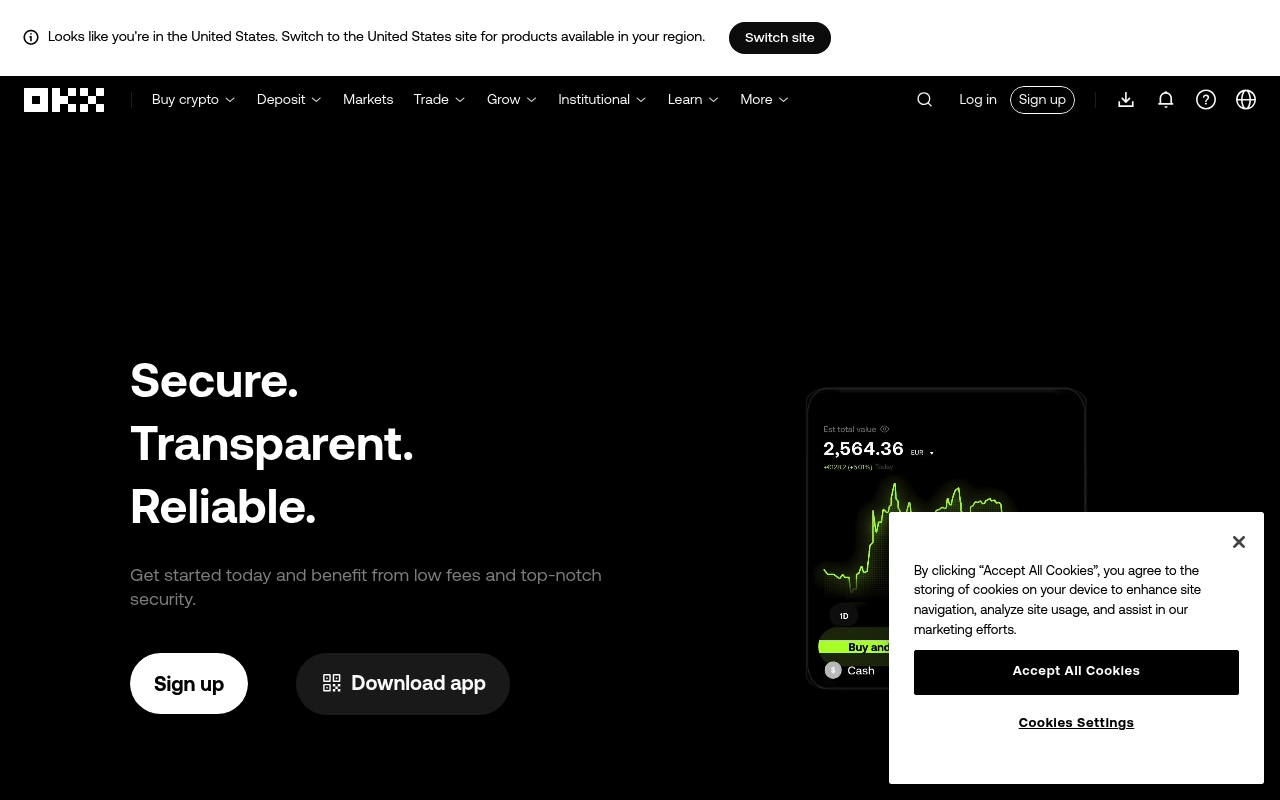
OKX is a cryptocurrency exchange and Web3 infrastructure platform that has become one of Europe's most active crypto trading destinations. The platform combines spot and derivatives trading with a growing suite of Web3 tools, positioning itself as more than just an exchange—it's a gateway to decentralized finance and digital assets for European traders and institutions alike.
The exchange operates with institutional-grade infrastructure, offering sophisticated order types, leverage trading, and options markets that rival traditional capital markets platforms. What sets OKX apart is its commitment to European regulatory compliance and its investment in Web3 ecosystem tools, including an integrated wallet and support for blockchain exploration across multiple networks.
While most traditional exchanges struggle to navigate crypto's regulatory complexity, OKX has built operational depth in multiple European jurisdictions. It serves everyone from retail traders seeking exposure to digital assets to institutions building Web3 strategies, making it a central hub in Europe's growing crypto infrastructure layer. In the broader fintech landscape, OKX represents the convergence of trading sophistication and Web3 accessibility—a platform built for the next generation of financial infrastructure rather than merely replicating legacy models.
Founded 2017
Bitwala
Digital Banking🇩🇪 Germany
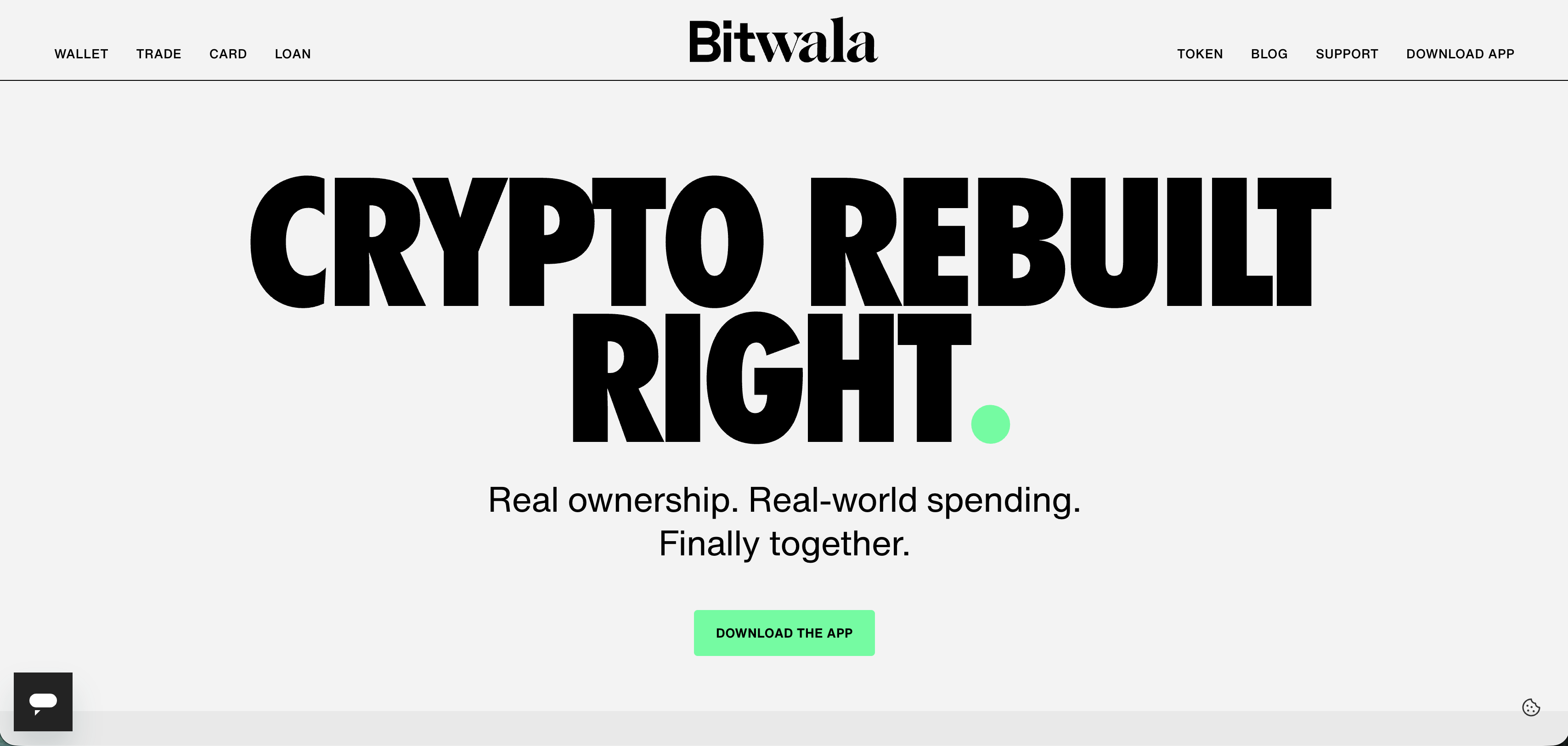
Banking and Bitcoin coexisting in the same account felt like a contradiction in terms for most of the 2010s. Banks were systematically closing accounts connected to crypto activity while the crypto industry was building parallel financial infrastructure that deliberately avoided the banking system. Bitwala was founded in Berlin in 2015 to bridge that gap — building a bank account with integrated Bitcoin functionality, letting users hold euros and Bitcoin in the same place and convert between them instantly. The product was genuinely novel: a German IBAN, a Visa debit card, and a Bitcoin wallet under one roof, with the regulatory standing of a licensed German financial institution. Bitwala rebranded to Nuri in 2021, reflecting a broader evolution from a Bitcoin-specific product toward a more comprehensive crypto banking platform. The Nuri brand subsequently entered insolvency in 2022, a casualty of the crypto market downturn and the difficult economics of building a consumer banking product. The Bitwala/Nuri story is one of the more instructive in European crypto banking — a genuinely innovative product that proved the market wanted crypto-integrated banking accounts, but that couldn't build a sustainable business model before the market turned.
Founded 2015
Iconomi
Wealth🇸🇮 Slovenia
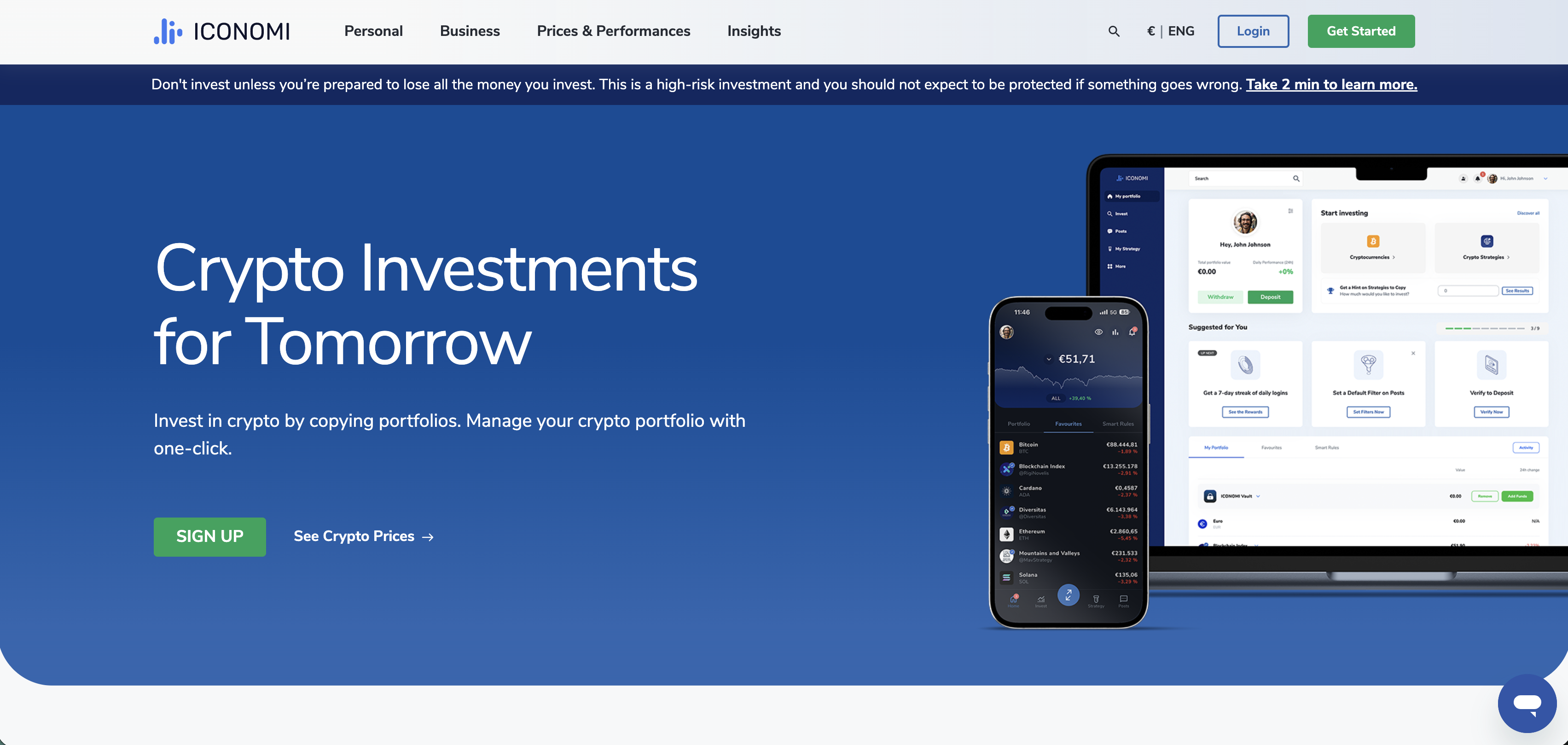
Crypto portfolio management for retail investors has a complexity problem. The range of assets is vast, the volatility is extreme, and the research burden of building a diversified digital asset portfolio from scratch is beyond what most retail investors are willing or able to undertake. Iconomi was founded in Ljubljana in 2016 to solve that problem with a crypto fund management platform — letting experienced crypto investors create and manage public strategies that others could copy, earning a management fee in return. The model anticipated the copy-trading dynamic that has become widespread in retail investing, applied specifically to digital assets. Iconomi's platform lets retail investors browse strategies managed by experienced crypto traders, allocate capital to the ones that match their risk appetite, and have their portfolio managed automatically. In the Slovenian and broader European crypto market, Iconomi has built a niche as a platform for the serious retail investor who wants crypto exposure without the active management burden — a segment that has grown substantially as crypto has moved from speculative curiosity to legitimate asset class in the portfolios of European retail investors.
Founded 2016
CoinGate
Payments🇱🇹 Lithuania
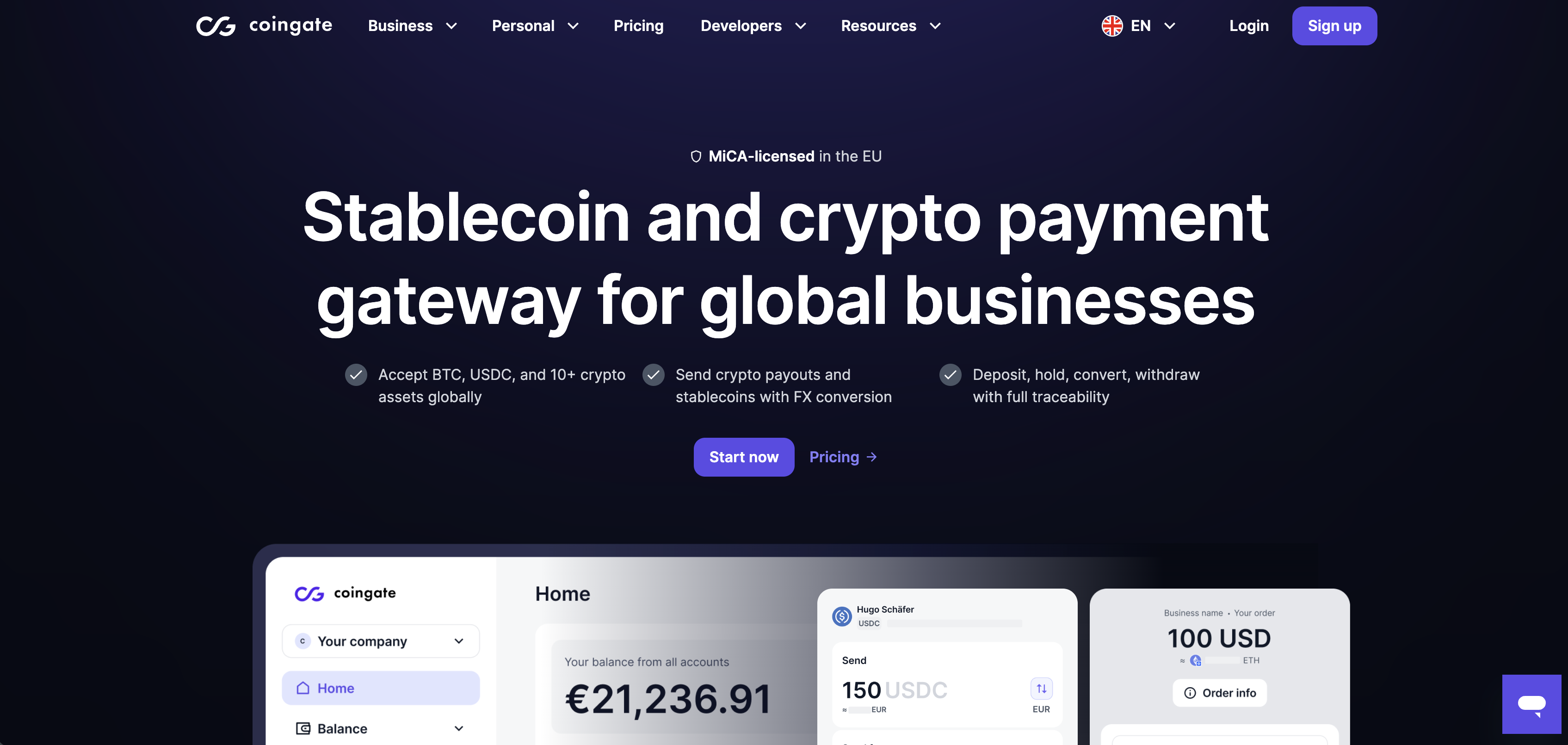
Accepting cryptocurrency payments as a merchant has always been technically possible and operationally difficult. The volatility of crypto assets, the complexity of wallets, and the absence of chargebacks — seen as a feature by some, a problem by merchants — made crypto payment acceptance a niche choice for most businesses. CoinGate was founded in Vilnius in 2014 to make crypto payment acceptance as straightforward as card payment acceptance, offering a payment gateway that handles the technical and commercial complexity of crypto transactions and settles merchants in euros. Its platform supports over 70 cryptocurrencies, integrates with major e-commerce platforms, and provides the invoicing, reporting, and settlement infrastructure that businesses need to treat crypto payments as a normal part of their payment stack. CoinGate has processed hundreds of millions in transactions and built a merchant network across Europe and beyond. In the Lithuanian fintech ecosystem — which has become disproportionately important in European crypto regulation thanks to the Bank of Lithuania's pragmatic licensing approach — CoinGate represents the merchant-facing end of the crypto payment stack, building the commercial infrastructure that turns cryptocurrency from a speculative asset into a practical payment method.
Founded 2014
Showing 12 of 25 companies. View all in the directory →