DatabaseServicesArticlesCountriesGlossaryNewsletterRequest listing
← All countries
🇧🇬

Fintech in Bulgaria

7 companies·View all in directory →
About the Bulgaria fintech ecosystem

Bulgaria has developed a growing technology sector centred on Sofia, with a significant pool of software engineering talent that has attracted both international technology companies establishing development centres and local technology startups. The Bulgarian fintech ecosystem is nascent by Western European standards but growing, with companies operating across payments, lending, and financial infrastructure.

Bulgaria's regulatory environment is managed by the Bulgarian National Bank and the Financial Supervision Commission, operating within EU frameworks. The country is not yet a eurozone member — it uses the lev, which is pegged to the euro — but has been working toward euro adoption. Eurozone accession would simplify the payment infrastructure environment for Bulgarian fintechs significantly.

Sofia's combination of low operational costs, strong technical education at Sofia University and the Technical University, and growing international business connectivity makes it increasingly attractive for fintech companies at early stages of development. Credissimo, a Bulgarian consumer lending platform, has expanded beyond its domestic market, representing the kind of regional expansion that Bulgarian fintechs are beginning to pursue.

Fintech companies based in Bulgaria
Payhawk
Payhawk
Embedded Finance
Most companies still manage corporate spending the way they did a decade ago—expense reports, manual reconciliation, scattered receipts. Payhawk has built something radically simpler: a unified spending platform that gives finance teams complete visibility into every company transaction, from the moment it's authorized to the moment it's reconciled. The platform combines physical and virtual cards, automated expense management, and real-time spend controls in a single dashboard. What sets Payhawk apart in the crowded corporate finance space is its refusal to compromise on user experience. Employees aren't fighting clunky interfaces or wrestling with legacy systems. Instead, they get an intuitive mobile app that feels like personal fintech, while finance teams gain the analytical firepower to actually manage policy, catch fraud, and optimize spending patterns. The company treats visibility not as a nice-to-have but as the foundation of control. In Europe's SME and mid-market space, where most alternatives still rely on outdated card programs or disconnected software suites, Payhawk's integration of issuance, spend management, and analytics represents a meaningful shift. The company has quietly built something that enterprises have wanted for years: a spending platform that doesn't require compromise between employee experience and financial governance. For finance leaders tired of spreadsheets and reactive reporting, it's become the natural choice.
Founded 2019
Paynetics
Paynetics
Embedded Finance
Paynetics operates at the intersection of payment infrastructure and embedded finance, building the plumbing that lets fintechs and traditional companies accept, process, and manage payments without wrestling with legacy banking systems. The Bulgarian-founded company has positioned itself as a critical middleware layer—connecting merchants, fintech platforms, and financial institutions through a unified API. Rather than forcing clients into proprietary ecosystems, Paynetics emphasizes flexibility and interoperability, allowing partners to plug into multiple acquiring networks, payment gateways, and settlement rails from a single integration point. This approach has resonated particularly with regional players across Europe seeking alternatives to Western-dominated payment processors. The company's strength lies not in flashy consumer-facing products but in unglamorous, essential infrastructure: payment orchestration that routes transactions intelligently, card issuing APIs that power embedded finance plays, and acquiring services that work across markets where local nuance matters. For fintech founders building in Central and Eastern Europe or scaling across fragmented European payment corridors, Paynetics removes the friction of navigating dozens of local processors and compliance regimes. Its expansion into treasury and FX services suggests ambitions beyond pure payments—positioning itself as a platform for companies managing cross-border complexity. In an industry dominated by American giants and large European incumbents, Paynetics represents a rare example of a challenger emerging from the region's underestimated fintech ecosystem, proving that critical infrastructure doesn't always require Silicon Valley pedigree.
Founded 2013
myPOS
myPOS
Financial Infrastructure
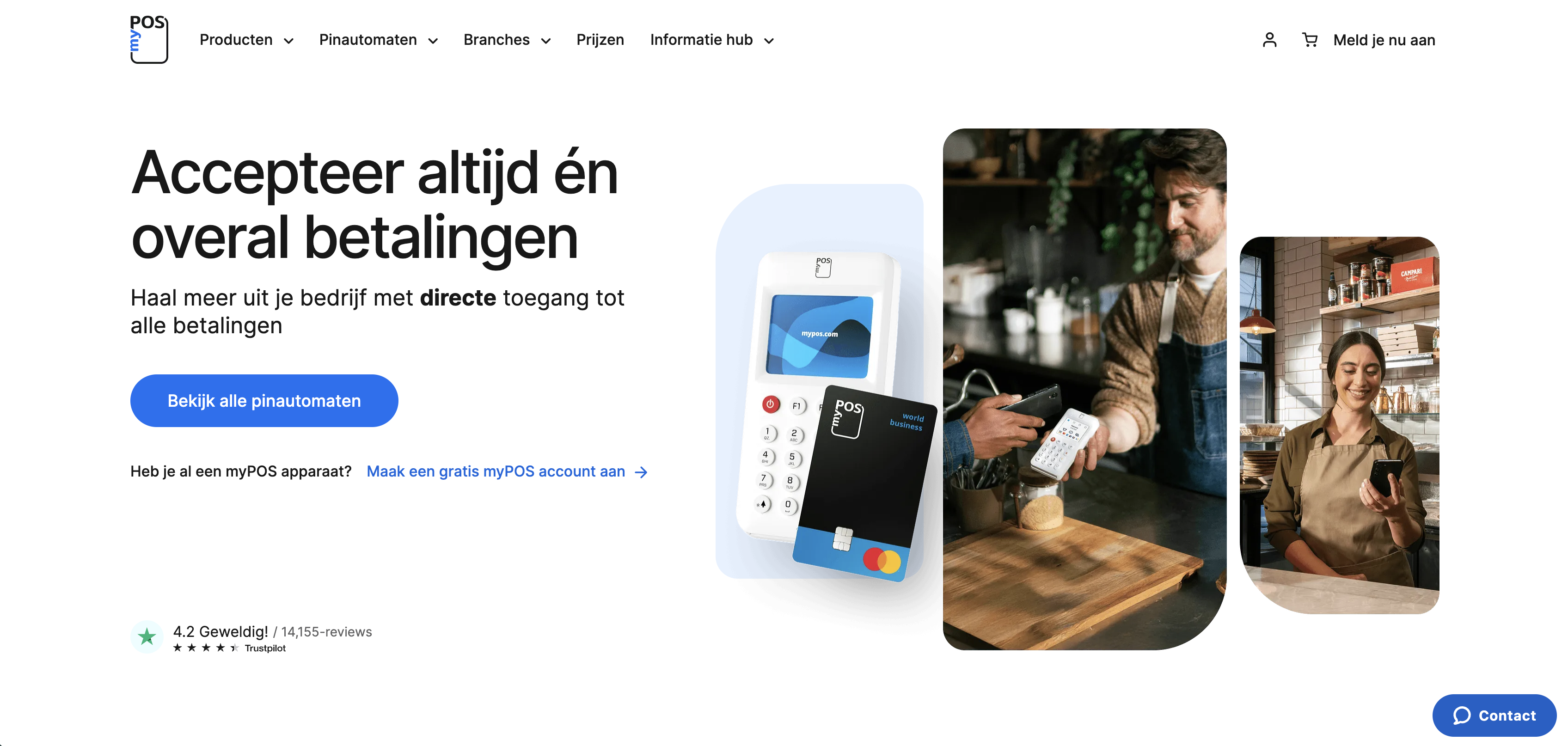
myPOS is a fintech company that sits at the intersection of payments and merchant services, focused on modernizing how small businesses and entrepreneurs handle transactions across Europe. Rather than forcing merchants into legacy payment processing workflows, myPOS bundles hardware, software, and financial services into a seamless ecosystem that feels native to how modern retailers actually operate. The platform combines point-of-sale systems, payment processing, and merchant acquiring into a single integrated offering, with particular strength in high-risk verticals where traditional acquirers have historically been hesitant. What sets myPOS apart in the European market is its commitment to serving the long tail of merchants—from food vendors and boutiques to service providers—without the bureaucratic friction that characterizes incumbent payment processors. The company has built its infrastructure to support cross-border operations across multiple European markets while maintaining competitive pricing that doesn't penalize small transaction volumes. In the broader fintech landscape, myPOS exemplifies the shift toward vertical integration in payments, where success increasingly depends on controlling the full merchant experience rather than being relegated to a single layer of the payment stack.
Founded 2012
Klear Lending
Klear Lending
RegTech
Klear Lending is a London-based fintech that automates credit decisions for alternative lenders and financial institutions across Europe. The company has built a machine learning platform that cuts through the complexity of underwriting—replacing outdated credit scoring with algorithmic assessment that learns from lender-specific data and performance patterns. Rather than forcing institutions into rigid scoring boxes, Klear's technology adapts to how different lenders actually price risk, meaning a borrower rejected by one algorithm might be approved by another using the same underlying data. The platform processes loan applications in seconds, reducing the manual review work that traditionally chokes alternative lending operations. Its clients range from peer-to-peer platforms and buy-now-pay-later startups to traditional bank-owned lending divisions looking to modernize their decision engines. Klear sits at the intersection of infrastructure and risk—not quite a lender itself, but the invisible scoring layer that powers decisions across Europe's fragmented credit market. In a landscape where underwriting talent is expensive and credit models age quickly, Klear's bet is that dynamic, data-driven decisioning will eventually become table stakes for any lender serious about competitive underwriting. The company has steadily built a niche serving institutions that can't build these capabilities themselves but can't afford to leave money on the table with overly conservative approval rates either.
Founded 2016
Credissimo
Credissimo
Lending
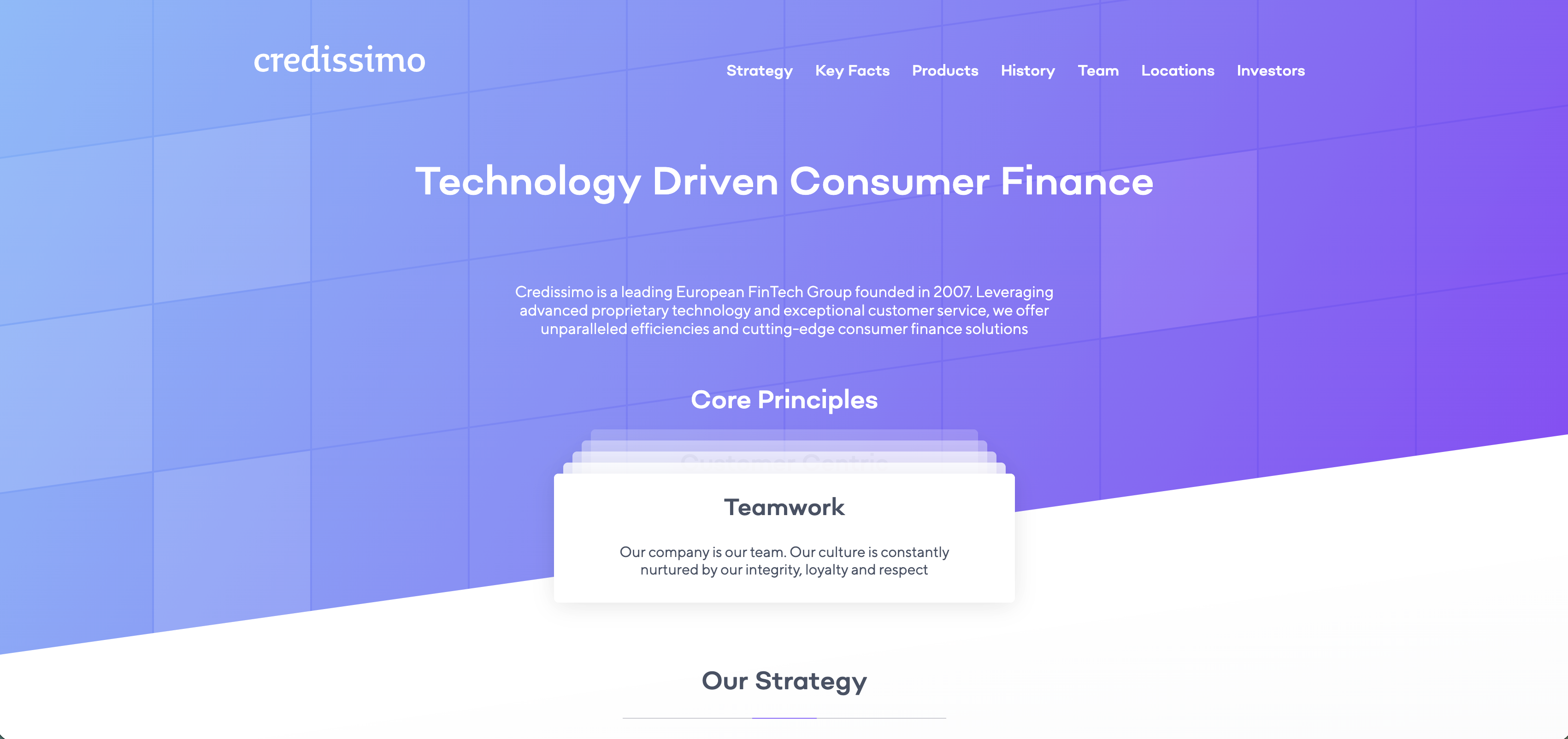
Bulgaria's consumer credit market evolved through a different trajectory than Western European countries, with the digital alternatives developing alongside rather than after the traditional banking sector. Credissimo was founded in Sofia in 2007 as one of the country's first digital consumer lenders, providing short-term and instalment loans through online channels at a time when most Bulgarian consumers were still receiving credit through bank branches and informal networks. The company has expanded across multiple European markets and built a substantial digital lending operation, with technology infrastructure that supports underwriting, servicing, and customer management across borders. Credissimo operates in a regulatory environment that has tightened significantly over the past decade — the Bulgarian and EU consumer credit frameworks have evolved to set clearer standards for short-term lending, and operators that survived the regulatory consolidation are those that adapted their products to the new requirements. In the broader European consumer credit landscape, Credissimo represents the kind of operator that has been quietly building scale across Central and Eastern European markets while the venture-backed fintechs of Western Europe have captured the headlines — a different model with different economics, but one that has demonstrated genuine durability across nearly two decades of operation.
Founded 2007
CashCredit
CashCredit
Lending
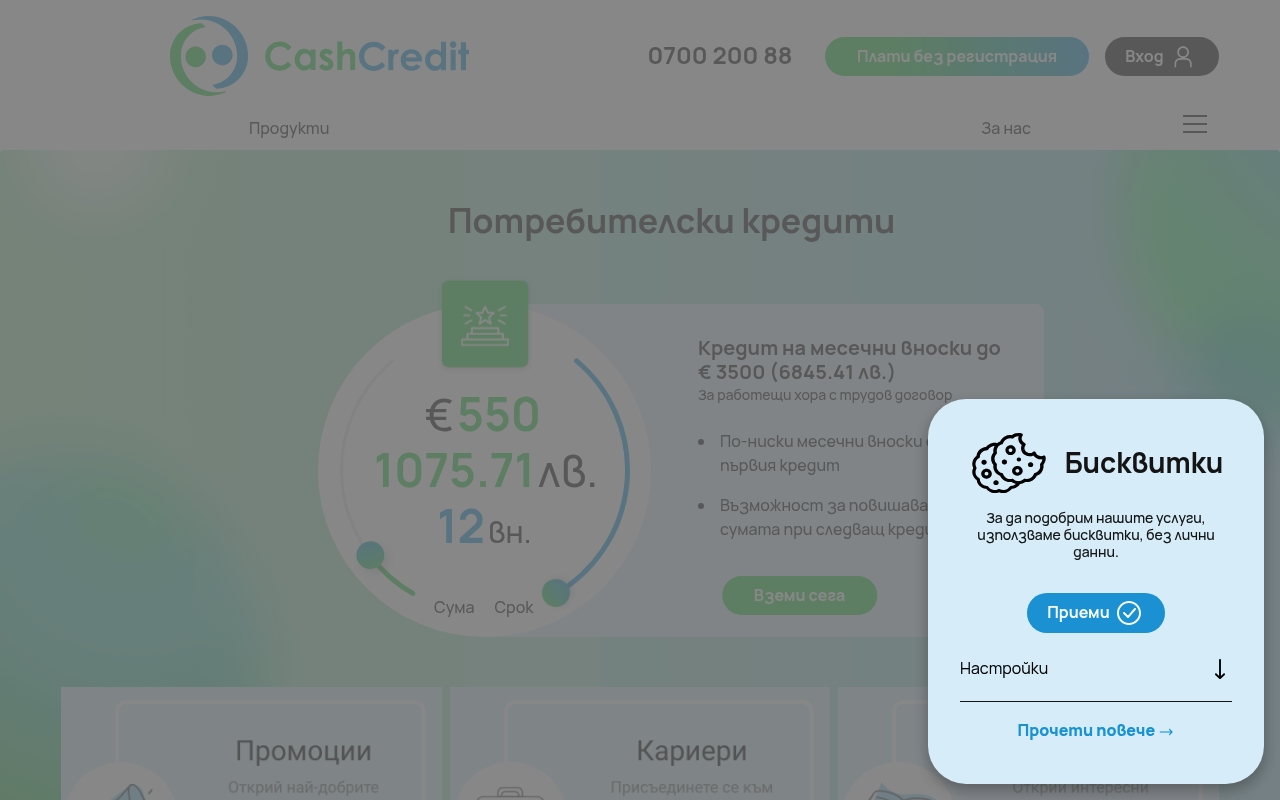
CashCredit operates in Bulgaria's consumer lending space, offering quick cash loans through a digital interface designed for speed and accessibility. The platform targets individuals seeking fast credit decisions without the bureaucratic friction of traditional banking. In a market where many borrowers still face lengthy application processes, CashCredit compresses the timeline through online application and rapid underwriting. The company positions itself as a straightforward alternative for personal borrowing, emphasizing the simplicity of its loan products. As part of Bulgaria's emerging fintech lending ecosystem, CashCredit represents the shift toward digital-first credit provision in Central and Eastern Europe, where traditional banks remain slow to modernize their consumer lending operations. The company's core offering sits at the intersection of accessibility and speed—two factors that increasingly define competitive advantage in the consumer lending space across the region.
Nexo
Nexo
Crypto & Blockchain
Crypto-backed lending — using cryptocurrency as collateral for loans denominated in fiat currency or stablecoins — represented one of the most ambitious commercial applications of digital assets during the crypto boom of the 2017-2021 period. Nexo was founded in Sofia in 2018 to build a platform offering exactly that, combining instant crypto-backed credit lines with savings products that paid yield on deposited cryptocurrency. The proposition appealed to crypto holders who wanted liquidity without selling their digital assets and to investors looking for returns on crypto holdings that exceeded what traditional savings products offered. Nexo grew rapidly during the bull market years, building a substantial user base across multiple jurisdictions and accumulating significant assets under management. The crypto market correction of 2022 and the broader collapse of crypto lending platforms including Celsius and BlockFi created a difficult operating environment for the entire category, with regulatory scrutiny intensifying across multiple jurisdictions. Nexo navigated that period with continuing operations and has continued evolving its product range as the regulatory environment under MiCA and similar frameworks has clarified. In the broader European crypto landscape, Nexo represents the lending and yield-product category that is being substantially reshaped by post-2022 market conditions and regulatory developments.
Founded 2018