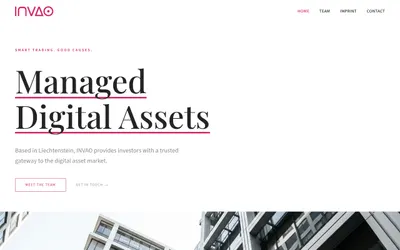
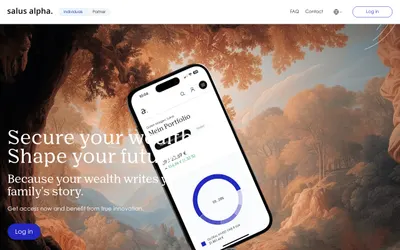
Liechtenstein is Europe's smallest financial centre and one of its most structurally interesting. A principality of roughly 40,000 people wedged between Switzerland and Austria, it uses the Swiss franc, sits inside the Swiss customs union — and has been a full member of the European Economic Area since 1995. That combination exists nowhere else: a financial institution licensed by Liechtenstein's FMA can passport its services across the entire EU and EEA single market while operating in Swiss francs, next door to Zurich. For a certain kind of financial company, that dual access is the entire reason to incorporate there.
The jurisdiction's fintech significance comes from regulatory craft rather than market size. The Token and Trusted Technology Service Provider Act — the "Blockchain Act" — came into force in January 2020, making Liechtenstein one of the first countries anywhere with a comprehensive legal framework for the token economy, years before the EU's MiCA regulation existed. The framework gave companies legal certainty on token rights and created registration categories for crypto service providers, and it attracted real businesses: Bank Frick in Balzers became one of Europe's first regulated banks offering crypto custody and trading to institutional clients across the continent, and LCX built a regulated digital asset exchange from Vaduz. The FMA runs an accessible fintech desk, and the approachability of a micro-state regulator is itself part of the pitch.
Beyond crypto, Liechtenstein's financial tradition is private banking and wealth management — LGT, owned by the Princely family, and VP Bank are the anchors — supported by a AAA-rated state and deep trust and foundation law expertise. The honest read: a domestic market of 40,000 people means every ambitious Liechtenstein company is international from day one, and the jurisdiction competes on regulatory quality the way Lithuania competes on licensing speed. With MiCA now applying across the EEA, the Blockchain Act's first-mover advantage has narrowed — but the CHF-plus-EEA position remains structurally unique, and no other European jurisdiction can replicate it.
Fintech companies based in Liechtenstein