← All services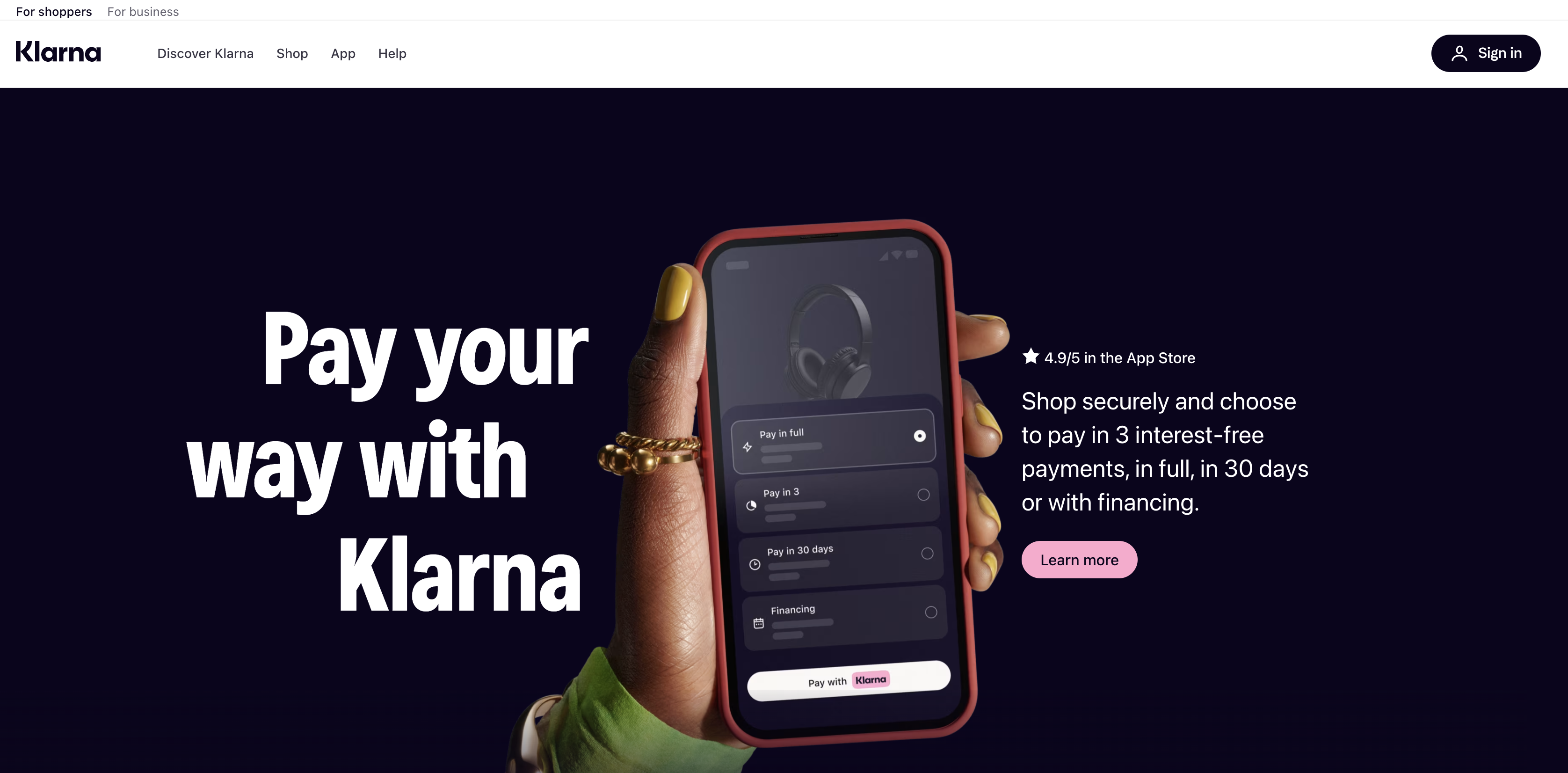
24 European companies
Fractional Investing Providers in Europe
Fractional investing allows individuals to buy portions of high-value assets — shares in expensive stocks, fractions of property, or slices of alternative investments — with small amounts of capital. By removing minimum investment thresholds, fractional investing has made diversified portfolio construction accessible to retail investors who could not previously afford individual shares in the highest-priced public companies.
Typically offered by
European fintech companies offering fractional investing
Klarna
Embedded Finance🇸🇪 Sweden
Three Stockholm School of Economics students pitched an idea at a university entrepreneurship competition in 2005: let shoppers receive goods before they pay, and put the credit risk on the merchant side. The pitch finished last. They built it anyway.
Sebastian Siemiatkowski, Niklas Adalberth, and Victor Jacobsson launched what was originally called Kreditor, later renamed Klarna, and spent the next two decades turning that rejected idea into one of Europe's most recognised fintech brands. The core insight held up: millions of people would rather split a purchase into three instalments than reach for a credit card, and merchants would pay for the privilege of offering that option because it reduces cart abandonment and increases average order values.
Klarna grew from a Swedish checkout button into something considerably more complex. It now holds a banking licence in Sweden, offers savings accounts, issues its own card, and operates across more than 45 markets with around 93 million active consumers and 675,000 merchant partners at the end of 2024. The US, which Klarna entered in 2015, has become its largest market by revenue, a fact the company underlined by listing on the New York Stock Exchange in September 2025 under the ticker KLAR, raising $1.37 billion at IPO.
The financial trajectory has been bumpy. Klarna reported net income of $21 million in 2024, a return to profitability after a bruising 2022 that included an 85% valuation cut and significant layoffs that reduced headcount from over 7,000 to around 3,400. What survived the restructuring was a leaner company with $2.81 billion in revenue and a clearer strategic direction: AI. Klarna's partnership with OpenAI produced a customer service assistant it claims handles the equivalent of 700 full-time agents, and generative AI now manages roughly two-thirds of customer chats.
The honest assessment of where Klarna sits today: it's no longer purely a BNPL provider and it's not quite a bank. It's somewhere in between, a consumer finance platform that knows more about your shopping behaviour than your bank does, and is betting that's worth a lot.
Founded 2005
Scalable Capital
Wealth🇩🇪 Germany
Scalable Capital was founded in Munich in 2014 by an unusually complementary quartet: Erik Podzuweit, a former Goldman Sachs banker; Florian Prucker, his co-CEO to this day; Adam French, who built the UK business; and Stefan Mittnik, an econometrics professor who gave the company its quantitative risk-management backbone. The product they launched in 2016 was a robo-advisor — algorithmically managed ETF portfolios for German savers who had money in zero-interest accounts and no relationship with the stock market. The early growth hack was distribution rather than marketing: a 2017 partnership put Scalable's digital wealth management inside ING Germany's retail bank, and BlackRock joined the cap table the same year. By 2018 it was managing €1 billion and ranked among the fastest-growing robo-advisors anywhere.
The decision that transformed the company came in 2020: the launch of Scalable Broker, a flat-fee trading platform built around a subscription model — the PRIME tiers — rather than per-trade commissions. It arrived at exactly the moment a generation of Germans discovered investing, and it made recurring ETF savings plans, the culturally German path into the market, effectively free at scale. Scalable became one of continental Europe's two dominant neobrokers, locked in a now decade-defining duel with Berlin's Trade Republic, with the low-cost incumbent DEGIRO fighting the same war from the Netherlands.
What distinguishes Scalable strategically is how far it has pushed vertical integration. When the EU banned payment for order flow — the revenue model most neobrokers were built on — Scalable's answer was to co-found its own trading venue, the European Investor Exchange, with Börse Hannover in 2023, keeping headline trading costs low by bringing execution in-house. It launched its own World ETF with DWS and MSCI in 2024, and opened private equity access to retail investors through a BlackRock partnership in 2025. Independent reviewers note the obvious tension in this design: when a broker routes client orders to its own exchange, execution quality and spreads deserve as much scrutiny as the visible fees — a fair caveat about a structure that is otherwise a genuine competitive moat.
The capstone came in September 2025, when the European Central Bank granted Scalable Capital a full banking licence, making it a CRR credit institution supervised by BaFin and the Bundesbank. The licence collapsed the remaining dependency on partner banks: Scalable now handles custody, clearing, settlement, deposits, and lending itself. Interest-bearing deposits launched within weeks, spread across Scalable's own bank and partner institutions with the distribution visible in-app, and a flexible credit product followed — loans from €1,000 to €250,000 with no fixed term. Podzuweit's framing of the ambition is lifelong: everything a customer and their family need for investing, saving, and financing, from the first savings-plan euro to retirement. It's the same full-stack endgame Trade Republic reached via its own licence — the two German rivals have independently concluded that the neobroker business ends in becoming a bank.
The scale now backs the ambition. Scalable Capital manages more than €30 billion for over one million customers across Germany, Austria, France, Italy, Spain, and the Netherlands, with around 845 employees across Munich, Berlin, London, Vienna, and Milan. A $175 million round led by Sofina and Noteus Partners in June 2025 — joined by Balderton, Tencent, and HV Capital — took total funding past half a billion dollars, three months before the banking licence landed. A decade in, the company that started by automating ETF portfolios for cautious German savers has become one of Europe's few vertically integrated investment banks for retail: its own exchange, its own ETF, its own banking licence, and a product that now touches every stage of a customer's financial life.
Founded 2014
Anaxago
Embedded Finance🇫🇷 France
Anaxago is a European investment platform that democratizes access to private market deals, letting retail investors back startups and SMEs that would normally require deep pockets and insider connections. The platform sidesteps the gatekeeping that has long defined venture capital, offering curated equity stakes in growth-stage companies across tech, real estate, and other sectors. Founded in 2014, it operates across multiple European markets and has processed hundreds of millions in investments, positioning itself as a bridge between ambitious entrepreneurs and everyday investors seeking portfolio diversification beyond public markets. What sets Anaxago apart is its focus on transparency and accessibility. Rather than opaque fund structures or minimum investment requirements that exclude ordinary savers, it lets users invest from relatively modest amounts while maintaining rigorous due diligence on every deal. The platform handles the mechanics of investment management, shareholder rights, and secondary market liquidity—functions that typically require armies of lawyers and compliance teams. It's part of a broader shift toward democratized finance, where technology makes previously exclusive opportunities available to anyone with capital and appetite for risk. In the European fintech landscape, where crowdfunding and alternative investment platforms have proliferated, Anaxago has carved out credibility through regulatory compliance, deal flow quality, and a genuine commitment to investor protection. It represents how fintech can unbundle traditional wealth management, making private market exposure a normal part of retail investing rather than a privilege reserved for the wealthy.
Founded 2014
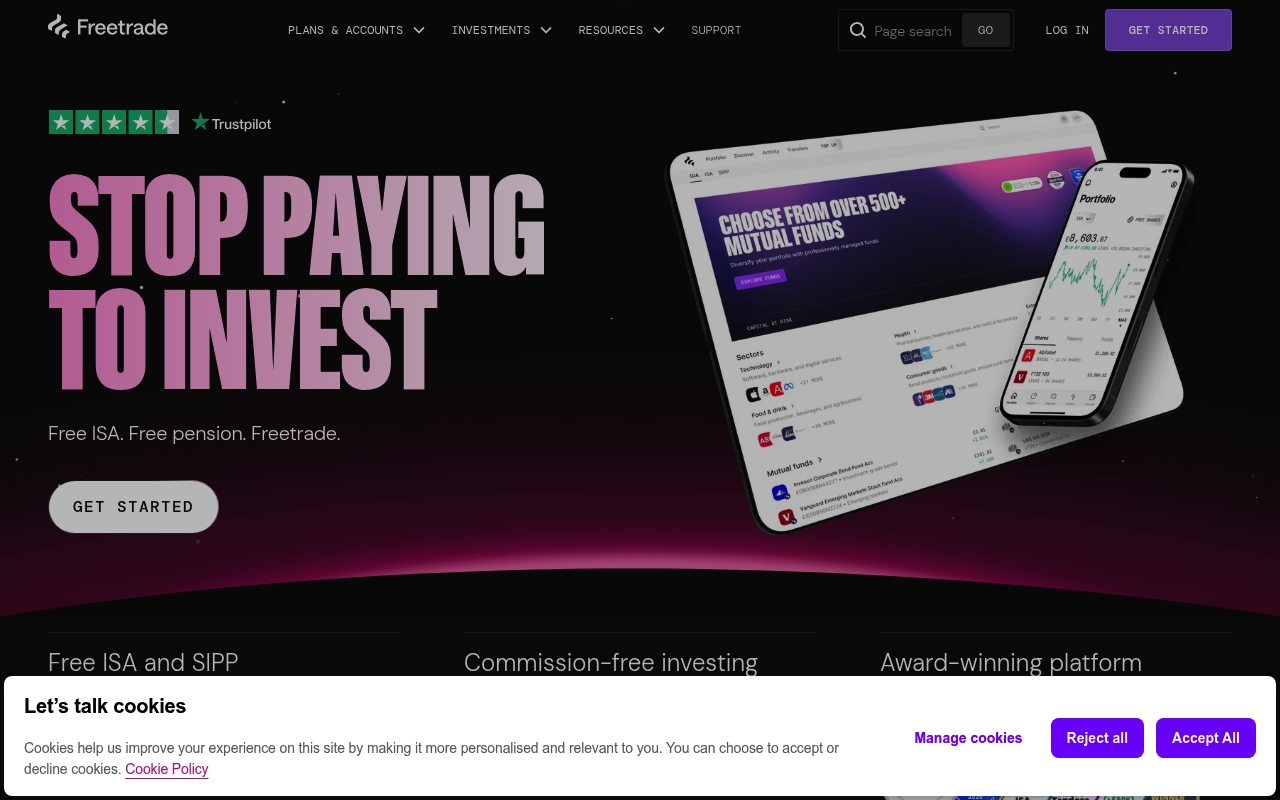
Freetrade
Wealth🇬🇧 United Kingdom
Freetrade is a London-based investing app that stripped away the gatekeepers between everyday Europeans and the stock market. Founded on the principle that trading shouldn't cost you a fortune in fees, it lets you buy fractional shares of thousands of stocks and ETFs for zero commission—something that would have seemed impossible a decade ago.
The app democratizes retail investing by making it accessible, transparent, and genuinely affordable. While traditional brokers buried fees in spreads and commissions, Freetrade charges nothing for trades and offers a refreshingly straightforward pricing model. You get real-time data, a clean mobile interface, and the ability to build diversified portfolios without watching fees erode returns.
In a European market where retail investing was often treated as a luxury product for the wealthy, Freetrade positioned itself as the alternative—serious investing without the pretense or the price tag. The platform appeals to younger investors who want to own individual stocks and ETFs but were previously priced out or intimidated by legacy brokers.
Today, Freetrade represents a shift in how Europeans think about stock ownership: not as something reserved for the financially elite, but as a fundamental right. It's embedded itself in the broader fintech movement toward dematerializing finance and making capital markets participation the default rather than the exception.
Founded 2017
Avanza
Wealth🇸🇪 Sweden
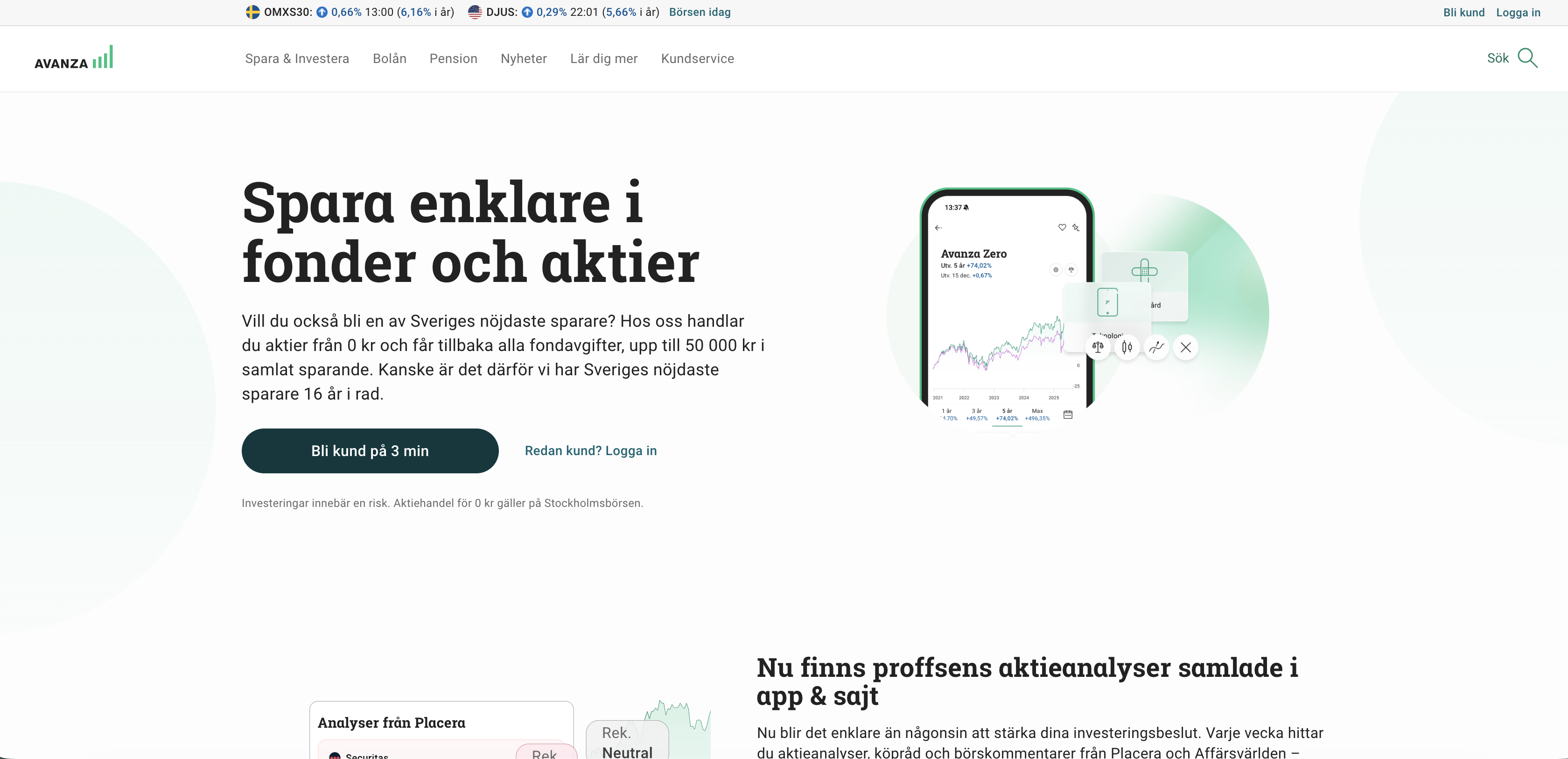
Avanza is Sweden's largest independent online brokerage, a no-frills investment platform that democratized stock trading for Swedish retail investors two decades ago. What started as a scrappy alternative to traditional banks has become the go-to app for millennials and Gen Z who want to trade, invest, and save without paying legacy banking fees. The platform strips away unnecessary complexity—no advisors, no jargon, just direct market access at transparent prices. Avanza operates in that interesting middle ground between a neobank and a pure trading platform. It offers savings accounts, pension accounts, and investment accounts with a sharp focus on user experience and low costs. The company has built a cultural following in Sweden, becoming almost synonymous with retail investing for a generation that views traditional brokers as relics. Beyond just equities and funds, Avanza has expanded into savings products, retirement planning, and financial education—positioning itself as a genuine financial companion rather than just a transaction layer. Its dominance in the Nordic market reflects a broader European shift toward direct-to-consumer investment platforms that compete on transparency, speed, and mobile-first design. Avanza exemplifies how fintech can win by doing one thing exceptionally well and then expanding thoughtfully into adjacent categories. The company's influence extends beyond Sweden into a broader shift in how younger Europeans think about investing: without gatekeepers, without unnecessary fees, and entirely on their own terms.
Founded 1999
Reinvest24
Real Estate Finance🇪🇪 Estonia
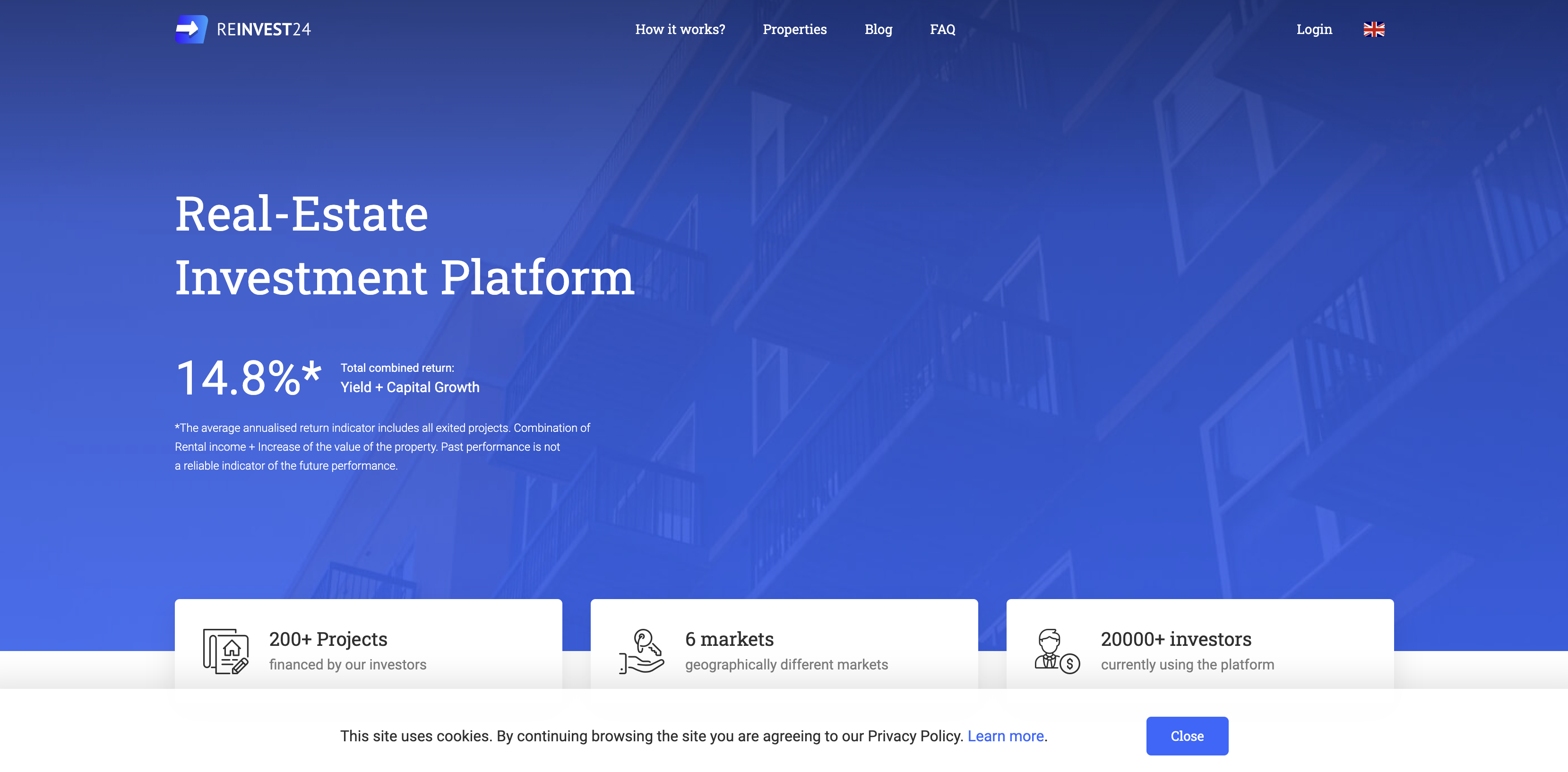
Reinvest24 launched in Tallinn in 2018 with a model that was genuinely more interesting than most of the property crowdfunding wave it belonged to. Instead of funding property-backed loans — the EstateGuru approach, where investors hold debt secured against real estate — Reinvest24 sold fractional ownership. Investors put in as little as €100 and became part-owners of a rental property through a special purpose vehicle, collecting a share of the monthly rent plus any capital appreciation when the property sold. Equity rather than debt, yield plus upside, and for a while it worked: the platform grew across Estonia, Latvia, Moldova, Germany, and Spain, attracting roughly 25,000 registered investors and funding in the range of €30–40 million in projects during its 2018–2022 growth years under CEO Tanel Orro.
The unravelling began in 2023, and its causes are a compact catalogue of platform risk. The EU's crowdfunding regulation became mandatory in November 2023, requiring every platform to hold an ECSP authorisation to raise money from European retail investors — Reinvest24 never obtained one, which legally ended its ability to fund new projects. Its Spanish projects drew a public warning from the Spanish regulator. And at the centre of the crisis sat a related-party problem: KIRSAN, a group holding a reported 18% stake in the platform, was simultaneously one of its largest borrowers through the Moldovan project portfolio. When a shareholder is also your biggest credit exposure, trouble at the borrower becomes trouble everywhere, and that is what happened.
As of mid-2026 the picture, as documented by independent platform trackers, is bleak. Withdrawals have not been processed for more than a year. The entire outstanding portfolio — roughly €26 million — is in recovery. Regulators in Estonia, Spain, and Norway have issued public warnings, new fundraising is prohibited, and the Estonian business registry shows the operating company reduced to a single employee. Legal proceedings connected to the KIRSAN group are ongoing in Moldova, where the process has itself been turbulent, including the detention of insolvency administrators and the resignation of a judge cited in the investigations. Independent reviewers now describe the platform as being in a slow-motion wind-down; the company itself has not announced a formal liquidation.
Reinvest24 remains listed here for the same reason this database lists it honestly: people searching for it deserve the current facts. Notably, affiliate review sites were still publishing positive "hands-on" reviews of the platform in 2026, citing steady returns and monthly distributions — claims impossible to reconcile with withdrawals that have been frozen for over a year. For anyone with funds on the platform, the relevant channel is the platform's official recovery communications and the Estonian Financial Supervision Authority's public notices. For everyone else, Reinvest24 has become one of the clearest European case studies in the risks specific to crowdfunding platforms: related-party exposure, regulatory authorisation as a hard requirement rather than a formality, and the fact that platform risk is entirely separate from the property risk investors thought they were taking.
Founded 2018
Vivid Money
Wealth🇩🇪 Germany
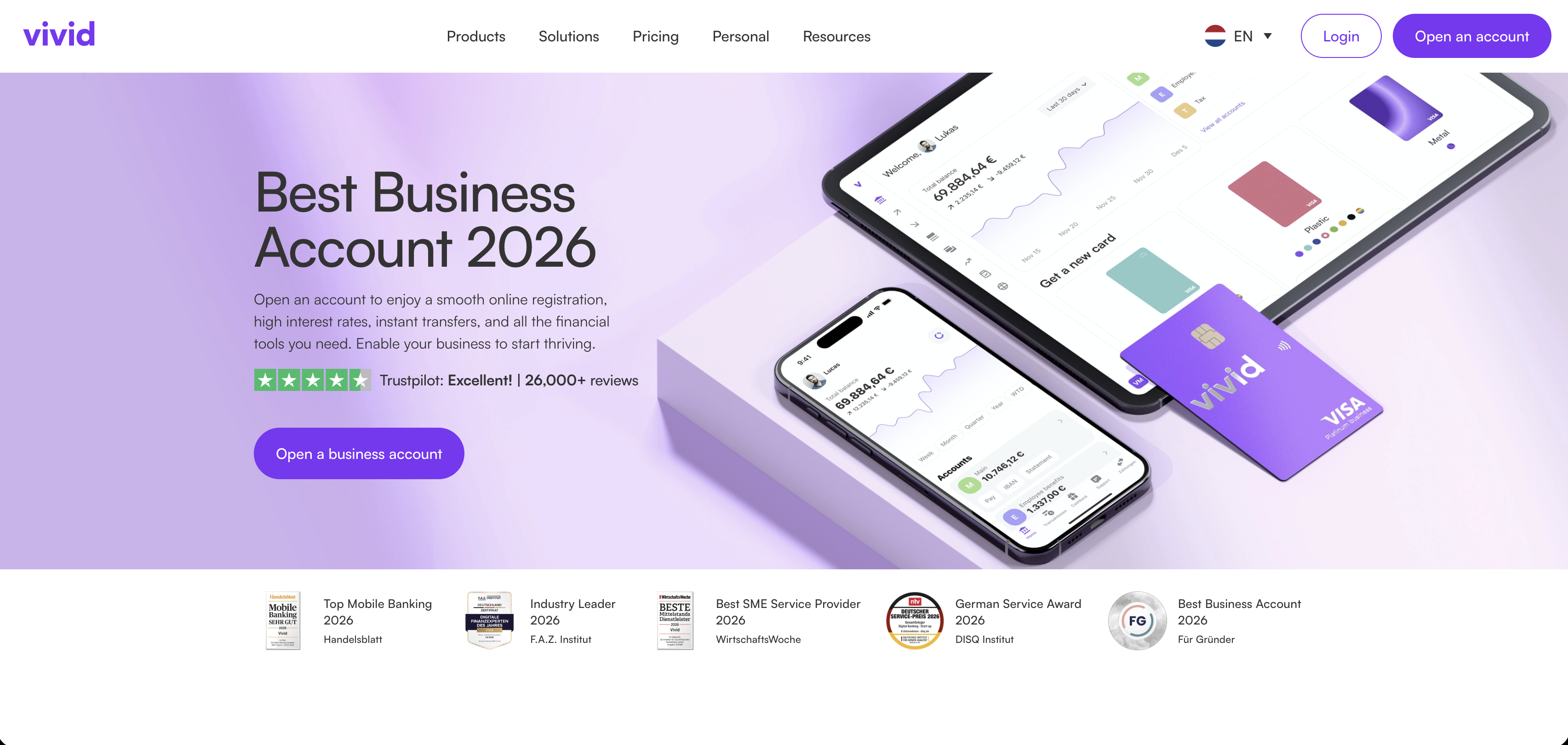
Vivid Money is a Berlin-based fintech that collapsed the traditional distinction between banking, investing, and spending into a single mobile-first experience. Launched in 2020, it positioned itself as the European answer to all-in-one financial apps—a place where you could manage your checking account, invest in fractional shares and crypto, and pay with virtual cards, all without leaving the app.
The platform built its early reputation on speed and accessibility. Account opening took minutes rather than days. The investment side felt more like TradingView-for-consumers than stuffy wealth management. Virtual card creation was instantaneous, and the app's design sensibility leaned toward the minimalist and modern rather than corporate banking's beige aesthetic.
Vivid positioned itself against traditional banks' glacial pace and regulatory burden, while also differentiating from pure-play neobanks that didn't offer investing. It moved quickly to add crypto features when the market demanded them, and secured backing from tier-one investors who believed in the all-in-one thesis.
However, the company faced headwinds from regulatory tightening around crypto and the broader fintech funding winter. In late 2024, reports emerged of operational restructuring and potential insolvency, marking a sobering turn for what had been one of Europe's most closely watched fintech challengers. Vivid's arc—from breakthrough disruptor to distressed turnaround—reflects the volatility of the European fintech landscape and the challenge of building a diversified financial platform without institutional heritage or captive customer bases.
Founded 2020
Enerfip
Wealth🇫🇷 France
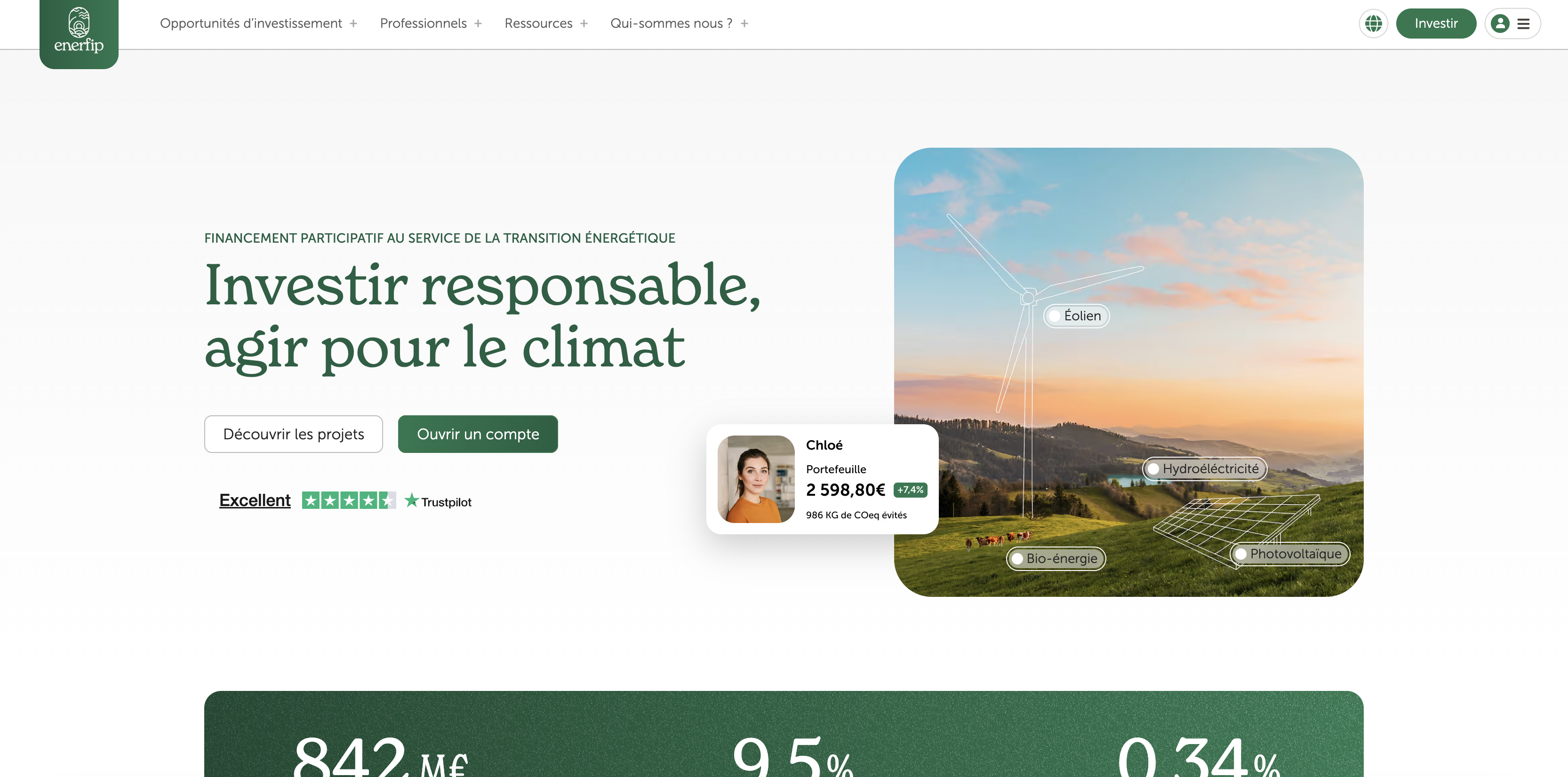
Enerfip is a French renewable energy crowdfunding platform that lets retail investors back solar, wind, and biomass projects with minimal friction. Rather than requiring the traditional wealth checks and gatekeeping that institutional investors face, Enerfip democratizes green energy financing—you can start investing from as little as €100 in projects across Europe. The platform has financed over €100 million in renewable capacity since 2014, positioning itself as a serious player in the intersection of climate finance and retail investment. What sets Enerfip apart is its focus on operational projects with real yields, not speculative green ventures. Its model works because the renewable energy sector desperately needs capital, and Enerfip sits comfortably between the retail investor appetite for impact and the genuine need for project-level funding. The platform doesn't just move money; it acts as a curator and risk manager, vetting projects to ensure investors understand what they're buying into. In a European fintech landscape crowded with robo-advisors and crypto platforms, Enerfip remains distinctly mission-driven—proving that profitable finance and environmental impact aren't mutually exclusive. The company reflects a broader European shift toward sustainable investing, where returns and responsibility are expected to move in tandem.
Founded 2014
Nordnet
Wealth🇸🇪 Sweden
Pan-Nordic retail investing requires more than translating a Swedish product into Norwegian, Danish, and Finnish. Each Nordic market has its own pension system, tax-advantaged investment accounts, regulatory framework, and consumer expectations — complexity that has kept many investment platforms confined to a single national market. Nordnet was founded in Stockholm in 1996 with the explicit ambition to build a genuinely Pan-Nordic investment platform, and has spent nearly three decades doing it. Its platform serves customers across Sweden, Norway, Denmark, and Finland, offering stocks, funds, ETFs, pensions, and savings products tailored to each market's specific tax-advantaged account structures. The cross-border depth is genuinely unusual — most Nordic financial services companies that operate internationally do so through separate national entities with separate products, rather than the integrated platform approach that Nordnet has built. The company is publicly listed on the Stockholm Stock Exchange and competes directly with Avanza in the Swedish market while occupying dominant positions in several other Nordic countries. In the European retail investment landscape, Nordnet's combination of cross-border integration and decades of operational depth makes it one of the most credible regional brokers in any European market — a model that the rest of Europe has been slower to replicate.
Founded 1996
Lightyear
Wealth🇪🇪 Estonia
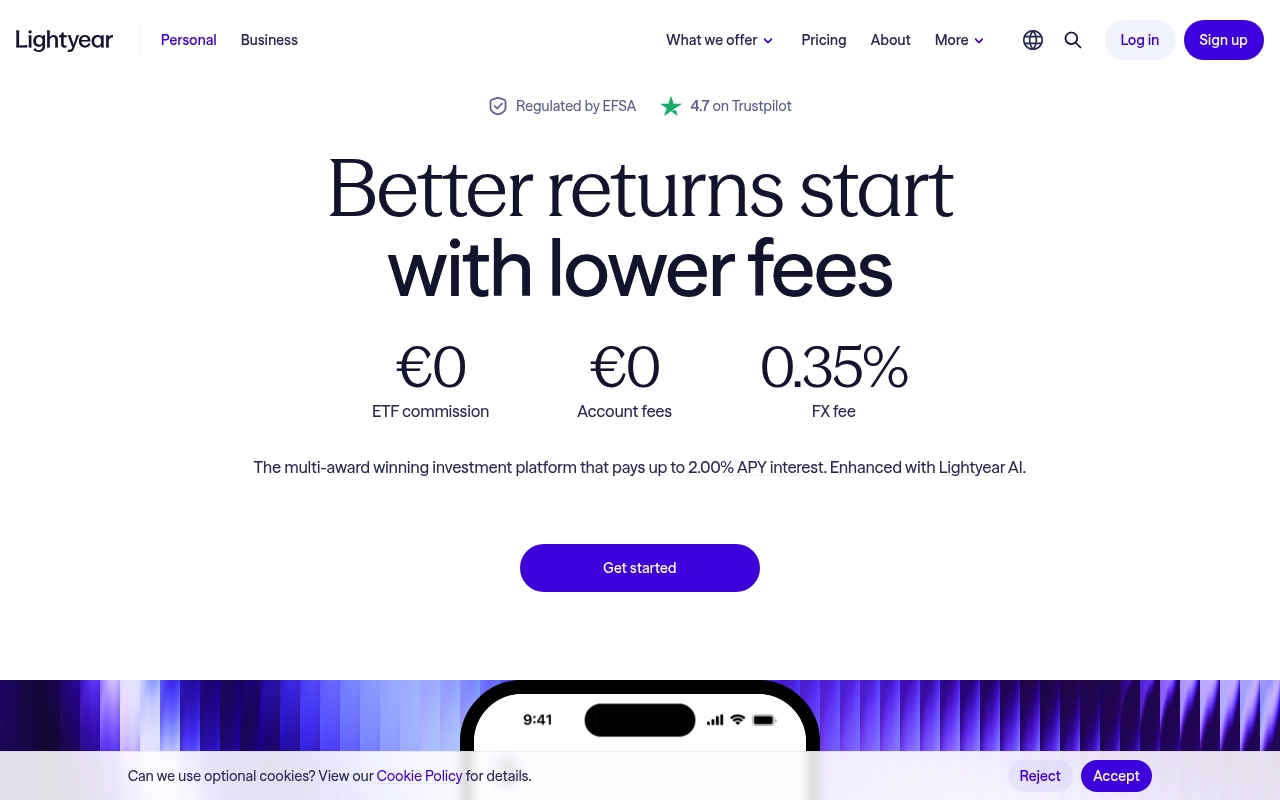
Martin Sokk and Mihkel Aamer both worked at Wise before founding Lightyear in 2021, and the lineage shows in the product: multi-currency accounts, a transparent FX fee stated as a number rather than buried in a spread, and a deliberate refusal to make money from the things retail brokers usually make money from. The app gives European investors access to over 6,000 stocks, ETFs and money market funds with zero commission on ETFs and a flat 0.35% currency conversion charge. Estonian-founded and London-based, it is regulated by Estonia's EFSA — which makes it one of the few genuinely pan-European brokers built from the Baltics outward rather than from a large domestic market.
The cap table is a roll call of the Estonian technology diaspora: Wise co-founder Taavet Hinrikus, Bolt CEO Markus Villig, Skype founding engineer Jaan Tallinn, Checkout.com's former CTO Ott Kaukver, and Veriff's Kaarel Kotkas, alongside institutional backers Lightspeed Venture Partners, Virgin Group and NordicNinja, which led a $23 million Series B in July 2025. Total funding stands at $58 million, with the Series B reportedly valuing the company between $200 million and $300 million. That round coincided with customer assets passing $1 billion and expansion to 25 European markets in 10 languages. In 2026 the company was named FinTech Company of the Year at Baltic Fintech Days, and its founders took EY Estonia's Entrepreneur of the Year.
The strategic bet since the Series B is AI, and it is more specific than most fintech AI announcements. Lightyear shipped features that explain why a stock moved on a given day, generate balanced bull and bear cases, and summarise portfolio developments in plain language — research tooling of the kind that was previously professional-only. Sokk's framing is that investing splits into "self-driving money," where an AI pursues a stated goal, and a "manual gearbox" for people who want to make their own decisions, and Lightyear is building for the second. The competitive position is harder than the product: it sits between Trade Republic and Scalable Capital, both of which now hold full banking licences, and DEGIRO's incumbent scale. Lightyear's answer is to be the cleanest and most genuinely multi-currency of the group rather than the biggest.
Founded 2021
Bux
Wealth🇳🇱 Netherlands
Bux is a mobile-first investing platform that strips away the gatekeeping around stock and ETF trading, making it accessible to anyone with a smartphone and spare change. Founded in the Netherlands, the company lets users trade fractional shares from €1 upward—a deliberate move to democratize markets that traditionally demanded thousands in upfront capital.
The core product is refreshingly simple: a clean app interface where you can buy stocks, ETFs, and crypto without the jargon or friction that traditional brokers impose. Bux's positioning sits at the intersection of retail investing and social trading, with features that encourage discovery and community engagement alongside serious portfolio building. Think of it as the antidote to the institutional gatekeeping of wealth creation.
Among European retail investment platforms, Bux stands out for its aggressive accessibility play—fractional shares, zero commissions, and a user experience designed for people who'd rather scroll than call a broker. It competes in a crowded space alongside the likes of Revolut and Trading 212, but maintains a laser focus on making investing feel less intimidating and more tangible.
In the broader fintech landscape, Bux represents a generation of platforms that have fundamentally rewritten the rules of retail access to capital markets, turning investing from a privilege into a habit.
Founded 2014
Moneyfarm
Wealth🇮🇹 Italy
Robo-advisory in Italy faces the particular challenge of building investor confidence in a market where retail investment participation has historically been low and trust in financial institutions has been complicated by decades of banking sector difficulties. Moneyfarm was founded in Milan in 2011 and grew into one of the largest digital wealth managers in Europe by addressing that confidence problem directly — combining algorithmic portfolio management with human investment consultants who provide personalised guidance to clients who want it. The hybrid model differentiates it from pure robo-advisors that rely entirely on questionnaires and from traditional wealth managers that gatekeep advice behind high minimums. Moneyfarm has expanded across Italy, the UK, and Germany, building a substantial business in markets with very different investor cultures and regulatory environments. The company has attracted backing from major investors including Allianz Asset Management and Cabot Square Capital, reaching billions in assets under management. In the European wealth tech landscape, Moneyfarm represents one of the more successful examples of a digital wealth manager building genuinely cross-border scale rather than remaining confined to a single market — and its hybrid model of algorithmic management plus human advice has proven more durable than purely algorithmic approaches in markets where trust must be built more carefully.
Founded 2011
Showing 12 of 24 companies. View all in the directory →