← All services
14 European companies
Onboarding APIs in Europe
Onboarding APIs provide programmatic access to the identity verification, KYC, document collection, and risk screening capabilities that regulated financial companies need to onboard new customers compliantly. By integrating onboarding APIs, fintechs and banks can complete regulated customer onboarding within their own product flows without building the underlying compliance infrastructure.
Typically offered by
European fintech companies offering onboarding APIs
N26
Payments🇩🇪 Germany
Valentin Stalf and Maximilian Tayenthal started in Vienna in 2013 with a product that sounds strange now and sounded stranger then: a prepaid card for teenagers, controlled by their parents through an app. The pivot came quickly. What they had actually built was a mobile-first banking interface, and the teenagers were incidental. Relaunched as N26 and relocated to Berlin, it became the first of the European neobanks to look genuinely modern — instant push notifications on every transaction, sign-up in minutes by video identification, an interface that made incumbent German banking apps look like they had been designed by a committee, which they had. In 2016 N26 received its own full German banking licence from BaFin, three years after founding, an unusually fast route to becoming a real bank.
Growth followed, and then the growth became the problem. BaFin, which had granted the licence, concluded that N26's controls had not scaled with its customer base. In 2021 the regulator imposed a growth cap limiting the bank to roughly 50,000 new customers per month — a restriction with no real precedent for a German bank — alongside a special monitor and fines relating to late suspicious activity reports. The cap was lifted in 2024 after substantial investment in compliance, financial crime prevention, and internal controls, but it cost N26 the better part of three years at exactly the moment Revolut and Monzo were compounding. The company also withdrew from the UK after Brexit and exited the US, narrowing to its European core.
The company that emerged is a different one, and its leadership reflects that. Both founders have stepped back from executive roles, with Mike Dargan — previously group technology head at UBS — appointed chief executive. In August 2026 the refresh reached the rest of the C-suite: CFO Arnd Schwierholz, who steered the bank through the BaFin period, announced he is stepping away with a search under way for a successor, while N26 hired Nathalie Picquot from Santander as Chief Growth and Marketing Officer and Marcin Pakulnicki from ING as Chief Technology Officer. The pattern is unmistakable and increasingly common among mature neobanks: the executives now being recruited come from the incumbent banks the challengers were built to replace, because the problems have changed from product-market fit to regulatory scale.
N26 serves millions of customers across the eurozone with a product set that has broadened well past the original current account — savings, investments including ETFs and crypto, insurance, and a subscription tier structure that has been the company's answer to interchange-dependent economics since long before that became fashionable. Its onboarding runs on Fourthline's identity verification, one of several European fintech supply-chain relationships this directory tracks. The strategic position is coherent but no longer leading: N26 is the eurozone-native neobank, strongest in Germany, Austria, France, Italy, and Spain, competing against a Revolut that is now valued at $115 billion and licensed on three continents, and a Monzo generating £1.7 billion in revenue from a single market. The three years spent fixing what BaFin found were three years not spent building, and the current chapter is about whether an institutionally rebuilt N26 can convert regulatory soundness back into growth.
Founded 2013
Enable Banking
Financial Infrastructure🇫🇮 Finland
Most open banking aggregators want your data. That is the business model: connect to the banks, pull the transactions, store them, enrich them, and sell the enriched product back. Enable Banking built the opposite. The company describes itself as the postman of your data — it moves financial information from the bank to the customer's application and does not retain, process, or build models on what passes through. For a fintech that considers its transaction data a competitive asset, or a customer with strict data residency requirements, that neutrality is the entire pitch.
Joonas Tomperi and Fedor Tyurin founded the company in Espoo in 2019, at the point where PSD2 had legally opened European bank APIs but had not made them usable. Each bank interpreted the standard differently, each shipped its own authentication quirks, and each updated on its own schedule. The regulation created the right; someone still had to build the plumbing. Enable Banking started with Finland and the Nordics and expanded outward, and now connects to more than 2,700 banks across 30 European countries through a single PSD2-compliant API — account information from all of them, and payment initiation from over 1,500.
What makes the company genuinely unusual is its scale relative to that coverage. Enable Banking has raised roughly €600,000 in total, in a single seed round in 2022 led by Wellstreet and Forward VC, and employs somewhere between fourteen and seventeen people distributed across seven countries. Tink sold to Visa for €1.8 billion with 500 employees. TrueLayer has raised hundreds of millions. Enable Banking is covering comparable European ground with a team that would fit around one table, which says something about how much of open banking infrastructure is disciplined engineering rather than capital.
The company holds its own Account Information Service Provider registration, supervised by Finland's FIN-FSA — which means other companies can build on top of its licence rather than obtaining their own. That is the model behind open-banking.io, the Danish developer tool that resells Enable Banking access at €3 per month without customers needing eIDAS certificates. It is also why Enable Banking's no-data-retention architecture matters structurally: because the platform never holds readable customer data, the companies building on it can make stronger privacy guarantees than they otherwise could.
Two smaller details are revealing about who this is built for. Enable Banking runs a balanced split between business and consumer accounts — roughly half of its ten million monthly API calls come from each, where most early open banking providers targeted consumer accounts only and treated corporate banking as an afterthought. And it offers a live production environment for testing without requiring a contract, which is a small thing that tells you the company expects developers to evaluate it by using it rather than by booking a call. Tomperi now chairs the board of Fintech Finland, the national industry association.
Founded 2019
IDnow
Identity & KYC🇩🇪 Germany
Knowing who your customer is has always been a regulatory requirement in financial services. Proving it, digitally, in real time, across dozens of jurisdictions with different document standards and compliance frameworks, is a genuinely hard engineering and operational problem. IDnow was founded in Munich in 2014 to solve it. Its identity verification platform offers a range of methods — video identification, automated AI-driven document checks, and eID integration — giving regulated businesses the flexibility to choose the right verification approach for their risk profile and customer base. The company has built particular depth in the German market, where video identification has a specific legal status under financial regulation, but has expanded across Europe serving banks, insurance companies, crypto platforms, and any business that needs to onboard customers with confidence. IDnow was acquired by Corsair Capital in 2021 and has continued expanding through partnerships and product development. In a regulatory environment where digital onboarding requirements are tightening and fraud is becoming more sophisticated, the identity verification layer is one of the most critical — and most contested — parts of the fintech stack.
Founded 2014
Credolab
Lending🇳🇱 Netherlands
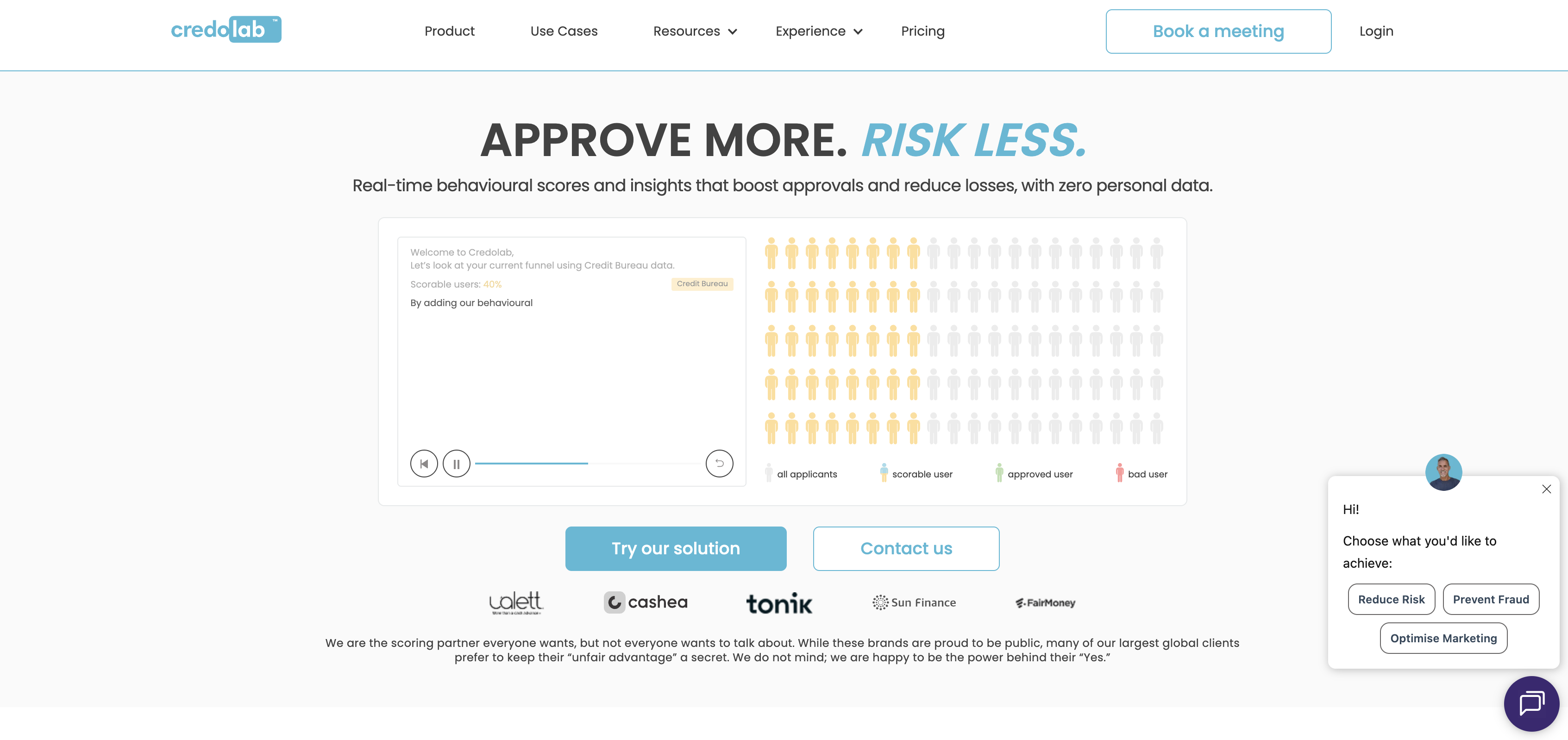
Credit decisions in markets without comprehensive credit bureau coverage have always been hard. The traditional underwriting model relies on credit history, income verification, and identity documents that significant portions of the global population either don't have or can't easily produce. Credolab was founded in 2016 with operations across Asia and Europe to address that gap with an unconventional data source — smartphone metadata. Its platform analyses behavioural patterns from a mobile device — without accessing personal content — to generate credit scores for consumers who have no traditional credit history. The data points are surprisingly predictive: how someone manages their phone storage, the pattern of their app usage, the regularity of their device behaviour all correlate with credit risk in ways that traditional underwriting misses. Credolab serves lenders, telcos, and digital platforms across emerging markets where credit bureau coverage is thin and the demand for digital credit is growing rapidly. In the alternative credit data landscape, where companies are competing to find the data sources that will define the next generation of underwriting, Credolab's behavioural smartphone approach is one of the more distinctive — and one that addresses a genuinely large unmet need in markets where billions of people remain credit-invisible to traditional financial systems.
Founded 2016
Sumsub
Fraud & Security🇬🇧 United Kingdom
Three brothers — Andrey Sever and his twins Jacob and Peter — founded Sumsub in 2015 to solve a problem that regulated digital businesses had been solving badly: verifying who a customer is, fast enough that they don't abandon signup, and rigorously enough that a regulator accepts it. What began as a document verification vendor has become an onboarding orchestration platform covering the full compliance lifecycle: identity verification, business verification (KYB) including ownership-structure analysis, AML screening, transaction monitoring, fraud prevention, and case management, delivered through API and SDKs.
The scale claims are aggressive and specific: over 6,500 document types across 220 countries and regions, verification in under a minute on average, and conversion rates published per market — the kind of numbers a company only publishes when conversion is its main selling point against competitors. The methodology follows FATF recommendations and is built against FINMA, FCA, CySEC, MAS and BaFin requirements, which tells you the customer profile: crypto exchanges, trading platforms, fintechs, marketplaces and gaming operators, in that rough order of historical concentration.
Two things distinguish Sumsub in this directory's context. First is what happened in March 2022: following the invasion of Ukraine, the company ceased its Russian operations, chartering flights to relocate team members out of Russia, Ukraine and Belarus — an unusually consequential decision for a company that had built engineering capacity there, and one that reset its corporate footprint toward London and Limassol. Second is where it is going: reusable identity, so a verified user can onboard elsewhere in a few clicks, and — launched January 2026 — AI agent verification, binding automated agents to verified human identities. That second product is a direct answer to the agentic commerce thesis Checkout.com and Adyen have both been building toward. If AI agents start transacting on people's behalf, someone has to establish which human is accountable, and Sumsub is betting that becomes an identity product.
Founded 2015
Signicat
Financial Infrastructure🇳🇴 Norway
Signicat solved a problem that only exists in Europe. Across the continent, national electronic identity schemes — BankID in Sweden and Norway, NemID/MitID in Denmark, iDIN in the Netherlands, itsme in Belgium — mean that verifying a citizen means integrating with a different sovereign or bank-consortium system in every market. Founded in Trondheim in 2006, Signicat built the hub: a single integration point giving access to the widest available pool of eIDs, registry lookups, document scanning and electronic signature, so a bank entering five countries integrates once instead of five times.
The customer list reflects how deeply embedded it is in Nordic and European financial services: DNB, Klarna, Rabobank, Santander, Société Générale, Western Union, and non-financial names including BMW and Schibsted. Nordic Capital acquired the company in 2019, when it had around 115 employees and roughly €19 million in revenue, and used it as a buy-and-build platform. Seven acquisitions followed — Idfy in 2019 to consolidate the Nordics, Connectis in 2020 to build out the European platform, and others since — taking Signicat past 500 employees and into more than 45 markets.
The strategic position is about to be tested by the thing that created it. eIDAS 2 and the European Digital Identity Wallet, which member states are required to offer citizens, are an attempt to standardise exactly the fragmentation Signicat monetises. The optimistic reading is that a new scheme in every member state is more integration work, not less, and that someone still has to orchestrate acceptance, verification and signature on top — which is Signicat's business. The pessimistic reading is that a genuinely interoperable wallet erodes the value of a hub. Signicat's answer so far has been to move up the stack into orchestration and fraud, and its position across both regulated and non-regulated verticals gives it more room than a pure eID broker would have.
Founded 2006
FintechOS
Financial Infrastructure🇷🇴 Romania
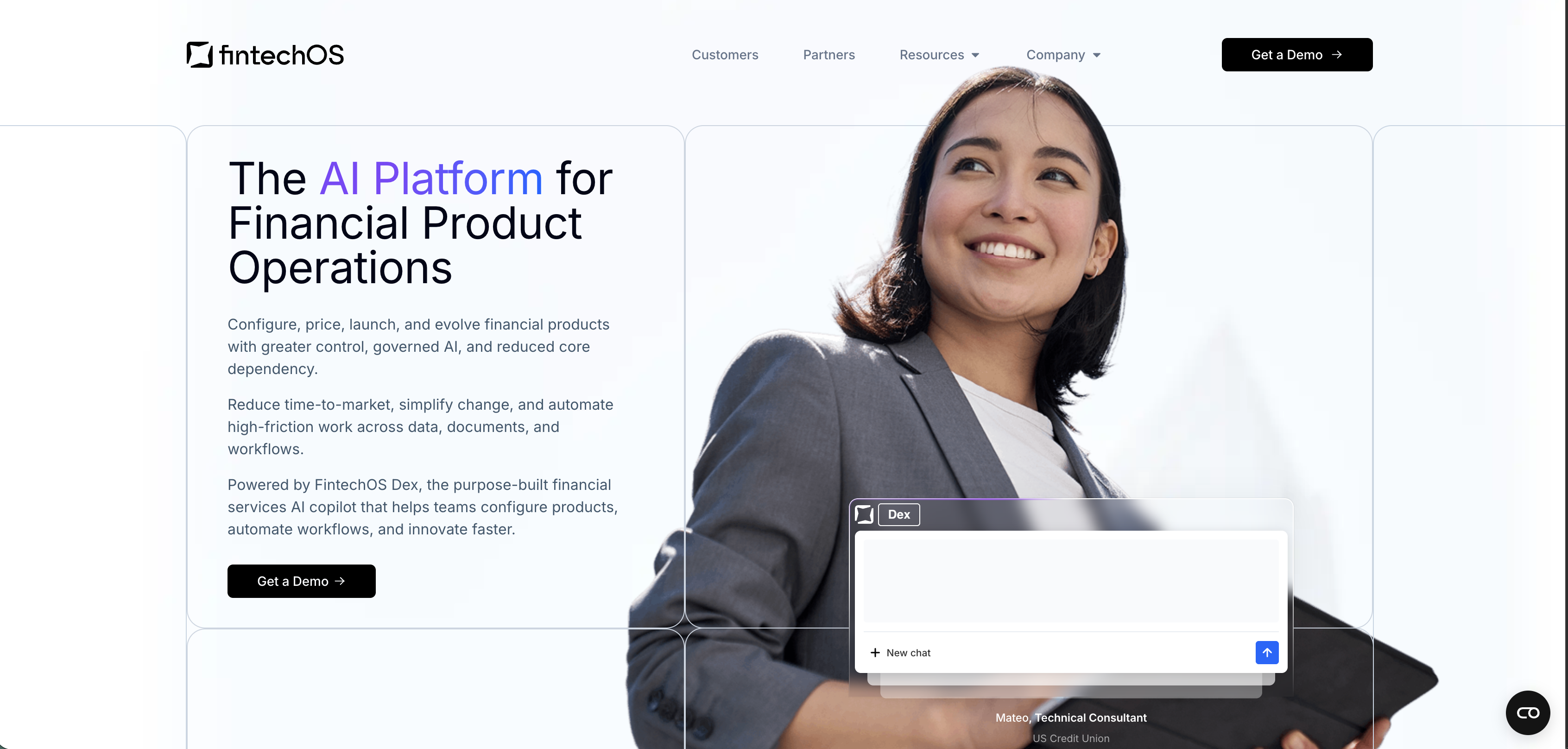
Banking software has historically been built around the idea that each financial product needs its own dedicated system — a current account platform, a separate mortgage system, another for credit cards, another for investments. The result is a fragmented technology landscape that prevents banks from delivering the unified experience customers actually want. FintechOS was founded in Bucharest in 2017 to challenge that model with a digital-first platform that lets financial institutions build, launch, and operate any financial product on a single configurable infrastructure. Its platform combines core banking capabilities with low-code product configuration, letting banks design customer journeys, launch new products, and modify existing ones without the multi-year IT projects that define traditional banking transformation. FintechOS has attracted backing from major investors including Earlybird and Draper Esprit, and serves banks and insurance companies across Europe and beyond. The Romanian base is significant — Bucharest has emerged as one of the more important Central European fintech hubs, and FintechOS has built one of the most credible product-led companies to come from that ecosystem. In the European banking infrastructure market, where the largest players are global enterprise software companies, FintechOS represents a generation of platform-native banking technology built for a different kind of bank.
Founded 2017
Finshape
Financial Infrastructure🇨🇿 Czech Republic
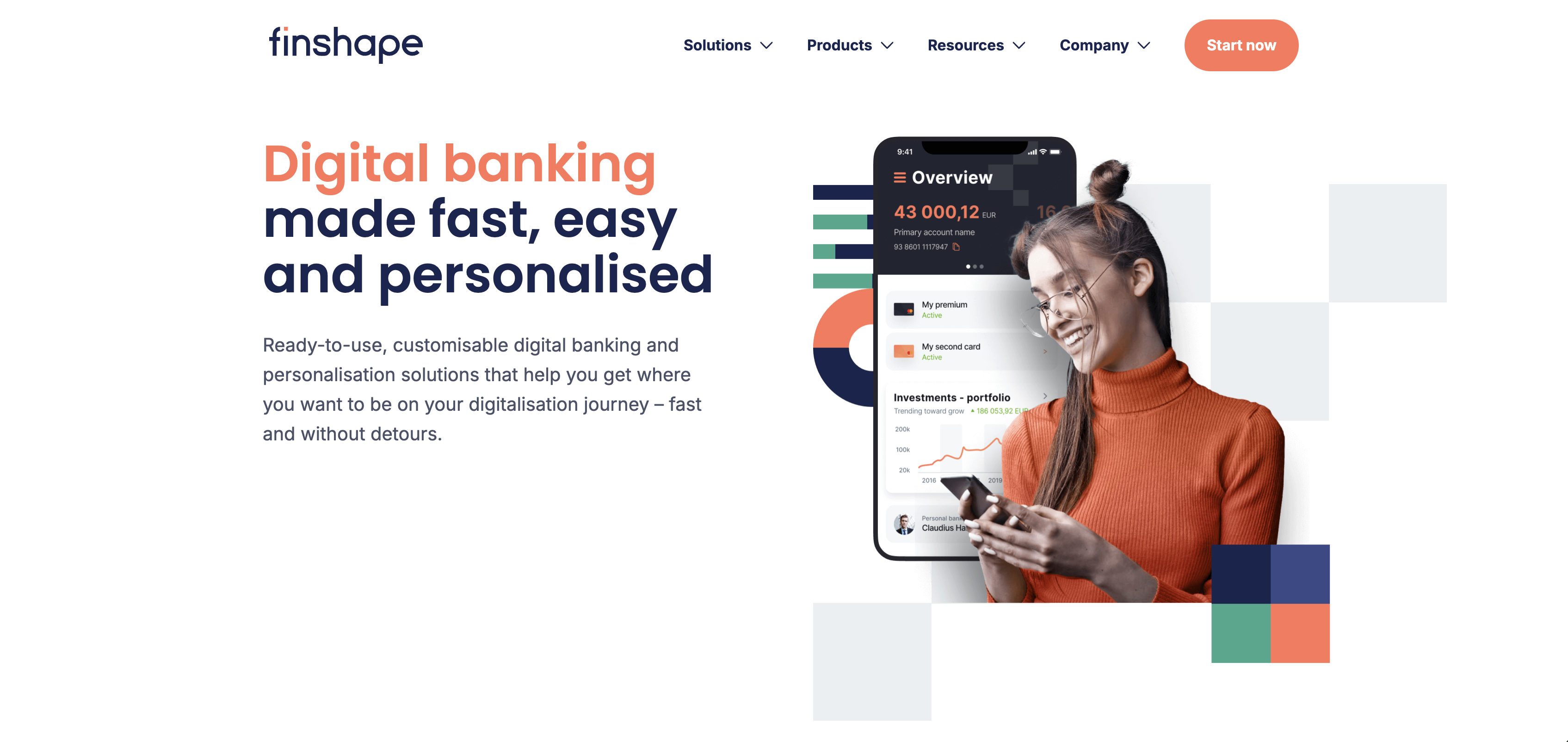
Digital banking platforms for incumbent banks are one of the more practical answers to the question of how traditional financial institutions modernise without rebuilding their entire technology stack. Finshape was founded in 2011 with operations across the Czech Republic and broader CEE region, building a digital banking platform that provides retail and SME banking applications, personal finance management, and customer engagement tools to banks looking to upgrade their digital capabilities. The product approach is white-label — Finshape provides the technology that banks deploy under their own brand, integrating with the bank's existing core systems rather than replacing them. That integration-friendly positioning has made Finshape relevant to banks that want digital capability without the disruption of a full core banking transformation. The company has built a client base across CEE and broader European markets, deploying its platform to dozens of banks across multiple countries. In the European banking technology landscape, the white-label digital platform model serves a particular market segment — mid-sized regional banks that need to compete on digital experience but that lack the resources or appetite to build their digital banking capability internally. Finshape sits at the intersection of banking software and digital experience design, building products that are evaluated on the customer experience they enable for the banks that license them.
Founded 2011
Rebellion Pay
Payments🇪🇸 Spain
Rebellion Pay is a Berlin-based fintech that's quietly reshaping how independent merchants and small businesses handle payments across Europe. Rather than forcing merchants into the familiar—and often expensive—dance with traditional acquirers, Rebellion Pay sits somewhere between a payments orchestrator and a merchant enabler, connecting SMEs to better rates and faster settlement through its own infrastructure.
The company focuses on the merchant acquiring layer, carving out a niche where most European fintech players either go full neobank or stay pure-play processors. Rebellion Pay's positioning sits at the operational level: they handle the mechanics of card acceptance, gateway infrastructure, and merchant onboarding—the unglamorous but highly profitable middle ground that larger players often overlook or silo into legacy systems.
What sets them apart isn't flashy consumer apps or venture-capital-fueled consumer acquisition. Instead, Rebellion Pay serves merchants who want simpler payment infrastructure without the complexity of traditional acquiring relationships. They've built for an audience tired of legacy processor friction and are betting that transparency and operational efficiency resonate more than novelty.
In the broader European fintech landscape, Rebellion Pay represents a quiet thesis: that embedded payments and merchant infrastructure remain genuinely underdeveloped, and there's real value in cleaning up the plumbing rather than just adding new surfaces on top of it.
Founded 2017
Veriff
Fraud & Security🇪🇪 Estonia
Identity verification has become the unglamorous bottleneck of fintech. Every app that touches money needs to know who you are, but the old way—uploading a selfie and a blurry document—feels like something from 2015. Veriff is fixing that plumbing.
The company offers real-time identity verification powered by AI and human review, designed to catch fraud while keeping friction low. It works across document verification, biometric matching, and liveness detection—the kind of infrastructure most fintech companies would rather not think about but absolutely cannot live without.
What makes Veriff different is scale and speed. Thousands of fintech platforms, neobanks, payment providers, and regulated financial institutions rely on it, often processing millions of verification requests annually. The company operates globally but with particular strength in Europe, where regulatory pressure around KYC and AML has made identity verification less of a nice-to-have and more of a business requirement.
In the broader fintech stack, Veriff sits quietly but strategically at the point where regulation meets user experience. It's the kind of company that doesn't get headlines, but gets called at 3 a.m. when compliance breaks.
Founded 2014
SmartKYC
Fraud & Security🇬🇧 United Kingdom
Know-your-customer compliance has always been a bottleneck—slow, expensive, and prone to human error. SmartKYC automates the entire identity verification and AML screening process for financial institutions, fintechs, and payment providers across Europe. The platform combines document verification, biometric checks, and real-time sanctions screening into a single, seamless API that integrates directly into onboarding flows.
What sets SmartKYC apart is its focus on speed without sacrificing accuracy. While most KYC solutions force customers through lengthy verification journeys, SmartKYC's technology delivers results in seconds, with decision-making powered by machine learning models trained on millions of real-world verifications. The platform handles everything from passport and ID document validation to liveness checks and continuous AML monitoring.
The company positions itself as a middle ground between expensive legacy compliance vendors and low-cost but unreliable automated solutions. It's built for the modern fintech landscape—API-first, developer-friendly, and designed to scale across different regulatory jurisdictions without manual intervention. SmartKYC serves both consumer-facing companies that need frictionless onboarding and B2B platforms managing compliance at scale.
In a market increasingly focused on regulatory precision and user experience, SmartKYC represents the practical answer: regulatory rigor that doesn't feel like friction.
Founded 2018
Finchecker
Fraud & Security🇱🇻 Latvia
Finchecker is an advanced B2B RegTech platform designed to automate and optimize AML (Anti-Money Laundering), KYB, and sanctions screening workflows for digital banks, fintech platforms, and PSPs. Our core focus is solving the industry's biggest operational challenge: high volumes of false alarms during sanctions and watchlist screening.
Powered by precise fuzzy matching algorithms and smart confidence scoring, Finchecker reduces manual review queues by more than 50% without compromising risk relevance. The platform supports ultra-fast API integration as well as secure on-premise infrastructure setups, ensuring zero data retention risks for regulated entities operating across the European market.
Showing 12 of 14 companies. View all in the directory →