← All services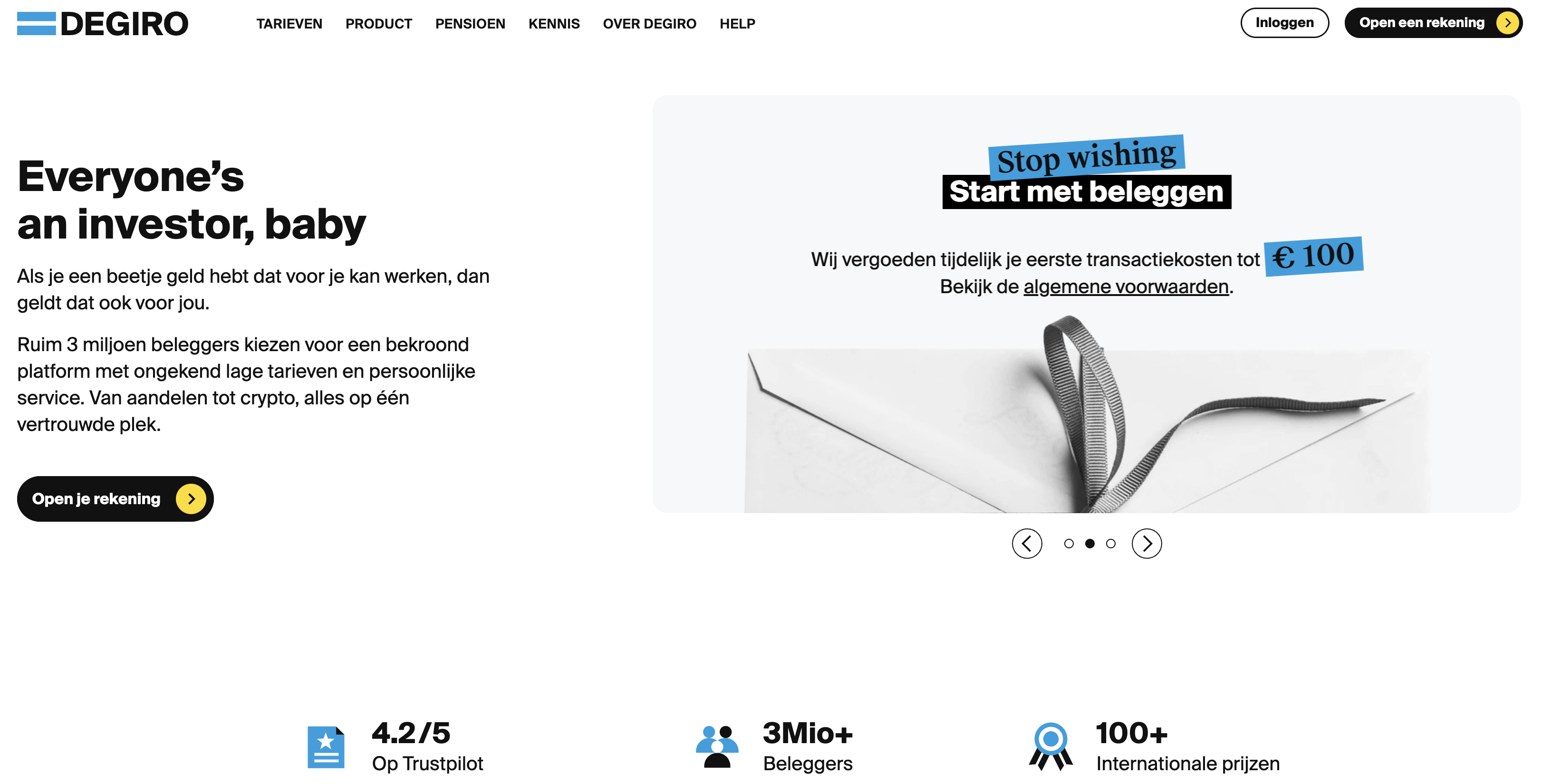
10 European companies
Order Management Providers in Europe
Order management systems handle the lifecycle of financial market orders — creation, routing, execution, modification, and cancellation — across trading venues and asset classes. For institutional investors and trading firms, order management is the operational core of investment activity, connecting portfolio managers to execution systems while maintaining audit trails, compliance controls, and position records.
Typically offered by
European fintech companies offering order management
DEGIRO
Wealth🇳🇱 Netherlands
DEGIRO is a Dutch discount broker built on a single observation: the marginal cost of executing a stock trade is software and settlement, not human labour — so the fees European retail investors were paying bore little relation to what a trade actually cost. Founded in Amsterdam in 2008 by former BinckBank employees, it started as an institutional broker, opened to retail investors in 2013, and undercut the incumbents by a wide enough margin to expand across the continent within a few years.
The product is deliberately unglamorous. No gamification, no social feed, no notification congratulating you on a €5 deposit. DEGIRO offers direct access to dozens of exchanges across Europe and the US, real market data, and low per-trade pricing, and it assumes you already know what you want to buy. That utilitarian positioning has aged well as the novelty of investing apps has faded and European retail investors have matured past the onboarding experience into simply wanting to invest efficiently.
DEGIRO is no longer independent. German broker flatex AG agreed to acquire it for around €250 million in December 2019, with the legal merger into flatexDEGIRO Bank completing in May 2021. The combined group trades on the Frankfurt Stock Exchange, joined the MDAX in March 2025, and converted from an AG to a European Company (SE) at the end of 2025. It now runs three brands — DEGIRO for international European markets, flatex for Germany and Austria, and ViTrade for active traders — together serving more than 3.5 million customers across 16 countries, with over €95 billion in assets under custody and more than 75 million transactions a year. Group revenue reached €559.8 million in 2025 with net income of €160.4 million, up from €71.9 million in 2023.
The regulatory record is less tidy than the pricing story. The Dutch AFM fined the bank €2 million in 2022 over late and inaccurate reporting of unusual transactions, reduced to €797,500 on appeal in 2025. BaFin has issued a series of penalties: €1.05 million in 2023 for breaches of banking supervisory rules, accompanied by additional capital requirements and a special representative appointed to oversee remediation; €560,000 in December 2025 for advertising free investment services without clearly disclosing that a processing fee applied; and €1 million in April 2026 for failing to publish inside information promptly. Leadership has churned alongside it — CEO Frank Niehage resigned in 2024 after a public dispute with founder and major shareholder Bernd Förtsch, and former Morgan Stanley Europe CEO Oliver Behrens took over that October.
Founded 2013
ION Group
Financial Infrastructure🇬🇧 United Kingdom
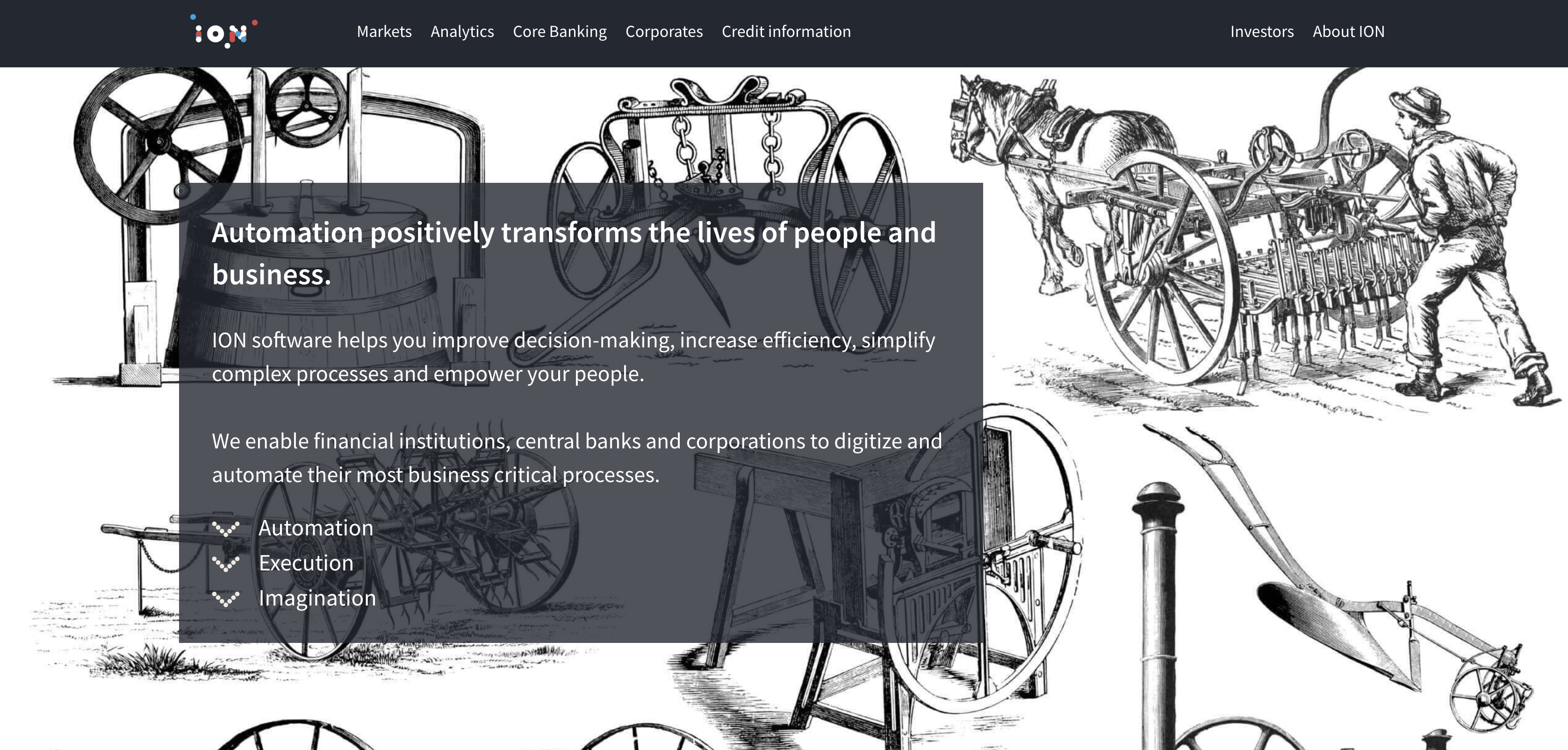
Andrea Pignataro founded ION in London in 1999, after leaving a trading role at Salomon Brothers with a conviction that the software running global markets was held together with too much manual process. Over the following two and a half decades he built ION into one of the largest, most acquisitive players in capital-markets technology — absorbing dozens of specialist vendors, including Fidessa and Broadway Technology, and folding them into a single group.
The core business is still the unglamorous plumbing of institutional finance: trading platforms across equities, fixed income, foreign exchange, and cleared derivatives; risk management; post-trade processing; clearing and settlement; and market data. Investment banks, hedge funds, and corporate treasuries run parts of their daily operations on ION's systems, often without their own customers ever knowing it.
Less visible is ION's regulatory technology line. Products including ION LookOut and Fidessa Surveillance handle trade surveillance, market-abuse detection, and regulatory reporting across multiple jurisdictions, and ION's compliance tools have placed in FinTech Global's RegTech 100 list for three consecutive years. It's a smaller part of the business than the trading and post-trade platforms, but a genuine one — which is why ION appears under both Capital Markets and RegTech in this directory, rather than just one.
The company is headquartered in London, employs more than 13,000 people across over 50 offices worldwide, and remains privately held under Pignataro's control — a scale most consumer-facing fintechs never approach, built almost entirely on customers who are themselves in finance.
Founded 1999
Dukascopy
Payments🇨🇭 Switzerland
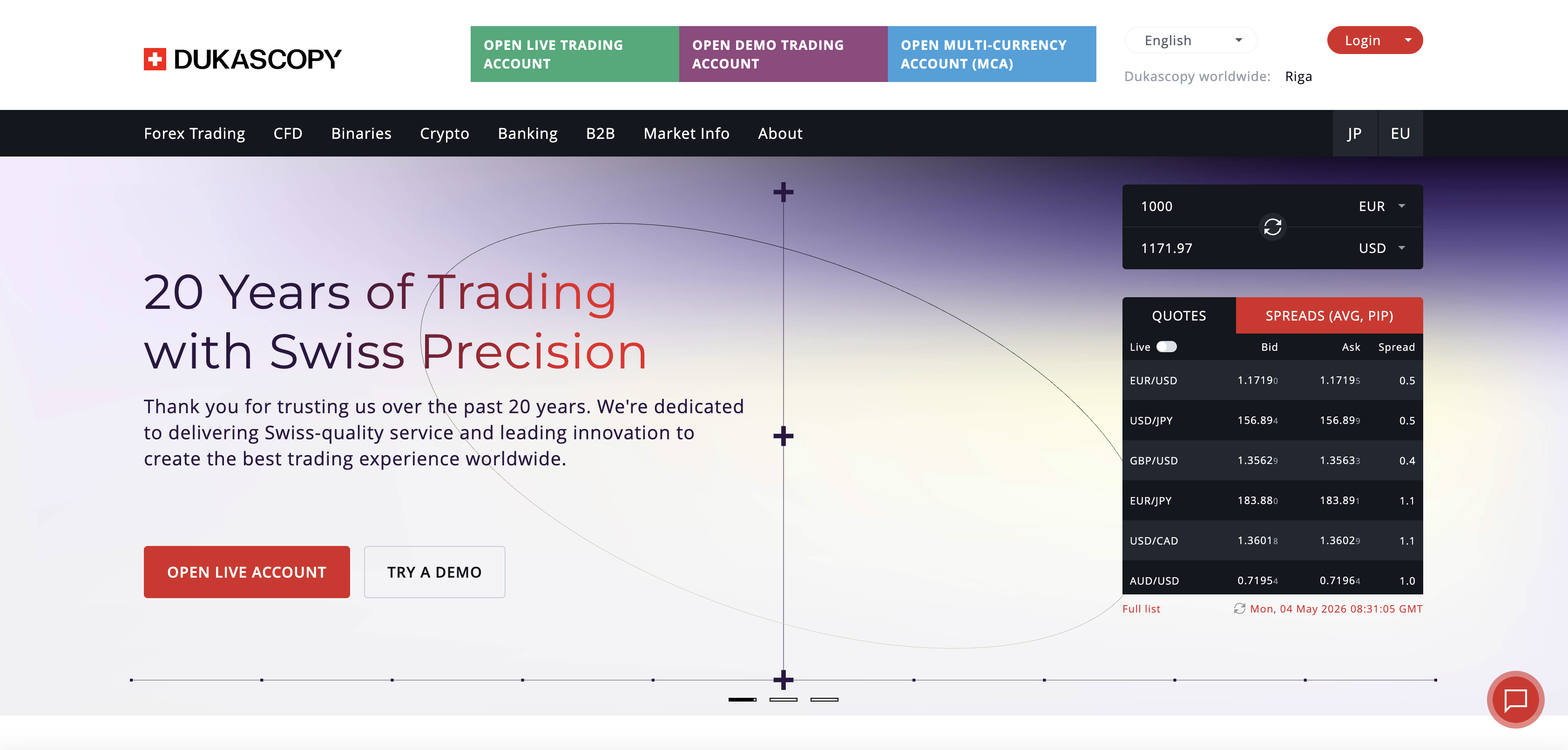
Dukascopy is a Swiss online financial platform that has spent two decades building infrastructure for forex, CFD, and crypto trading. The company operates its own bank and matching engine, which sets it apart from brokers that simply resell liquidity. This infrastructure-first approach means Dukascopy can offer tight spreads and direct market access without hidden markups.
The platform caters to retail traders and small institutions who want institutional-grade tools without the price tag. Its trading terminals rival professional setups, while the mobile app keeps things simple for casual traders. Dukascopy has also moved into crypto custody and blockchain services, positioning itself as a bridge between traditional finance and digital assets.
In the crowded retail trading space, Dukascopy distinguishes itself through ownership and transparency. Many competitors are broker-dealers; Dukascopy is a bank. This matters for client money protection and operational independence. While it lacks the consumer-facing polish of newer fintech apps, it appeals to traders who value substance over hype and appreciate the regulatory weight of Swiss banking.
The company represents a different model in fintech—not a startup chasing growth at all costs, but an established financial institution quietly building depth in forex, crypto, and institutional services.
Founded 2000
Tokeny
Financial Infrastructure🇱🇺 Luxembourg
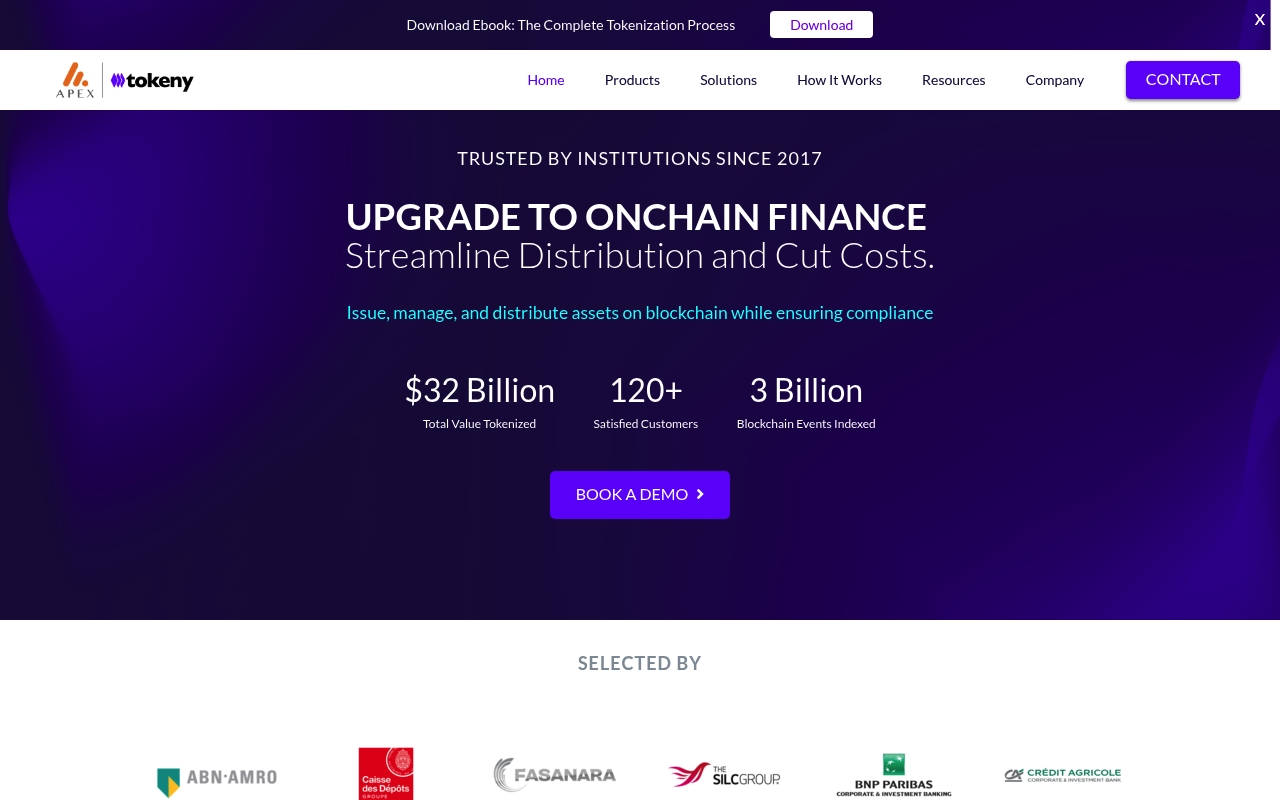
Tokeny sits at the intersection of traditional finance and blockchain, building the infrastructure for institutions to tokenize real-world assets. The company transforms illiquid holdings—real estate, private equity, bonds, commodities—into tradeable digital securities, giving wealth managers and asset owners a way to unlock capital without the friction of traditional markets.
What sets Tokeny apart is its focus on institutional credibility. Rather than chasing retail crypto excitement, the company has built compliance-first tooling that speaks the language of regulators, custodians, and fund administrators. Their platform handles the entire lifecycle: issuance, custody, trading, and settlement, all wrapped in the governance frameworks that institutional clients actually need.
The European fintech scene is crowded with blockchain evangelists; Tokeny reads differently. It's less "decentralize everything" and more "make institutional finance move at digital speed." In a market where real asset tokenization is still nascent, Tokeny occupies the pragmatic middle ground—Web3 infrastructure without the ideology.
The company is positioning itself as essential plumbing for an inevitable shift: the digitization of capital markets. As regulatory frameworks clarify across Europe, tokenization moves from proof-of-concept to production, and Tokeny's early positioning in the institutional layer could prove valuable.
Founded 2017
Symmetrical
Capital Markets🇵🇱 Poland
Symmetrical is building the infrastructure layer for algorithmic trading—think of it as the plumbing that powers modern quantitative finance. Instead of forcing traders and quant teams into rigid, legacy systems, Symmetrical provides a cloud-native platform where they can deploy, backtest, and execute complex trading strategies at scale. The platform abstracts away the messy reality of connecting to multiple exchanges, managing order flow, and handling real-time data feeds, letting teams focus on what actually matters: the algorithm itself. What sets Symmetrical apart is its approach to multi-venue execution and risk management. While traditional venues lock you into their ecosystem, Symmetrical sits above them, orchestrating orders across multiple exchanges and liquidity sources with a single unified API. For European quant funds and prop traders, this matters—especially as market fragmentation makes it harder to find alpha across venues. The company is positioning itself as the operational backbone for a new generation of systematic traders who want speed, flexibility, and control without wrestling with decades-old infrastructure. In a landscape dominated by entrenched trading platforms, Symmetrical represents a reimagining of what modern algo trading infrastructure should actually look like.
Founded 2019
Lemon Markets
Financial Infrastructure🇩🇪 Germany
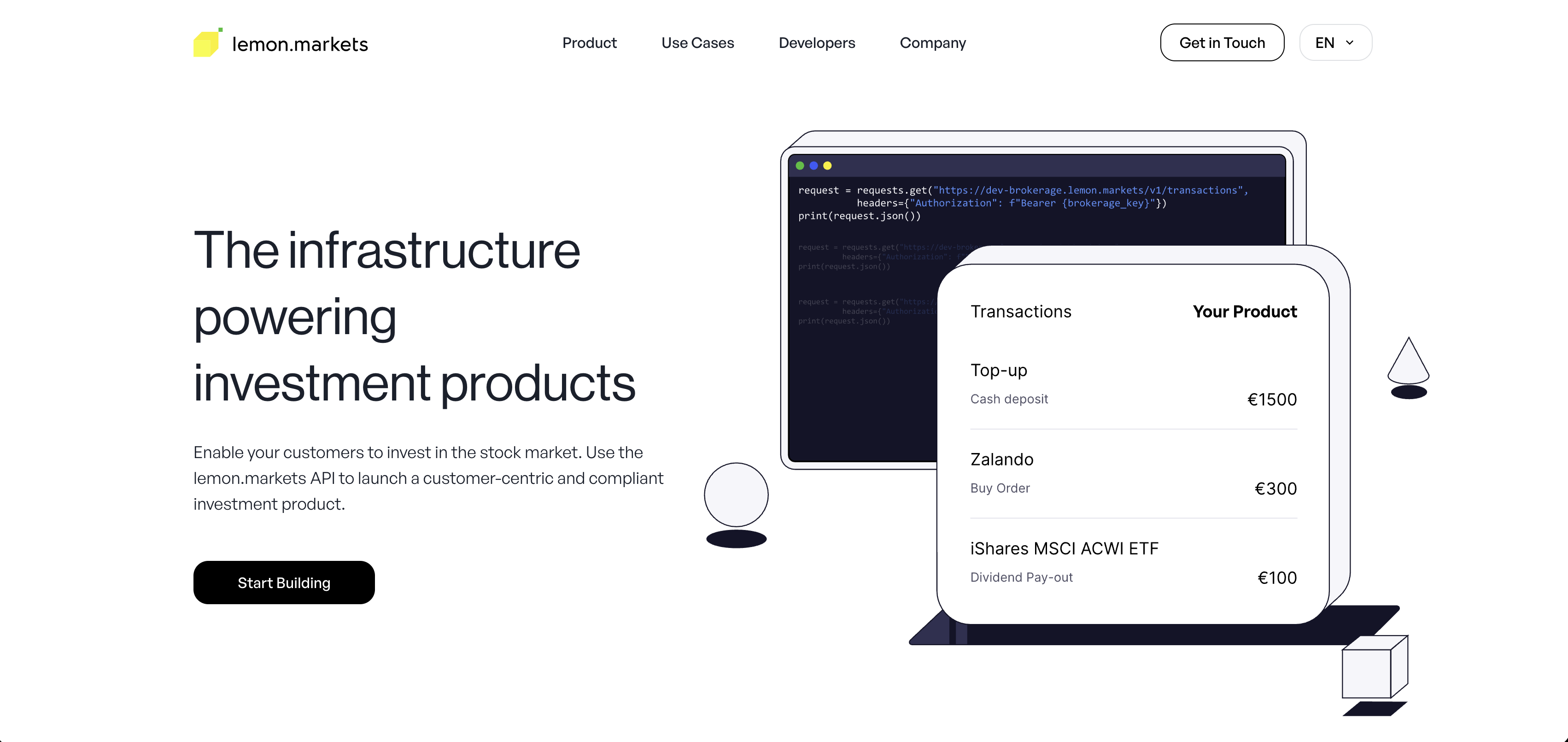
Lemon Markets is a Berlin-based fintech infrastructure platform that has stripped away the complexity of building investment services. Rather than forcing startups and established companies to navigate the labyrinth of European financial regulation and fragmented market access, Lemon Markets provides a modern, API-first foundation for trading, investing, and wealth management applications. The platform essentially democratizes access to European capital markets infrastructure that was previously locked behind expensive integrations and legacy banking relationships.
At its core, Lemon Markets connects to European stock exchanges, clearing houses, and settlement systems through a single, developer-friendly interface. This means a fintech founder can build an investment app without needing to spend months on regulatory approvals or integration nightmares. The company handles the hard infrastructure problems—market data, order routing, settlement, custody—so its clients can focus on user experience and product differentiation.
What sets Lemon Markets apart is its unabashedly technical approach. This isn't a white-label solution dressed up with templates; it's engineering-first infrastructure designed for developers. The platform has gained traction among neo-brokers, robo-advisors, and wealth management platforms across Europe, particularly in Germany, France, and beyond. It occupies a critical middle ground: more flexible and modern than legacy market infrastructure, more affordable and specialized than building everything from scratch or licensing Bloomberg terminals.
In the broader European fintech landscape, Lemon Markets represents a specific bet: that the next wave of investment apps won't be built by reinventing market infrastructure, but by companies that abstract it away entirely. As retail investing and fractional ownership become mainstream expectations, Lemon Markets sits at the plumbing layer that makes this possible.
Founded 2019
June
Financial Infrastructure🇫🇷 France
June is a product analytics platform built for B2B SaaS companies that want to understand user behavior without the engineering overhead. Founded on the principle that analytics shouldn't require data science degrees, it connects directly to your product database and transforms raw events into actionable insights through an intuitive interface. The platform emphasizes simplicity—no SQL required, no data warehouse setup, no weeks of implementation. It's designed for product teams, marketers, and founders who need to answer questions about user engagement, retention, and conversion velocity without waiting for engineers to run queries. June positions itself as the anti-complexity analytics tool in a space dominated by expensive enterprise platforms and code-heavy DIY solutions. Where Amplitude demands technical expertise and Mixpanel requires careful event planning, June lets non-technical users slice, dice, and visualize their product data in minutes. The company appeals to early-stage and growth-stage SaaS founders who recognize that understanding their users is fundamental to building products people actually want. In the broader fintech context, June serves as critical infrastructure for fintech and embedded finance platforms that need to track user adoption, feature usage, and revenue metrics across their product surface.
Founded 2021
Blocktrade
Financial Infrastructure🇸🇮 Slovenia
Blocktrade is a European crypto trading and custody platform that gives institutional investors and professional traders access to digital asset markets without the friction of traditional exchanges. Rather than building another retail-facing crypto app, Blocktrade positions itself as infrastructure for serious money—the kind of counterparty and settlement backbone that banks and funds need when moving between traditional and digital assets.
The platform combines multi-asset trading (spot, futures, derivatives) with institutional-grade custody and settlement, all wrapped in an API-first architecture. This means it works as both a self-service portal for traders and a white-label integration layer for banks and wealth managers looking to offer crypto exposure to their clients.
In a market crowded with retail-facing exchanges, Blocktrade's positioning is decidedly institutional. It emphasizes compliance readiness, banking partnerships, and operational reliability over flashy UX or gamification. The company operates across Europe with a focus on regulated markets, treating regulatory clarity as a competitive advantage rather than a constraint.
Within the European fintech landscape, Blocktrade represents a maturation of the crypto infrastructure layer—moving beyond speculation towards the plumbing that lets traditional finance integrate digital assets into their existing workflows. It's the kind of company that works best when you never hear about it, operating quietly in the background as the rails beneath institutional crypto activity.
Founded 2017
CRX Markets
SME Finance🇩🇪 Germany
CRX Markets was founded in 2012 in Munich and set out to fix a problem every large company knows well: waiting 60 or 90 days to get paid on an invoice, while suppliers further down the chain wait even longer.
The tools are receivables finance and reverse factoring — selling an outstanding invoice to a bank or investor at a discount for cash today instead of at maturity. Neither technique is new; what CRX built is the marketplace layer around them, an automated platform connecting corporates to a network of more than 50 banks, institutional investors, and factoring companies, so that payables and receivables financing gets priced competitively instead of negotiated bank by bank.
The volumes are now substantial for a company most people outside corporate treasury departments have never heard of: more than EUR 2 billion in financing volume moves through the platform every month, cumulative volume has passed EUR 20 billion since launch, and the marketplace runs in more than 60 countries. CRX has also pushed into Sustainable Supply Chain Finance, tying supplier financing terms to ESG performance, and partnered with the IFC in 2025 to extend that model into emerging-market supply chains.
CRX is not a bank or a payments company — it is working-capital plumbing, the kind of infrastructure that keeps large buyer-supplier relationships liquid and that nobody notices until it is gone.
Founded 2012
Synofin
Financial Infrastructure🇱🇮 Liechtenstein
Synofin operates in the unglamorous but essential corner of finance where institutions actually move money around. Based in Liechtenstein, it's built a platform for asset managers, wealth advisors, and financial institutions to orchestrate complex multi-asset transactions without the operational friction that usually comes with them. Rather than chasing the retail investing boom or the fintech headlines, Synofin focuses on the plumbing—the execution systems, settlement infrastructure, and order management that larger players need to function at scale. Their approach addresses a real pain point: institutions currently juggle fragmented systems, manual reconciliation, and operational bottlenecks when handling multiple asset classes and counterparties. Synofin's platform consolidates these workflows into a single execution and settlement layer. It's the kind of infrastructure play that doesn't get much press but quietly becomes indispensable once embedded in institutional workflows. In the European institutional finance space, where inefficiency still costs millions annually, Synofin represents a pragmatic automation story—less disruption, more operational reality.