← All services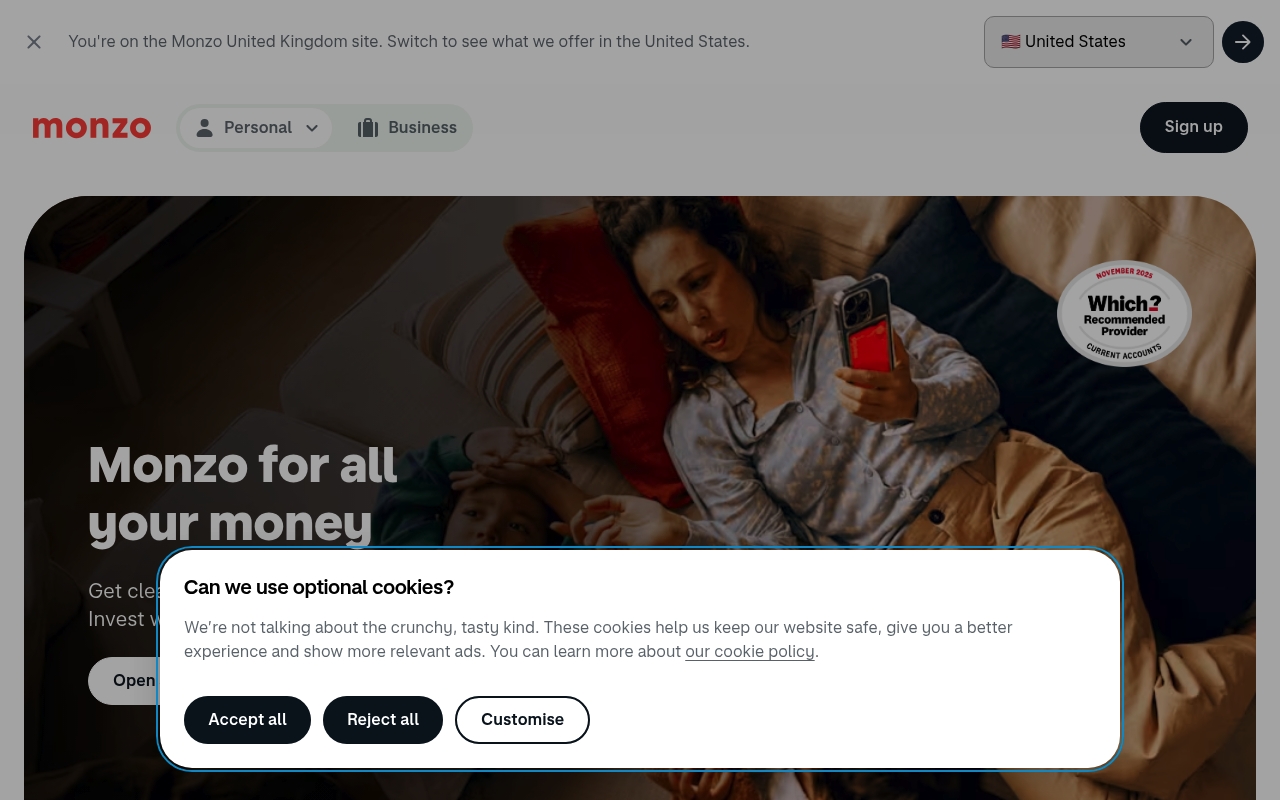

47 European companies
Expense Tracking Providers in Europe
Expense tracking provides detailed visibility into spending patterns across transactions — categorising purchases, identifying merchants, flagging unusual activity, and producing spending summaries. Open banking has made real-time expense tracking dramatically more accurate by replacing manual entry with automatic transaction data from bank accounts, making it practical for both consumer budgeting and business bookkeeping.
Typically offered by
European fintech companies offering expense tracking
Monzo
Wealth🇬🇧 United Kingdom
The founding team that built Monzo had all worked together before — at Starling Bank, another challenger startup that didn't survive its internal conflicts. Tom Blomfield, Gary Dolman, Jonas Huckestein, Jason Bates, and Paul Rippon left together in 2015 and started again. The product was initially a prepaid card — a coral-coloured piece of plastic that became one of the most recognisable objects in British fintech — before becoming a fully licensed current account in 2017. The early community was unusual for a bank: public engineering blogs, user forums, beta programmes, and a 2016 crowdfunding round that raised £1 million in 96 seconds, a world record. People felt ownership of the product in a way no high street bank had ever achieved, and that emotional connection became a durable competitive advantage.
A decade on, the results have caught up with the mythology. For the year to March 2026, Monzo reported revenue of £1.71 billion, up 39%, with gross profit crossing £1 billion for the first time and a third consecutive year in the black — statutory pre-tax profit of £87.3 million, up 44%, or £172.6 million adjusted for restructuring charges and a roughly £21 million FCA fine over historical financial-crime control failings. The bank added a record three million customers to reach 15.2 million — one in five UK adults — with deposits up 55% to £25.7 billion, 1.6 million paying subscribers, and business banking growing 45% to 905,000 customers and 14% of revenue. Four separate income streams — current account balances, borrowing, payments, and wealth — each now clear £300 million. Half of active customers use Monzo as their primary bank, which shows up in the metric that anchors every valuation conversation: revenue per active personal customer of £167, against Revolut's £66. The gap is the difference between being someone's bank and being their travel card.
Leadership and strategy both turned over during the year. Diana Layfield, a former Google executive, took over as CEO in February 2026 following TS Anil's departure — a transition shaped in part by board tensions over IPO venue and the company's UK concentration. Her first significant moves were decisive: Monzo closed its US operations entirely, and redirected the international ambition at Europe, where it secured a banking licence from the Central Bank of Ireland, launched in Ireland to a 100,000-person waitlist, and named Spain as the next market. The acquisition of digital mortgage broker Habito completed on 1 April 2026, giving the bank a capital-efficient route into mortgages — a product more than 550,000 customers were already tracking in the app. Costs rose with the ambition: the cost-to-income ratio ticked up to 74% as hiring and marketing accelerated.
Monzo remains private, valued at approximately $5.9 billion in its 2024 secondary sale, and Layfield has told the FT she is "not in a hurry" to list. The strategic bet of this chapter is clear and genuinely contestable: that Monzo's deep-relationship, primary-bank model — expensive to build, lucrative per customer — can be exported to European markets where Revolut arrived a decade earlier with the opposite playbook. The UK numbers say the model works. Europe will say whether it travels.
Founded 2015
Starling Bank
Digital Banking🇬🇧 United Kingdom
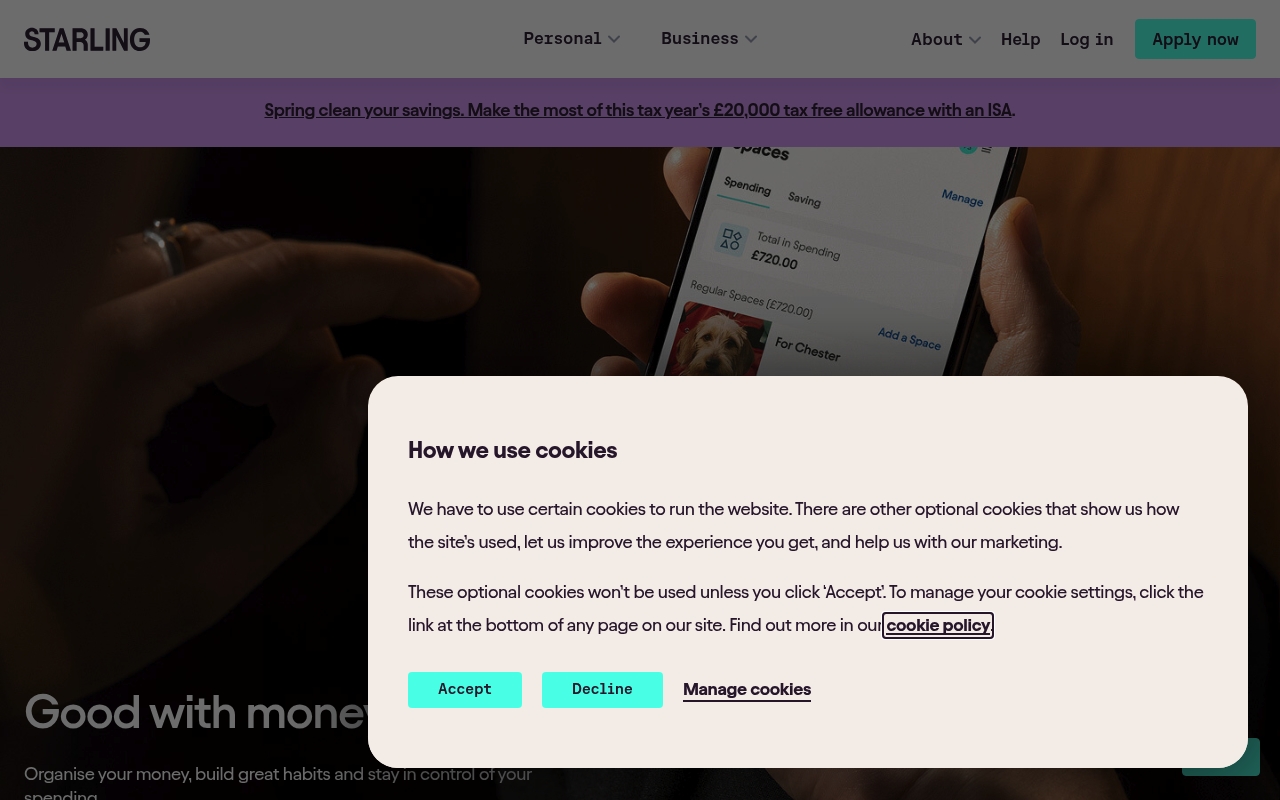
Starling is a UK digital bank offering personal and business current accounts entirely through a mobile app, with no branches. Founded in January 2014 by Anne Boden, a former Allied Irish Banks COO, it secured a full UK banking licence in 2016 — a distinction that matters more than it sounds. Unlike neobanks that operate on a partner institution's licence, Starling is a bank in its own right, regulated by the FCA and PRA, with deposits FSCS-protected.
It also built its own core banking technology rather than licensing someone else's, and that decision turned out to have a second act. Engine by Starling packages that technology as software-as-a-service and sells it to other banks: Salt Bank in Romania and AMP Bank in Australia were the first clients live on the platform, and Starling is now pushing Engine into North America and the Middle East, targeting what CEO Raman Bhatia has called a £100 billion addressable market. For a bank whose retail footprint stops at the UK border, Engine is the international growth story — and the reason Starling turns up in Banking-as-a-Service conversations as often as digital banking ones.
The core bank remains strong but is no longer on a simple upward curve. Starling reported its fifth consecutive profitable year in 2026, with pre-tax profit of roughly £217 million on £887 million of revenue, serving around 3.5 million personal and business customers, and it has been named Which? Banking Brand of the Year three years running. But that result marked a second straight annual decline, after a 26% profit drop the year before, driven by provisions for pandemic-era Bounce Back Loan issues and a regulatory penalty.
That penalty is the part most profiles leave out. In October 2024 the FCA fined Starling £29 million over anti-money laundering and sanctions screening failures, finding the bank had opened more than 54,000 accounts for high-risk customers in breach of an agreed restriction, and that its screening system had been checking customers against only a fraction of the UK sanctions list since 2017. Starling accepted the findings, apologised, and has invested heavily in remediation — but the episode illustrates the defining challenge of the challenger-bank model: compliance infrastructure that struggles to keep pace with customer growth.
Anne Boden stepped down as CEO in 2023 and left the board in 2024. Raman Bhatia, formerly CEO of OVO and head of HSBC's UK and European digital bank, took over in 2024 and has spent his tenure working through the legacy issues while repositioning the company's growth story around Engine. The bank dropped "Bank" from its name in a September 2025 rebrand.
Founded 2014
Pockit
Digital Banking🇬🇧 United Kingdom
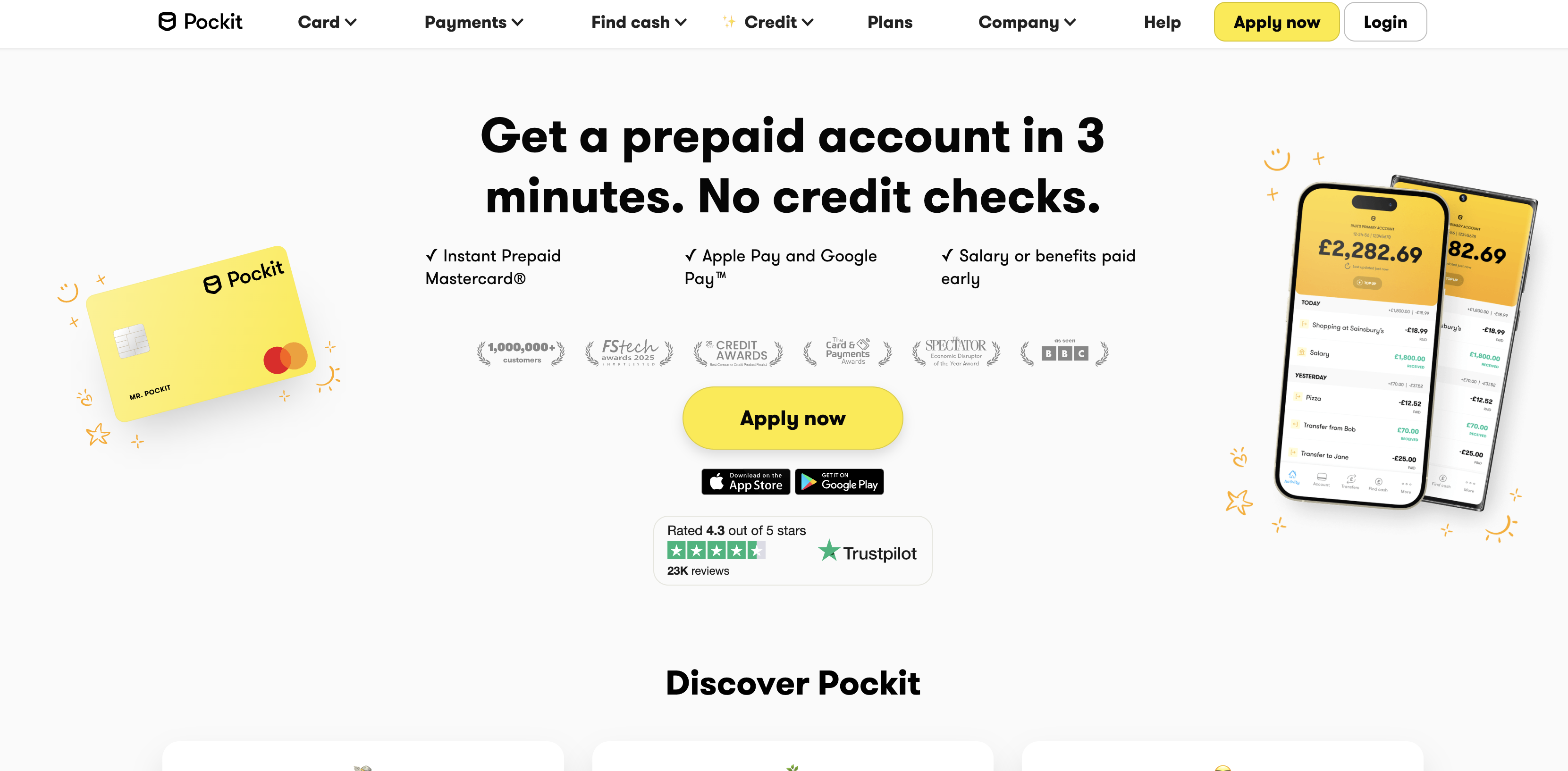
Every UK neobank claims to serve people the banks ignore. Pockit actually built its business there. Founded by Virraj Jatania in 2014 as a prepaid card, it grew into a digital account for the roughly 17.5 million UK adults underserved by mainstream banking — people with thin credit files, irregular incomes, or histories that fail high-street onboarding. The product set follows the customer: a simple account and card, cross-border transfers, early wage access, credit building, and cashback — priced as a utility rather than a lifestyle brand. It is the unfashionable end of consumer fintech, and Pockit's bet has always been that unfashionable segments are where loyalty and margins survive, precisely because nobody else is competing for them. The company also carries a scar that shaped it: in 2020, when the FCA froze Wirecard Card Solutions during the Wirecard collapse, Pockit customers were locked out of their money for days — a formative lesson in the risks of renting critical infrastructure.
The transformational move came in October 2024, when Pockit acquired Monese — the pan-European money app founded by Estonian entrepreneur Norris Koppel in 2015 — for a reported £15 million. The price is the story: Monese had raised more than $200 million from investors including HSBC, Kinnevik, and PayPal, and HSBC had already written its stake down to zero. What was a wipeout for Monese's cap table was a coup for Pockit's: the combined group serves roughly three million customers, generates around £30 million in annual revenue, and processes about £5 billion in transactions a year. Just as valuable, Monese brought e-money and consumer credit licences that cut Pockit's transaction costs and open the path to lending products for a customer base otherwise pushed toward high-cost credit — the loan-shark alternative Jatania cites as the mission's sharpest edge. Monese's B2B platform, XYB, was excluded from the deal.
Pockit is backed by Puma Growth Partners and Maven Capital, with a cap table that includes Sir Alex Ferguson, private equity veteran Jon Moulton, and the UK's Future Fund; it raised £10 million in growth funding in 2024 ahead of the acquisition. The integration has been real — headcount stands around 52 after consolidation, against the 100 Monese staff who joined at completion. Jatania's public thesis is that UK fintech is entering a consolidation phase, and Pockit is the proof-of-concept: while Monzo and Revolut fight for the mass market at nine-figure marketing budgets, Pockit is quietly rolling up the segment beneath them — buying at distressed prices the customers that cost its rivals £50 a head to acquire. Whether a low-margin customer base can support a lending business profitably is the open question; the licences to find out are now in hand.
Founded 2015
Payhawk
Embedded Finance🇧🇬 Bulgaria
Most companies still manage corporate spending the way they did a decade ago—expense reports, manual reconciliation, scattered receipts. Payhawk has built something radically simpler: a unified spending platform that gives finance teams complete visibility into every company transaction, from the moment it's authorized to the moment it's reconciled. The platform combines physical and virtual cards, automated expense management, and real-time spend controls in a single dashboard.
What sets Payhawk apart in the crowded corporate finance space is its refusal to compromise on user experience. Employees aren't fighting clunky interfaces or wrestling with legacy systems. Instead, they get an intuitive mobile app that feels like personal fintech, while finance teams gain the analytical firepower to actually manage policy, catch fraud, and optimize spending patterns. The company treats visibility not as a nice-to-have but as the foundation of control.
In Europe's SME and mid-market space, where most alternatives still rely on outdated card programs or disconnected software suites, Payhawk's integration of issuance, spend management, and analytics represents a meaningful shift. The company has quietly built something that enterprises have wanted for years: a spending platform that doesn't require compromise between employee experience and financial governance. For finance leaders tired of spreadsheets and reactive reporting, it's become the natural choice.
Founded 2019
Taxfix
RegTech🇩🇪 Germany
Filing a tax return in Germany is a national ordeal. The forms assume knowledge most people don't have, the deadlines carry penalties, and millions of employees simply never file — leaving refunds unclaimed because claiming them requires understanding a system designed by and for specialists. Mathis Büchi and Lino Teuteberg founded Taxfix in Berlin in 2016 on the observation that this was a user-interface problem wearing a tax-law costume.
The product replaces forms with a conversation. A dynamic questionnaire asks plain-language questions, skips everything irrelevant to the answers given, accepts a photograph of a payslip instead of manual data entry, and files directly with the tax office through Germany's ELSTER integration. The pricing was equally deliberate: a flat fee charged only when the refund exceeds a threshold, so the product is free to anyone it can't help. For customers who want more, an expert service hands the return to a tax adviser. The results are substantial — the company reports more than five million returns submitted and billions of euros in refunds returned to users.
Taxfix reached unicorn status with a $220 million Series D in April 2022, led by Teachers' Venture Growth, part of the Ontario Teachers' Pension Plan, with Index Ventures, Valar Ventures, Creandum and Redalpine participating — taking total funding past $330 million at a valuation above $1 billion. Martin Ott is chief executive. Expansion has been through acquisition as much as organic growth: the company bought Steuerbot, a German competitor, and TaxScouts in 2024, and operates across Germany, Italy, Spain and the UK.
That geography is the strategic crux. European tax filing is fragmented in a way that makes it both a large opportunity and a hard business — every market has its own rules, its own filing infrastructure, its own deadlines and its own advisory profession, so almost nothing built for Germany transfers to Spain beyond the interface philosophy. It's the same fragmentation that protects the business from a US entrant arriving with an existing product, and the same fragmentation that makes each new market a full build. The seasonality is unforgiving too — consumer tax filing generates most of its revenue in a few months of the year. Taxfix's answer, visible in the Instant Refund product that advances half a refund within a business day, is to widen from filing into adjacent financial services where the relationship can be year-round.
Founded 2016
Credit Spring
Lending🇬🇧 United Kingdom
Credit Spring is a UK-based fintech that treats financial distress like a health problem—one that deserves diagnosis and treatment, not judgment. Rather than simply offering credit, the company combines short-term loans with financial coaching and debt management tools, recognizing that a quick cash injection without context is often a band-aid on a bigger problem. The platform helps borrowers understand their spending patterns and rebuild their financial foundation, not just patch a temporary shortfall. It's a provocative stance in a market crowded with BNPL and payday lenders that rarely ask why someone needs money in the first place. Credit Spring targets people in the credit-vulnerable segment—those with poor or limited credit histories who'd normally be shut out of mainstream lending. Instead of algorithmic rejection, the company uses alternative data and behavioral insights to assess creditworthiness beyond traditional scoring. For users, this means faster access to reasonable credit at transparent rates. For the market, it signals a shift toward lending that acknowledges financial fragility as a temporary state, not a permanent condition. The company represents a broader move within fintech to attach financial wellness services to credit products, treating lending as an entry point to deeper financial health rather than a transaction.
Founded 2016
Fintonic
Open Banking🇪🇸 Spain
Fintonic is a Spanish fintech that has spent the better part of a decade helping everyday Europeans understand what they're actually spending money on. Rather than reinvent banking from scratch, it acts as a layer on top of your existing accounts—aggregating transactions, categorizing expenses, and surfacing insights that most banks still bury in PDF statements. The app feels less like financial software and more like a personal finance companion that speaks plain language. You link your bank accounts, and Fintonic does the unglamorous work: tracking subscriptions you forgot about, highlighting spending patterns, flagging unusual transactions. It's deliberately unglamorous work, because the real value sits in simplicity. What sets Fintonic apart in a crowded personal finance space is its focus on the European user. The platform understands local banking infrastructure, multi-currency households, and the specific pain points of cross-border living. It's not trying to be your investment platform or your savings app or your lending provider—it's trying to be the one thing most people actually need: clarity on money that's already moving. For a generation that finds traditional banking UX infuriating, Fintonic occupies the pragmatic middle ground: minimal, useful, and genuinely designed for how Europeans actually manage money.
Founded 2011
Silvr
Digital Banking🇫🇷 France
Silvr is a digital banking platform built specifically for the self-employed and freelance economy. The company targets creators, gig workers, and independent professionals who fall through the cracks of traditional banking—people running legitimate businesses but operating outside conventional employment structures. Rather than forcing them into generic business bank accounts designed for SMEs, Silvr offers tailored financial tools that actually reflect how modern independent work operates.
The platform combines a business current account with integrated financial management features: invoicing, expense tracking, tax planning, and automated bookkeeping. Silvr handles the friction points that plague freelancers—irregular income patterns, complex tax obligations, cash flow volatility—by building visibility and automation directly into the banking layer. It's not a neobank trying to be all things to all people; it's purpose-built around the specific financial rhythm of self-employment.
In a market dominated by legacy banks treating freelancers as afterthoughts and generic challenger banks treating them as just another customer segment, Silvr occupies a distinct position. It understands that the self-employed need different banking primitives, not just a prettier interface. The company sits at the intersection of business banking, fintech, and the creator economy—a segment the traditional sector has largely ignored.
Silvr represents a broader fintech trend toward hyper-segmentation and behavioral specificity. Rather than chasing scale through mass-market appeal, it's building moat through deep product fit with an underserved but economically significant cohort.
Founded 2021
Blackcat
SME Finance🇩🇪 Germany
Blackcat is a German fintech platform designed to help freelancers and self-employed professionals manage their finances with minimal friction. Rather than forcing users into complex accounting workflows, Blackcat simplifies the entire money flow—from invoicing to tax filing—with a mobile-first interface that feels more like a consumer app than enterprise software.
The platform tackles a real pain point in the European freelance economy: most existing tools are either bloated legacy systems or fragmented point solutions that don't talk to each other. Blackcat bundles invoicing, expense tracking, tax preparation, and business banking into one coherent experience, removing the cognitive load of juggling multiple services.
What sets Blackcat apart is its opinionated approach to simplicity. Rather than mirroring traditional accounting software's feature sprawl, it prioritizes the workflows that matter most to freelancers—getting paid faster, documenting expenses, and staying tax-compliant without the headache. The platform's integration with German tax authorities and compliance frameworks positions it as particularly valuable in the DACH region, where self-employed taxation can be notoriously complex.
In a market crowded with accounting tools and SME platforms, Blackcat represents a new generation of fintech that starts with the freelancer's actual needs rather than retrofitting legacy processes into a digital wrapper. It's part of a broader shift toward consolidated SME finance platforms that understand that complexity itself is the problem.
Ramp
Financial Infrastructure🇵🇱 Poland
Ramp is rewriting how companies spend money. Built for finance teams tired of spreadsheets and manual processes, it combines a corporate card, expense management, and accounting integrations into a single platform that actually talks to the software finance teams already use. Most corporate card programs feel like they were designed in 1995. Ramp feels like software built this decade—mobile-first, API-forward, and deeply integrated with tools like NetSuite and QuickBooks. The company started by solving a real problem: CFOs and controllers wasting hours reconciling card statements and expense reports. Instead of patching that broken workflow, Ramp replaced it entirely. You get a card, real-time spending controls, automated categorization, and instant syncing to your accounting system. No more manual entries, no more approval bottlenecks, no more spreadsheet chaos. The platform goes deeper than most competitors by combining physical and virtual cards with embedded controls—spend limits by department, merchant category, or individual employee. Finance teams can actually enforce policy in real time rather than auditing violations weeks later. Ramp operates in a crowded space, but it's differentiated by speed and simplicity. Where competitors try to be everything to everyone, Ramp has kept focus on what CFOs actually care about: reducing manual work, improving visibility, and cutting unnecessary spending. Its integration-first approach means it's not trying to replace your entire finance stack—it's designed to slot in and make your existing tools work harder. For mid-market companies tired of manual expense management and lacking the complexity of enterprise-grade solutions, Ramp has become the obvious choice. It's also been ruthless about profitability, reaching positive unit economics early, which matters in a category where many competitors burned through billions before proving their model worked.
Founded 2019
Spendesk
Payments🇫🇷 France
Spendesk cuts through the chaos of corporate spending. It's a unified platform where teams manage expenses, issue corporate cards, approve invoices, and reconcile everything in one place—no more spreadsheets shuffled across email chains or finance teams drowning in admin work.
The platform sits somewhere between a spend management tool and a modern finance operating system. Companies connect their bank accounts, set spending rules, issue virtual or physical cards to employees, and watch transactions flow into an automated approval workflow. Invoices get coded automatically. Reconciliation happens in real time. The whole thing syncs with accounting software so the numbers always match reality.
What makes Spendesk different is that it treats spend management as a team sport, not a back-office chore. It's built for the actual workflows that modern finance teams use: expense reports that don't feel like punishment, card management that doesn't require IT involvement, and visibility that doesn't require a Ph.D. in Excel. Most competitors bolt features together; Spendesk designed the experience first.
In a market crowded with point solutions and legacy software masquerading as modern, Spendesk has become the de facto standard for mid-market companies in Europe that want to stop thinking about spending and start optimizing it. It's now a critical piece of infrastructure in how thousands of companies handle money.
Founded 2015
Accountable
SME Finance🇧🇪 Belgium
Accountable helps freelancers manage taxes, expenses, and accounting from an app.
Founded 2017
Showing 12 of 47 companies. View all in the directory →