DatabaseServicesArticlesCountriesGlossaryNewsletterRequest listing
← All countries
🇫🇷

Fintech in France

52 companies·View all in directory →
About the France fintech ecosystem

France has built one of Europe's most substantial fintech ecosystems over the past decade, with Paris establishing itself as the leading continental European fintech hub. The Station F campus, EuraTechnologies in Lille, and the broader French Tech initiative have created infrastructure for fintech startups that has attracted both domestic founders and international companies choosing Paris as their European base.

The French fintech landscape has distinctive characteristics shaped by the country's financial culture. Business finance has been a particularly strong category — Qonto, Pennylane, Spendesk, and Agicap have built significant businesses serving French SMEs whose needs have been consistently underserved by the major French banks. The payments category has also produced significant companies including Mangopay, Lemonway, and Alma, leveraging France's large e-commerce market and the regulatory framework created by the Banque de France.

French regulation through the ACPR (Autorité de Contrôle Prudentiel et de Résolution) has been relatively supportive of fintech innovation, with a clear licensing framework for payment institutions, electronic money institutions, and investment service providers. The French government's active promotion of the French Tech brand internationally has raised the profile of French fintechs in investor and partner markets outside France.

Fintech companies based in France

Paymium
Paymium
Crypto & Blockchain
Bitcoin exchanges in Europe's early crypto years were characterised by technical fragility, regulatory opacity, and the constant possibility that the platform you were using would simply disappear. Paymium was founded in Paris in 2011 as one of Europe's first Bitcoin exchanges and has the unusual distinction of still operating today — a survival record that sets it apart from the majority of its early-era peers. Its longevity reflects a deliberate choice to operate as a regulated financial institution from the beginning, obtaining French regulatory authorisation and maintaining compliance standards that many early crypto platforms treated as optional. Paymium serves both retail and institutional users in the French market, offering Bitcoin trading with the regulatory framework and consumer protection standards of a licensed payment institution. In the contemporary European crypto landscape — dominated by Coinbase, Binance, and Kraken — Paymium is a niche player by volume but a significant one by longevity and regulatory credibility. For French institutional investors and the segment of retail users who prioritise regulatory protection over trading fees, Paymium's fifteen-year track record of compliant operation is a genuine differentiator in an industry where that record is extraordinarily rare.
Founded 2011
Orange Bank
Orange Bank
Digital Banking
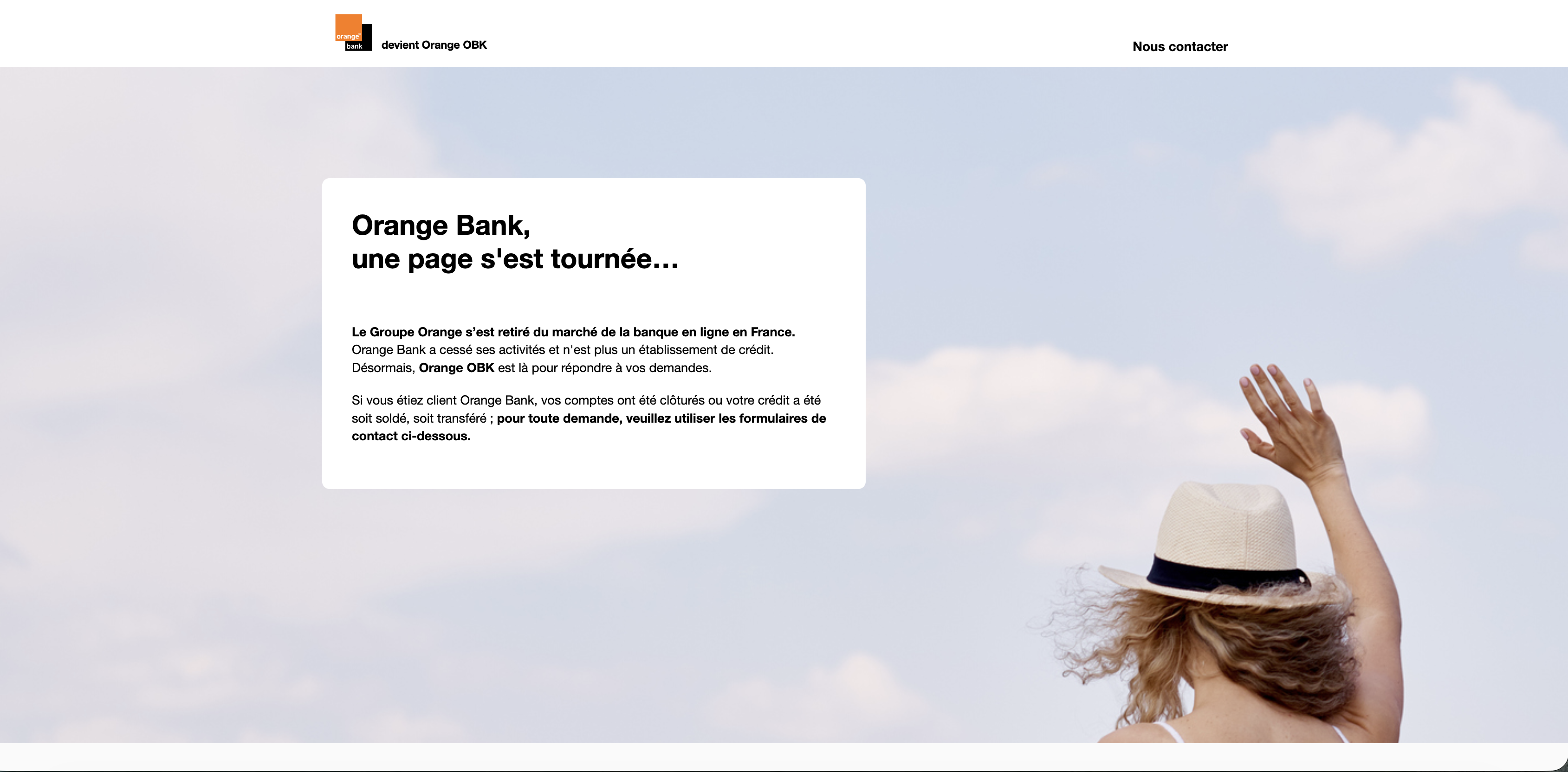
Orange Bank is France's straightforward answer to digital banking, born from the telecom giant Orange's pivot into retail finance. Rather than reinventing the wheel with flashy features, it focuses on delivering genuine utility: competitive savings rates, no-fee accounts, and a mobile experience that feels native to French users who already trust Orange's infrastructure. The brand trades on Orange's massive distribution reach and existing customer relationships, offering a credible alternative to both traditional banks and the newer neobank crowd. Where many challenger banks chase viral growth, Orange Bank plays the long game—leveraging a parent company with real retail presence across France. It's banking designed for people who want simplicity without sacrificing control: straightforward pricing, transparent terms, and the backing of one of Europe's largest telecoms. In the European digital banking landscape, Orange Bank represents a hybrid model: the scale and trust of an incumbent, the agility and user focus of a challenger. It proves you don't need to be born digital to compete in digital—you just need to execute without the legacy baggage. But execution, as it turned out, was precisely where the story became more complicated. Despite its strong foundations, Orange Bank struggled to achieve the scale and profitability needed to justify its ambitions. Customer acquisition proved slower and more expensive than expected, and the competitive pressure from nimble fintech players—and increasingly digitized traditional banks—tightened margins. What was meant to be a steady, long-term play began to look like a costly experiment. Eventually, Orange made the pragmatic decision to step back. The bank began winding down its retail operations, marking a quiet end to a bold attempt at convergence between telecom and finance. For customers, the impact was managed and orderly. For the industry, however, it served as a clear signal: brand trust and distribution alone are not enough to win in digital banking. The lesson from Orange Bank isn’t that incumbents can’t innovate—it’s that entering financial services requires more than adjacency and scale. It demands relentless focus, deep specialization, and a willingness to compete in a space where margins are thin and expectations are high. Orange Bank showed what’s possible when a non-bank enters finance—but also highlighted just how hard it is to stay there.
Founded 2017
Qonto
Qonto
Payments
Qonto is a European business banking platform that treats SMEs and freelancers the way tech-forward founders wish their banks would: fast, transparent, and built for how modern companies actually operate. Instead of waiting days for payments to clear or wrestling with legacy banking interfaces, Qonto users get instant payments, real-time visibility across their accounts, and integrations that sync seamlessly with their existing tools. The platform lives at the intersection of traditional banking and fintech simplicity. Qonto handles everything from multi-currency accounts and payment processing to expense management and financial reporting, all from a mobile-first interface that feels like an app, not a bank. The company has quietly become the go-to choice for growing SMEs across Europe who want banking that doesn't slow them down. What sets Qonto apart in a crowded B2B banking space is its obsessive focus on the user experience and its commitment to European expansion. While many neobanks either chase mass-market consumers or hide behind enterprise complexity, Qonto sits in a sweet spot: accessible enough for a solo founder, powerful enough for teams managing millions in annual revenue. The company's growth across France, Germany, Spain, Italy, and beyond reflects a simple truth: European businesses have been waiting for a bank that understands their needs. As European business banking undergoes its biggest transformation in decades, Qonto stands as proof that the future of SME finance isn't about moving fast and breaking things—it's about moving fast and building things that actually work.
Founded 2016
PayFit
PayFit
SME Finance
PayFit is a French payroll and HR software platform that automates the tedious work of managing employee compensation, benefits, and compliance across Europe. Founded in 2015, the company has built something genuinely useful: a system that lets mid-market companies and SMEs stop wrestling with spreadsheets and outdated payroll systems, and instead manage their entire workforce in one place. The platform handles everything from salary calculations and tax filings to expense reports and leave management—work that traditionally demanded a dedicated HR department or expensive outsourcing. What sets PayFit apart is its focus on reducing administrative friction rather than just digitizing existing processes. The interface feels designed for actual users, not consultants. It integrates with accounting software and handles the increasingly complex regulatory landscape across France, Germany, Spain, and the UK, where employment law differs wildly but payroll headaches remain universal. In Europe's fragmented payroll software market, where legacy providers still dominate through inertia, PayFit represents a generational shift toward cloud-first, mobile-friendly HR operations. The company competes less on features (though it has plenty) and more on making payroll feel like a solved problem rather than an annual migraine. It's the kind of infrastructure play that startups and growth companies build themselves around once they've used it—not flashy, but fundamentally necessary.
Founded 2015
Blank
Blank
Digital Banking
Blank provides freelancers with a business account, insurance, and admin support.
Younited
Younited
Embedded Finance
Younited provides instant credit and embedded lending across Europe.
Founded 2009
Kyriba
Kyriba
Treasury
Kyriba is a cloud-native treasury and finance platform that sits at the intersection of corporate finance operations and intelligent automation. Rather than patching together spreadsheets and legacy systems, Kyriba consolidates cash management, liquidity forecasting, and working capital visibility into a single operating system for finance teams. Think of it as the command center for CFOs who are tired of fragmented data and manual workflows. The platform handles everything from multi-currency cash positioning to FX hedging and supply chain financing, all orchestrated through APIs that plug into banks and accounting systems. It's built for mid-market to enterprise companies that move serious money across borders and need to know exactly where every dollar sits at any given moment. Kyriba doesn't try to be a banker or a startup darling—it's an industrial-grade tool that speaks the language of corporate treasurers. In the European treasury space, Kyriba competes with legacy software vendors but with a modern cloud architecture that actually scales. It's the kind of platform that gets adopted quietly but becomes mission-critical once companies realize how much time their finance teams get back. The market for treasury automation remains sticky and consolidating, but Kyriba has built a defensible position by solving the unglamorous but essential work of helping large corporations optimize their balance sheets and reduce financial risk.
Founded 2000
Younited Credit
Younited Credit
Lending
Younited Credit sits at the intersection of consumer lending and fintech, offering personal loans to borrowers across Europe who want speed and transparency instead of the bureaucratic friction of traditional banks. Founded in 2011, the company has evolved from a peer-to-peer lending marketplace into a full-stack credit platform that sources, prices, and services loans for both retail customers and institutional partners. The core product is straightforward: quick online approval (often minutes), competitive rates based on real underwriting, and a streamlined digital experience that feels more like ordering something on your phone than sitting in a bank branch. What distinguishes Younited from the crowded European consumer lending space is its scale and sophistication. Rather than just operating a marketplace, the company has built proprietary credit scoring models, automated servicing infrastructure, and a diversified funding model that includes institutional investors, warehouse financing, and securitization. This means Younited isn't dependent on peer-to-peer investors or a single funding source—it can grow independently. The platform operates across multiple European markets and has become a quiet infrastructure player for consumer credit, processing loans for direct borrowers while also powering lending for third parties through white-label partnerships. In an era when legacy banks still treat personal lending like a commodity and fintechs are scrambling to prove unit economics, Younited represents the pragmatic middle ground: technology-first underwriting and customer experience wrapped around a business model that actually scales profitably.
Founded 2011
Ledger
Ledger
Crypto & Blockchain
Ledger is the world's most recognizable cryptocurrency hardware wallet manufacturer, though the company has evolved well beyond that single product. Founded in 2014, it pioneered the idea that self-custody of digital assets could be both secure and user-friendly, making crypto accessible to millions who otherwise would have left their holdings on exchanges. The company operates as a full-stack crypto infrastructure provider, offering hardware wallets (Ledger Nano S and X), a software wallet platform, and developer APIs that let third-party services integrate Ledger's security model into their own products. What sets Ledger apart in the crypto space is its obsessive focus on security through isolation. While competitors often offer software wallets or custodial solutions, Ledger's approach keeps private keys permanently offline, eliminating the attack surface that plagues hot wallets. The company has successfully maintained that zero-breach record for a decade, which matters enormously in an industry built on trust and skepticism. Beyond hardware, Ledger has quietly built a platform ecosystem—Ledger Live (the official app) aggregates portfolio tracking, staking, swaps, and third-party integrations, turning the wallet into something closer to a financial operating system for crypto natives. Ledger operates at a fascinating intersection of consumer hardware business and B2B infrastructure play. Millions of individual users buy Ledger devices directly, but the company also licenses its technology to banks, exchanges, and other financial institutions looking to offer institutional-grade custody. It's a rare position in fintech: simultaneously a consumer brand (few non-crypto companies sell physical products as recognizable as a Ledger Nano) and an enterprise security provider. That duality has made Ledger one of Europe's most valuable fintech unicorns, though it remains private. In the broader fintech ecosystem, Ledger represents the backbone layer—the infrastructure that makes decentralized finance possible without requiring users to become security experts themselves.
Founded 2014
Anaxago
Anaxago
Embedded Finance
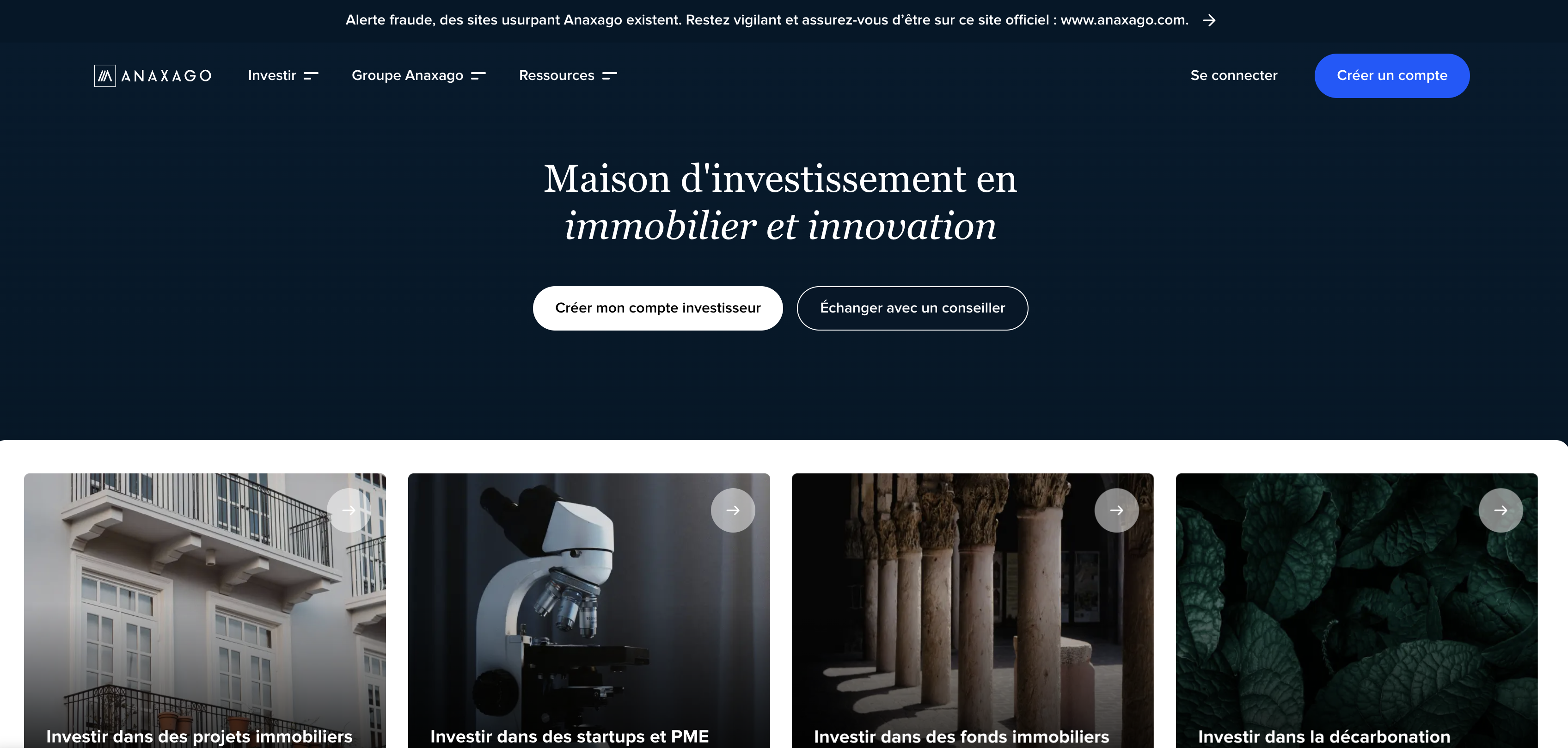
Anaxago is a European investment platform that democratizes access to private market deals, letting retail investors back startups and SMEs that would normally require deep pockets and insider connections. The platform sidesteps the gatekeeping that has long defined venture capital, offering curated equity stakes in growth-stage companies across tech, real estate, and other sectors. Founded in 2014, it operates across multiple European markets and has processed hundreds of millions in investments, positioning itself as a bridge between ambitious entrepreneurs and everyday investors seeking portfolio diversification beyond public markets. What sets Anaxago apart is its focus on transparency and accessibility. Rather than opaque fund structures or minimum investment requirements that exclude ordinary savers, it lets users invest from relatively modest amounts while maintaining rigorous due diligence on every deal. The platform handles the mechanics of investment management, shareholder rights, and secondary market liquidity—functions that typically require armies of lawyers and compliance teams. It's part of a broader shift toward democratized finance, where technology makes previously exclusive opportunities available to anyone with capital and appetite for risk. In the European fintech landscape, where crowdfunding and alternative investment platforms have proliferated, Anaxago has carved out credibility through regulatory compliance, deal flow quality, and a genuine commitment to investor protection. It represents how fintech can unbundle traditional wealth management, making private market exposure a normal part of retail investing rather than a privilege reserved for the wealthy.
Founded 2014
Swan
Swan
Financial Infrastructure
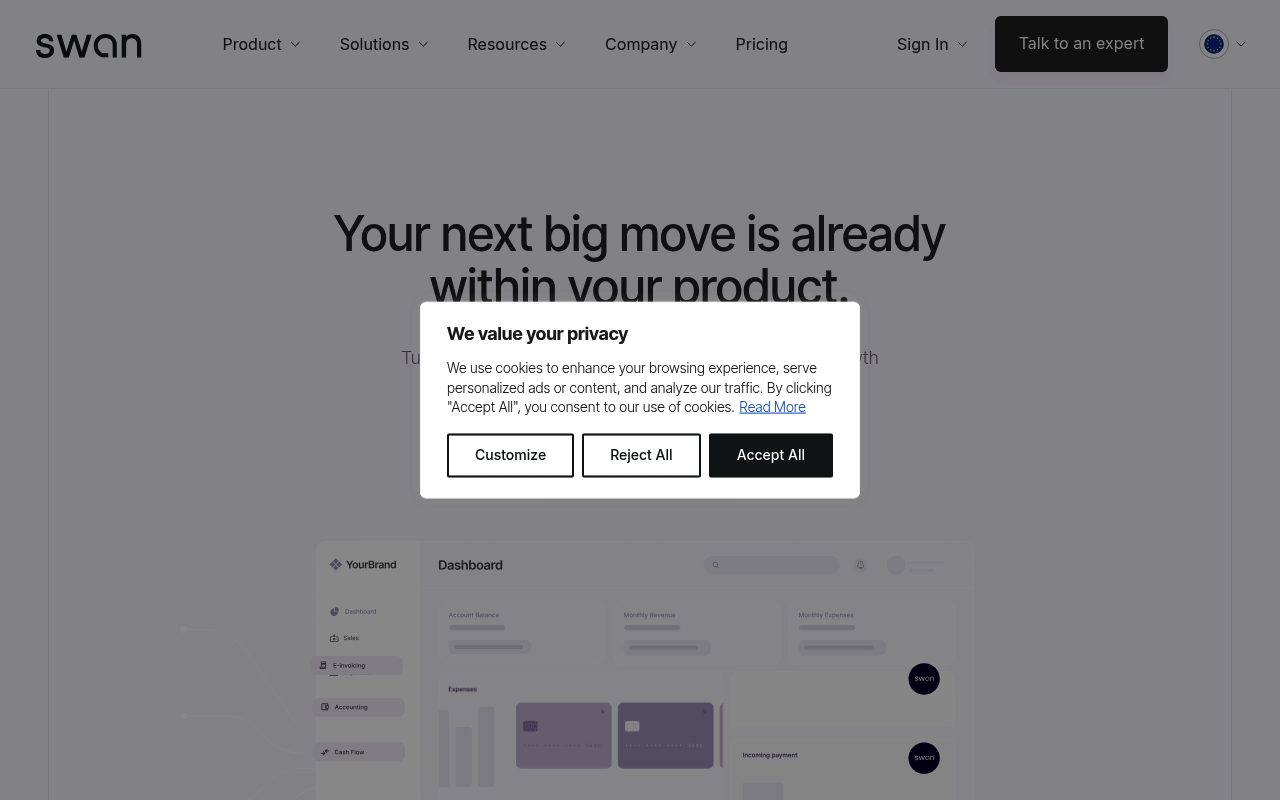
Swan is reshaping how European businesses handle payments by offering a modern, developer-friendly infrastructure layer that sits between companies and the complexity of traditional banking rails. Rather than forcing startups and established firms to navigate fragmented payment ecosystems, Swan bundles together payment processing, banking APIs, and compliance tooling into a single, coherent platform. The company targets mid-market and enterprise customers—think e-commerce platforms, SaaS businesses, and financial services—who need to embed payments into their core operations without hiring a dedicated payments team. Swan's core strength lies in its ability to strip away legacy banking friction: it handles card processing, instant payments, payouts, and cross-border transfers through a unified API, while managing the regulatory headaches that usually consume engineering bandwidth. In a European landscape crowded with payment gateways and banking APIs, Swan distinguishes itself through developer experience and architectural clarity. Where competitors often bolt together disparate services, Swan presents a genuinely integrated stack—one codebase, one dashboard, one billing model. The company serves as both a payments operator and a bridge to traditional banking, making it particularly valuable for businesses scaling beyond their first million transactions. Swan represents a broader maturation in European fintech infrastructure: the shift from "we'll process your payments" to "we'll become your payments backbone," enabling a generation of companies to focus on their core product rather than payment plumbing.
Founded 2019
Alan
Alan
InsurTech
Alan is rewriting health insurance for the digital age, stripping away the bureaucratic drag that makes traditional coverage feel like a relic. The Paris-based insurtech startup treats health protection as something that should integrate seamlessly into daily life rather than a quarterly bill you dread opening. Using AI and real-time data, Alan automates claims processing, cuts administrative friction, and lets users manage their coverage through a clean mobile app. What sets Alan apart is its focus on speed and transparency. Most European health insurers still operate like they're managing paper files; Alan processes claims in days, not months, and explains costs upfront instead of hiding them in fine print. The company serves both individuals and SMEs across France, Belgium, Spain, and beyond, positioning itself as the insurance provider for people who actually understand technology. In a market where health insurance feels synonymous with frustration, Alan's role is to prove that coverage can be simple, fast, and genuinely customer-centric.
Founded 2016
Swile
Swile
Embedded Finance
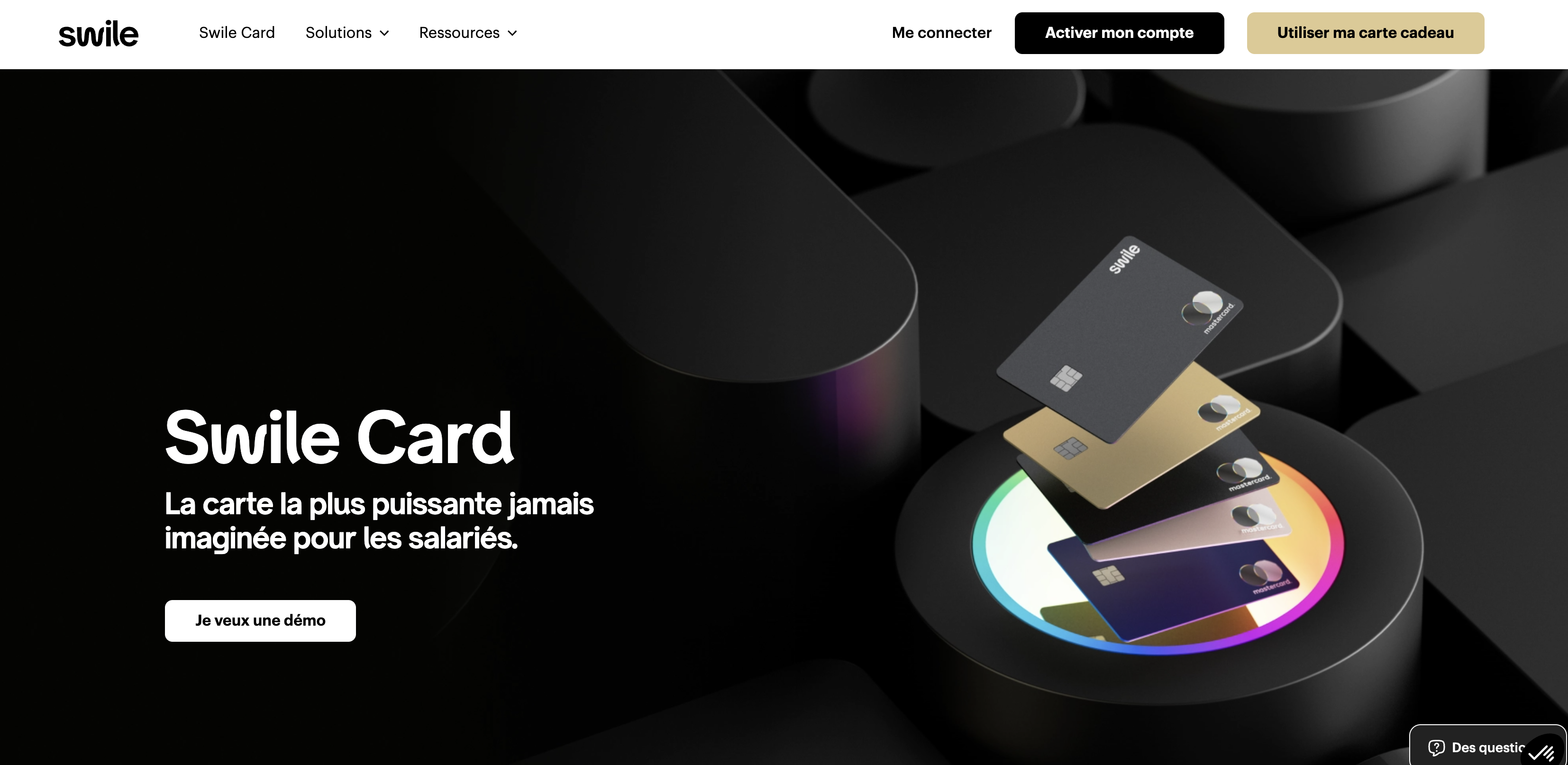
Swile tackles the unglamorous but essential problem of employee benefits administration—turning what's typically a bureaucratic nightmare into something that actually works for modern companies. The Paris-based platform bundles meal vouchers, transportation allowances, childcare support, and wellness benefits into a single card and app that employees actually want to use. Instead of juggling multiple vendor relationships and paper trails, HR teams get one interface to manage everything. Employees scan a card or phone at participating restaurants, shops, and gyms, earning tax-advantaged benefits while employers simplify their compliance burden. It's the kind of boring-but-essential infrastructure that scales across Europe—Swile operates in France, Spain, Italy, and beyond. What sets Swile apart in the crowded benefits space is its focus on the entire employee lifecycle rather than just one vertical. While competitors obsess over meal vouchers or mobility, Swile positions itself as a comprehensive benefits platform. The company raised significant Series B funding and expanded aggressively across continental Europe, proving that there's real appetite for consolidation here. Swile represents a broader shift in how European companies think about compensation: less about salary alone, more about total employee experience. By digitizing what was once entirely analog, Swile has become an essential piece of HR infrastructure for mid-market and enterprise employers across the region.
Founded 2016
Pennylane
Pennylane
Digital Banking
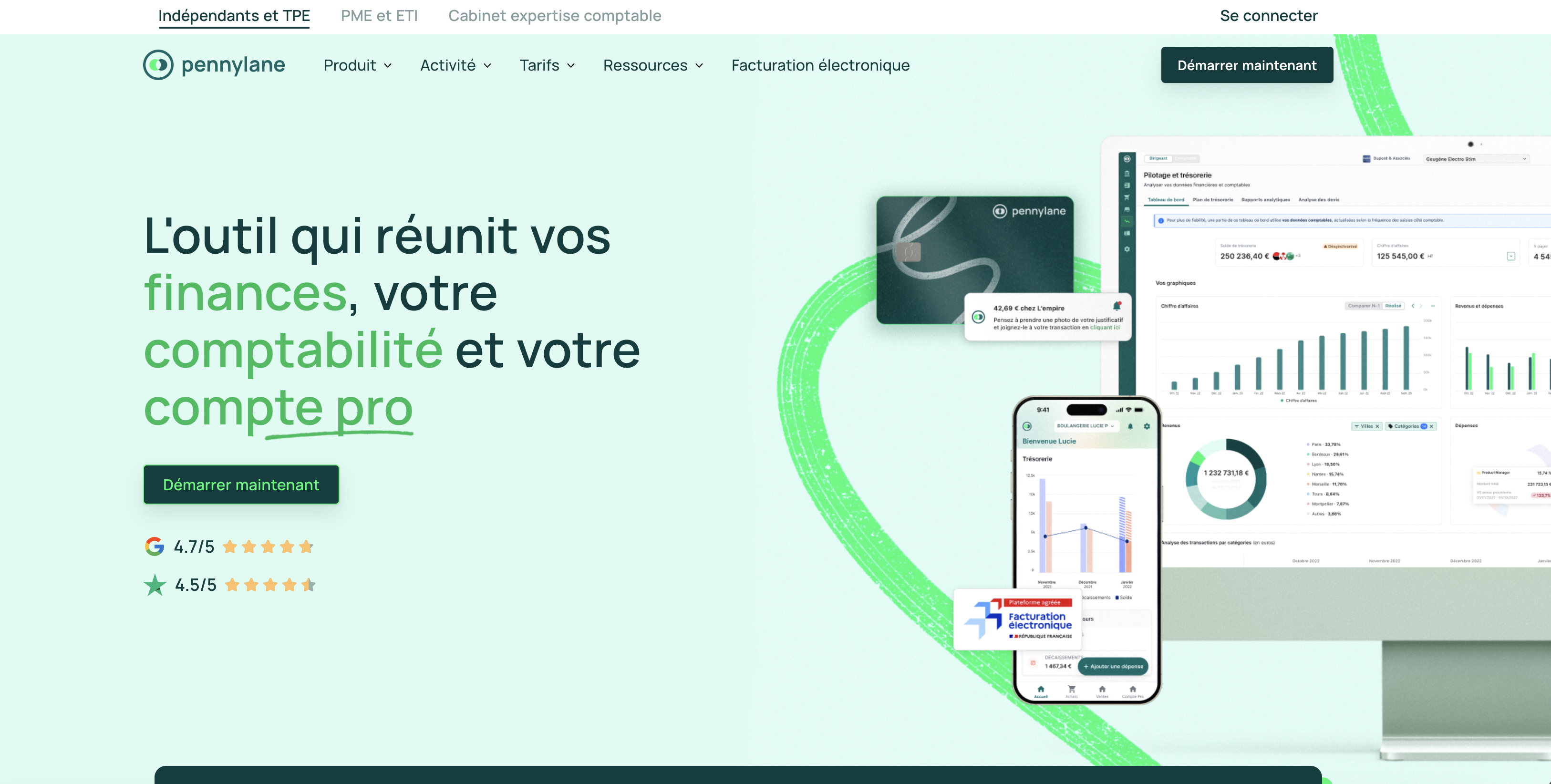
Pennylane is a French fintech that bundles accounting, invoicing, and banking into one platform built for freelancers and small businesses. Rather than piecing together separate tools, users get a unified workspace where transactions sync automatically, expenses categorize themselves, and tax calculations happen in the background. The company positions itself against the fragmented mess of legacy accounting software and generic banking solutions, betting that SMEs want a single interface that actually understands their cashflow. What sets Pennylane apart in Europe's crowded SME finance space is its focus on simplicity without sacrificing depth. While competitors often target either accountants or business owners, Pennylane aims at the owner-operator who wants to understand their numbers without hiring bookkeeping help. The platform connects directly to bank feeds and invoice data, pulling everything into a dashboard that feels less like traditional accounting software and more like a modern finance app. Pennylane represents a shift in how European SMEs are expected to manage money. Rather than quarterly accountant visits and spreadsheet chaos, the company argues that modern businesses should have real-time visibility into their finances. It's part of a broader movement to make financial operations software actually enjoyable to use, not just tolerable.
Founded 2018
Linxo
Linxo
Open Banking
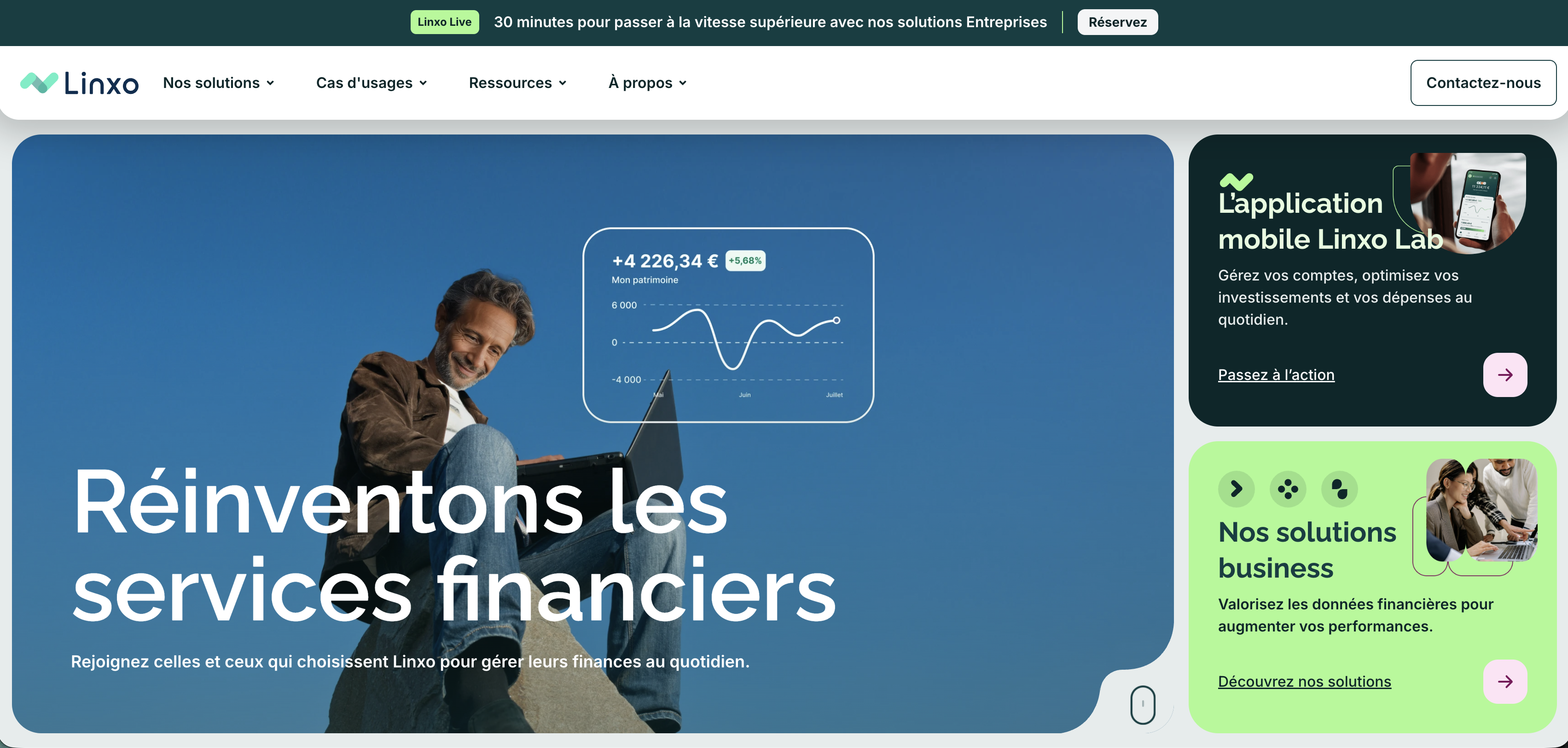
Linxo is a European personal finance platform that aggregates bank accounts, credit cards, and investments across multiple institutions into a single dashboard. Rather than asking users to switch banks entirely, the app pulls live data from existing accounts—a model that respects the European's pragmatic relationship with their primary bank while offering the insights and control they actually want. The company positions itself as the financial operating system for everyday money management, not a replacement for banking itself. What sets Linxo apart in a crowded personal finance space is its focus on actionable intelligence. Beyond simple balance-checking, the platform categorizes spending automatically, alerts users to unusual transactions, and helps track progress toward financial goals—all without the paternalistic tone of many budgeting apps. It works across France, Spain, Germany, Italy, and Belgium, making it one of the few genuinely pan-European plays in a category often dominated by single-market apps. Linxo has built its infrastructure on open banking standards, leveraging PSD2 APIs to connect securely to banking institutions rather than relying on screen-scraping. This approach gives it a technical moat while also keeping it aligned with regulatory trends. The company targets digitally-native adults who want visibility into their finances without the friction of traditional banking interfaces. In the broader fintech landscape, Linxo represents a specific bet: that most people won't abandon their bank, but they will absolutely pay for—or accept advertising within—a tool that makes that bank easier to use. It's less disruptive than a neobank, more practical than an investment app, and more design-forward than legacy personal finance software.
Founded 2015
Spendesk
Spendesk
Financial Infrastructure
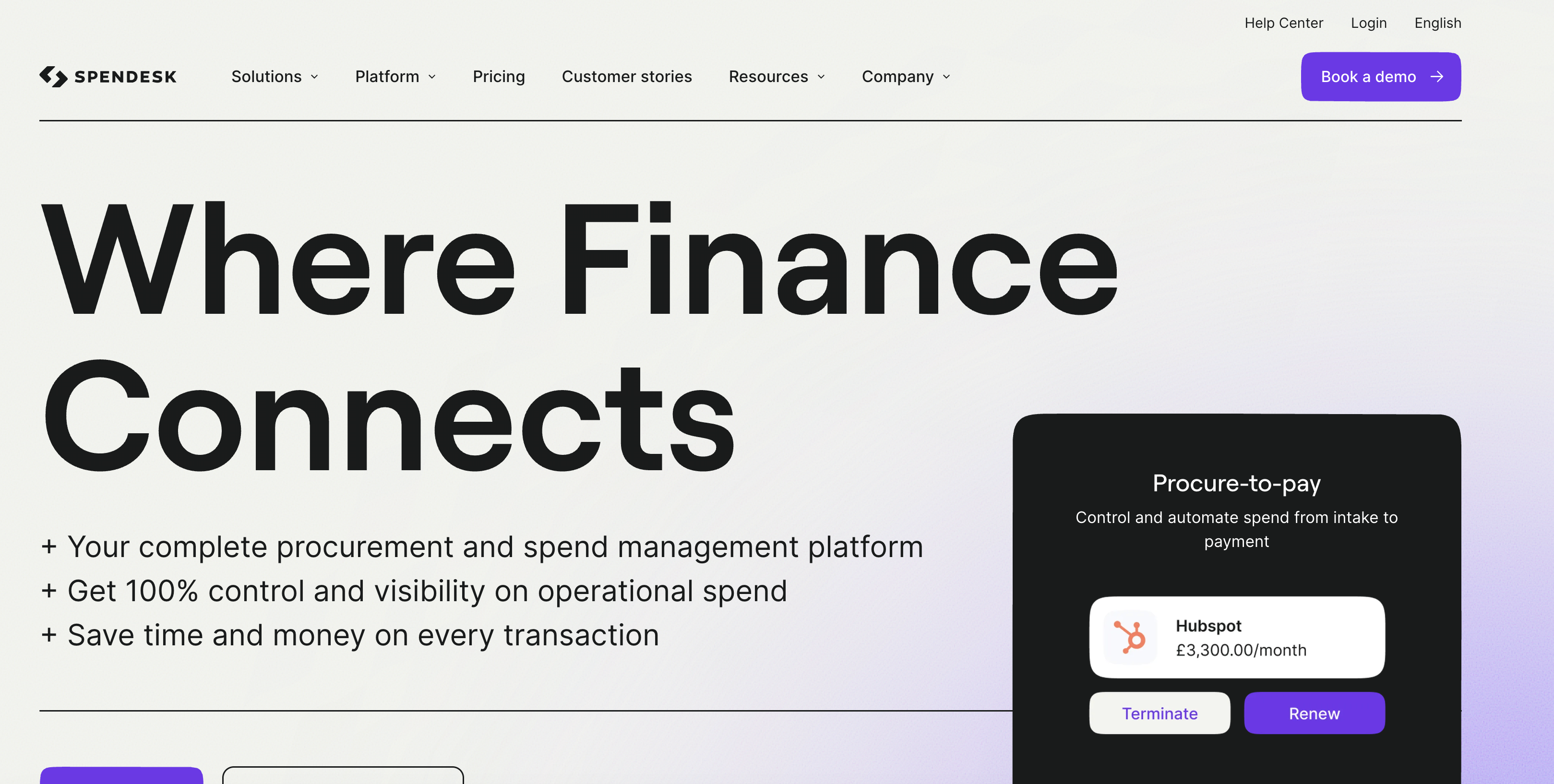
Spendesk cuts through the chaos of corporate spending. It's a unified platform where teams manage expenses, issue corporate cards, approve invoices, and reconcile everything in one place—no more spreadsheets shuffled across email chains or finance teams drowning in admin work. The platform sits somewhere between a spend management tool and a modern finance operating system. Companies connect their bank accounts, set spending rules, issue virtual or physical cards to employees, and watch transactions flow into an automated approval workflow. Invoices get coded automatically. Reconciliation happens in real time. The whole thing syncs with accounting software so the numbers always match reality. What makes Spendesk different is that it treats spend management as a team sport, not a back-office chore. It's built for the actual workflows that modern finance teams use: expense reports that don't feel like punishment, card management that doesn't require IT involvement, and visibility that doesn't require a Ph.D. in Excel. Most competitors bolt features together; Spendesk designed the experience first. In a market crowded with point solutions and legacy software masquerading as modern, Spendesk has become the de facto standard for mid-market companies in Europe that want to stop thinking about spending and start optimizing it. It's now a critical piece of infrastructure in how thousands of companies handle money.
Founded 2015
Akur8
Akur8
InsurTech
Akur8 is an AI-powered insurance underwriting platform that automates and accelerates pricing decisions for insurers. Rather than relying on traditional actuarial models that can take months to build and update, Akur8 uses machine learning to rapidly discover optimal pricing strategies from historical claims data, enabling insurers to compete faster and adapt to market shifts in weeks rather than quarters. The platform is built for underwriters and actuaries who are tired of being bottlenecked by legacy systems. Akur8 sits between an insurer's data warehouse and their pricing engine, learning patterns that humans might miss and generating transparent, explainable models that regulators will actually approve. The company positions itself as the bridge between insurance's analog past and a data-driven future. In the European insurance market, where digitalization remains patchy and many carriers still rely on spreadsheet-heavy workflows, Akur8 stands out by being genuinely usable—not just technically sophisticated, but designed for the reality of how insurance actually operates. Its customers include major European insurers looking to modernize underwriting without dismantling their entire infrastructure. The company represents a broader shift toward embedded AI in financial services, where the technology doesn't replace humans but makes them exponentially more effective at their core job: pricing risk accurately.
Founded 2016
Agicap
Agicap
SME Finance
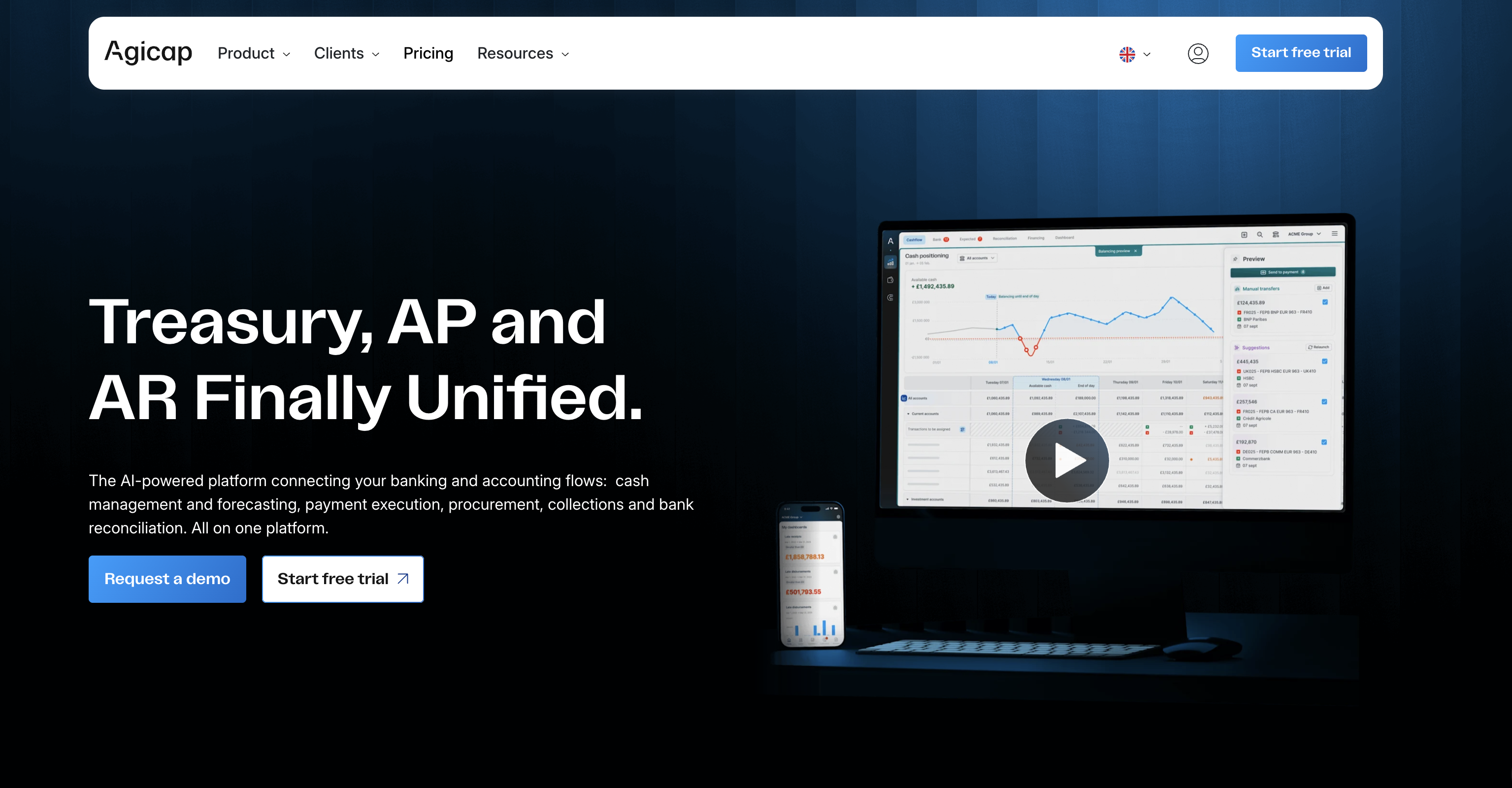
Cash flow forecasting for mid-market companies is a constant headache. Finance teams spend weeks building Excel models, updating bank balances by hand, and scrambling when surprises hit. Agicap strips away the manual drudgery with a platform that pulls real-time bank data, forecasts cash positions, and alerts teams to shortfalls before they become crises. The platform connects directly to corporate bank accounts across Europe, aggregating transactions and balances in a single dashboard. Finance teams can forecast weeks or months ahead, model different scenarios, and plan borrowing or investment with confidence. It's built for the CFO or finance manager at a growing company—someone managing millions but not yet running a treasury department. In a crowded space of cash management tools, Agicap distinguishes itself through simplicity and breadth of bank connectivity. Where some competitors focus on large enterprises or niche workflows, Agicap targets the mid-market sweet spot: companies that have outgrown spreadsheets but aren't yet ready to deploy enterprise software. The platform's strength lies in its ease of setup and integration with French, German, and UK banking networks. Agicap sits at the intersection of SME finance and treasury, filling a gap for companies that need working capital visibility without the complexity or cost of traditional corporate treasury platforms.
Founded 2014
Memo Bank
Memo Bank
Payments
Memo Bank is a European SME banking platform built for the realities of modern business. Rather than forcing entrepreneurs into legacy banking workflows, Memo gives small business owners a financial operating system designed around how they actually work—combining business accounts, payments, invoicing, and expense management in one interface. The platform handles the friction points that plague traditional business banking: slow payments, fragmented tooling, and compliance overhead that feels designed for a different era. What sets Memo apart is its architecture. Instead of bolting payment features onto a traditional account system, the company built integrated workflows from the ground up. You get real-time visibility into cash flow, automated invoice management, and seamless integrations with accounting software—the kind of coherence you find in consumer fintech but rarely in business banking. Multi-currency and cross-border payments work as smoothly as domestic transfers, stripping away the complexity that makes international business a headache for SMEs. Memo competes in a crowded space, but it's positioned differently from both legacy business banks and fragmented fintech stacks. It's not trying to be a wholesale replacement for every financial service a business might need. Instead, it's building the core banking layer that everything else should connect to—one that actually talks to how modern SMEs operate. In the broader European fintech landscape, Memo represents a maturing category: purpose-built business banking that treats SMEs as sophisticated customers rather than smaller versions of enterprises.
Founded 2021
Indy
Indy
Digital Banking
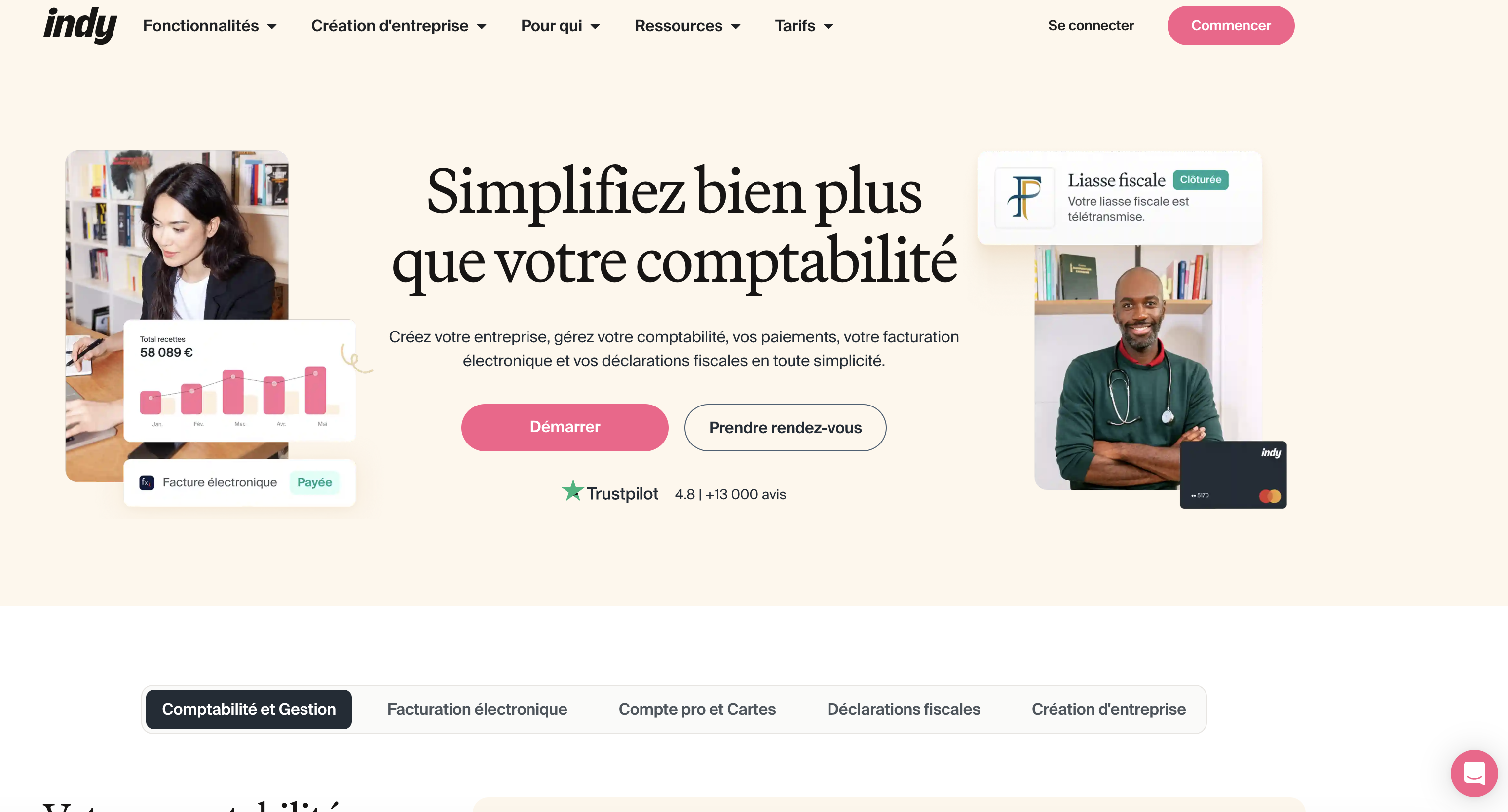
Indy is a French fintech built for freelancers and self-employed workers who are tired of juggling accounting software, invoicing tools, and bank dashboards across a dozen different apps. The platform consolidates business banking, invoicing, expense tracking, and tax compliance into a single workspace designed specifically for French independent professionals and micro-entrepreneurs. Unlike traditional accounting software that feels built for accountants, Indy puts the solopreneur first—automating routine tasks like categorizing expenses and calculating quarterly tax estimates while keeping the interface clean and approachable. The company has become a go-to solution across France for freelancers managing both the creative and administrative sides of their business, from photographers to consultants to digital agencies. It's one of Europe's clearest examples of how fintech can solve a specific, underserved market by building exactly what that market actually needs rather than trying to be everything to everyone. In a landscape crowded with generic SME finance platforms, Indy's laser focus on French self-employed workers—and their particular regulatory requirements and pain points—has established it as a cultural fixture in the French freelance community.
Founded 2014
Bankin
Bankin
Digital Banking
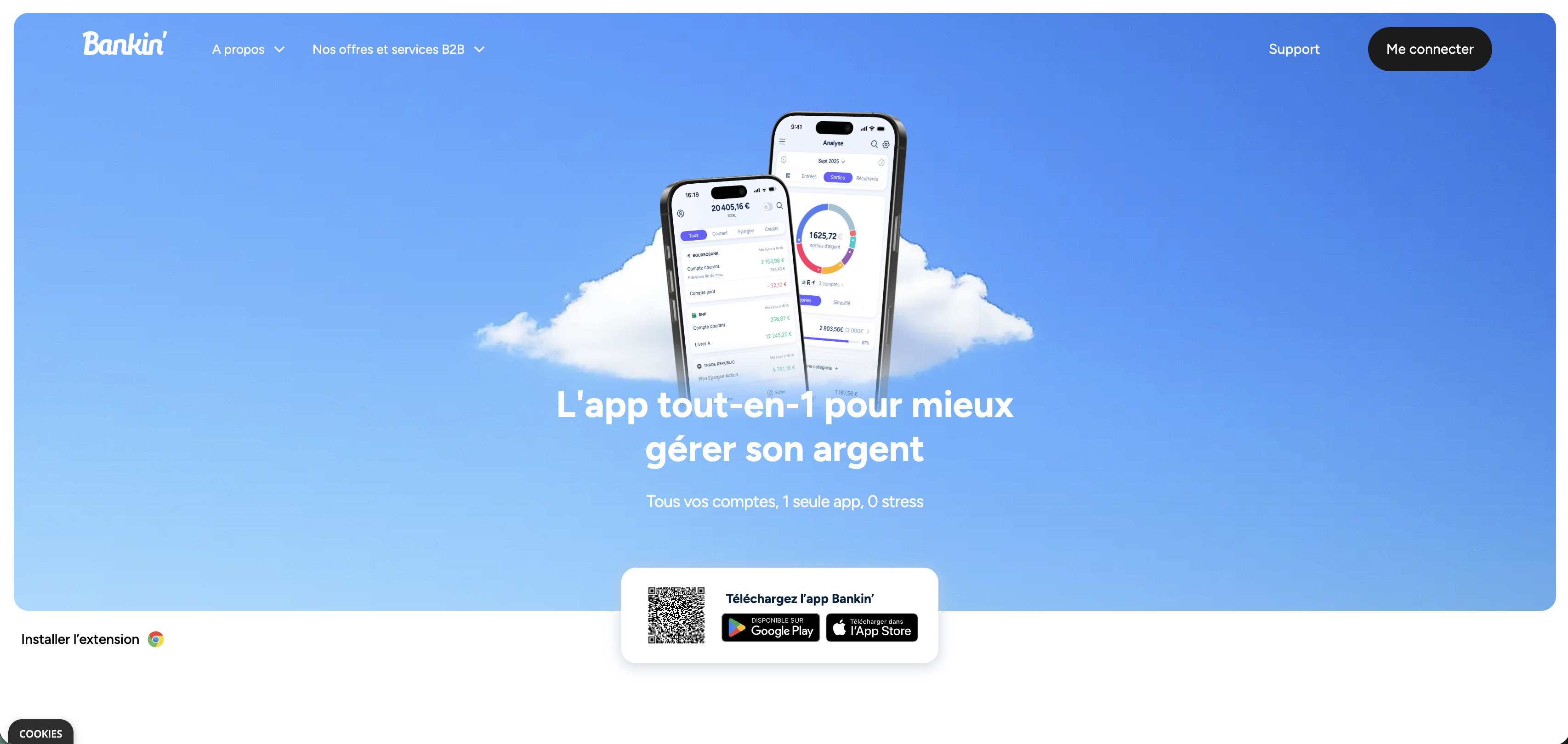
Bankin is a French fintech that connects you to your money across multiple banks through a single app. Rather than juggling five different banking apps, Bankin aggregates all your accounts—checking, savings, investments, crypto—into one place where you can see your full financial picture. The company doesn't hold your money or replace your banks; it's an overlay that reads your data securely and gives you control over what happens next. What sets Bankin apart is its focus on switching: unlike most aggregators that just show you balances, Bankin helps you move money between banks, find better rates, and actually leave a bank if you want to. It's positioned somewhere between a personal finance dashboard and a financial comparison tool, but with genuine switching capability baked in. The app works across Europe, though strongest in France and the Nordics, and has built a loyal base of power users who genuinely use it to manage their money rather than just peek at their balance. In a landscape crowded with robo-advisors and neobanks offering me-too features, Bankin solves a more mundane but more urgent problem: most people still bank with multiple institutions and hate managing them. The company has positioned itself as the glue holding fragmented European banking together, and that simplicity—aggregation plus switching—gives it a unique role in the open banking revolution.
Founded 2013
Tiime
Tiime
SME Finance
Tiime sits at the intersection of accounting software and financial management for small businesses, offering a streamlined alternative to the traditional bookkeeping grind. Rather than forcing entrepreneurs to juggle spreadsheets and endless paperwork, Tiime automates the heavy lifting—invoice generation, expense tracking, and financial reporting—directly within a unified platform designed for French SMEs. The software integrates with major accounting systems and banking partners, pulling transactions automatically and categorizing them without manual intervention. What separates Tiime from legacy accounting tools is its focus on simplicity and real-time visibility. Founders understood that most small business owners aren't accountants and don't want to be; they want clarity on their cash position and fewer admin headaches. The platform surfaces key financial metrics at a glance, enabling better decision-making without requiring a finance degree. In the crowded SME finance software market, Tiime positions itself as the bridge between basic invoicing apps and expensive enterprise accounting suites—accessible enough for solopreneurs, sophisticated enough for growing teams. It represents the modernization of accounting infrastructure across French and broader European SME finance, where digital transformation still lags behind consumer fintech.
Founded 2016
Fintecture
Fintecture
Financial Infrastructure
Fintecture is building the plumbing that makes open banking actually work for merchants and platforms across Europe. Rather than forcing businesses to cobble together fragmented payment APIs and banking connectors, Fintecture consolidates access to bank accounts and payment rails across the continent into a single integration point. The company's core offering is elegantly straightforward: a unified API that lets merchants initiate payments directly from customer bank accounts without managing dozens of individual bank connections. This sits somewhere between traditional payment gateways and the messy reality of banking infrastructure—it handles the complexity of navigating different banking standards, regulatory environments, and technical protocols across European markets so businesses don't have to. What sets Fintecture apart is its focus on the merchant experience rather than the bank experience. While most open banking platforms were built to satisfy regulators, Fintecture designed its product assuming developers actually want to use it. The company operates across 30+ European countries and integrates with over 4,000 banks, which means a single merchant can reach customers wherever they bank without building country-by-country integrations. In a landscape crowded with both traditional payment processors and newer open banking specialists, Fintecture occupies a distinct middle ground—not replacing card networks, but offering an alternative rails that's cheaper for merchants, more transparent for customers, and increasingly difficult for incumbents to ignore.
Founded 2017
Powens
Powens
Fraud & Security
Powens sits at the intersection of open banking and financial data aggregation, helping European fintechs and traditional banks make sense of the fragmented payment and account landscape. Rather than building another me-too aggregator, the company positions itself as the connective tissue between institutions and the data they need to move capital efficiently and securely. Their platform ingests transaction data, payment initiation flows, and account information from thousands of financial institutions across Europe, surfacing clean, standardized intelligence to power lending decisions, fraud detection, and embedded finance experiences. What sets Powens apart is its focus on the continental European market—where open banking adoption is uneven and legacy banking infrastructure still dominates. While UK and US aggregators have enjoyed first-mover advantage, Powens saw an opportunity to build native expertise in Germany, France, Spain, and Benelux, where regulatory tailwinds and fragmented banking systems created genuine demand. The company works with both consumer-facing fintechs and institutional clients, meaning they've learned to navigate the messy reality of building infrastructure that talks to both sleek fintech apps and stuffy corporate banking platforms. This dual-sided approach has become their competitive moat—they understand both the user experience expectations of modern fintech and the compliance complexity of traditional finance. In the broader European fintech stack, Powens functions as a critical middleware layer, solving the unglamorous but essential problem of data connectivity that powers everything downstream—from embedded lending to fraud prevention to wealth management.
Founded 2015
Bridge
Bridge
Financial Infrastructure
Bridge is an open banking API platform that sits between applications and financial institutions, making it trivially easy to connect customers' bank accounts and move money around. Rather than building direct integrations with hundreds of banks across Europe, developers plug into Bridge once and gain instant access to account aggregation, payment initiation, and transaction data across the continent's fragmented banking landscape. The company emerged at the intersection of open banking regulation and developer frustration. PSD2 mandated that banks expose customer data via APIs, but the reality was messy—each bank implemented things differently, with varying speed and quality. Bridge standardized that chaos, translating dozens of regional banking protocols into a single, clean REST interface that developers actually want to use. In the European fintech stack, Bridge occupies a crucial middle layer. While some competitors focus narrowly on payments or data, Bridge built a horizontal platform that covers the full spectrum: reading account balances, initiating payments, categorizing transactions, and handling the compliance overhead that comes with touching banking data. The company competes against both specialized point solutions and infrastructure players, but its strength lies in treating open banking as a genuine developer experience problem, not just a regulatory checkbox. As fintech adoption accelerates across Europe and regulations like PSD2 spread globally, Bridge's role as a translator between app developers and banking infrastructure has become increasingly central to how modern financial services get built.
Founded 2017
Payplug
Payplug
Financial Infrastructure
Payplug is a French payment infrastructure company that helps SMEs and mid-market businesses accept payments online and in-store. Founded in 2012, it's built a reputation for making payment acceptance friction-free—something most European merchants still struggle with despite living in 2024. The platform handles card payments, invoice payments, and subscription billing through a single dashboard. Payplug removes the complexity of payment processing: no technical setup required, no need to manage multiple payment providers, no hidden fees. It's the kind of tool that works best when you forget it's there. In a crowded European payments market dominated by legacy players and American gatekeepers, Payplug stands out by focusing obsessively on the SME segment rather than chasing enterprise deals. Its growth has been steady but unglamorous—which is exactly how French fintech should work. The company raised €60 million in 2021 and reached profitability, a rarity in the payments space where many competitors are still burning cash to fight for market share. Payplug represents the maturing of European payment infrastructure: local, profitable, and built for merchants who don't have time for venture-scale complexity. It's an essential player in the infrastructure layer that powers European e-commerce.
Founded 2012
Mooncard
Mooncard
Payments
Mooncard is a French-born corporate card platform that treats company spending like it actually matters. Built for mid-market businesses tired of expense report theatre, it combines physical and virtual cards with real-time spend visibility and automated compliance—no more spreadsheets, no more manual reconciliation, no more explanations that take longer than the purchase itself. The platform issues cards to employees while maintaining absolute control at the center. Managers see transactions as they happen, approval workflows happen instantly, and accounting teams get data that's actually usable. It's less about giving employees freedom and more about giving finance teams their sanity back. Unlike American corporate card incumbents that charge per card and treat integration like a favour, Mooncard pricing is transparent and the API connects to your actual accounting system. In Europe, where regulatory requirements and multi-currency complexity are facts of life, that matters. It's particularly resonant in France and across Western Europe, where the mid-market had essentially given up on tools that work. The company sits in a competitive space—Brex and others are moving downmarket, while legacy corporate card providers are finally waking up. But Mooncard's positioning is distinctly European: designed for how mid-sized companies actually spend money here, not adapted from American assumptions. That localised approach has made it one of the few European fintech companies that's actually winning on its home turf.
Founded 2016
PayTweak
PayTweak
Financial Infrastructure
PayTweak sits at the intersection of payment orchestration and real-time optimization—a platform that lets merchants intelligently route transactions across multiple payment methods and acquirers to maximize approval rates and cut costs in a single motion. Rather than accepting whatever approval your default processor gives you, PayTweak continuously tests and learns which payment paths work best for each customer, adjusting strategy on the fly. It's less about adding another layer of complexity and more about turning payment infrastructure from a fixed cost into a dynamic, self-improving system. The platform addresses a real friction point in European e-commerce: merchants have multiple acquirers and payment methods sitting in their tech stack, but no smart way to orchestrate them. PayTweak automates that decision-making, using machine learning to predict which combination of processor, method, and authentication approach will succeed for any given transaction—all while minimizing fraud losses and fees. It works especially well for cross-border merchants, subscription businesses, and high-volume retailers where even fractional improvements in approval rates translate to significant revenue recovery. Compared to traditional payment gateways, PayTweak moves past the static integration model. Rather than forcing merchants to choose one acquirer or stick with preset rules, it treats the entire payment ecosystem as a resource to be optimized in real time. This approach resonates particularly in European markets where regulatory fragmentation and multiple payment rails mean no single processor can do it all equally well. PayTweak represents the emerging category of intelligent payment infrastructure—less about moving money, more about making sure every eligible transaction succeeds. For merchants tired of leaving approval and revenue on the table, it's a meaningful efficiency play.
Founded 2019
PayGreen
PayGreen
Financial Infrastructure
PayGreen is a French payment orchestration platform built for the mobile-first era. Rather than forcing merchants through legacy payment infrastructure, PayGreen sits between the checkout and the bank, intelligently routing transactions across multiple payment methods and acquiring partners to optimize conversion and cost. The platform handles card payments, local payment methods, subscriptions, and marketplace payouts—all from a single integration point. What sets PayGreen apart is its emphasis on merchant control and transparency. Instead of hiding behind proprietary algorithms, it lets businesses see exactly how their transactions are being processed, what they're paying, and which methods work best for their customers. This matters particularly in markets like France and Southern Europe where payment preferences fragment wildly—a customer in Lyon might prefer a completely different checkout flow than one in Paris. The company positions itself as the anti-Stripe for merchants who've outgrown the one-size-fits-all model but don't want to hire a payments engineering team. It's equally comfortable powering a high-volume e-commerce operation as it is managing recurring billing for SaaS platforms or handling marketplace settlements. PayGreen operates across Europe but maintains particularly strong roots in France and the French-speaking fintech ecosystem. In the broader landscape, PayGreen represents a shift toward more granular, configurable payment infrastructure—the idea that payment orchestration isn't a feature you bolt on, but a core business decision that deserves transparency and control.
Founded 2014
Sesamm
Sesamm
Financial Infrastructure
Sesamm is a European fintech platform that makes cross-border payments and international transfers seamless for individuals and businesses. Rather than wrestling with traditional banks' outdated correspondent networks, Sesamm connects users directly to liquidity providers and local payment rails across Europe and beyond, stripping away the friction that typically defines moving money across borders. The platform handles currency conversion, compliance, and settlement in the background while letting you send money in minutes rather than days. It's built for a generation that expects financial services to work as smoothly as messaging apps, but with the regulatory rigor that serious money movement demands. Unlike legacy remittance services or traditional banks charging double-digit percentage fees, Sesamm prices itself competitively and strips away opaque markups. The company positions itself as the bridge between a fragmented European payment landscape and modern expectations around speed and transparency. Sesamm represents the broader shift toward infrastructure-first fintech: instead of chasing consumer hype, it's quietly making the plumbing work better. In an EU pushing for faster, cheaper cross-border payments through initiatives like SEPA Instant, Sesamm is building the kind of platform that benefits from regulatory tailwinds while solving a genuinely frustrating problem.
Smile and Pay
Smile and Pay
Payments
Smile and Pay operates in a curious corner of fintech where payment infrastructure meets merchant empowerment. The company builds point-of-sale and payment processing solutions designed for small retail businesses and merchants who want more control over their transaction flows and customer data. Rather than simply routing payments through legacy acquiring rails, Smile and Pay emphasizes a merchant-first approach to payments—letting retailers integrate flexible payment acceptance across channels without surrendering visibility or margin to traditional payment networks. The platform combines elements of merchant acquiring, payment gateway functionality, and POS software into a single stack. This matters because most merchants still rely on fragmented tooling: a POS system here, a payment processor there, reporting scattered across multiple dashboards. Smile and Pay attempts to consolidate these functions, making it easier for independent retailers to accept cards, digital wallets, and alternative payment methods from a unified interface. In the European context, where merchant acquiring remains dominated by large banking groups and a handful of global players, Smile and Pay positions itself as an alternative that respects merchant economics and data ownership. The company operates in a space where fintech adoption is still unevenly distributed—large chains have sophisticated payment infrastructure, while mid-market and independent retailers often lag. Smile and Pay targets this gap, offering both technical capability and commercial terms that treat merchants as stakeholders rather than transaction volume. For the broader payments ecosystem, Smile and Pay represents the ongoing shift toward API-first, software-driven payment infrastructure that challenges the traditional acquiring model and puts merchant control back at the center of payment experience.
FinFrog
FinFrog
Digital Banking
FinFrog is a French neobank designed for the Instagram generation—a mobile-first challenger that strips away the pretense of traditional banking and treats financial management like a social experience. Rather than positioning itself as a replacement for your main bank, FinFrog positions as the fun account you actually use, complete with spending analytics that actually make sense and a card that feels like an extension of your lifestyle rather than a financial obligation. The platform focuses on real-time spending visibility, automated savings mechanisms, and a philosophy that younger Europeans shouldn't have to tolerate clunky interfaces or hidden fees just to manage their money. It's built on the premise that financial literacy and engagement happen through friction-free, mobile-native experiences, not through apps bolted onto legacy systems. Within the European challenger banking landscape, FinFrog carves out space by leaning heavily into design and user experience clarity rather than attempting to be everything at once. While competitors chase feature bloat, FinFrog has maintained focus on core banking and budgeting fundamentals executed at a level that feels genuinely differentiated. As part of the broader shift toward mobile-first financial services in continental Europe, FinFrog represents the next wave of neobanks that treat banking as a utility that should be boring, fast, and actually yours—no corporate messaging, no pretense, just money that works.
Founded 2018
Coinhouse
Coinhouse
Crypto & Blockchain
Crypto for institutions requires a different product than crypto for retail. The compliance requirements, the custody standards, the reporting obligations, and the client servicing expectations of professional investors are categorically different from those of an individual buying Bitcoin through an app. Coinhouse was founded in Paris in 2014 as one of France's first regulated crypto asset service providers, building a platform designed for the higher standards that institutional and professional clients require. Its services cover crypto trading, custody, staking, and portfolio management for professional investors — with the regulatory standing of a PSAN (Prestataire de Services sur Actifs Numériques) registration under France's crypto asset framework. Coinhouse has positioned itself as the French institutional crypto bridge — the regulated, professional-grade alternative to the consumer exchanges that dominate by volume but not by client sophistication. In the European institutional crypto market, where MiCA regulation is creating clearer requirements for crypto asset service providers, platforms that have already built their compliance infrastructure to institutional standards are better positioned than those scrambling to retrofit regulation onto consumer products.
Founded 2014
Enerfip
Enerfip
Wealth
Enerfip is a French renewable energy crowdfunding platform that lets retail investors back solar, wind, and biomass projects with minimal friction. Rather than requiring the traditional wealth checks and gatekeeping that institutional investors face, Enerfip democratizes green energy financing—you can start investing from as little as €100 in projects across Europe. The platform has financed over €100 million in renewable capacity since 2014, positioning itself as a serious player in the intersection of climate finance and retail investment. What sets Enerfip apart is its focus on operational projects with real yields, not speculative green ventures. Its model works because the renewable energy sector desperately needs capital, and Enerfip sits comfortably between the retail investor appetite for impact and the genuine need for project-level funding. The platform doesn't just move money; it acts as a curator and risk manager, vetting projects to ensure investors understand what they're buying into. In a European fintech landscape crowded with robo-advisors and crypto platforms, Enerfip remains distinctly mission-driven—proving that profitable finance and environmental impact aren't mutually exclusive. The company reflects a broader European shift toward sustainable investing, where returns and responsibility are expected to move in tandem.
Founded 2014
Lendosphere
Lendosphere
Lending
Lendosphere is a European marketplace lending platform that connects small businesses with institutional investors hungry for alternative returns. Founded on the conviction that traditional banks systematically underserve SMEs, the platform has built a dual-sided network where vetted borrowers access capital at competitive rates while investors diversify beyond bonds and equities. What makes Lendosphere distinct isn't just the marketplace mechanics—it's the emphasis on data-driven credit assessment and a commitment to transparency that appeals to both cautious CFOs and yield-conscious institutional money. The company operates across multiple European markets, handling everything from loan origination through servicing, which means they've had to navigate fragmented regulatory environments while maintaining operational efficiency. In a lending landscape crowded with point solutions and pure-play platforms, Lendosphere positions itself as the connective tissue between supply and demand, enabling capital that would otherwise stay idle or be allocated inefficiently. For SMEs tired of bank gatekeeping, and for institutions seeking uncorrelated returns with human oversight, Lendosphere represents a pragmatic alternative—not utopian blockchain dreams, but boring-boring-good marketplace infrastructure that actually works across borders.
Founded 2014
October
October
Lending
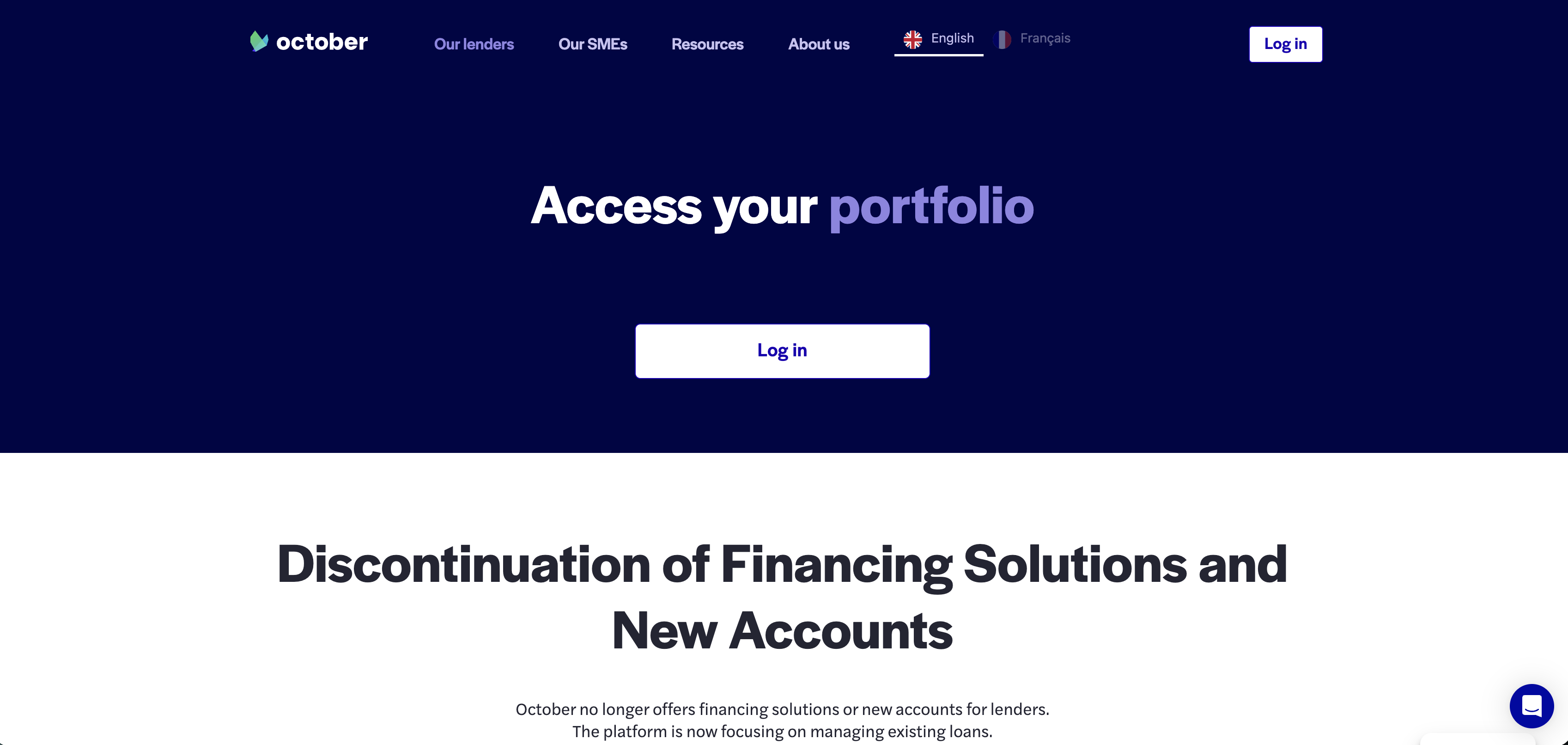
Lending to European SMEs across multiple national markets is genuinely difficult — different regulatory regimes, different credit bureau infrastructures, different cultural attitudes toward debt that vary significantly between France, Germany, Italy, Spain, and the Netherlands. October was founded in Paris in 2014 (originally as Lendix) to build a Pan-European SME lending platform that could navigate that complexity, providing credit to small and medium-sized businesses across multiple European markets through a single platform. Its model combines retail and institutional capital, lending to creditworthy SMEs with proprietary underwriting that adapts to the specific data and regulatory environments of each market. October has built operations in France, Spain, Italy, the Netherlands, and Germany, becoming one of the few genuinely Pan-European SME lenders rather than a single-market platform with international ambitions. Its founder Olivier Goy is one of the more recognisable figures in French fintech, and the company's evolution — from retail P2P origins to institutional and government partnership funding — mirrors the broader maturation of European alternative SME lending. In a European market where SME credit infrastructure remains fragmented along national lines, October represents one of the more successful attempts to operate genuinely across borders.
Founded 2014
Weefin
Weefin
Lending
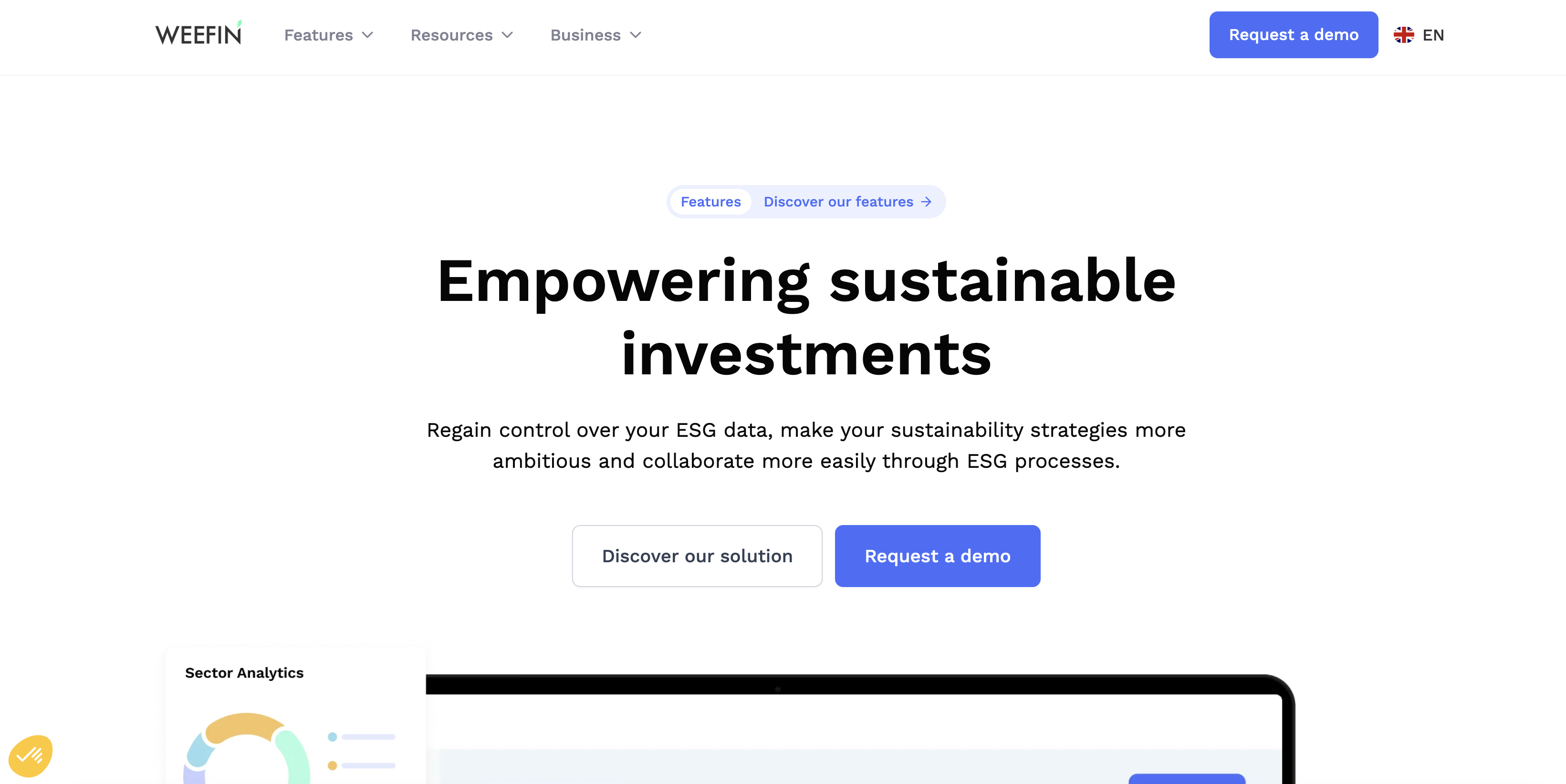
Weefin is a French fintech that helps consumers navigate the murky world of consumer credit with algorithmic precision. Rather than drowning users in confusing loan options, Weefin acts as a personal credit matchmaker, using data and AI to surface the most suitable financing products from a network of lenders. It's solving a genuine friction point: most people shopping for personal loans have no idea which option actually fits their circumstances, so they either overpay or get rejected. The company positions itself as a transparent intermediary in a market where traditional banks still treat credit like a black box. Weefin aggregates loan offers, compares terms, and guides users toward products that make financial sense for their specific situation rather than maximizing lender margins. It's the anti-payday-loan play—using technology to bring clarity to a category that thrives on confusion. The platform works with established financial institutions, making it a white-glove service for consumers who want intelligence, not just access. In a European fintech landscape crowded with neobanks and payment startups, Weefin occupies a narrower but genuinely useful niche: making consumer credit less of a gamble and more of an informed decision. It reflects a broader shift toward algorithmic transparency in lending, where the consumer's best interest and the platform's intelligence alignment create real value.
Founded 2018
Slim Pay
Slim Pay
Financial Infrastructure
Slim Pay sits at the intersection of payments and open banking, quietly solving the friction that still exists when businesses want to collect money directly from customer bank accounts. The company has built a pan-European network that lets merchants and platforms initiate payments via SEPA Direct Debit and bank transfers, cutting through the complexity of fragmented payment rails across different countries. What makes Slim Pay distinct is its ability to orchestrate these flows seamlessly—no need to manage separate integrations for France, Germany, or Scandinavia when you want to scale across Europe. The platform works as both a white-label solution for financial institutions and a direct API for fintechs and merchants looking to embed bank-originated payments into their own applications. In a market flooded with card payment startups, Slim Pay has built its reputation on doing one thing exceptionally well: making account-to-account payments simple, compliant, and profitable. The company's model reflects a matured understanding of European payments infrastructure—it partners with banks rather than fighting them, which has made adoption among established financial services players remarkably smooth. For subscription businesses, marketplaces, and lending platforms, Slim Pay offers a genuinely different lever for payment collection, one that costs less than cards and works for customers without a credit card. It's the kind of boring-but-essential infrastructure that the fintech ecosystem actually needs.
Founded 2009
Nickel
Nickel
Payments
Nickel is a French-born neobank that treats banking as a public good rather than a premium service. It emerged in the early 2010s with a radical premise: everyone deserves access to basic financial tools, regardless of income or credit history. The platform offers no-frills digital accounts, card payments, and essential money management features at a fraction of traditional bank costs. Unlike the gamified, feature-heavy challenger banks flooding the European market, Nickel stays deliberately minimal. Its appeal lies in straightforward functionality and transparency—no hidden fees, no algorithmic nudges toward credit products, no complexity. The company operates a hybrid model, partnering with physical retailers to provide account opening and cash services, which sets it apart from fully digital competitors. In the crowded Western European neobank space, Nickel occupies a distinct position: it's inclusive by design, not by accident. While competitors target affluent early adopters with investment tools and lifestyle integrations, Nickel focuses on financial stability for underserved populations—students, gig workers, immigrants, and those excluded from traditional banking. This mission-driven approach has earned it a loyal user base and growing recognition as a serious alternative to incumbent banks. Nickel represents a quietly powerful force in European fintech: proof that sustainable disruption doesn't require endless feature releases, just genuine accessibility and trust.
Founded 2012
HiPay
HiPay
Payment orchestration — the ability to route transactions across multiple payment providers, optimise authorisation rates, and manage the complexity of accepting payments across different markets — has become one of the more contested spaces in European fintech. HiPay was founded in Paris in 2003 as one of the earlier European payment service providers and evolved through multiple strategic iterations into a payment platform focused on helping merchants optimise their payment acceptance. Its platform handles acquiring, alternative payment methods, and fraud management, with particular depth in the French and Southern European markets where local payment expertise matters. HiPay has worked with major retail and e-commerce brands seeking to improve conversion rates and reduce the cost of payment acceptance across complex multi-market operations. In a payment processing market that has consolidated dramatically around a small number of very large players, HiPay represents the specialist end of the spectrum — a platform that competes on depth of local knowledge and optimisation capability rather than raw scale. For merchants who have discovered that switching from a generic processor to a specialist one can meaningfully improve their bottom line, that positioning has real value.
Founded 2003
Lydia
Lydia
Splitting a restaurant bill used to involve a painful combination of mental arithmetic, someone forgetting their wallet, and a group negotiation about whether to ask for separate checks. Lydia was founded in Paris in 2013 to make that specific moment effortless — and in doing so, became the dominant peer-to-peer payment app in France. Its simple interface for sending and requesting money between contacts captured a generation of French users who had grown up with PayPal but wanted something faster and more mobile-native. Lydia expanded beyond P2P transfers into a broader financial platform, adding savings accounts, investment products, and consumer credit — the classic neobank expansion playbook, executed in a market where Revolut and N26 were competing aggressively for the same digitally native users. The company rebranded its premium offering as Sumeria in 2023, signalling an evolution from a payment utility into a full financial product. In the French fintech landscape, which has historically been dominated by the large banking groups, Lydia built something rare: a consumer brand with genuine affection from its users, built on the back of a product so simple that it spread without marketing.
Founded 2013
IBAN First
IBAN First
Financial Infrastructure
IBAN First is a European payment and banking platform built for businesses that operate across borders. Instead of juggling multiple bank accounts and currency conversions, it gives SMEs and freelancers a single control center for managing payments, invoicing, and cash flow in 180+ currencies. The platform handles the infrastructure most founders want to ignore: they focus on payment processing, multi-currency accounts, and seamless integrations with accounting software, leaving you free to scale without banking friction. IBAN First operates as a full payment enabler, not just a middleman. It strips away the complexity of international finance that has traditionally locked smaller businesses out of global commerce. While traditional banks still treat cross-border payments like a luxury service, IBAN First treats it as table stakes. The platform competes in a crowded space of fintech payment solutions, but its particular strength lies in the combination of multi-currency operations, developer-friendly APIs, and a focus on the European SME market. It's positioned as infrastructure for businesses that have already outgrown single-market banking but aren't yet enterprise-scale. In the broader fintech landscape, IBAN First represents the shift toward embedded financial operations—the idea that payment infrastructure should be invisible, integrated, and international by default.
Founded 2016
Libeo
Libeo
Payments
Libeo is a cross-border payments platform that strips away the friction from international money transfers. Most banks still treat moving money across borders like it's 1995—expensive, slow, opaque. Libeo changes that narrative by offering real-time rates, transparent fees, and settlement in hours instead of days, targeting SMEs and mid-market companies that bleed money on traditional correspondent banking. The platform connects directly to bank-grade liquidity, meaning customers get actual interbank prices without the middleman markup. Built for businesses that operate across multiple currencies and geographies, Libeo handles everything from invoice payments to payroll distributions across borders. The infrastructure is designed for speed and simplicity: API-first architecture that lets companies automate their international cash flows rather than managing them manually through spreadsheets and phone calls. In the European payments ecosystem, Libeo sits in a crowded space, but distinguishes itself through its focus on SMEs rather than consumers. While fintech giants chase retail transfers, Libeo targets the less glamorous but far more lucrative segment of businesses tired of losing 2-4% to legacy banking corridors. The company represents the ongoing commoditization of cross-border rails—what was once a banker's margin is becoming a utility, and Libeo is betting businesses will migrate the moment they see the difference.
Founded 2019
Lemonway
Lemonway
Payment infrastructure for platforms and marketplaces is a regulatory minefield. When money moves between multiple parties — a buyer, a seller, a marketplace taking a commission — the question of who is holding funds, for how long, and under what licence becomes surprisingly complex. Lemonway was founded in Paris in 2007 to solve exactly that problem. Its payment services platform is designed specifically for crowdfunding platforms, marketplaces, and platforms handling third-party funds — providing the payment accounts, KYC, and regulatory compliance infrastructure that these businesses need to operate legally across Europe. Lemonway holds a French payment institution licence that covers the European Economic Area, meaning platforms that integrate its API get a compliant payment infrastructure without needing their own licence. The company serves hundreds of platforms across Europe including real estate crowdfunding sites, donation platforms, and B2B marketplaces — invisible to end users but essential to the compliance architecture of the platforms they use. In the embedded finance landscape, Lemonway occupies a specific and defensible niche: compliance-heavy payment infrastructure for the platform economy, where the regulatory complexity is high enough that most platforms would rather outsource it than build it.
Founded 2007
Yomoni
Yomoni
Wealth
Yomoni is a robo-advisor built for French investors who want algorithmic portfolio management without the premium price tag or institutional gatekeeping. The Paris-based platform automates investment decisions through a algorithm that rebalances your portfolio, manages tax efficiency, and removes the emotional friction most retail investors wrestle with. Unlike traditional wealth managers charging a fortune for mediocre returns, Yomoni targets the mass-affluent segment with transparent, low-cost index-based investing. The company has carved a meaningful presence in the French fintech landscape by proving that algorithmic wealth management doesn't require either a massive bankroll or a white-glove service model. Yomoni sits at the intersection of accessibility and sophistication: it democratizes portfolio construction for middle-class savers while maintaining the rigor of quantitative finance. In a market saturated with commission-hungry advisors and bloated wealth platforms, Yomoni represents a cleaner alternative, one where costs are visible, advice is systematic, and your money does the work instead of enriching intermediaries.
Founded 2014
Finary
Finary
Wealth
Wealthy individuals in France — and across Europe — tend to have their assets spread across multiple institutions: a current account here, a brokerage account there, real estate, a life insurance policy, perhaps some crypto. Getting a coherent picture of net worth across all of those positions has traditionally required either a private banker who charges for the privilege or a spreadsheet that goes out of date the moment you close it. Finary was founded in Paris in 2021 to solve that specific problem for the financially active generation that has moved beyond a single savings account. Its platform aggregates financial assets across banks, brokers, crypto exchanges, and real estate valuations into a single dashboard, providing net worth tracking, portfolio performance analysis, and asset allocation insights. The product is designed for the financially engaged user — someone who invests actively, owns multiple asset types, and wants the kind of portfolio view that was previously only available through private banking relationships. Finary has grown rapidly in the French market, tapping into a generation of investors who came of age during the low interest rate era and built diversified portfolios that their bank's app was never designed to show them clearly. In the European wealth tracking market, Finary represents the modern version of the portfolio management tool — mobile-first, multi-asset, and designed for self-directed investors.
Founded 2018
Kard
Digital Banking
Teenagers are the most underserved segment in European retail banking — old enough to spend money, young enough to be ignored by most financial institutions whose products require an adult to co-sign or whose onboarding flows assume a credit history that simply doesn't exist yet. Kard was founded in Paris in 2019 to build a bank account specifically for 10 to 18 year olds, with a Visa card, a parent control interface, and a product designed to be genuinely useful to the generation that has grown up with smartphones but has been handed little more than a prepaid card by the financial system. The parent app allows spending oversight, pocket money automation, and savings goals — turning what could be a restrictive tool into a genuine financial education platform. Kard has grown rapidly in France, building a user base among teenagers and their parents who value the combination of independence and oversight. In the European youth banking segment — where GoHenry, Revolut Junior, and BNP Paribas's own digital youth products compete — Kard's French-first approach and deep understanding of the specific dynamics of teenage financial behaviour give it a local edge that pan-European rollouts often lack.
Founded 2019
Shine
Shine
Digital Banking
Shine is a French neobank built specifically for freelancers and self-employed professionals. Rather than forcing creatives and contractors into a traditional banking mold, Shine offers a dedicated business account that actually understands the rhythms of independent work—invoicing, expense tracking, tax provisions, and irregular income patterns built into the DNA of the product. The platform launched in 2016 with a simple thesis: freelancers deserve better than generic business accounts designed for corporations. The app handles everything from payment collection to social contribution calculations, meaning a designer or consultant isn't juggling five different services just to keep their finances in order. Shine's positioning sits at the intersection of neobanking and SME fintech—it's not trying to be a full-stack fintech empire, but rather the one platform a freelancer actually wants to open every morning. The service has become a benchmark for what purpose-built financial infrastructure can achieve when you stop trying to serve everyone and start solving for a specific person. In the broader European fintech landscape, Shine represents a growing category: the professional account for the gig economy, where banking, accounting, and tax optimization converge into a single interface.
Founded 2016
AidePay
AidePay
Payments
Specialised payment infrastructure for the food and hospitality sectors has become one of the more interesting niches in European fintech — a category where vertical depth in a specific industry beats horizontal scale across many. AidePay was founded in Paris in 2018 to serve the French restaurant and food service market with payment solutions designed for the specific operational realities of the sector. Restaurant payments have particular requirements — table-side payment terminals, integrated tip handling, split bill functionality, integration with point-of-sale systems that range from modern cloud platforms to ancient legacy systems still running across French restaurants. AidePay built its product around those specific needs rather than adapting general-purpose payment terminals to a hospitality context. The company has expanded across the French market and into adjacent verticals where similar dynamics apply. In the French payments landscape, where SumUp and traditional bank acquirers compete for general SME merchants, AidePay's vertical focus on food service and hospitality represents a different competitive strategy — building product depth in one industry rather than feature breadth across many.
Founded 2018
Treezor
Treezor
Embedded Finance
Treezor is a European payment infrastructure platform that lets businesses embed financial services directly into their products without building from scratch. Rather than cobbling together APIs from a dozen vendors, companies get a unified backbone—accounts, cards, transfers, payouts—through a single integration. The platform handles the regulatory complexity too, managing licenses and compliance across Europe so clients don't have to. What sets Treezor apart in a crowded infrastructure space is its focus on flexibility. It's built for fintechs and platforms that need more than off-the-shelf solutions but aren't ready to go full banking. Whether you're a marketplace, a loyalty platform, or a SaaS business looking to monetize financial services, Treezor lets you white-label banking-grade features. It's particularly strong in the French and European market, where it's become a quiet backbone for dozens of emerging finance companies. The company positions itself as the middle ground between heavyweight core banking systems and lightweight payment APIs. While traditional banks still take weeks to onboard partners, Treezor operates at fintech speed, combining the regulatory credibility of a licensed institution with the developer experience of a modern platform. For European businesses wanting to move fast without the operational and legal headaches of financial services, Treezor has become essential infrastructure rather than just another vendor.
Founded 2011
Bpifrance
Bpifrance
Financial Infrastructure
Bpifrance is France's state-owned investment bank, tasked with financing the country's small and medium-sized enterprises through loans, guarantees, and equity investments. Rather than a traditional fintech disruptor, Bpifrance operates as the backbone of French SME finance—a public institution that deploys capital to underserved segments that commercial banks often overlook. The organization manages multiple financing vehicles, from microloans to growth capital, and has increasingly digitized its lending processes to compete with faster, leaner fintech challengers. For SMEs across France, Bpifrance remains the largest source of non-bank financing, offering stability and patient capital where venture debt or growth loans might otherwise be unavailable. Its role sits somewhere between development bank and digital lender, blending public mandate with operational efficiency. In the broader European fintech landscape, Bpifrance exemplifies how state-backed institutions are modernizing lending infrastructure to support entrepreneurship at scale.
Founded 2012
Alma
Alma
Embedded Finance
Alma is a European fintech built for the modern checkout experience. It sits between merchants and consumers, offering flexible payment options that look and feel native to the shopping journey rather than bolted-on afterthoughts. The platform combines buy-now-pay-later, installment plans, and direct payment methods into a single orchestration layer that merchants can drop into their websites or apps with minimal friction. What sets Alma apart is its focus on the merchant, not the consumer. While most BNPL startups chase consumer adoption metrics, Alma has positioned itself as the infrastructure behind the scenes, working with e-commerce platforms, marketplaces, and SaaS companies to embed flexible payment options into their products. It handles the underwriting, the risk, and the complexity so merchants don't have to. The company operates across Western Europe with particular strength in France, Spain, and Germany. Its investor backing and regional focus give it credibility with mid-market and enterprise merchants skeptical of younger fintech players. Alma represents a shift in how payment choice is distributed in Europe—not as a direct-to-consumer play, but as middleware that makes commerce better for everyone involved in the transaction.
Founded 2020