DatabaseServicesArticlesCountriesGlossaryNewsletterRequest listing
← All countries
🇷🇴

Fintech in Romania

7 companies·View all in directory →
About the Romania fintech ecosystem

Romania has one of Central and Eastern Europe's most significant technology sectors, with Bucharest hosting a large and growing community of software engineers, technology companies, and startups. The country has a long tradition of strong mathematics and computer science education that has produced technical talent in numbers disproportionate to its GDP — a fact reflected in the number of international technology companies that have established Romanian development centres.

Romanian fintech is growing from a relatively low base but benefits from a large domestic market of 19 million people, improving digital payment adoption, and strong mobile internet penetration among younger demographics. The National Bank of Romania regulates financial services within the EU framework, and Romania's path toward eurozone accession will provide additional regulatory simplification for payment companies.

FintechOS, a financial services transformation platform that helps banks and insurance companies build digital products rapidly, is Romania's most internationally prominent fintech — with operations across Europe, the Middle East, and the Americas.
Fintech companies based in Romania

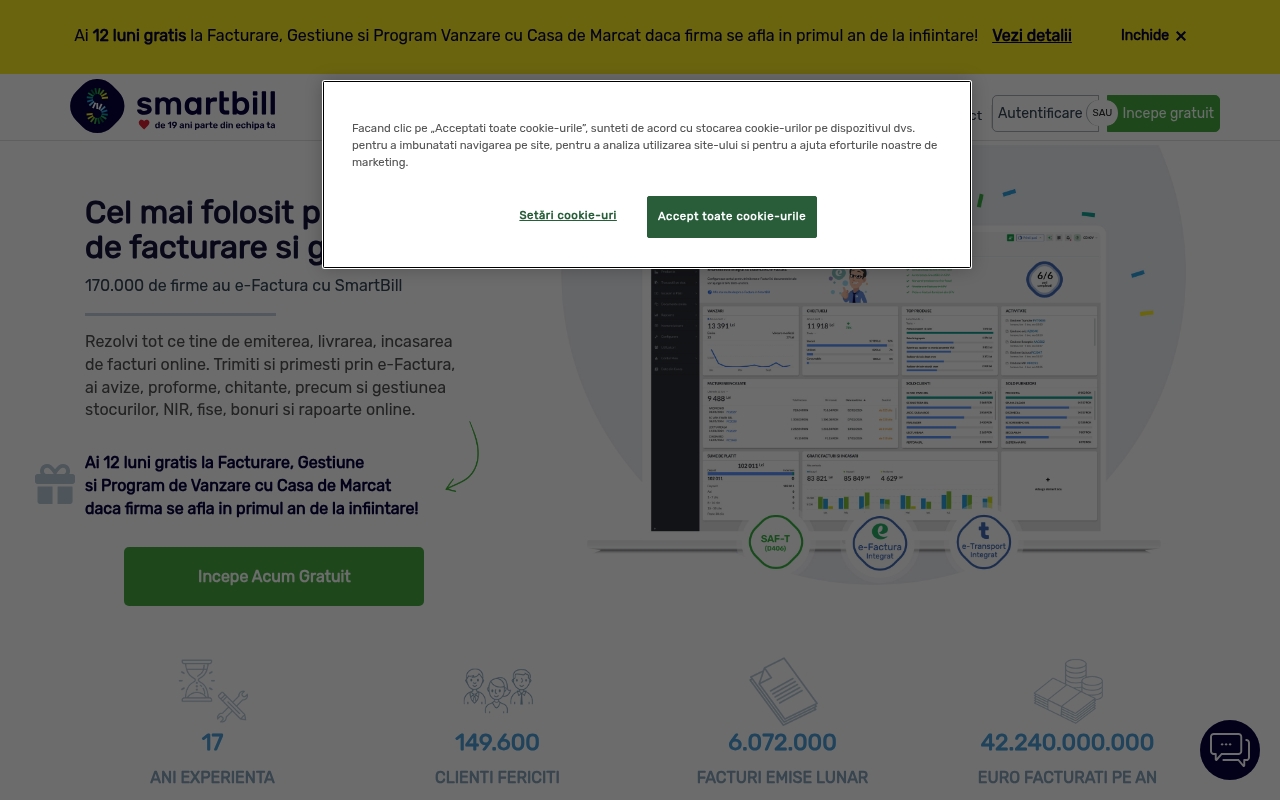
SmartBill
SmartBill
SME Finance
SmartBill provides invoicing, accounting, and business management tools for Romanian companies.
Founded 2007
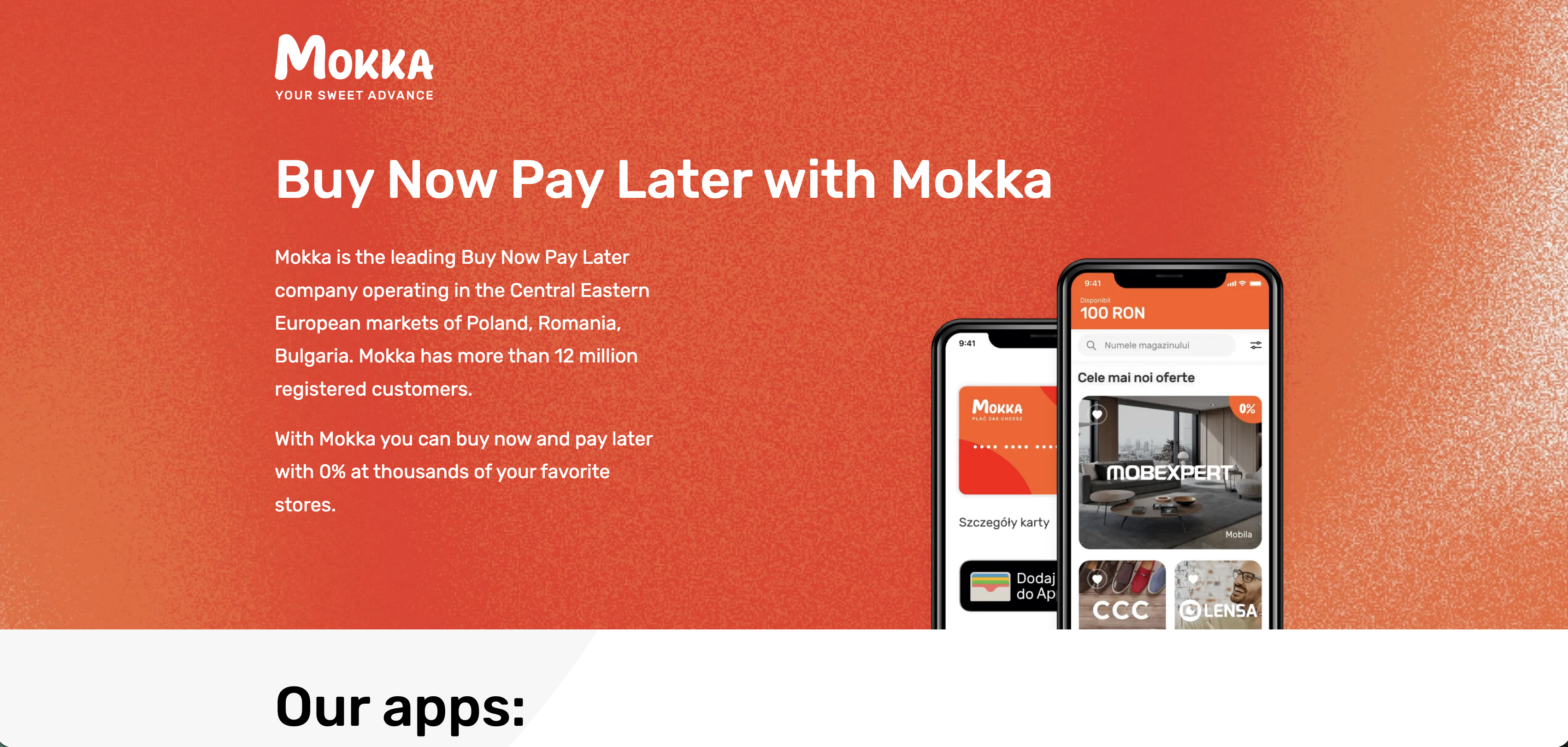
Mokka
Mokka
Financial Infrastructure
Mokka is a Romanian fintech platform built for the modern seller. Rather than forcing merchants into the rigid infrastructure of traditional payment processors, Mokka gives them a unified dashboard to manage payments, invoicing, and business basics from one place. The platform handles card payments, digital wallets, and local payment methods—all wired into a clean, merchant-friendly interface that feels less like enterprise software and more like something designed for actual humans. For Romanian SMEs and freelancers tired of juggling multiple logins and opaque fee structures, Mokka offers transparency and control that legacy banking and payment gateways simply don't provide. It's part merchant acquirer, part business backbone—a practical response to how payment infrastructure in Central & Eastern Europe still lags behind Western standards. Mokka sits at the intersection of embedded finance and merchant enablement, serving businesses that want payment functionality without the complexity.
Founded 2020
SeedBlink
SeedBlink
Financial Infrastructure
SeedBlink enables investors to access European startup investment opportunities.
Founded 2020
Fagura
Fagura
Embedded Finance
Fagura is a B2B wholesale marketplace that lets retailers and resellers source products directly from manufacturers across Europe. Rather than hunting through scattered suppliers or dealing with traditional wholesale distribution, users navigate a single platform to compare prices, find new suppliers, and place orders. The model cuts out the middleman, giving small retailers the margins they need to compete on price while manufacturers reach customers they'd otherwise struggle to find. What makes Fagura stand out in the broader fintech landscape is its embedded finance layer—the company operates a working capital financing facility that lets buyers pay for inventory purchases over time, turning what would otherwise be a cash-flow bottleneck into a growth lever. This isn't fintech as a standalone product; it's fintech woven into the nuts and bolts of how small business inventory gets funded. Fagura has built something rare: a marketplace where financial services don't just sit on top, they're baked into the commercial mechanics. For SMEs across Europe struggling to finance seasonal stock or scale quickly, Fagura represents a different way to structure working capital—accessible, automatic, and tied directly to real purchasing behavior.
Founded 2019
FintechOS
FintechOS
Financial Infrastructure
Banking software has historically been built around the idea that each financial product needs its own dedicated system — a current account platform, a separate mortgage system, another for credit cards, another for investments. The result is a fragmented technology landscape that prevents banks from delivering the unified experience customers actually want. FintechOS was founded in Bucharest in 2017 to challenge that model with a digital-first platform that lets financial institutions build, launch, and operate any financial product on a single configurable infrastructure. Its platform combines core banking capabilities with low-code product configuration, letting banks design customer journeys, launch new products, and modify existing ones without the multi-year IT projects that define traditional banking transformation. FintechOS has attracted backing from major investors including Earlybird and Draper Esprit, and serves banks and insurance companies across Europe and beyond. The Romanian base is significant — Bucharest has emerged as one of the more important Central European fintech hubs, and FintechOS has built one of the most credible product-led companies to come from that ecosystem. In the European banking infrastructure market, where the largest players are global enterprise software companies, FintechOS represents a generation of platform-native banking technology built for a different kind of bank.
Founded 2017
Pago
Pago
Embedded Finance
Pago is a Romanian digital payments platform that simplifies how businesses and consumers handle transactions in a market where cash still dominates. Rather than positioning itself as just another payment processor, Pago has built a local infrastructure play—enabling merchants to accept card payments, online transfers, and installments while giving consumers a frictionless way to pay across channels they already use. It's the kind of company that solves a genuine geographic problem: bringing payment modernization to Eastern Europe where legacy banking infrastructure still creates friction. What sets Pago apart is its focus on local market dynamics. While Western European fintechs obsess over cross-border complexity, Pago recognized that Romania needed better domestic payment rails and merchant tools first. The platform handles everything from point-of-sale integration to checkout optimization to installment lending, bundling services that larger international players often treat as separate concerns. For businesses, it's simplified operational complexity. For consumers, it's made purchasing more flexible—particularly the installment features that appeal to a market where credit penetration remains lower than Western Europe. Pago occupies an interesting middle ground in the fintech ecosystem: too local to compete with global payment giants, but too functionally complete to ignore within Romania's growing digital economy. It represents a broader pattern of Eastern European fintechs solving hyperlocal problems before scaling across the region.
Founded 2015
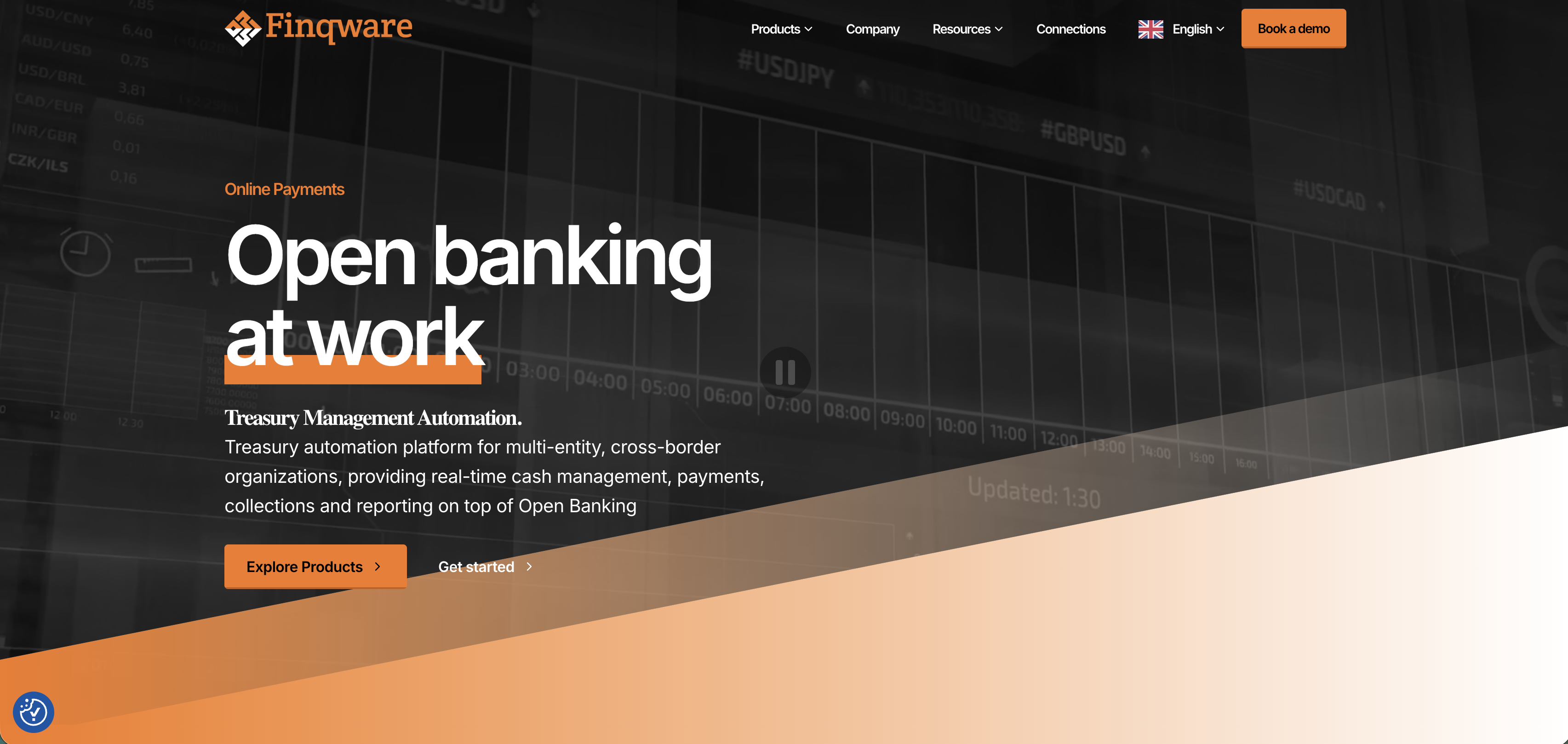
Finqware
Finqware
Financial Infrastructure
Open banking infrastructure across Central and Eastern European markets has been built more slowly than in Western Europe, partly because of the smaller size of individual national markets and partly because the major pan-European open banking infrastructure providers have prioritised the larger Western markets in their integration work. Finqware was founded in Bucharest in 2018 to address that gap with an open banking platform focused specifically on the CEE region. Its API connectivity covers banks across Romania and the broader CEE markets, providing the account aggregation and payment initiation capabilities that fintechs and financial institutions in the region need to build digital products. The regional focus is deliberate — building genuine connectivity to the long tail of Central European banks requires the kind of operational depth in each market that platforms with broader ambitions struggle to maintain. Finqware's positioning as the CEE specialist gives it integrations and partnerships in markets where the larger Western European open banking platforms have less coverage. In the broader European open banking landscape, the regional specialist model has proven more durable than expected — the technical and regulatory complexity of bank connectivity in each country gives genuine local depth a competitive advantage that larger but shallower platforms cannot easily replicate.
Founded 2018