← All services
13 European companies
Multi-Bank Tools Providers in Europe
Multi-bank tools allow businesses to connect and manage accounts at multiple banking institutions through a single interface — viewing balances, initiating payments, and running cash position reports across all banking relationships simultaneously. For treasury teams managing accounts at several banks for operational, regulatory, or relationship reasons, multi-bank tools eliminate the need to log into multiple banking portals separately.
Typically offered by
European fintech companies offering multi-bank tools
Kyriba
Treasury🇫🇷 France
Kyriba is a cloud-native treasury and finance platform that sits at the intersection of corporate finance operations and intelligent automation. Rather than patching together spreadsheets and legacy systems, Kyriba consolidates cash management, liquidity forecasting, and working capital visibility into a single operating system for finance teams. Think of it as the command center for CFOs who are tired of fragmented data and manual workflows.
The platform handles everything from multi-currency cash positioning to FX hedging and supply chain financing, all orchestrated through APIs that plug into banks and accounting systems. It's built for mid-market to enterprise companies that move serious money across borders and need to know exactly where every dollar sits at any given moment. Kyriba doesn't try to be a banker or a startup darling—it's an industrial-grade tool that speaks the language of corporate treasurers.
In the European treasury space, Kyriba competes with legacy software vendors but with a modern cloud architecture that actually scales. It's the kind of platform that gets adopted quietly but becomes mission-critical once companies realize how much time their finance teams get back. The market for treasury automation remains sticky and consolidating, but Kyriba has built a defensible position by solving the unglamorous but essential work of helping large corporations optimize their balance sheets and reduce financial risk.
Founded 2000
Salv
Treasury🇪🇪 Estonia
Salv is a European treasury and payments platform designed for the modern finance team. Rather than juggling spreadsheets and legacy banking interfaces, Salv consolidates cash visibility, liquidity forecasting, and cross-border payments into a single, intuitive interface. The platform connects directly to a company's bank accounts—whether across Europe or globally—and gives CFOs and controllers real-time insight into cash positions, pending transactions, and upcoming obligations.
What sets Salv apart is its focus on simplicity without sacrificing depth. While enterprise treasury software often demands armies of consultants and months of implementation, Salv gets finance teams operational in days. The platform handles multi-currency cash management, automates reconciliation, and streamlines payment execution—all critical functions that most midmarket companies currently manage through error-prone manual processes or expensive legacy systems.
In a market dominated by entrenched enterprise players like Kyriba and Treasurit, Salv targets the overlooked middle: growth companies and mid-sized enterprises that have outgrown basic banking but don't need Fortune 500-grade complexity. It's positioned as the cash management tool for teams that want control without the headache, and it reflects a broader European fintech trend toward pragmatic, cloud-native alternatives to traditional treasury solutions. For finance leaders tired of workarounds, Salv represents the kind of infrastructure redesign that turns scattered processes into streamlined workflow.
Founded 2021
ION Group
Financial Infrastructure🇬🇧 United Kingdom
Andrea Pignataro founded ION in London in 1999, after leaving a trading role at Salomon Brothers with a conviction that the software running global markets was held together with too much manual process. Over the following two and a half decades he built ION into one of the largest, most acquisitive players in capital-markets technology — absorbing dozens of specialist vendors, including Fidessa and Broadway Technology, and folding them into a single group.
The core business is still the unglamorous plumbing of institutional finance: trading platforms across equities, fixed income, foreign exchange, and cleared derivatives; risk management; post-trade processing; clearing and settlement; and market data. Investment banks, hedge funds, and corporate treasuries run parts of their daily operations on ION's systems, often without their own customers ever knowing it.
Less visible is ION's regulatory technology line. Products including ION LookOut and Fidessa Surveillance handle trade surveillance, market-abuse detection, and regulatory reporting across multiple jurisdictions, and ION's compliance tools have placed in FinTech Global's RegTech 100 list for three consecutive years. It's a smaller part of the business than the trading and post-trade platforms, but a genuine one — which is why ION appears under both Capital Markets and RegTech in this directory, rather than just one.
The company is headquartered in London, employs more than 13,000 people across over 50 offices worldwide, and remains privately held under Pignataro's control — a scale most consumer-facing fintechs never approach, built almost entirely on customers who are themselves in finance.
Founded 1999
Ophen Technologies
SME Finance🇩🇪 Germany
Most corporate treasuries are still wrestling with spreadsheets and manual workflows when it comes to managing liquidity and FX exposure. Ophen Technologies reimagines treasury management for mid-market companies by building a unified platform that turns fragmented banking relationships into a single source of truth. The platform aggregates real-time cash positions across multiple banks, surfaces FX exposure, and automates the mechanics of moving money and hedging risk. It sits between a company's existing bank accounts and ERP systems, orchestrating what should be simple but somehow remains chaotic. What sets Ophen apart is its refusal to force clients into rip-and-replace dynamics. Instead, it works with existing infrastructure, meaning finance teams get immediate value without betting the company on a migration. The platform speaks the language of CFOs and controllers, not engineers, which matters when the problem you're solving is as mission-critical as knowing where your cash actually is. In a market where treasury tech tends toward either complexity or oversimplification, Ophen occupies a pragmatic middle ground. For European mid-market companies managing multi-currency operations and the complexity that comes with it, the platform addresses a genuine pain point that traditional banking and generic ERP modules have consistently underserved.
Founded 2021
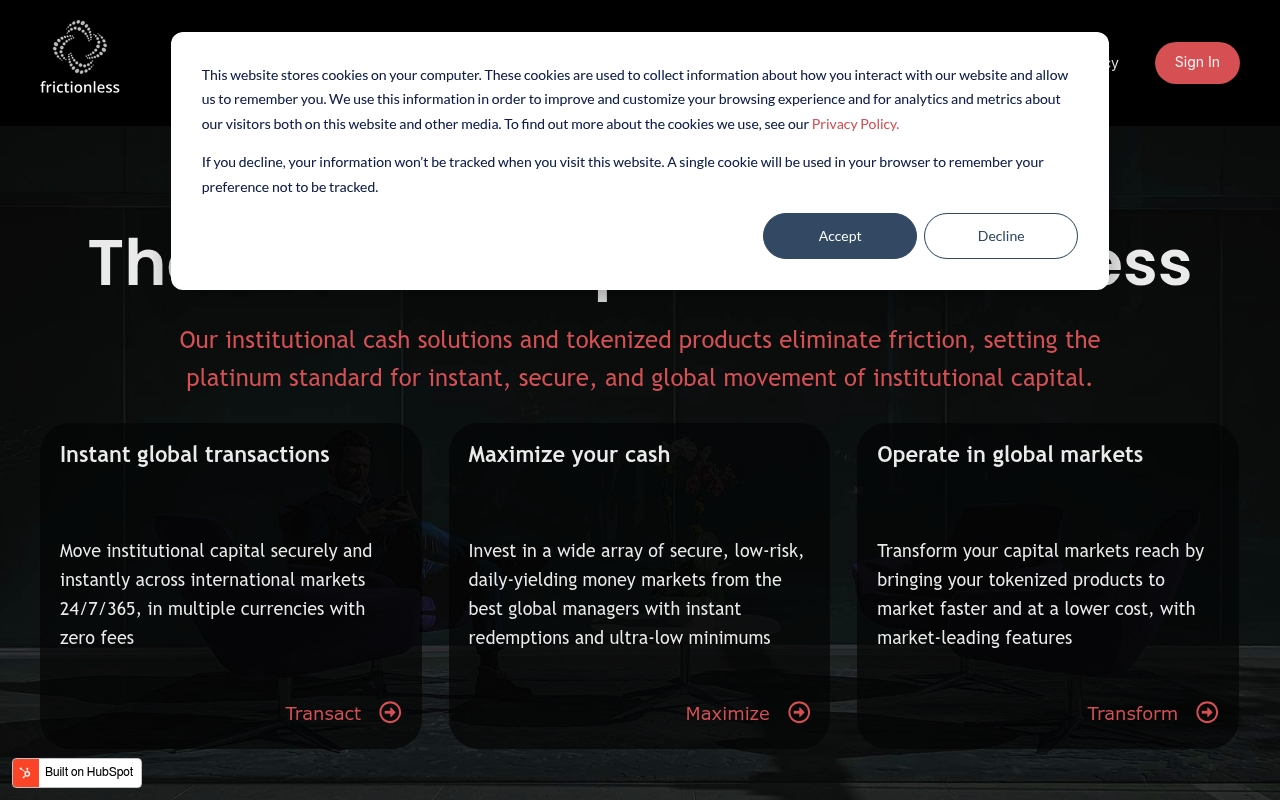
Frictionless Markets
Financial Infrastructure🇱🇺 Luxembourg
Frictionless Markets is building the infrastructure layer for cross-border capital flows in Europe. Rather than forcing companies to navigate fragmented clearing and settlement systems across jurisdictions, they've created a unified platform that collapses the friction out of moving money across borders—think of it as the plumbing that lets financial institutions actually operate seamlessly across the continent.
The company tackles a surprisingly stubborn problem: despite decades of fintech progress, moving capital between countries still involves Byzantine manual processes, multiple intermediaries, and settlement delays that would make a 1990s bank nervous. Frictionless automates what should be simple, letting institutions execute, clear, and settle cross-border transactions in a fraction of the time it currently takes.
What sets them apart is their approach to the European market specifically. While global platforms treat Europe as one market, Frictionless has built infrastructure that actually understands and respects the regional regulatory mosaic—different clearing codes, settlement windows, compliance requirements. They're not trying to bulldoze standardization; they're engineering around fragmentation.
The company sits at the critical intersection where traditional finance infrastructure meets modern fintech. As regulatory frameworks like T2S consolidation and PSD3 continue reshaping European payments, Frictionless is positioned as the connective tissue that makes the transition actually work for mid-market institutions.
Founded 2022
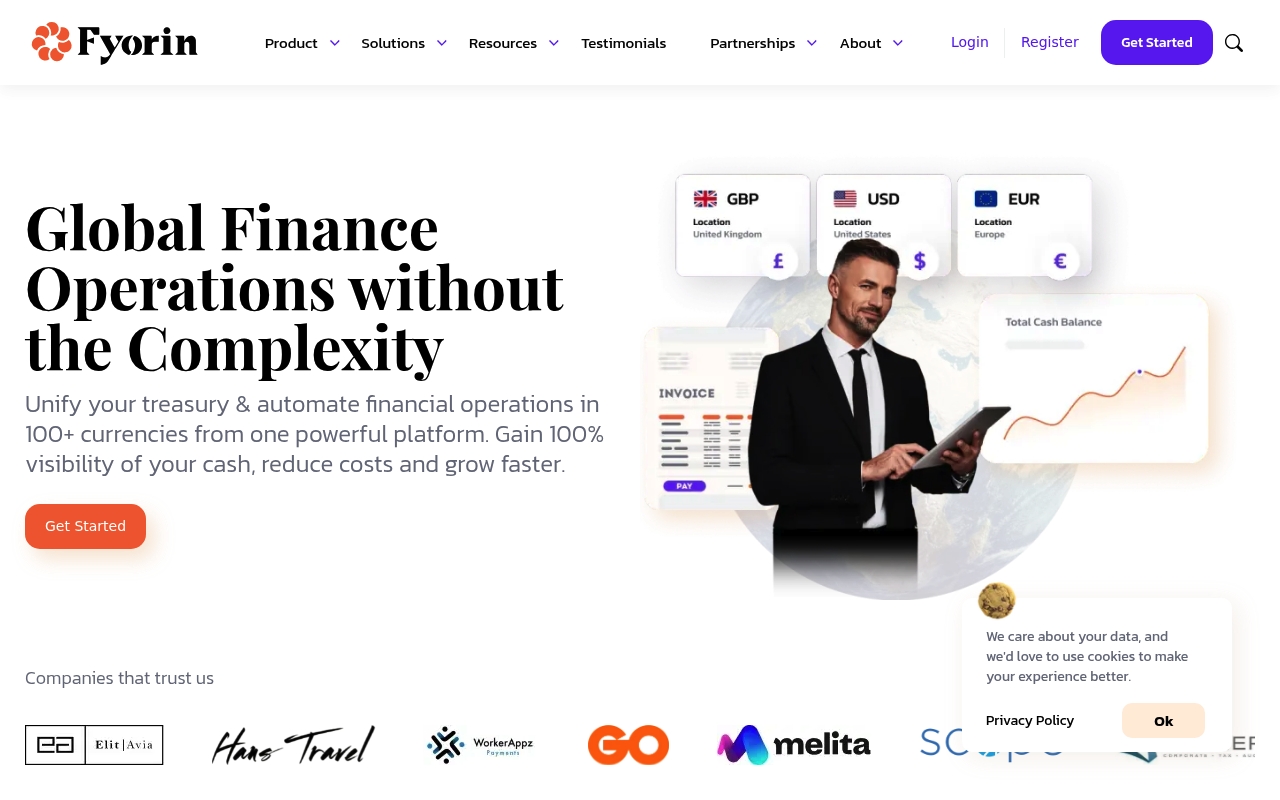
Fyorin
Financial Infrastructure🇲🇹 Malta
Fyorin is a European treasury and payments platform built for the modern corporate finance team. It bundles cash management, FX execution, and liquidity forecasting into a single interface—stripping away the complexity that haunts traditional treasury software. The platform connects directly to your banks and accounting systems, giving finance teams real-time visibility into cash positions across multiple accounts and currencies. Unlike legacy solutions that require armies of integrators and months of implementation, Fyorin is designed for immediate deployment, letting companies start optimizing cash flow within weeks rather than years. It appeals to mid-market and enterprise finance teams tired of spreadsheet-driven processes and fragmented point solutions. Fyorin sits squarely in the gap between enterprise banking software and modern fintech: it's professional enough for serious corporate finance, but built with the simplicity and speed that modern teams expect. The platform is particularly valuable for companies with multi-currency exposure or complex banking relationships, where manual cash management becomes a real drag on working capital efficiency. In a market crowded with legacy treasury vendors, Fyorin represents a cleaner, faster alternative that doesn't ask you to overhaul your entire finance stack.
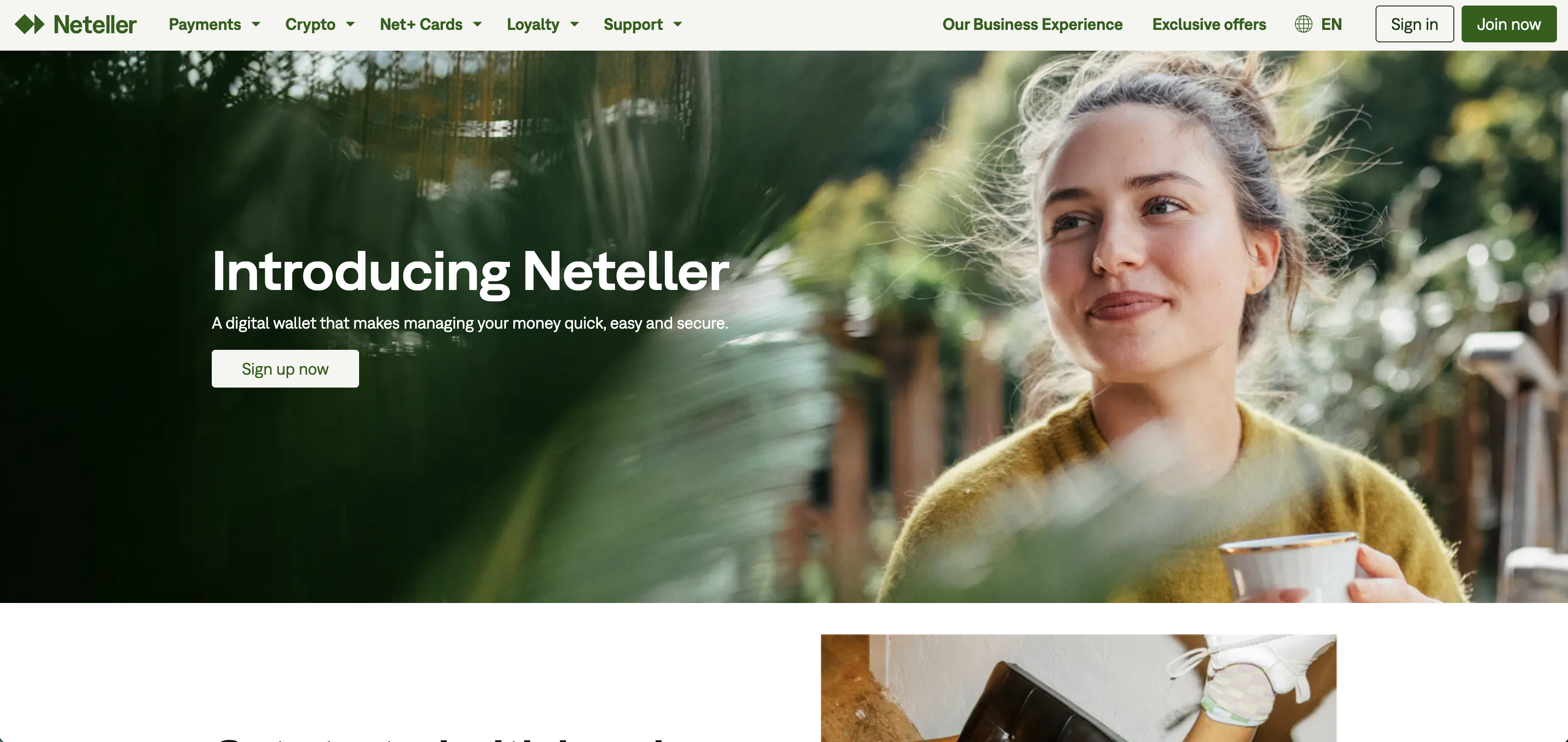
Neteller
Payments🇬🇧 United Kingdom
Neteller is a digital payments platform that lets you move money across borders and manage funds with the speed of a startup and the infrastructure of an established player. Born in the early days of online payments, it's evolved into a multi-currency wallet and transfer service that appeals to freelancers, remote workers, and anyone tired of waiting five days for a bank wire. The platform handles card payments, money transfers, and currency exchange without the theatrical overhead of traditional banking. Where most incumbents still treat international transfers like a bureaucratic ordeal, Neteller compresses the friction—you can fund accounts, withdraw to cards, and send money globally from a mobile app.
It's part of the Paysafe group, which means institutional backing without the institutional slowness. For users in emerging markets or anyone juggling multiple currencies for work, Neteller represents the pragmatic middle ground between crypto's volatility and banks' glacial timelines. It's not revolutionary, but it's genuinely useful for the people who need it most.
Founded 1999
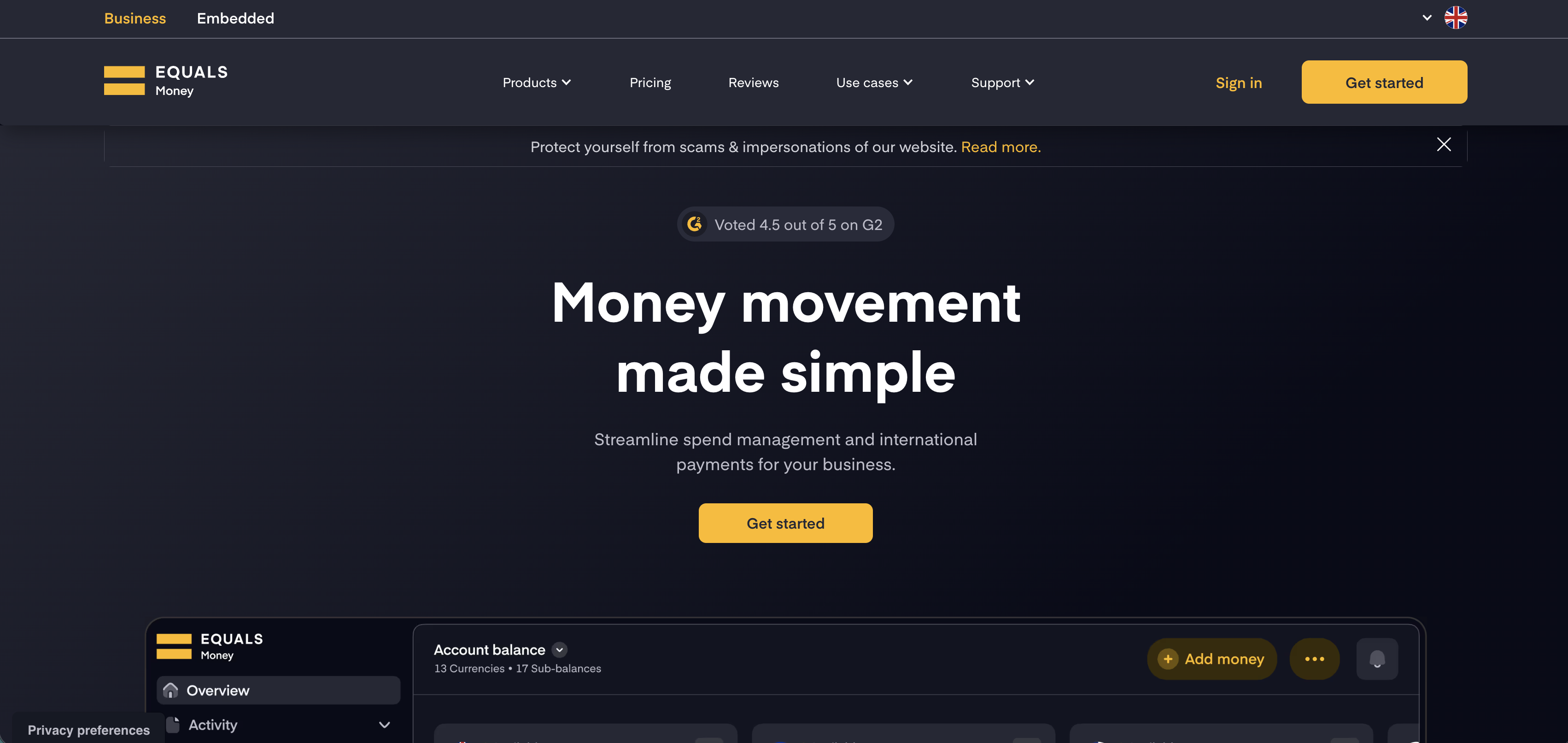
Equals Money
Payments🇬🇧 United Kingdom
B2B international payments live in an awkward gap between the consumer apps that have made cross-border transfers easy for individuals and the corporate banking products designed for treasury teams at multinational corporations. Equals Money — the rebranded successor to FairFX's business operations — was built specifically for that gap. Its platform serves SMEs and mid-market companies that need international payment capability with the user experience of a consumer fintech but the controls and reporting of a business product. Equals Money offers multi-currency accounts, mass payments, FX hedging, and expense management cards under a single platform, with pricing that is transparent and significantly more favourable than the international payment fees that high street banks charge their business customers. The Equals Group structure consolidates the FairFX consumer brand alongside the Equals Money B2B platform and other group products, giving it the scale to compete with both consumer transfer services and traditional corporate banking. In the European B2B cross-border payment market — where Wise Business, Airwallex, and Revolut Business compete aggressively for the same customers — Equals Money's UK depth and integrated product suite make it a particularly relevant option for British SMEs trading internationally.
Founded 2005
Verestro
Financial Infrastructure🇩🇪 Germany
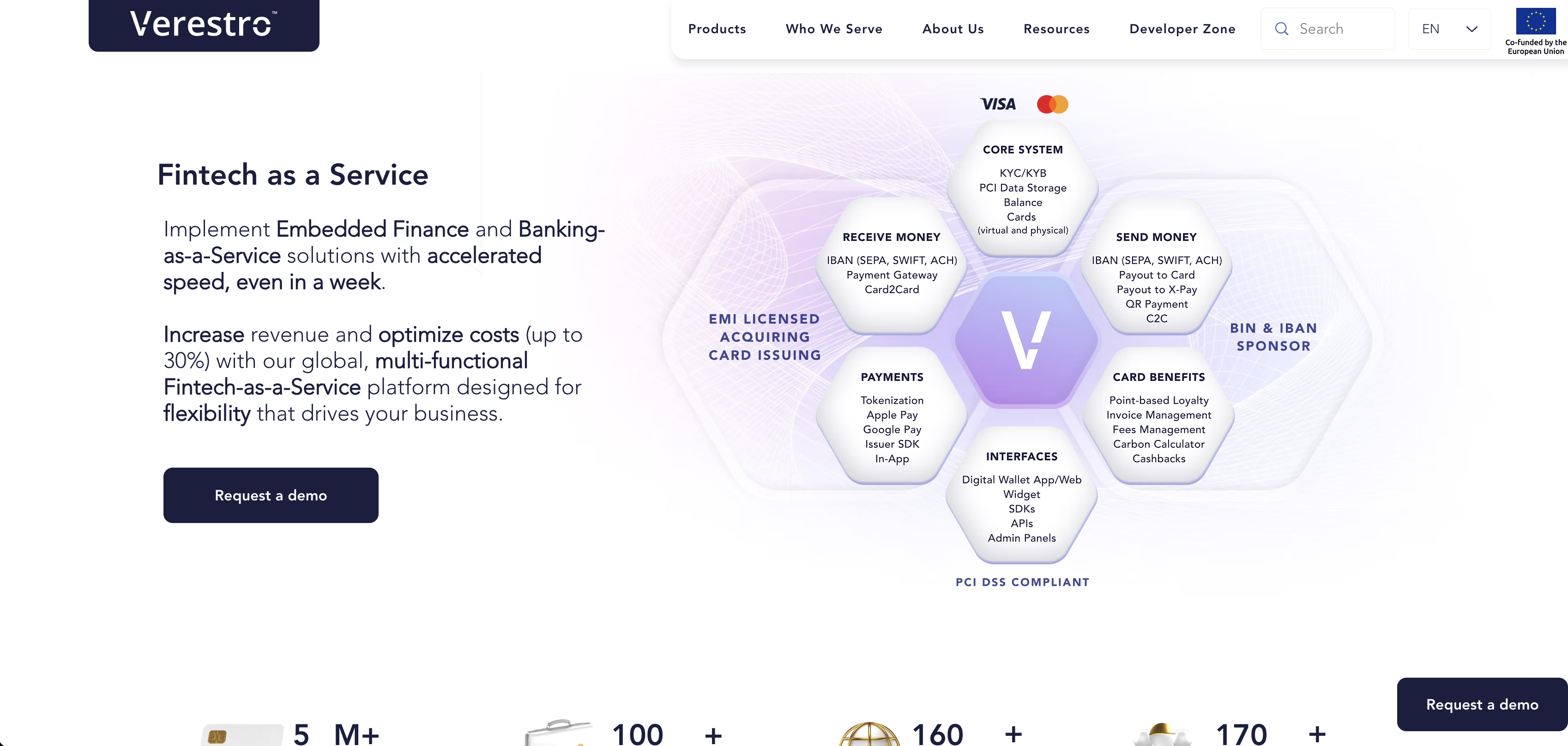
Verestro is a European fintech platform that simplifies cross-border payments and financial operations for SMEs and mid-market companies. Built for businesses that operate across multiple countries, it consolidates currency management, invoice payments, and working capital into a single dashboard, eliminating the friction of dealing with multiple banks and payment corridors. The platform sits at the intersection of treasury management and operational banking, handling everything from multi-currency liquidity forecasting to automated payouts across Europe and beyond. Unlike traditional corporate banks that charge premium fees and require relationship managers, Verestro strips away complexity and cost through API-first infrastructure and transparent pricing. It appeals to growing companies frustrated with legacy banking infrastructure—those processing hundreds of invoices monthly across different currencies and jurisdictions. The platform integrates with existing accounting systems and banking partners, functioning as the intelligent layer between a company's operations and its financial settlement. For the ambitious European SME or scaling startup, Verestro represents the kind of modernized, software-first alternative that traditional treasury teams have long awaited, combining corporate-grade functionality with the simplicity and cost structure of a modern fintech.
Founded 2020
Genome
Wealth🇱🇹 Lithuania
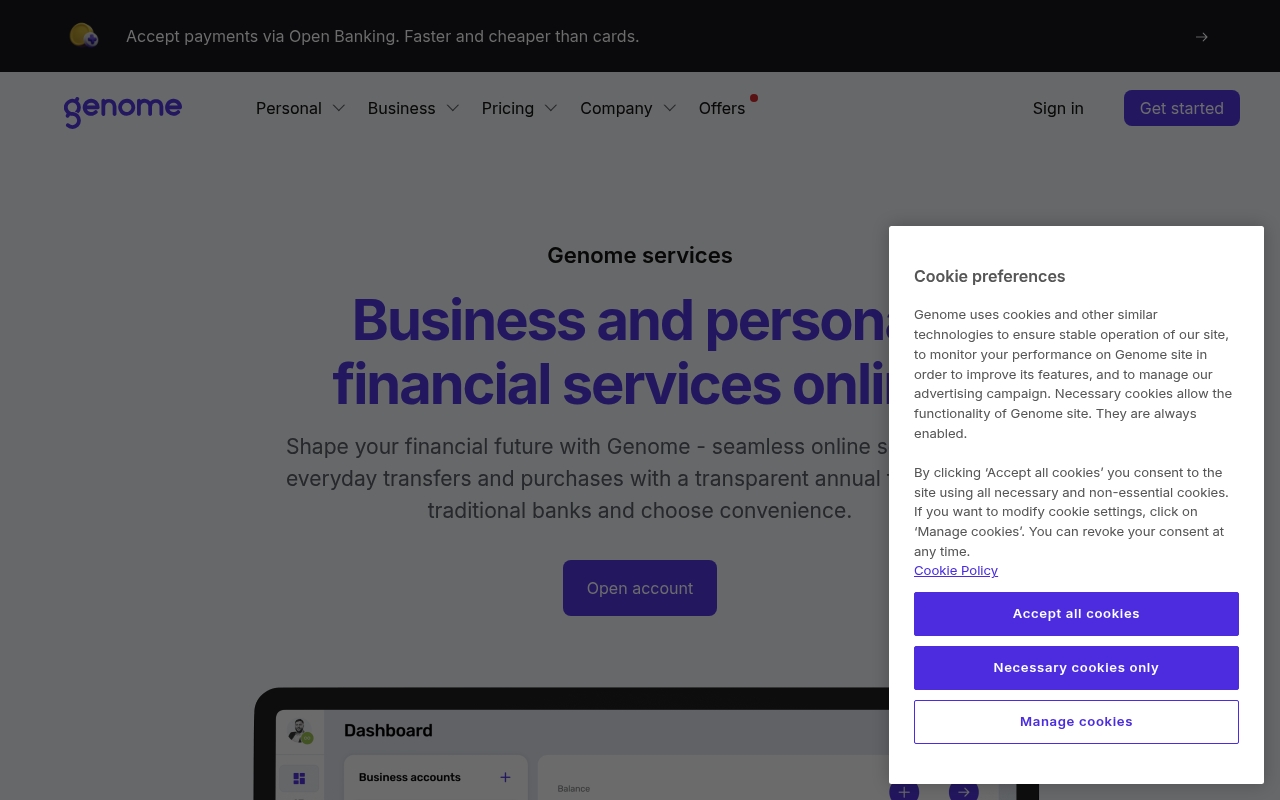
Genome is a Berlin-based fintech that turns fragmented financial data into actionable intelligence for wealth managers and family offices. Rather than forcing advisors to manually piece together client portfolios across multiple custodians and platforms, Genome aggregates real-time data and delivers a unified view—think of it as the operating system for complex wealth. The platform handles everything from portfolio monitoring and risk analysis to reporting and compliance, automating the grunt work that still consumes hours of advisor time each week.
What sets Genome apart is its focus on the enterprise wealth management market, where institutional-grade infrastructure matters more than flashy consumer features. It works directly with private banks, wealth managers, and fintech platforms that need bulletproof data integration and regulatory compliance built in from day one. Most competitors in this space either build for consumers or offer clunky, legacy-style solutions; Genome approaches it like a modern API-first infrastructure layer.
In the European context, where wealth management remains fragmented across countries and custody models, Genome's cross-border capabilities and multi-asset support address a real pain point. It's positioned as the connective tissue between traditional private banking and a new generation of digital-first advisors—not replacing advisors, but giving them the tools to scale and focus on actual strategy instead of data management.
Founded 2019
Estably
Embedded Finance🇱🇮 Liechtenstein
Estably sits at the intersection of real estate and fintech, solving a problem that has plagued property transactions for decades: escrow. The startup digitizes the entire escrow process, replacing paper, manual coordination, and outdated systems with a cloud-native platform that closes deals faster and with fewer friction points.
The platform handles the entire closing workflow—from document management to fund disbursement—in a single, integrated environment. Title companies, real estate agents, lenders, and buyers can collaborate seamlessly, with real-time visibility into transaction status. Estably automates routine tasks that traditionally consume hours of administrative work, freeing up teams to focus on client relationships instead of paperwork.
In a market dominated by legacy players still operating on fax and email, Estably represents a generational shift toward digital-native real estate finance. The platform appeals to title companies and brokers tired of fragmented workflows, as well as lenders and agents looking to accelerate their closing cycles. For European property markets—particularly those with emerging digital infrastructure—Estably's approach to modernizing escrow operations signals what's possible when you apply contemporary fintech thinking to a stubbornly analog industry.
Escrow has been the unexciting but essential glue holding real estate deals together. Estably makes it interesting.
Founded 2021
Currencies Direct
Payments🇬🇧 United Kingdom
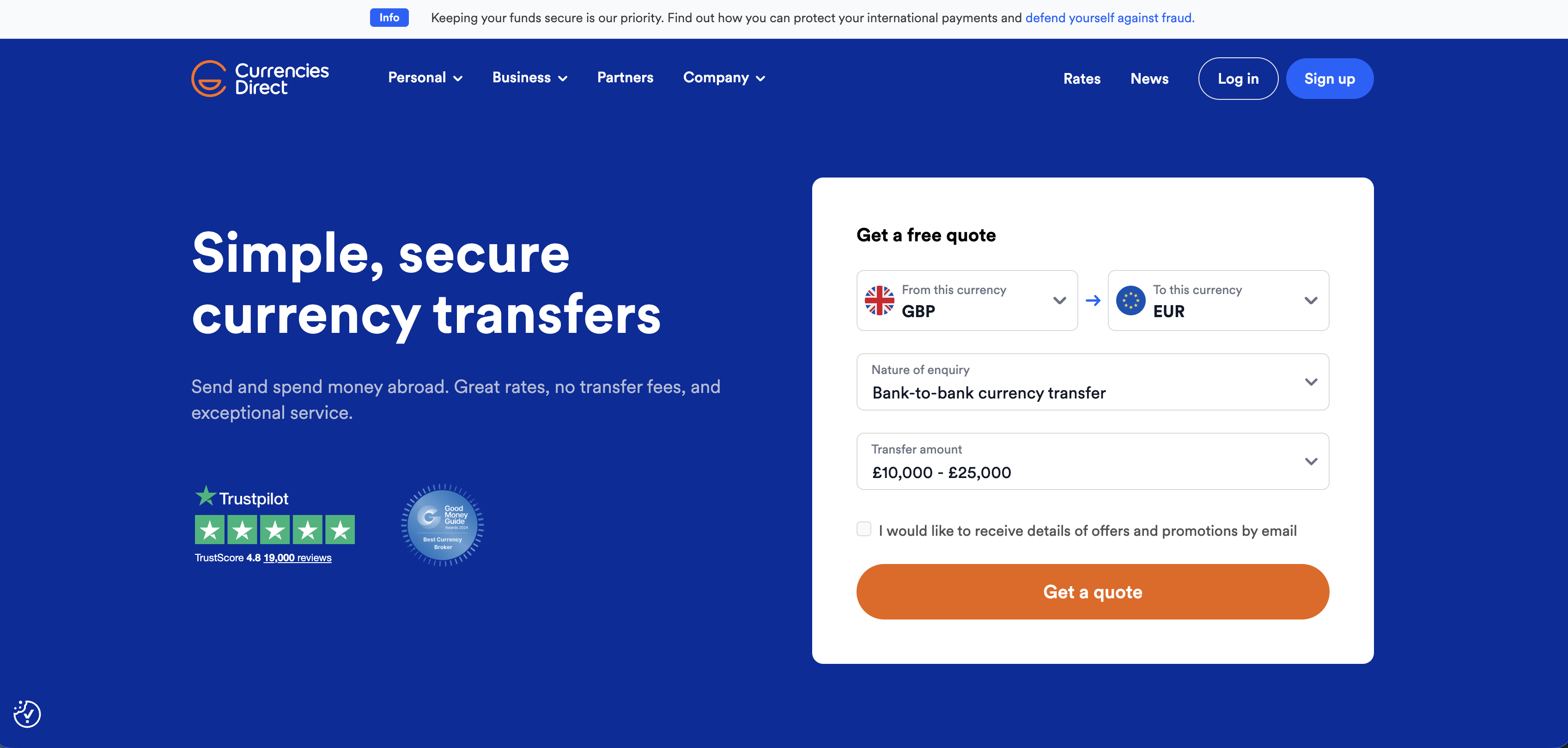
Long before Wise existed, there was a generation of UK companies serving the British expatriate community with foreign exchange services that were better than what banks offered, even if they still required phone calls and forms. Currencies Direct was founded in London in 1996 — making it ancient by fintech standards — and built one of the longest-running international payment businesses in Europe by serving exactly that market. Its core customer base has historically been British expatriates buying property abroad, sending pensions overseas, and managing the cross-border financial complexity of living in one country with assets and obligations in another. The company has evolved with the digital era, building online platforms while maintaining the relationship-based service model that its core customers valued — and continue to value, even as younger demographics have moved to app-based alternatives. Currencies Direct has expanded into broader international payment services for SMEs and individuals, processing billions in cross-border transfers annually. In the UK FX landscape, Currencies Direct represents the established alternative — older, more relationship-driven, and serving customer segments that the venture-backed fintechs sometimes overlook in their focus on digital-native users. Three decades of FX service is not nothing.
Founded 1996
Showing 12 of 13 companies. View all in the directory →