DatabaseServicesArticlesCountriesGlossaryNewsletterRequest listing
← All countries
🇨🇭

Fintech in Switzerland

25 companies·View all in directory →
About the Switzerland fintech ecosystem

Switzerland's fintech ecosystem reflects the country's position as one of the world's most important private banking and wealth management centres. Zurich and Geneva have developed fintech communities built around wealth technology, asset management infrastructure, trading platforms, and the crypto ecosystem — particularly in the "Crypto Valley" cluster centred on Zug that has become one of the world's most significant blockchain and crypto hubs.

FINMA, Switzerland's financial regulator, has developed a reputation for pragmatic engagement with fintech innovation. The introduction of a specific fintech licence in 2018 — allowing companies to accept public deposits up to CHF 100 million without a full banking licence — created a regulatory category specifically designed for deposit-taking fintechs. FINMA's crypto guidance, issued earlier than most comparable regulators, gave Swiss crypto companies regulatory clarity that attracted international blockchain projects and crypto asset managers.

Switzerland's non-EU status means Swiss fintechs cannot passport into the EU, which creates structural complexity for companies wanting to serve European customers from a Swiss base. Most significant Swiss fintechs maintain separate EU entities for their European operations. Within Switzerland, the financial services market is large, sophisticated, and wealthy, providing a strong domestic base for fintech products targeting private banking, asset management, and corporate treasury.

Fintech companies based in Switzerland

wefox
wefox
InsurTech
Wefox is a digital insurance broker that cuts through the noise of traditional insurance shopping. Rather than piecing together quotes from multiple providers, customers get personalized coverage recommendations through a streamlined mobile-first platform. The company bundles home, auto, and pet insurance into a single digital experience, handling everything from comparison to claims—no brokers in grey suits required. What sets wefox apart in Europe's insurance landscape is its focus on simplicity. While legacy brokers still rely on phone calls and paperwork, wefox does the legwork algorithmically, comparing hundreds of policies in seconds and presenting only the relevant options. The interface feels less like insurance shopping and more like opening a fintech app. The company operates across multiple European markets, building a tech-forward alternative to the tired insurance broker model. It's positioned as insurance for people who'd rather not think about insurance—until they need to claim. In the broader fintech ecosystem, wefox represents a straightforward play on distribution innovation: taking an opaque, offline-first industry and making it transparent, fast, and mobile-native.
Founded 2015
Taurus
Taurus
Financial Infrastructure
Taurus provides digital asset custody, tokenization, and trading infrastructure for institutions.
Founded 2018
Partasio
Partasio
Wealth
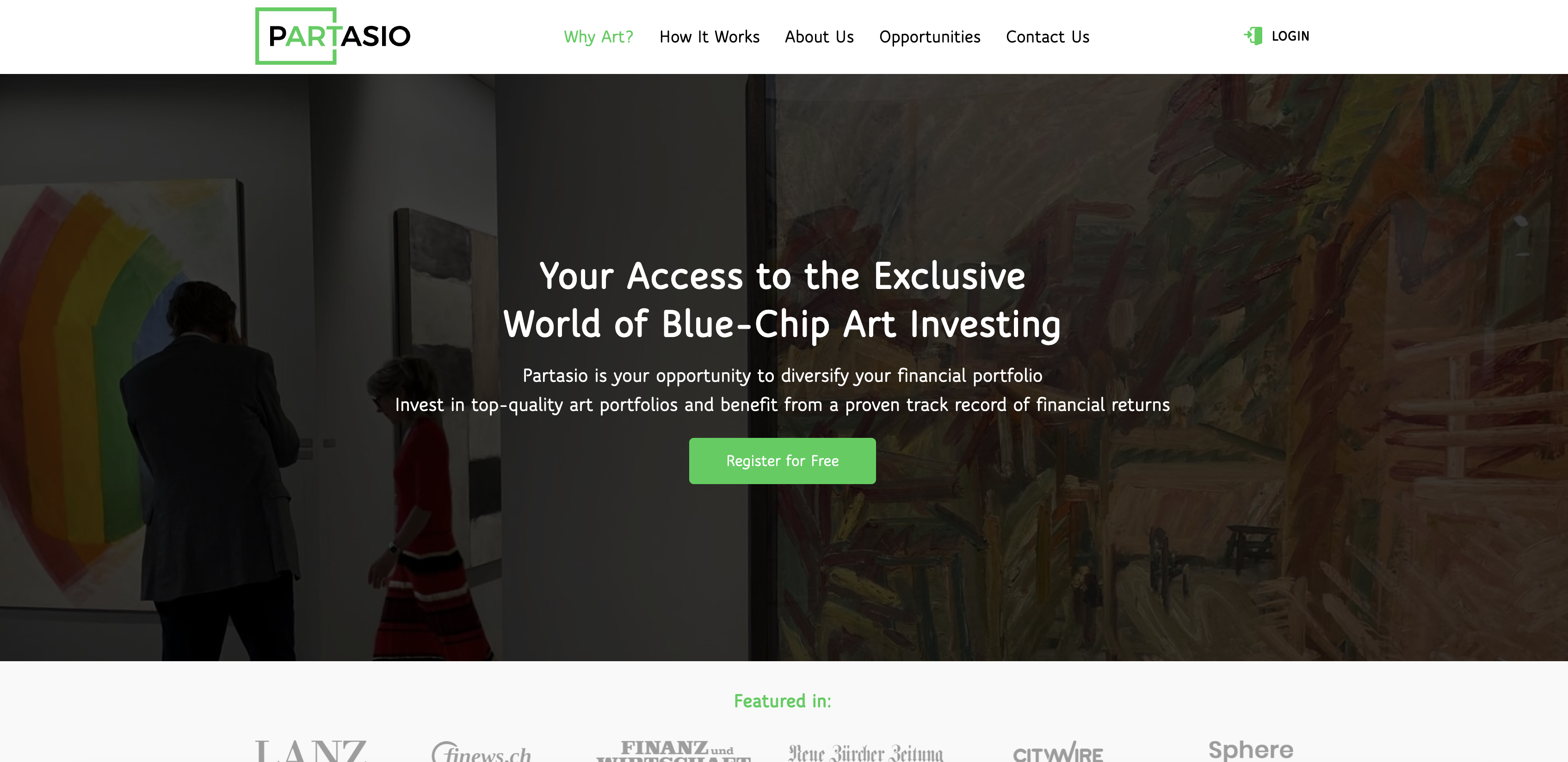
Most people think of art as something you hang on a wall, not something you add to a portfolio. That’s exactly the gap Partasio is trying to close. Based in Switzerland, Partasio sits at the intersection of finance and culture, turning blue-chip art into a structured investment product. Instead of buying a single painting for millions, investors can access curated portfolios of museum-grade works—fractionalized, packaged, and managed like a financial asset. At its core, the model is simple but powerful. Partasio builds portfolios of 4–6 high-end artworks from globally established artists, typically sourced off-market through private networks. Each portfolio is placed into a single-purpose vehicle, and investors buy into it through bankable certificates—complete with a Swiss ISIN—making it look and behave more like a traditional financial instrument than an art purchase. The pitch isn’t just about access—it’s about diversification. Blue-chip art has historically shown low correlation with traditional asset classes like equities or real estate, making it attractive for investors looking to balance risk. But until recently, that market was largely reserved for ultra-wealthy collectors. Partasio lowers that barrier, with minimum investments starting around CHF 30,000. What makes the platform stand out is how it blends private equity logic with the art world. Portfolios are actively managed over a multi-year horizon, with returns realized when the artworks are sold—typically within three to seven years. The company’s incentives are aligned with investors, earning performance fees only when profits are generated. It’s part of a broader shift in fintech toward alternative assets—where everything from real estate to art is becoming more accessible, structured, and digital. But Partasio leans into something slightly different. It doesn’t try to reinvent art. It simply builds a financial layer around it. In a market that’s historically opaque and exclusive, that alone is enough to make it stand out.
Founded 2022
Selma Finance
Selma Finance
Wealth
Selma Finance provides digital investing and personal wealth guidance.
Founded 2016
Alpian
Alpian
Wealth
Alpian is a Swiss digital private bank combining wealth management and everyday banking.
Founded 2019
Unblu
Unblu
Financial Infrastructure
Unblu operates in the unglamorous but essential territory where financial services meet customer service—the moment a bank customer needs live help and picks up their phone instead of abandoning their application. Rather than building another chatbot, Unblu created a platform that lets banks embed co-browsing and real-time video conversations directly into their digital channels, turning web pages and apps into collaborative workspaces where advisors and customers can actually see what the other is doing. The company targets financial institutions tired of losing conversions because their digital experiences feel abandoned. Unblu's platform sits between your app and your customer, enabling seamless handoffs from self-service to human guidance without the friction of traditional call centers. A user can be filling out a mortgage application, hit a question, and instantly video-call a specialist who sees their screen and can annotate, guide, and help in real time. What distinguishes Unblu in the European fintech infrastructure space is its focus on regulated financial use cases. Banks don't need another Silicon Valley-style collaboration tool; they need compliance-first interactions that work within PSD2, open banking, and data protection frameworks. Unblu has embedded this rigor into its platform rather than bolting it on afterward. The company serves a specific but high-value niche: banks and financial institutions that want to reduce abandonment rates, increase conversion, and do it through genuine human connection rather than algorithmic band-aids. In a landscape obsessed with APIs and automation, Unblu's bet is that sometimes the best digital experience is one that knows when to hand you a human.
Founded 2010
Netcetera
Netcetera
Financial Infrastructure
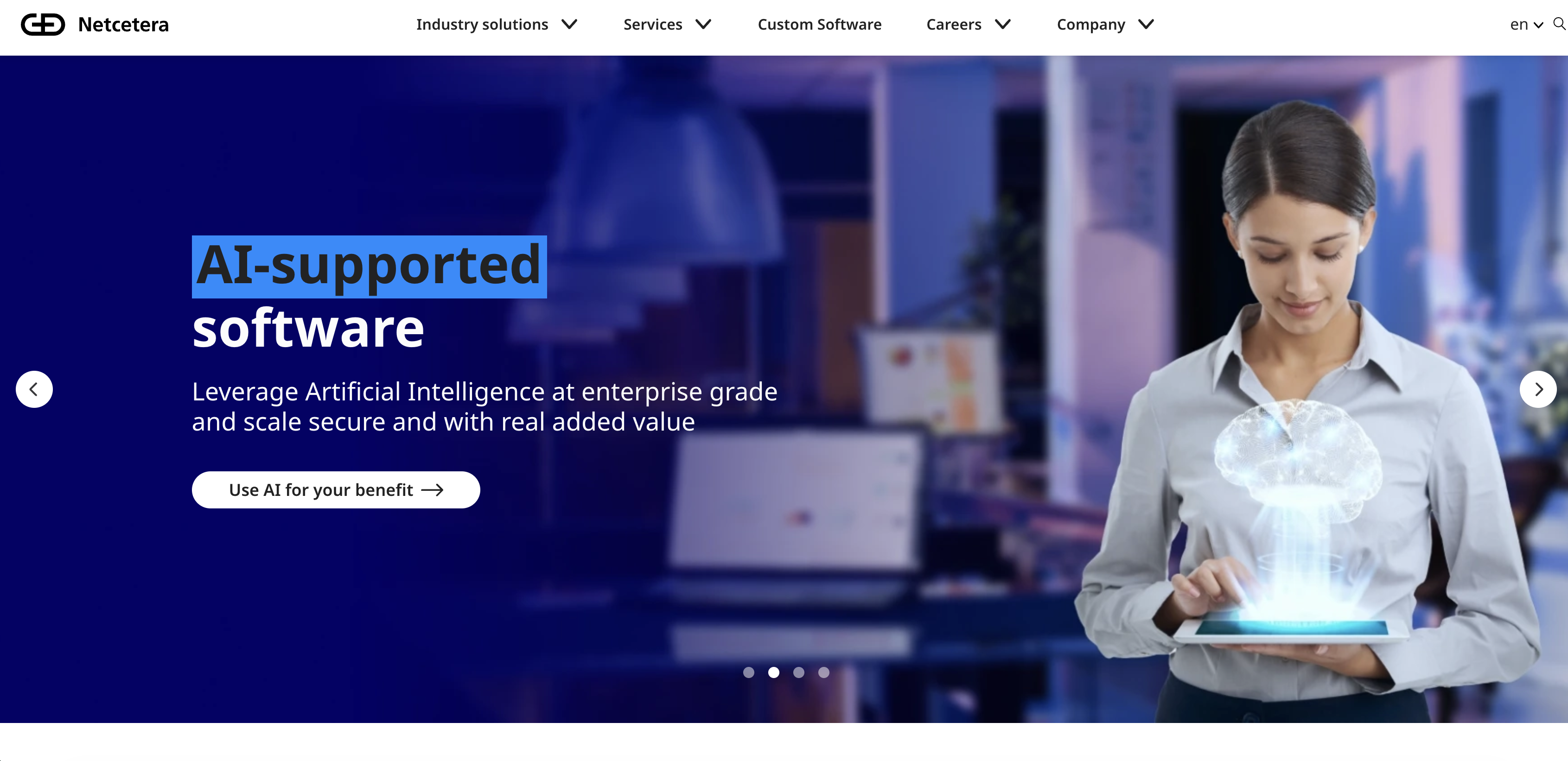
Netcetera is a Swiss-based financial software company that builds infrastructure for digital payments and banking. Rather than chasing flashy consumer apps, they focus on the unsexy but essential work of connecting banks, payment networks, and merchants through APIs and platforms that handle the plumbing beneath every transaction. Their reach spans card payments, mobile banking, and open banking rails—serving a global roster of financial institutions that need rock-solid, scalable technology rather than venture-backed disruption narratives. In markets where regulatory complexity and legacy system integration matter more than speed-to-market, Netcetera has quietly become indispensable. They approach fintech as a B2B engineering problem, not a consumer trend, which is exactly why you've never heard of them despite their work touching millions of transactions daily. The company represents a particular strain of European fintech: deeply technical, institution-friendly, and skeptical of hype. They're the kind of partner that traditional banks and payment processors turn to when they need to modernize without tearing everything down. In an ecosystem crowded with neobanks and consumer lending apps, Netcetera's unglamorous expertise in payment orchestration, card processing, and banking APIs underscores a fundamental truth about fintech infrastructure: the real value often hides behind the scenes, in systems nobody sees but everyone depends on.
Founded 1996
Payrexx
Payrexx
Embedded Finance
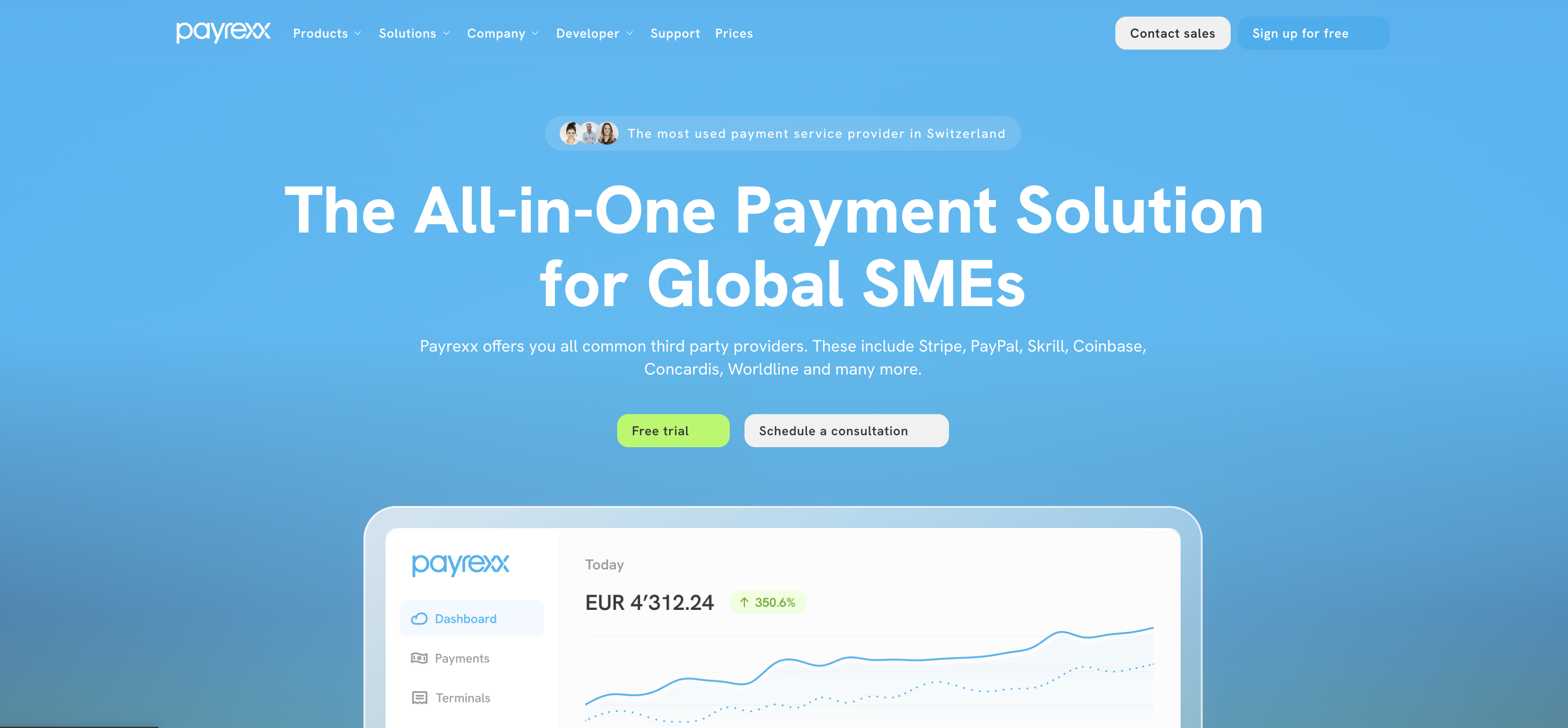
Payrexx is a Swiss payment processing platform that handles everything from card transactions to alternative payment methods through a single integration. Rather than juggling multiple providers, merchants get one dashboard, one API, and unified reporting—clean and straightforward. The company built its infrastructure to serve small and medium-sized businesses across Europe who found traditional acquiring fragmented and expensive. Payrexx bundles payment gateway, merchant acquiring, and checkout orchestration into a single stack, letting SMEs accept payments without becoming payment infrastructure experts. What separates Payrexx is its positioning as the pragmatic middle ground. It's not a heavyweight enterprise solution requiring months of integration, nor is it a bare-bones commodity service. The platform emphasizes ease of use alongside robust features—white-label checkout pages, recurring billing, instant settlement options, and granular reporting that actually tells you something useful about your business. In the crowded European payments landscape, Payrexx occupies the space where regulation meets accessibility. It holds full payment institution licensing across multiple jurisdictions, meaning merchants don't have to worry about compliance theater. For growing businesses tired of piecing together payment solutions, Payrexx represents consolidation without compromise.
Founded 2013
Crealogix
Crealogix
Financial Infrastructure
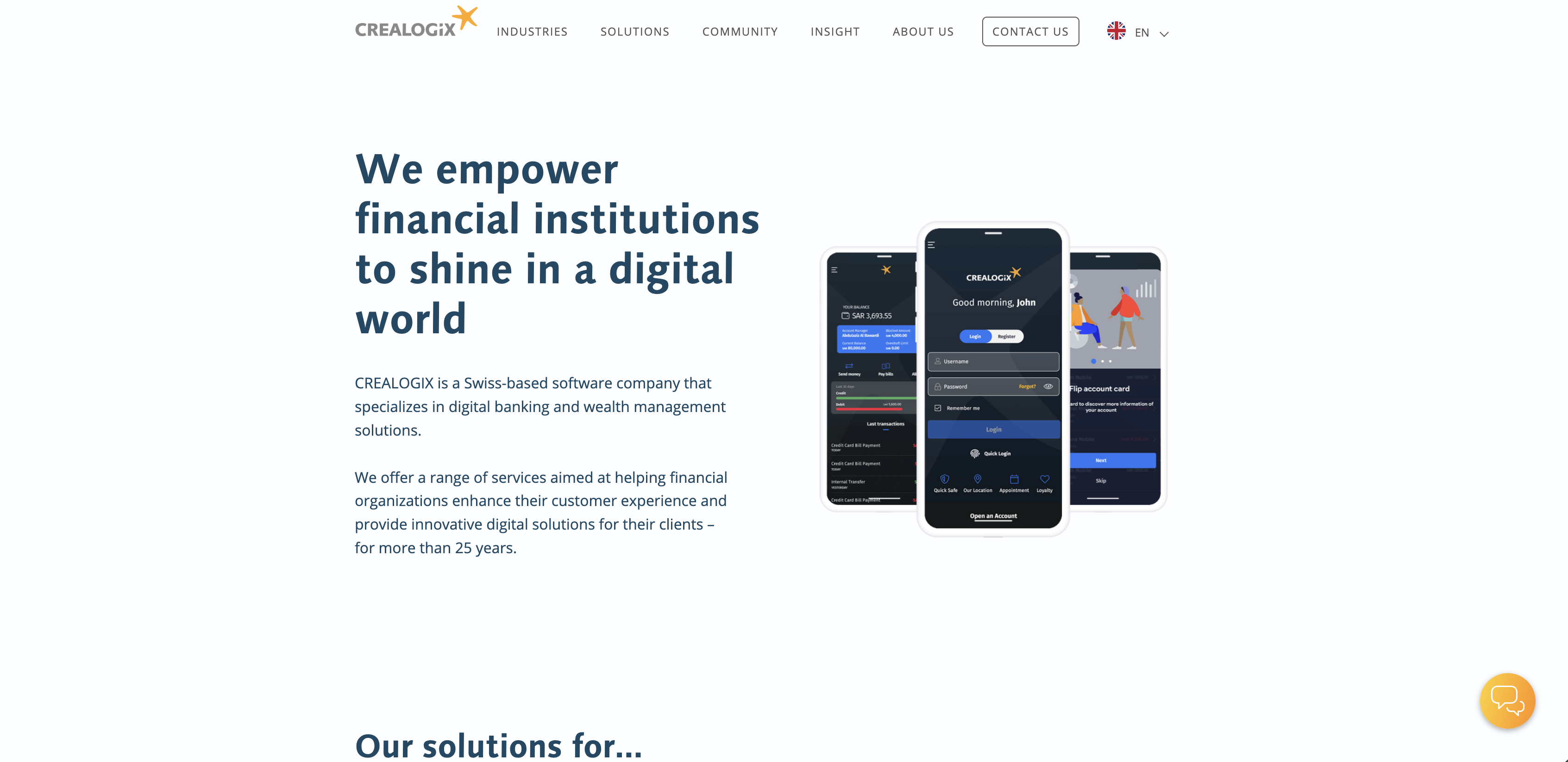
Crealogix is a Swiss fintech company that builds digital banking platforms for financial institutions across Europe. Rather than starting from scratch, banks and wealth managers plug into Crealogix's modular software suite to modernize their customer experience—covering everything from retail and corporate banking interfaces to wealth management portals and mobile apps. The company operates as an infrastructure play in the digital transformation space. Its platforms run on a microservices architecture, letting financial institutions pick and choose the components they need rather than ripping out legacy systems entirely. This approach has gained traction with mid-market and enterprise banks looking to compete with neobanks without the cost of a complete rebuild. Crealogix sits in a pragmatic middle ground between traditional banking software vendors and modern fintech disruptors. It's not trying to be a bank itself; instead, it partners with incumbents and increasingly with smaller financial institutions across German-speaking Europe and beyond. The company's strength lies in understanding both the technical demands of modern digital banking and the regulatory complexity that traditional banks navigate daily. In the evolving European fintech landscape, Crealogix represents the infrastructure generation—the companies enabling the banking industry's digital transition rather than replacing it entirely.
Founded 1999
Additiv
Additiv
Treasury
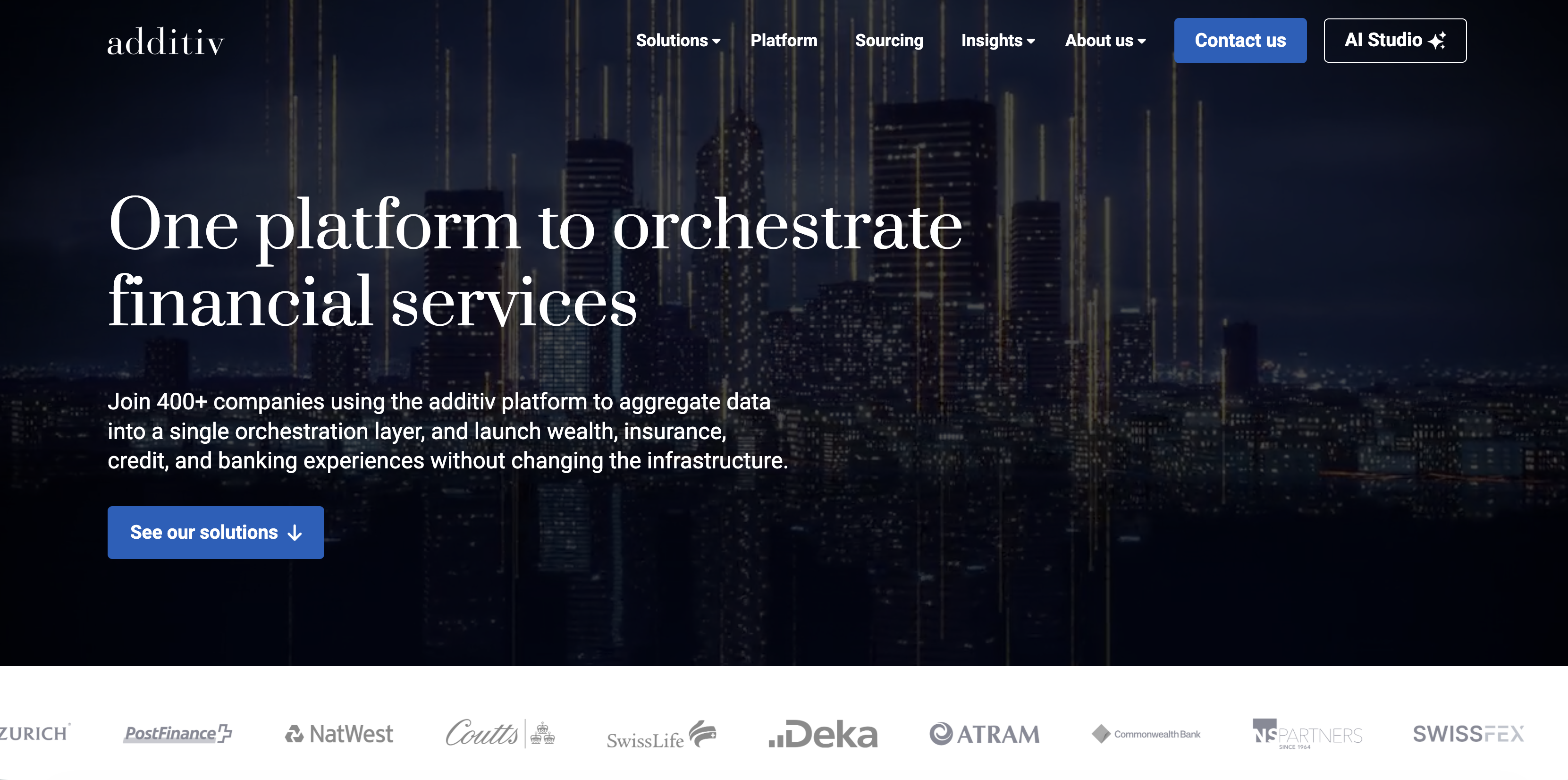
Additiv is a treasury and cash management platform built for the modern corporate finance team. It sits at the intersection of spreadsheets and enterprise software—companies spend billions managing liquidity across multiple banks, currencies, and counterparties, yet most still rely on fragmented manual processes. Additiv replaces that chaos with a unified workspace where teams can forecast cash flows, manage payments, and monitor FX exposure in real time. The platform connects directly to a company's banking infrastructure, pulling live transaction data and balances across all their accounts. From there, teams can model scenarios, automate routine reconciliation, and execute payments without context-switching between tools. It's designed for finance managers and treasurers who've outgrown spreadsheets but don't want the bloat of legacy treasury systems. In a market dominated by legacy players like Kyriba and FIS, Additiv positions itself as the cloud-native alternative—faster to implement, easier to use, and built for companies that actually want to control their cash position rather than just report on it. The company sits squarely in the corporate finance modernization wave that's reshaping how mid-market and enterprise companies think about liquidity. Unlike niche point solutions, Additiv attempts to be comprehensive enough to replace multiple tools while remaining nimble and intuitive.
Founded 2021
Saferpay
Saferpay
Payments
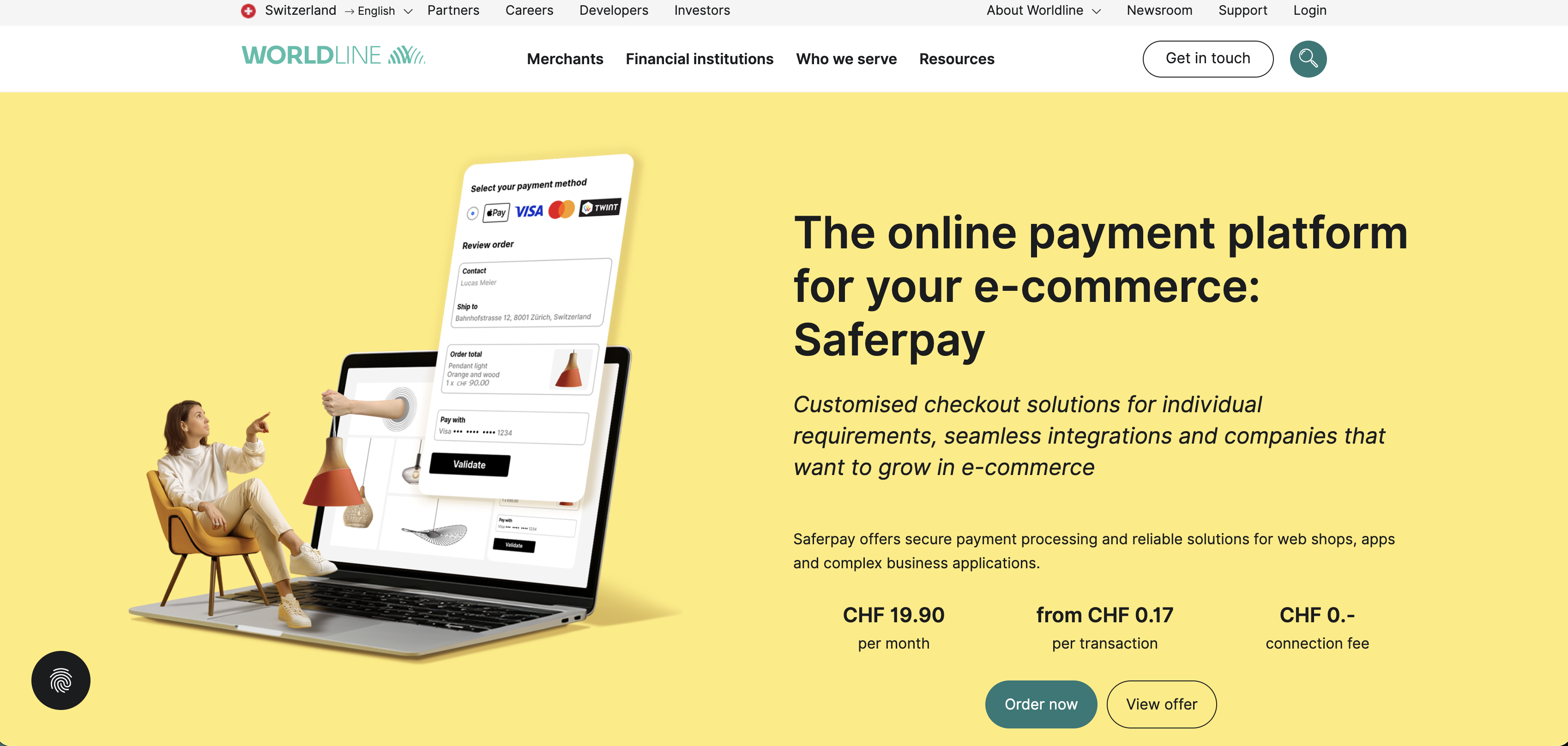
Saferpay is a Swiss payment solution that handles the unglamorous but critical work of processing card transactions safely. It sits between merchants and their customers, quietly managing the complexity of international payments, fraud prevention, and regulatory compliance that most people never think about until something goes wrong. The company has been around since the late 1990s, which in fintech terms makes it practically ancient—yet it continues to evolve rather than rest on its reputation. What sets Saferpay apart is its focus on security-first architecture. While newer payment players chase trends, Saferpay maintains obsessive attention to PCI DSS compliance, tokenization, and advanced fraud detection. It handles everything from simple card processing to complex multi-currency transactions across Europe and beyond. The platform is particularly strong in the DACH region and other heavily regulated European markets where compliance isn't negotiable. Saferpay operates as a B2B2C business, serving merchants directly and through integrations with banking partners and payment aggregators. Rather than trying to be everything to everyone, it's positioned itself as the reliable backbone for businesses that can't afford payment failures. For European merchants operating internationally or those in highly regulated industries, Saferpay offers a mature, battle-tested alternative to flashier payment startups.
Founded 1998
Datatrans
Datatrans
Embedded Finance
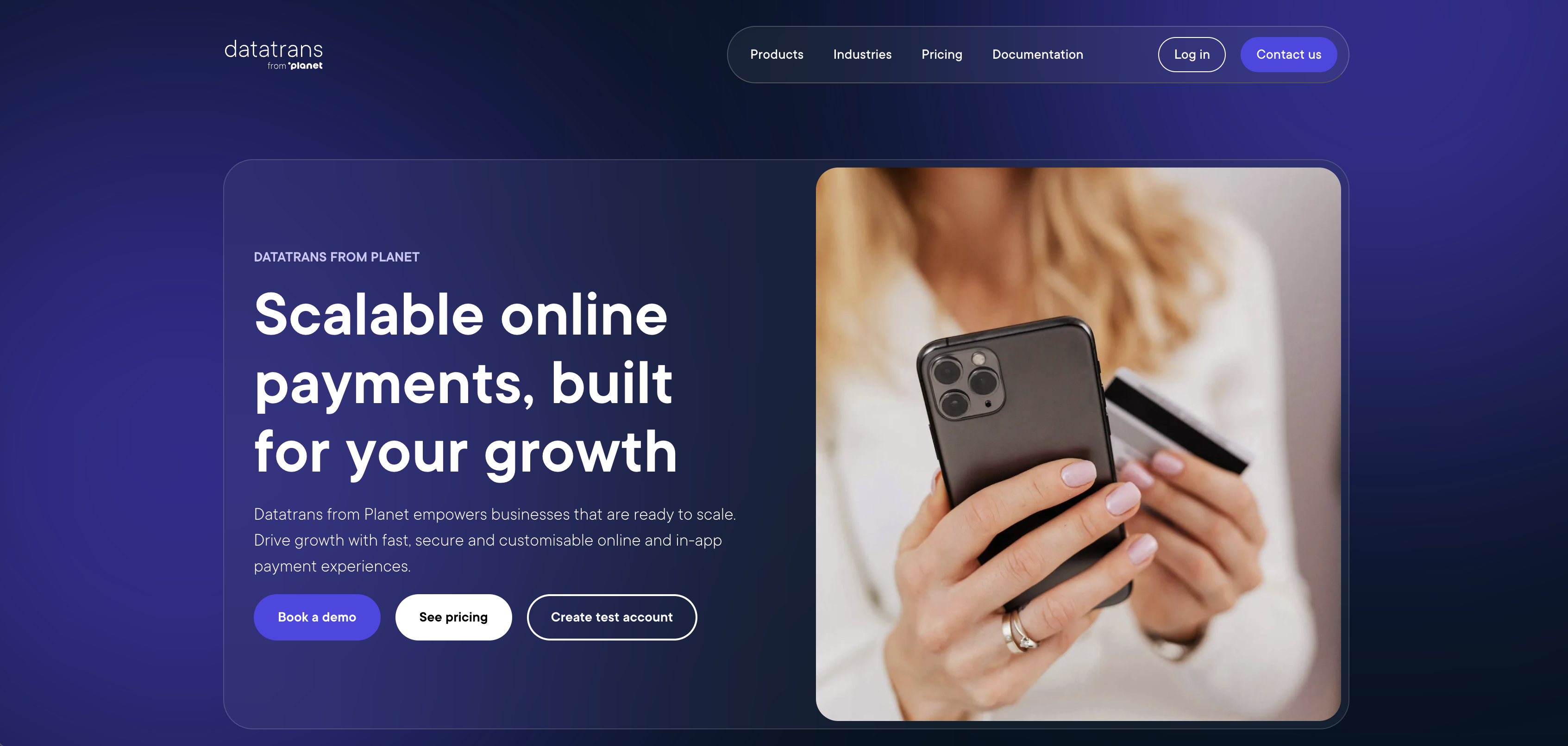
Datatrans is a Swiss payment infrastructure company that handles the plumbing most European merchants never think about. Founded in the late 1990s, it processes transactions across card networks, digital wallets, and emerging payment methods—quietly sitting between retailers and their customers' money. The company operates as a neutral hub, connecting merchants to multiple acquiring channels and payment processors without forcing them into a single vendor relationship. What sets Datatrans apart is its commitment to flexibility and technical depth. Rather than locking merchants into proprietary solutions, it provides APIs and integrations that let businesses choose their own payment stacks. This approach has made it a backbone for Swiss fintech, e-commerce platforms, and traditional retailers who need payment infrastructure that doesn't compromise on security or compliance. In the broader European market, Datatrans competes primarily through reliability and Swiss-tier regulation rather than flashy features. While newer payment platforms chase consumer-facing dashboards and AI-driven insights, Datatrans has focused on solving the harder problem: making payment processing genuinely open and interoperable. It's the kind of company that doesn't appear in consumer conversations but underpins the transactions that make them possible.
Founded 1997
Tax Free
Tax Free
RegTech
Tax Free is a B2B SaaS platform that simplifies VAT reclamation for international businesses. Most companies lose thousands annually to complex VAT compliance across borders—Tax Free automates the entire process, from documentation to submission, turning compliance overhead into recovered cash. Built for e-commerce merchants, SaaS platforms, and service providers operating across multiple European jurisdictions, it handles the messy work of tracking eligible expenses, calculating VAT positions, and filing claims with regional tax authorities. Rather than hiring tax consultants or wrestling with spreadsheets, customers connect their accounting systems and let Tax Free's intelligence layer handle jurisdiction-specific rules, deadlines, and documentation requirements. The platform sits quietly in the financial backend but unlocks material capital recovery that most businesses simply abandon. It's part infrastructure, part compliance, part cash management—solving a problem that affects every company doing cross-border business in Europe. In a landscape where VAT complexity remains one of the last major inefficiencies in SME finance, Tax Free turns hidden liabilities into automated revenue recovery.
Founded 1999
Sygnum
Sygnum
Identity & KYC
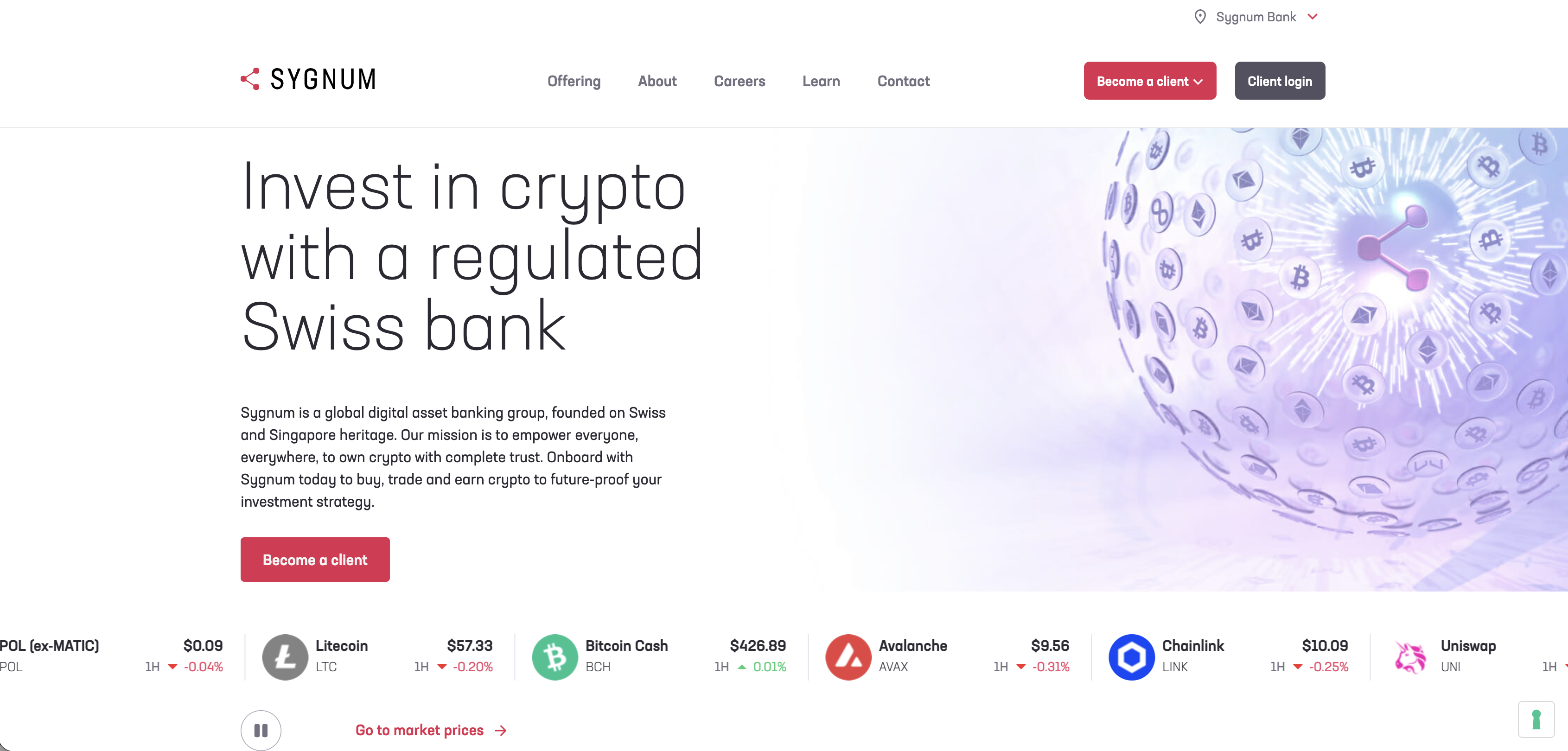
If traditional banking and crypto assets lived on opposite sides of a chasm, Sygnum has built the bridge. The Swiss digital bank is purpose-built to serve institutions that want to work with digital assets—everything from Bitcoin and Ethereum to tokenized real-world securities—without abandoning the regulatory rigor and operational discipline that traditional finance demands. It's not a crypto exchange, and it's not a legacy bank pretending to understand blockchain. Sygnum is a fully licensed, Swiss-regulated bank (founded 2018) that treats digital assets with the same institutional seriousness as fiat currency. Think of it as infrastructure for the convergence: custody, payments, settlement, and full banking services, all designed for the digital asset economy. While most banks still treat crypto clients as a compliance headache, Sygnum has built its entire stack around serving them properly. The company sits at an inflection point in fintech—the moment when digital assets stop being a niche speculation play and become a legitimate asset class that institutions need to hold, trade, and settle. Sygnum's positioning reflects this: it's not selling you a speculative product or a get-rich-quick scheme. It's selling trust, regulation, and the plumbing that lets serious money move in and out of the digital asset space without regulatory friction. In the broader European fintech landscape, Sygnum represents the maturing of crypto infrastructure—the shift from Wild West exchanges to regulated, institutional-grade platforms that bridge traditional finance and digital assets.
Founded 2018
YouHodler
YouHodler
Crypto & Blockchain
Swiss-regulated crypto financial products combine the technical innovation of crypto lending with the regulatory standing of Swiss financial services regulation — a combination that has appealed to international users who value regulatory clarity over the more permissive frameworks of some other crypto jurisdictions. YouHodler was founded in 2017 with operations in Switzerland and offers crypto-backed loans, savings products, and trading services to consumers across multiple international markets. Its model gives users the ability to borrow against cryptocurrency holdings, earn yield on deposited crypto, and trade between cryptocurrencies and stablecoins through a unified platform. The Swiss base has been operationally significant — Swiss financial regulation under FINMA provides clearer standing than the unregulated environment that defined early crypto lending, while still allowing the product range that crypto users seek. YouHodler has navigated the same crypto market dynamics that affected the broader category through the 2022-2023 period, including regulatory scrutiny and the broader market correction that reshaped crypto lending. In the European crypto financial services landscape, YouHodler occupies a position that combines crypto-native product capability with European regulatory infrastructure — a positioning that has become more rather than less relevant as MiCA implementation progresses and as the regulatory expectations for crypto financial services across Europe converge.
Founded 2017
PostFinance
PostFinance
Wealth
PostFinance is Switzerland's state-backed digital banking challenger, built on the back of a centuries-old postal service infrastructure. It operates as a full-service bank offering accounts, payments, lending, and wealth management to consumers and small businesses across Switzerland, but with a distinctly modern digital-first approach that sits somewhere between traditional banking and fintech agility. The company has leveraged its unique position—ubiquitous physical presence combined with digital capabilities—to compete directly with incumbent Swiss banks while maintaining strong regulatory backing. What makes PostFinance different is its embedded advantage: a trusted national brand paired with real financial infrastructure, rather than the typical fintech play of disruption through technology alone. In a market dominated by UBS and Credit Suisse, PostFinance represents a third way—state-supported, digitally competent, and increasingly willing to court younger, digitally native customers. The company's role in the Swiss financial landscape is evolving from a utility player into a genuine competitor with both the trust of the state and the user experience of a modern bank.
Founded 1906
Dukascopy
Dukascopy
Payments
Dukascopy is a Swiss online financial platform that has spent two decades building infrastructure for forex, CFD, and crypto trading. The company operates its own bank and matching engine, which sets it apart from brokers that simply resell liquidity. This infrastructure-first approach means Dukascopy can offer tight spreads and direct market access without hidden markups. The platform caters to retail traders and small institutions who want institutional-grade tools without the price tag. Its trading terminals rival professional setups, while the mobile app keeps things simple for casual traders. Dukascopy has also moved into crypto custody and blockchain services, positioning itself as a bridge between traditional finance and digital assets. In the crowded retail trading space, Dukascopy distinguishes itself through ownership and transparency. Many competitors are broker-dealers; Dukascopy is a bank. This matters for client money protection and operational independence. While it lacks the consumer-facing polish of newer fintech apps, it appeals to traders who value substance over hype and appreciate the regulatory weight of Swiss banking. The company represents a different model in fintech—not a startup chasing growth at all costs, but an established financial institution quietly building depth in forex, crypto, and institutional services.
Founded 2000
Relio
Relio
Wealth
Relio is a Swiss digital wealth platform built for the generation that grew up with smartphones but inherited a banking system designed for their parents. It combines automated portfolio management with a clean, modern interface that makes investing feel less like a chore and more like a natural part of daily financial life. Rather than the gatekeeping traditional advisors impose, Relio opens institutional-grade investing to anyone with a modest sum to start—no minimums, no pretense, just straightforward asset management. The platform sits at the intersection of robo-advisory and accessibility. You link your account, answer a few questions about your risk tolerance, and Relio handles the rest: portfolio construction, rebalancing, tax optimization. It's the algorithmic approach that's become standard elsewhere, but executed with the clarity and design sensibility that Swiss fintech does well. Most competitors either dumb down the interface or overwhelm users with data; Relio finds the middle ground. In a market flooded with trading apps and crypto speculation, Relio takes a fundamentally different stance: long-term, diversified, automated wealth-building. It competes less with brokerages and more with traditional private banks and advisors, but at a fraction of the cost and without the relationship theatre. The company represents a quiet but persistent shift in how younger Europeans want to manage money—efficiently, transparently, and on their own terms.
Founded 2017
Skribble
Skribble
Identity & KYC
Skribble is a Swiss-based digital signature platform that strips away the bureaucratic friction from document workflows. It's built for a Europe that still drowns in paperwork—contracts, agreements, approvals—but increasingly wants them signed without printing or scanning. Rather than positioning itself as just another e-signature tool, Skribble emphasizes compliance and trust, offering legally binding digital signatures that work across EU and Swiss law without requiring special infrastructure from users. The platform integrates into existing business processes, letting companies move from wet ink to verified digital identity in seconds. What separates Skribble from competitors is its focus on the European regulatory landscape, particularly the eIDAS regulation that governs electronic identification. It's not chasing the global market with a one-size-fits-all product; it's building trust infrastructure for markets where legal certainty matters. The company targets enterprises and SMEs drowning in document logistics, positioning digital signatures as a compliance win rather than just a convenience feature. Skribble represents a maturing phase of fintech where the real value lies not in disruption but in making legacy systems actually work in a digital-first world.
Founded 2018
Swissquote
Swissquote
Wealth
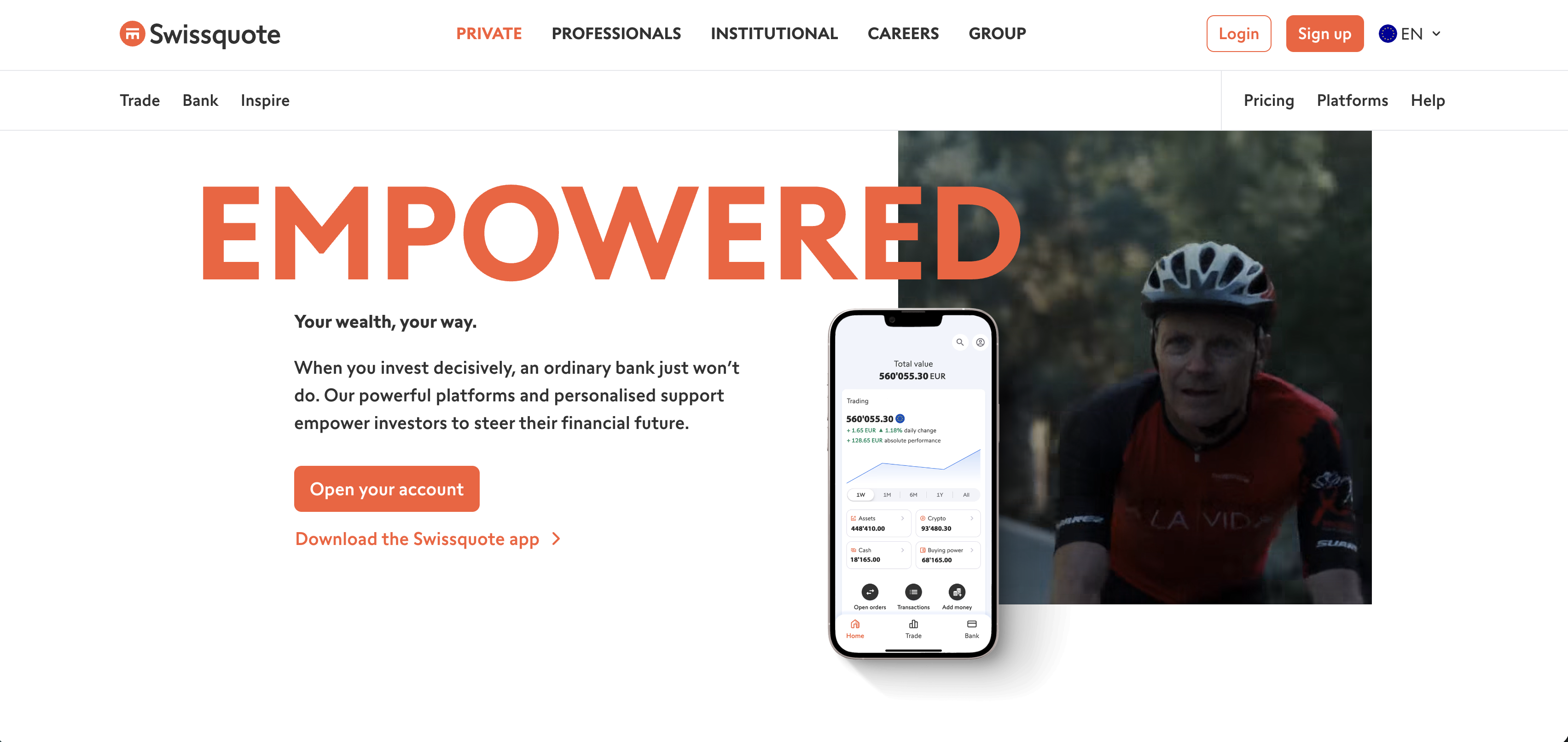
Swissquote is a Swiss online banking and investment platform that democratised retail access to capital markets long before the term fintech became fashionable. Founded in 1996, it operates as a full-service digital broker, offering everything from currency trading and stocks to cryptocurrencies and structured products—all wrapped in the kind of regulated, institutional-grade infrastructure you'd expect from Switzerland. The platform serves both everyday investors and active traders, positioning itself as a counterweight to traditional brokers by eliminating gatekeeping and offering direct market access. Its digital-first approach means clients manage portfolios through intuitive apps and web interfaces rather than dealing with relationship managers. Swissquote has progressively expanded into crypto custody and trading, recognizing early that digital assets would become table stakes in modern wealth management. Within Europe's competitive fintech landscape, Swissquote occupies a middle ground between pure-play neobanks and heavyweight institutional players. It lacks the brand velocity of newer challengers but carries the regulatory credibility of its Swiss heritage and banking license. The company has built longevity by staying disciplined about what it does well—trading, investing, and increasingly, custodying digital assets—rather than chasing every trend. Today, Swissquote represents a particular archetype in European fintech: the early mover that survived consolidation, scaled sustainably, and now competes by coupling digital experience with the trust premium of being rooted in one of the world's most regulated financial jurisdictions. It's neither disruptive in the startup sense nor stagnant—it's simply a mature digital-first investment platform that works.
Founded 1996
Yapeal
Yapeal
Wealth
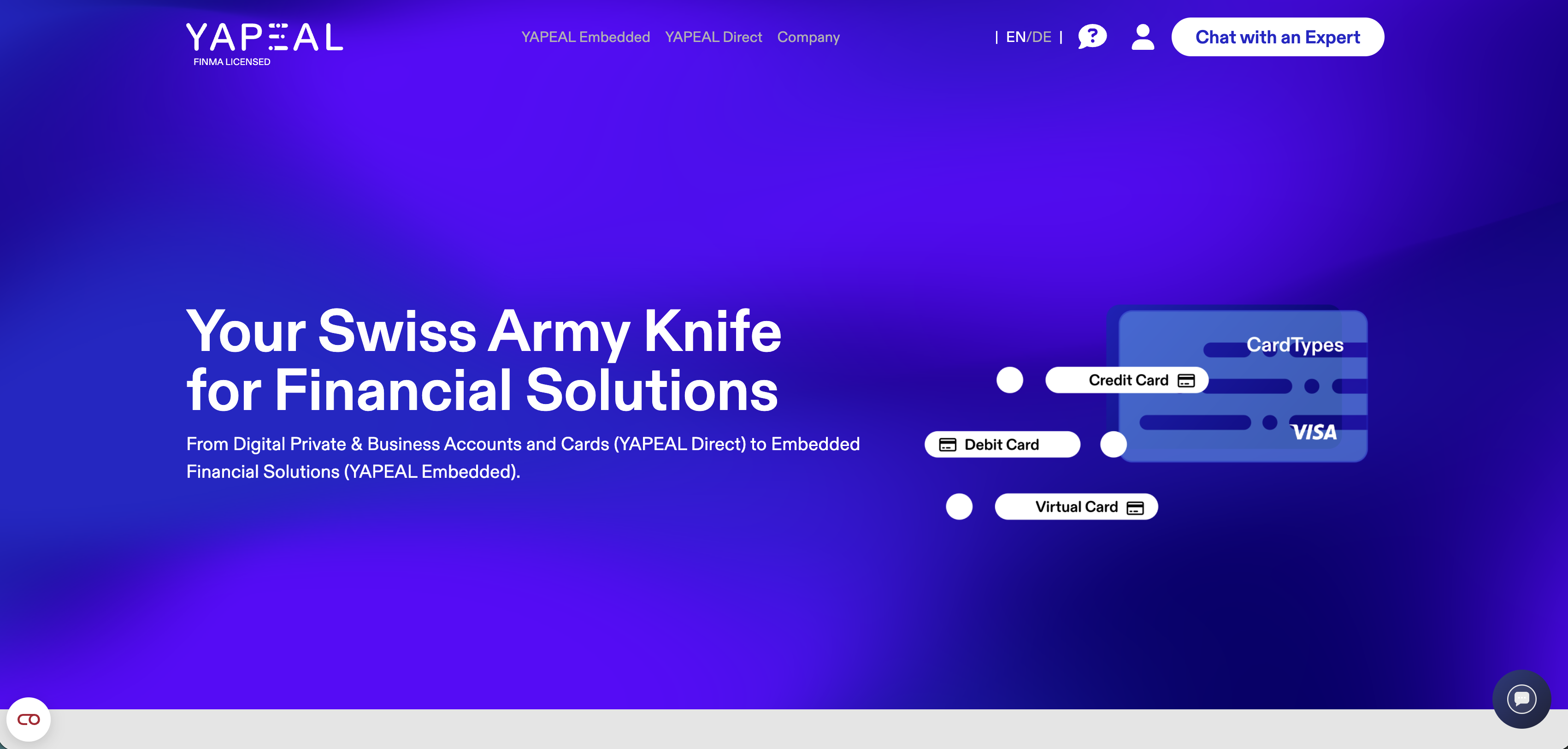
Yapeal is a Swiss wealth management platform built for the digital age, stripping away the gatekeeping and complexity that has long defined private banking. Rather than catering exclusively to the ultra-wealthy, Yapeal democratizes access to sophisticated investment tools and advisory services for affluent individuals and professionals who want control over their financial lives without the stuffy relationship management model of traditional banks. The platform combines algorithmic portfolio construction with human expertise, offering personalised wealth strategies across stocks, bonds, real estate, and alternative investments. Yapeal handles the operational grunt work—rebalancing, tax optimisation, compliance—so clients can focus on long-term wealth building instead of administrative friction. In a market dominated by legacy wealth managers still operating on outdated technology, Yapeal represents a genuine shift towards transparency and accessibility. It's wealth management for people who understand technology and expect their financial tools to work as intuitively as their other digital products. The company sits at the intersection of robo-advisory sophistication and boutique wealth service, serving Switzerland's growing cohort of digitally native high-net-worth individuals and emerging wealth creators.
Founded 2018
Neon
Neon
Digital Banking
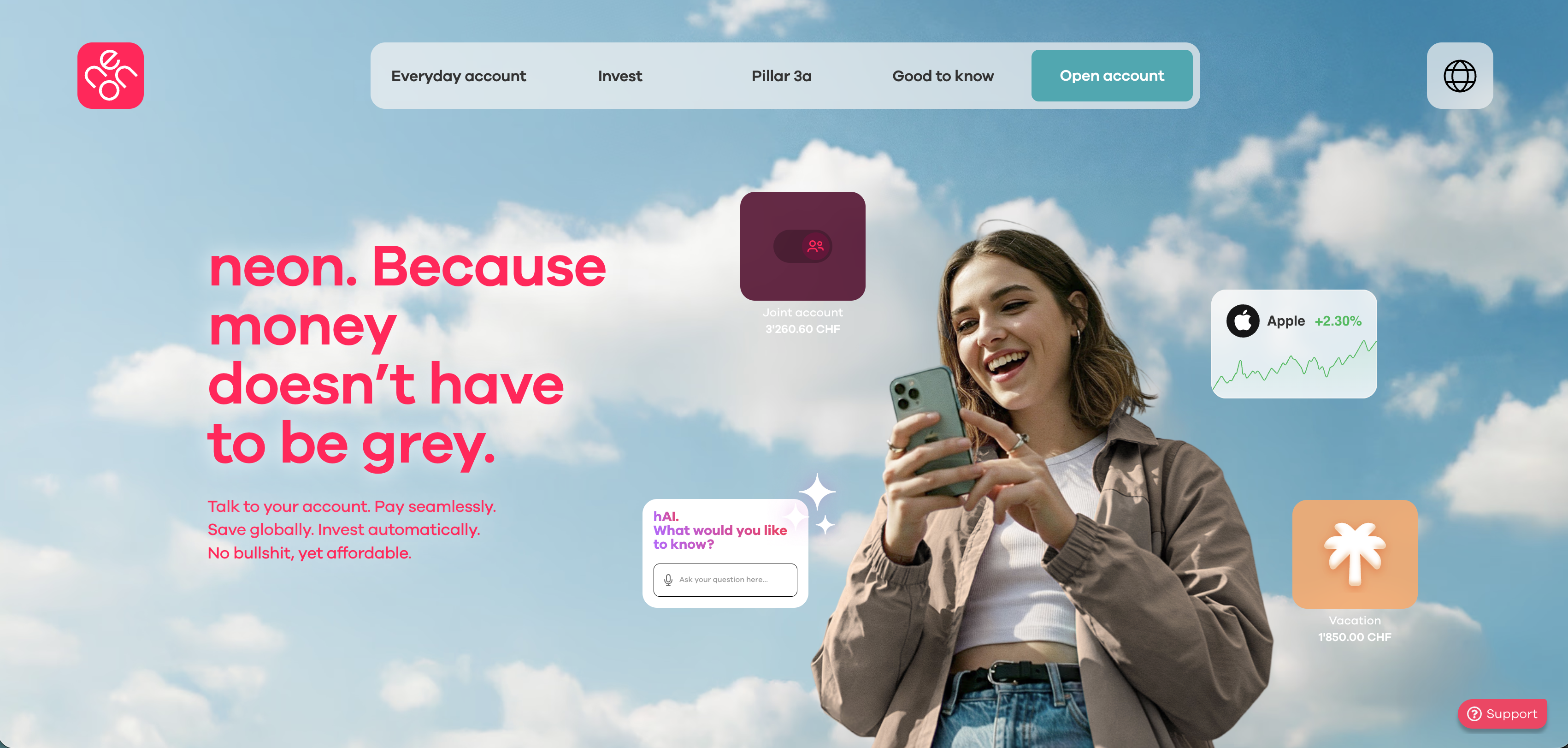
Neon is a Swiss digital bank built for the modern European lifestyle, cutting through the clutter of traditional banking with a mobile-first approach that actually works. Rather than tacking digital features onto legacy systems, Neon was engineered from scratch as a genuinely borderless bank—a distinction that matters when you're moving between currencies, countries, or just trying to send money to a friend across the continent without friction or hidden fees. The platform combines the essentials: a current account, debit card, and real-time transaction notifications in a clean, intuitive app. No paperwork, no endless phone calls. You open an account in minutes through your phone, and the underlying infrastructure handles international transfers, currency exchanges, and account management with the efficiency that shouldn't feel revolutionary but somehow does when compared to what Swiss banks were offering just five years ago. In the crowded space of European neobanks, Neon carves out territory by focusing on simplicity and genuinely competitive pricing. It's not trying to be everything to everyone—no savings features overlaid onto confusion, no unnecessary gamification. What Neon does do is remove friction at every step, which is why it resonates with young professionals, expats, and anyone who finds traditional Swiss banking processes unnecessarily complex. The bank is part of a broader shift toward banking as infrastructure rather than banking as experience theater. Neon strips away the performance and delivers what people actually want: speed, transparency, and access to their money without bureaucratic delays.
Founded 2017
SIX Group
SIX Group
Financial Infrastructure
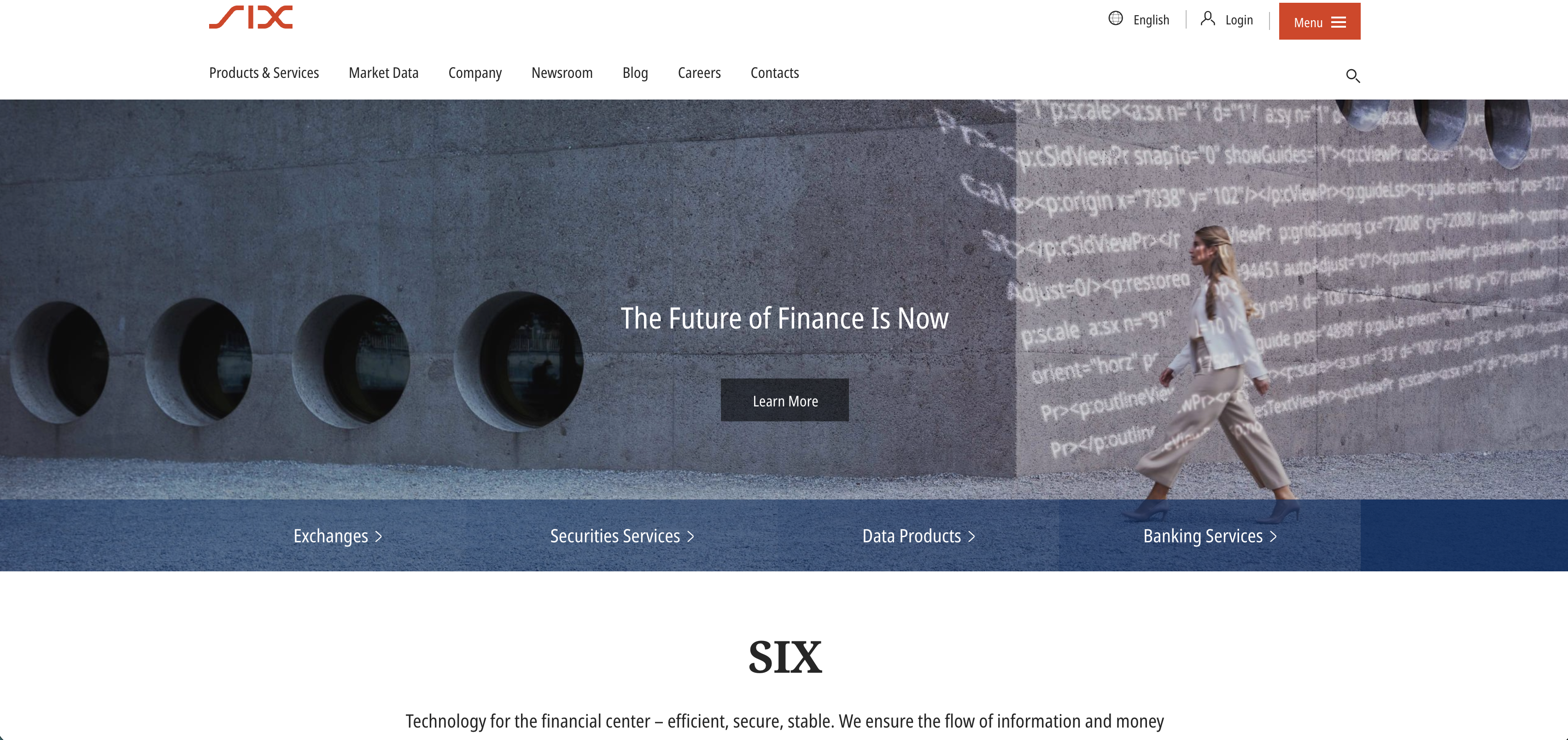
SIX Group is Switzerland's financial market infrastructure backbone, operating the plumbing that connects banks, exchanges, and payment systems across Europe. Rather than chasing consumer trends or startup disruption, SIX owns the rails—managing everything from securities trading to cash settlement to card processing for some of the continent's most critical financial flows. The company sits at the intersection of legacy banking infrastructure and modern fintech, wrestling with how to make centuries-old market mechanics work in a faster, more digital world. For European banks and financial institutions, SIX isn't a vendor you choose for innovation; it's the foundational architecture your business runs on. The group has been gradually modernizing its core systems while extending into new areas like digital asset services and API-first banking infrastructure, attempting to position itself as both custodian of traditional finance and enabler of what comes next. What makes SIX different is its monopoly-like position in Swiss and broader European settlement—you don't disrupt SIX, you integrate with it. The company's real challenge isn't competition but the looming shift toward decentralized finance and the pressure from regulators and customers to open its ecosystem faster. SIX represents the old guard of financial infrastructure, now grappling with whether it can evolve quickly enough to remain relevant as fintech rewrites the rules around what settlement, trading, and clearing actually mean.
Founded 1995
SIX
SIX
Financial Infrastructure
SIX is Europe's infrastructure backbone for financial markets—a Swiss-headquartered operator that runs the plumbing connecting banks, brokers, and exchanges across the continent. Rather than chasing consumer apps or flashy fintech positioning, SIX owns and operates the unsexy but critical systems: clearing houses, settlement networks, and real-time gross settlement rails that move trillions daily. The company manages Swiss stock exchanges, operates custody systems, and runs payment infrastructure that underpins everything from retail trading to institutional finance. For decades, SIX has been the quiet operator—the kind of company that doesn't need marketing because its services are non-negotiable for anyone serious about financial markets in continental Europe. Its footprint spans Switzerland, Germany, Austria, and beyond, making it indispensable infrastructure rather than a trendy challenger. While newer fintechs obsess over user experience and branding, SIX owns the rails they all depend on. The company is essentially the financial circulatory system of continental Europe, processing settlements, managing indices, and providing the foundational technology that keeps markets functioning. For institutions, regulators, and market participants, SIX isn't optional—it's the standard. In an era where fintech disruption gets all the headlines, SIX represents the opposite: unglamorous, mission-critical infrastructure that quietly enables the entire ecosystem to function. This positioning makes SIX a crucial player in European financial infrastructure, even if it rarely appears in consumer-facing fintech discussions.
Founded 1934
Yokoy
Yokoy
Payments
Yokoy automates spend management, invoices, and corporate card workflows.
Founded 2019