DatabaseServicesArticlesCountriesGlossaryNewsletterRequest listing
← All countries
🇪🇪

Fintech in Estonia

18 companies·View all in directory →
About the Estonia fintech ecosystem

Estonia has built a reputation as the world's most digitally advanced state — e-Residency, digital government services, and a technology-first culture have created an environment unusually well-suited to fintech entrepreneurship. Tallinn has produced significant fintech companies including Wise (founded by Estonians, though based in London), LHV Bank, TransferWise alumni ventures, and Veriff — alongside a cluster of lending, crypto, and payments companies.

The Estonian fintech ecosystem is small in absolute terms but extremely high in density of technical talent relative to population. The country's e-Residency programme, which allows foreign nationals to establish Estonian companies with EU market access, has created an international business community centred on Tallinn with genuine fintech presence. The Financial Supervision Authority (Finantsinspektsioon) regulates Estonian fintechs under EU frameworks.

Estonia's Baltic neighbours Latvia and Lithuania form a regional cluster of complementary fintech capabilities. Estonian fintech has benefited from the country's flat income tax, straightforward company formation processes, and the international profile generated by Skype, TransferWise, and other Estonian technology success stories.

Fintech companies based in Estonia

EstateGuru
EstateGuru
Real Estate Finance
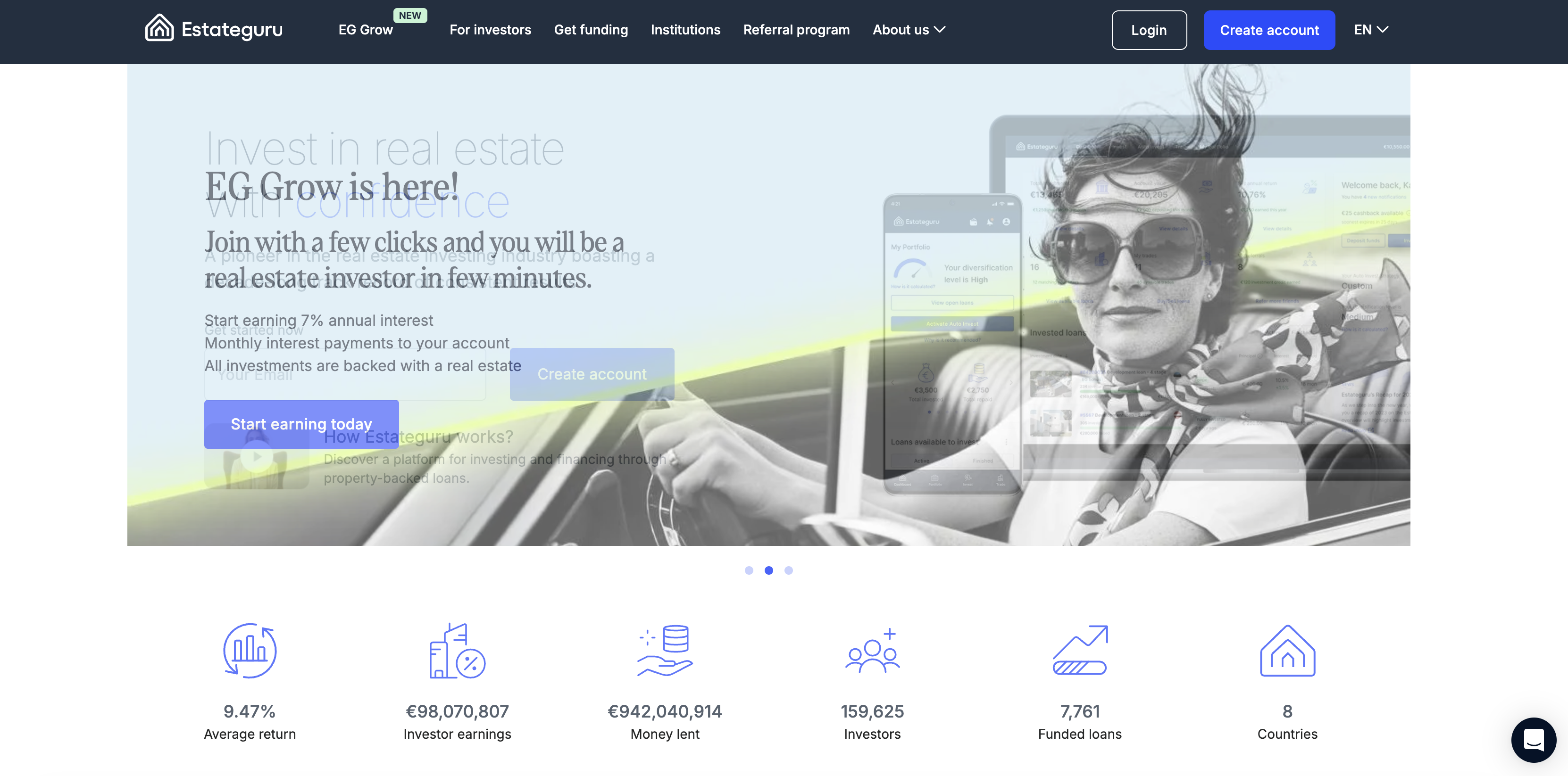
Real estate-backed lending across European markets has been one of the more durable categories within marketplace lending, partly because the underlying collateral provides recovery infrastructure that unsecured consumer lending lacks. EstateGuru was founded in Tallinn in 2014 to build a Pan-European platform connecting retail and institutional investors with property developers and real estate businesses needing project financing. The platform operates across multiple European markets, originating loans secured against real estate and offering investors the ability to diversify across geographies and loan types. EstateGuru has funded over a billion euros in real estate-backed loans since inception, making it one of the largest property-focused marketplace lending platforms in Europe. The model has proven more resilient through market cycles than unsecured consumer P2P lending — when borrowers default, the underlying real estate collateral provides recovery options that consumer loans don't have. The company has navigated the broader maturation of European marketplace lending while maintaining the property-secured focus that distinguishes it from generalist platforms. In the European alternative real estate finance landscape, EstateGuru represents one of the more substantial cross-border marketplace operators — building genuine geographic diversification rather than the single-market focus that characterises most regional property finance platforms.
Founded 2014
Inbank
Inbank
Digital Banking
Specialised banking for consumer credit — focused on lending products distributed through merchant partnerships rather than building general-purpose retail banking — is a model with deeper European roots than the venture-backed BNPL conversation suggests. Inbank was founded in Tallinn in 2011 as a specialist lender focused on point-of-sale consumer credit, partnering with retailers across Estonia and the broader Baltic and Central European region to offer instalment finance at the moment of purchase. The company received a full Estonian banking licence and has built operations across Estonia, Latvia, Lithuania, Poland, and the Czech Republic, expanding from a domestic specialist into a Pan-European consumer finance bank. Inbank is publicly listed on the Nasdaq Tallinn exchange — one of the few publicly traded Baltic fintechs — giving it both the regulatory standing of a licensed bank and the funding access of a public company. Its product range covers point-of-sale finance, BNPL, and consumer deposit products, with merchant partnerships across automotive, electronics, home improvement, and other categories where consumers commonly finance purchases. In the European specialist consumer banking landscape, Inbank represents one of the more successful examples of a focused operator scaling across borders while maintaining the operational discipline of a regulated bank.
Founded 2011
Reinvest24
Reinvest24
Wealth
Real estate investing for retail investors has historically required either substantial capital to buy property directly or comfort with public REITs that abstract away from individual properties to broad portfolios. Reinvest24 was founded in Tallinn in 2018 to occupy the space between those options with a property crowdfunding platform that lets retail investors participate in specific real estate projects with relatively small minimum investments. Its platform connects investors with property developers and real estate operators across European markets, with each investment opportunity tied to a specific project that investors can evaluate individually. Reinvest24's model spans both equity and debt structures across different deal types, giving investors the ability to construct a diversified property portfolio across geographies and risk profiles. The Estonian fintech ecosystem has produced a disproportionate concentration of marketplace and crowdfunding platforms relative to the country's size, and Reinvest24 represents the property-focused end of that ecosystem. In the European real estate crowdfunding landscape, where the model has matured significantly through the 2020s with clearer regulatory frameworks under the European Crowdfunding Service Provider regulation, Reinvest24's positioning as a Pan-European property platform with project-level transparency aligns with the direction the regulated end of the market has taken.
Founded 2018
Debitum
Debitum
Wealth
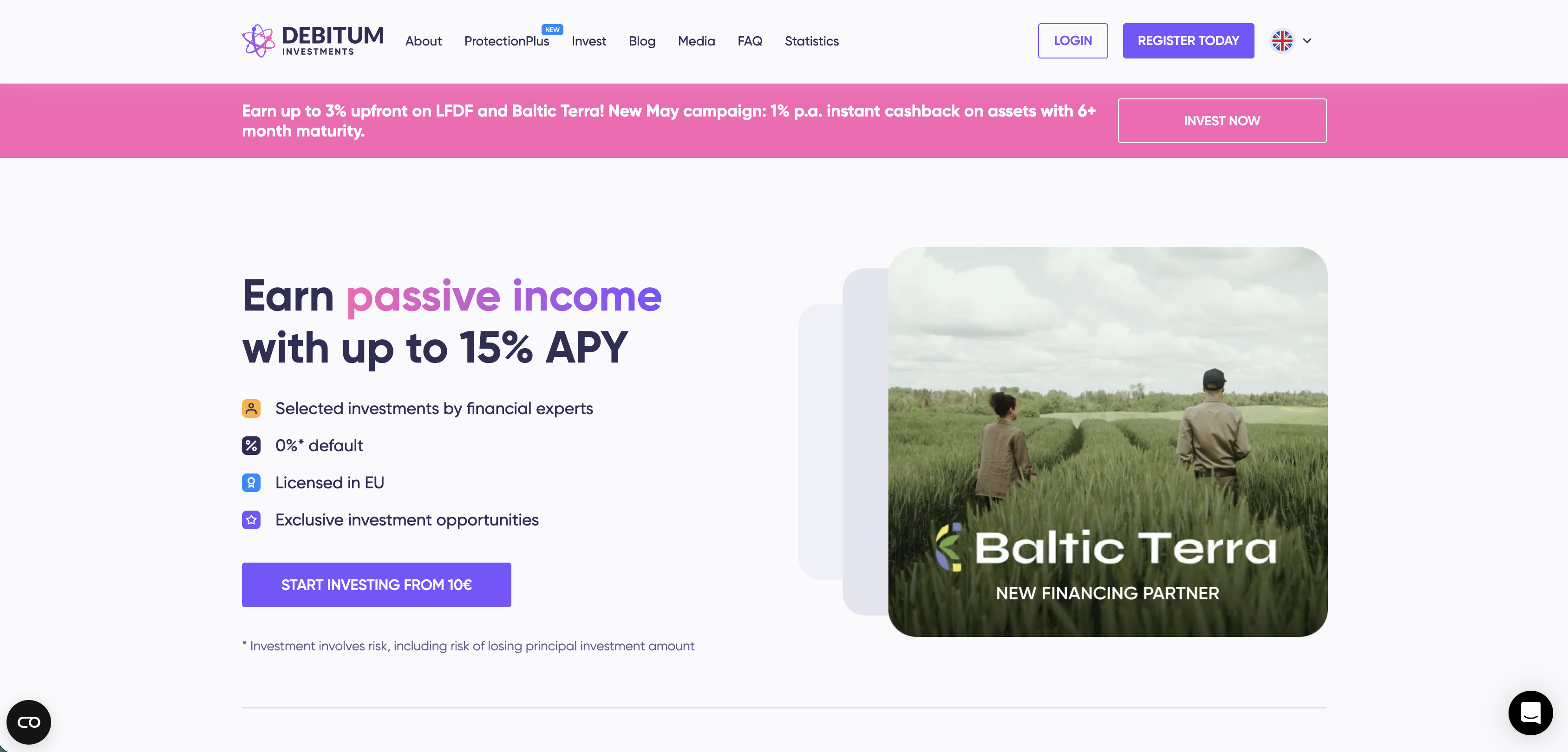
Debitum is a peer-to-peer lending platform that connects investors across Europe with emerging market borrowers, primarily small businesses and consumers in Africa and Southeast Asia. Rather than traditional bank intermediaries, Debitum uses blockchain technology and smart contracts to facilitate direct lending relationships, cutting out middlemen and offering investors returns typically unavailable in their home markets. The platform operates on a marketplace model where verified borrowers access capital while European investors diversify into emerging markets at institutional-grade returns. What sets Debitum apart is its hybrid approach: it combines traditional credit underwriting with transparent, technology-enabled funding mechanics. Unlike neobanks focused on consumer checking or payment apps targeting young professionals, Debitum sits at the intersection of capital markets access and peer-to-peer finance, targeting financially sophisticated individuals seeking yield. The company tokenizes loans on its platform, allowing fractional investment and secondary market trading. Debitum represents a growing category of European fintech platforms that treat emerging markets not as charity cases but as genuine investment opportunities, democratizing access to higher-yielding assets traditionally reserved for institutional investors.
Founded 2015
Wallester
Wallester
Embedded Finance
Wallester is a European fintech infrastructure company that makes it simple for other businesses to issue, manage, and distribute payment cards at scale. Rather than wrestling with legacy banking systems and complex integrations, companies use Wallester's APIs and platforms to embed card programs directly into their own products—think neobanks, fintechs, and platforms that need white-label card solutions without the operational overhead. The company handles the technical plumbing: card issuance, real-time transaction processing, compliance, and customer-facing controls, all delivered through clean, developer-friendly APIs. Wallester operates across multiple European markets and works with everyone from emerging challenger banks to established financial institutions looking to modernize their card infrastructure. What sets Wallester apart is its focus on removing friction from the card-issuing process. Most issuers are bound to cumbersome core banking relationships or have to build entirely custom solutions. Wallester sits in the middle, offering a turnkey platform that scales with demand without forcing companies to reinvent core banking. It's become a quiet backbone for European fintechs that need cards fast, reliably, and without the bureaucracy. The company represents a broader trend in fintech infrastructure: the unbundling of banking services into modular, API-first components that let smaller players compete with traditional incumbents.
Founded 2019
GoAndGrow
GoAndGrow
Lending
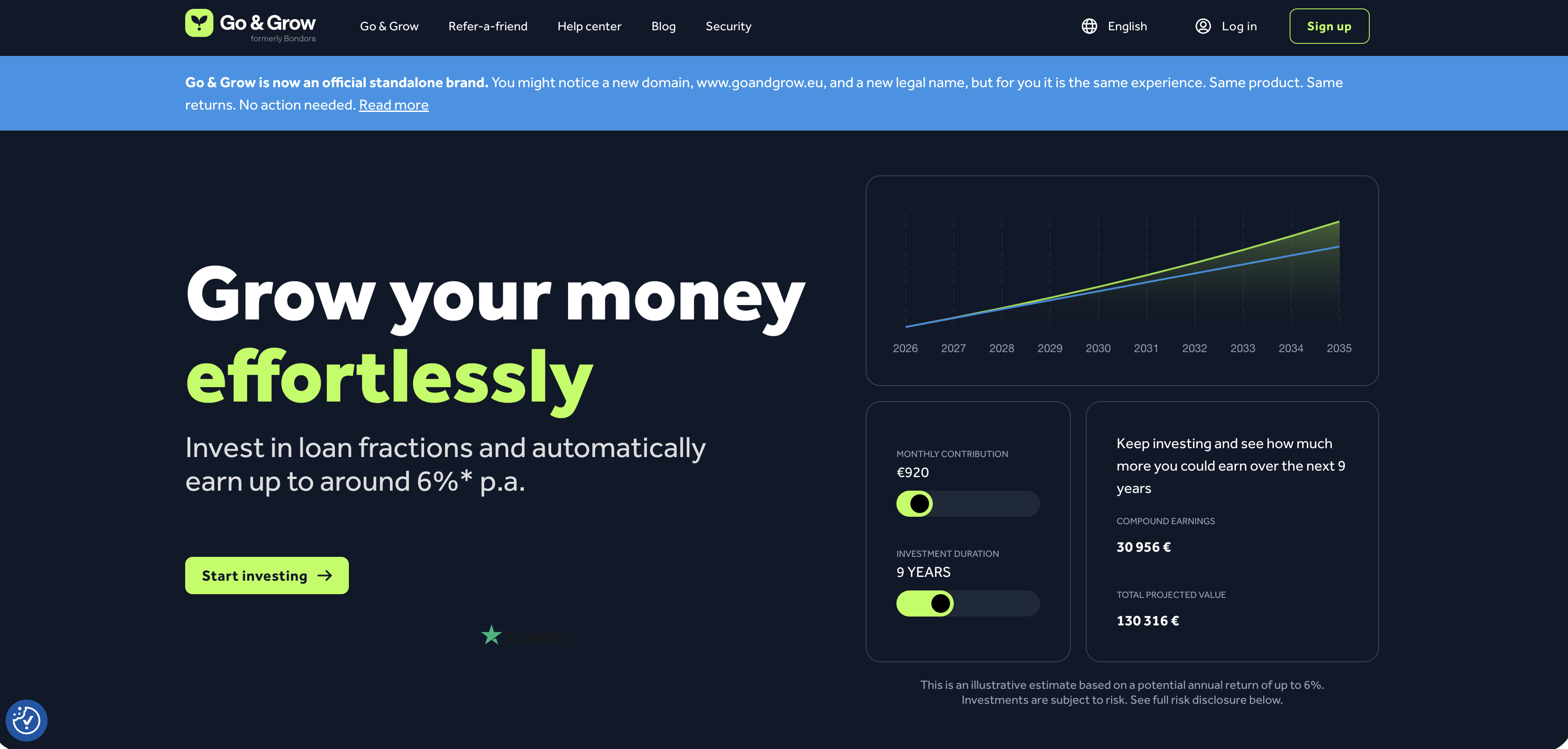
GoAndGrow strips away the complexity of peer-to-peer lending by connecting retail investors directly with vetted borrowers across Europe. The platform democratizes alternative finance in a region where traditional banks still gatekeep access to capital, offering returns that actually reflect market conditions rather than the near-zero rates savers have endured for over a decade.
Founded 2015
Maksekeskus
Maksekeskus
Payments
Estonian online merchants needed payment infrastructure that handled the specific characteristics of the Baltic market — local bank payment methods, Estonian language support, integration with Estonian e-commerce platforms — that international payment processors could not deliver with the same depth. Maksekeskus was founded in Tallinn in 2012 to provide that infrastructure, building a payment gateway specifically for Estonian and broader Baltic e-commerce businesses. Its platform supports the range of payment methods that Estonian consumers expect — bank links to local Baltic banks, card payments, modern alternatives like the Mobii payment standards — combined with the merchant tools needed to operate online commerce in the local market. The company has expanded across the Baltic states and beyond, becoming one of the most widely used payment gateways for Estonian online merchants. In the broader Estonian fintech landscape that has produced internationally successful companies like TransferWise and Bolt, Maksekeskus represents the domestic infrastructure layer — quietly powering a significant share of Baltic e-commerce while maintaining the operational depth and merchant relationships that decades of focused regional operation have produced. The economics of operating at this scale require focus on segment depth rather than international expansion, and Maksekeskus has built that focus into its business model.
Founded 2012
ESTO
ESTO
Lending
Estonian consumer credit at the point of online purchase has been transformed by the combination of digital infrastructure that lets credit decisions happen in real time and consumer expectations of completing purchases without leaving the merchant checkout. ESTO was founded in Tallinn in 2016 to serve that specific moment — providing buy now pay later and instalment financing options integrated into Estonian and Baltic merchant checkouts. The platform connects merchants with consumers seeking flexible payment options at purchase, handling underwriting, settlement, and ongoing customer relationship management for the credit products it originates. ESTO has expanded across the Baltic markets and into broader Central European territories, building a position in the BNPL category as one of the regional specialists that competes alongside the larger European platforms by virtue of its local market depth. In the Baltic BNPL landscape, where international platforms have made selective entries but have generally not built the merchant integration depth that domestic operators have, ESTO represents the local champion category. The competitive question for that category is whether local depth in a single regional market can sustain a competitive position as international BNPL platforms continue to expand and as the underlying economics of the category continue to evolve through cycles of growth and regulatory tightening.
Founded 2016
Xolo
Xolo
SME Finance
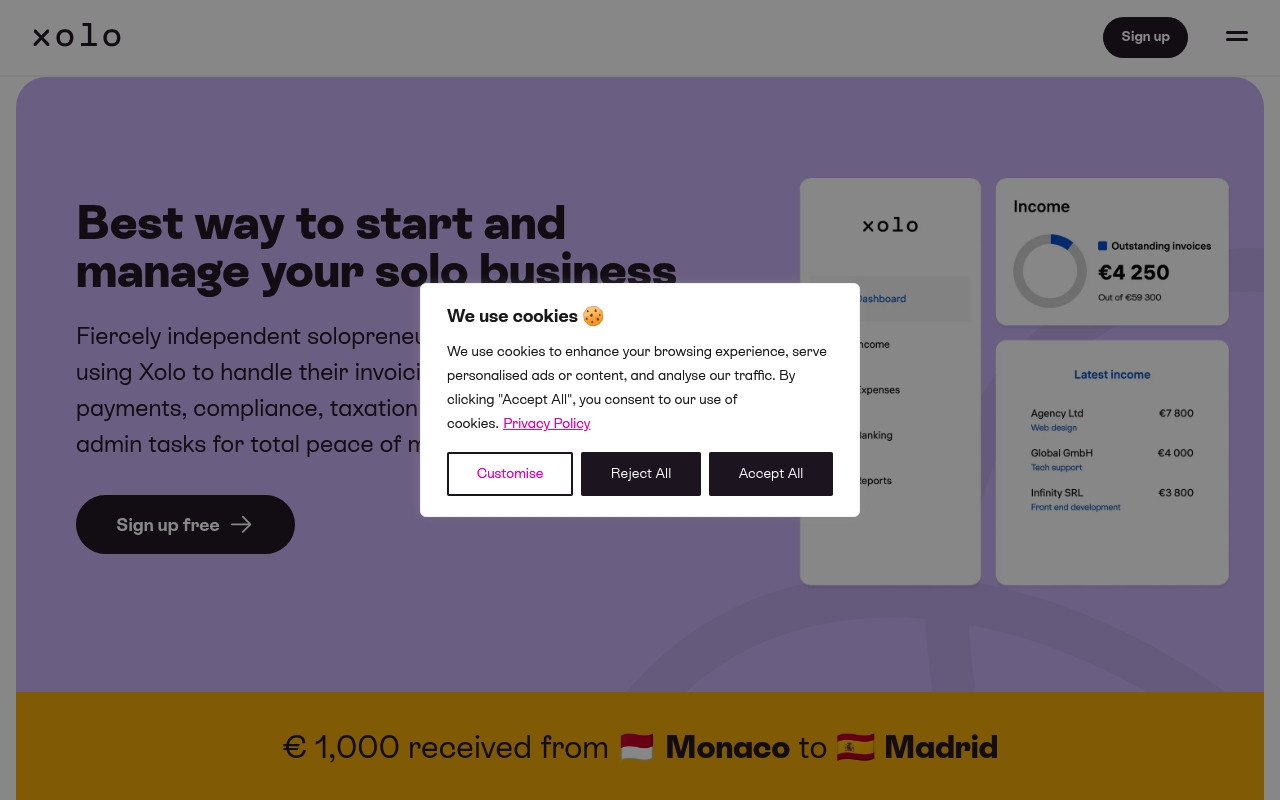
Xolo helps freelancers run solo businesses with invoicing, tax, and admin tools.
Founded 2015
Lightyear
Lightyear
Wealth
Lightyear offers low-cost investing in stocks and funds through a simple app.
Founded 2020
Monefit
Monefit
Lending
Consumer credit in Europe is in the middle of a slow renegotiation between flexibility and responsibility. Borrowers want access to credit without the formality of a personal loan application; lenders need underwriting models that work for revolving products without producing the kind of debt traps that have damaged the broader sector. Monefit was founded in Tallinn in 2020 as part of the Creditstar Group, building a digital revolving credit product for European consumers who want a flexible credit line they can draw on as needed rather than a fixed-term loan. Its model gives users access to credit up to a personalised limit, with interest charged only on the amount drawn, repayable on terms that flex with the borrower's circumstances. The Estonian base reflects both Creditstar Group's origins and the operational advantages of running a pan-European consumer credit business from a country whose digital infrastructure makes it possible. Monefit operates across multiple European markets, building a position in the segment of consumer credit that sits between traditional personal loans and credit card debt — a space that has been growing steadily as consumers become more comfortable with digital credit products and lenders find ways to underwrite them sustainably.
Founded 2020
Creditstar
Creditstar
Lending
Pan-European consumer lending under a single regulatory framework is one of the more ambitious operational models in European fintech. Creditstar was founded in Tallinn in 2006 and has spent nearly two decades building a multi-country consumer credit business, operating in Estonia, Finland, Sweden, Denmark, the Czech Republic, Poland, and Spain through a network of localised lending products. Each market has its own regulatory requirements, credit bureau infrastructure, and cultural attitudes toward consumer credit — complexity that Creditstar has navigated by building local lending teams alongside its centralised technology and underwriting infrastructure. The company offers short-term and instalment consumer loans, typically targeting consumers who need credit for unexpected expenses or specific purchases that fall between the products their primary bank offers and the higher-cost informal alternatives they might otherwise use. Creditstar Group has expanded its footprint through both organic growth and strategic launches like Monefit, building a diversified portfolio of consumer credit products across European markets. In the Baltic fintech ecosystem, Creditstar represents one of the longer-running and more geographically diversified consumer credit businesses — a quiet but substantial operator in a market that gets less attention than the venture-backed neobanks but that processes significant consumer credit volume.
Founded 2006
Eilla AI
Eilla AI
RegTech
AI for finance has moved quickly from experimental capability to genuine product opportunity, and the early movers building specialised AI tools for financial workflows have a chance to define how the technology integrates with the way finance professionals actually work. Eilla AI was founded in Tallinn in 2022 to apply large language models and AI agents to investment research and financial analysis workflows. Its platform helps investment professionals — analysts, portfolio managers, due diligence teams — process the enormous volume of unstructured information that financial decisions depend on: company filings, transcripts, market reports, news, alternative data sources. The product targets the specific bottleneck that AI is well-suited to address: the time-consuming work of synthesising large amounts of text into the structured insights that human analysts need to make decisions. The Estonian fintech ecosystem has produced a disproportionate number of internationally relevant companies, and Eilla represents the AI-native generation of European fintech infrastructure. In the broader landscape of AI applied to finance, where every major institution is experimenting with internal AI tools, specialist external platforms like Eilla have to demonstrate that their product depth and ongoing model development justify their use over generalist AI tools that everyone has access to.
Founded 2022
Montonio
Montonio
Embedded Finance
E-commerce growth in Central and Eastern Europe has accelerated significantly through the 2020s, and the payment infrastructure supporting that growth has needed to evolve from supporting basic card acceptance to providing the full range of payment methods, BNPL options, and merchant tools that modern e-commerce expects. Montonio was founded in Tallinn in 2018 to build that infrastructure for the CEE market specifically. Its platform offers payment processing, BNPL integration, and merchant commerce tools designed for Baltic and broader Central European e-commerce businesses, with a particular focus on the integration depth and local payment method coverage that international platforms underserve. The company has grown rapidly across Estonia, Latvia, Lithuania, Poland, and other CEE markets, building merchant relationships and product capability in markets where the e-commerce growth opportunity is significant but where the international payment platforms have not invested with the same depth as in Western Europe. In the European payments landscape, the regional specialist model has shown durable competitive advantages in markets where local payment preferences are distinct, and Montonio represents the new generation of CEE payment infrastructure built for the post-2020 e-commerce environment rather than retrofitted from older payment systems.
Founded 2018
Tuum
Tuum
Financial Infrastructure
Tuum is a European fintech infrastructure platform that lets financial services companies build, launch and scale digital financial products without needing to rebuild core banking technology from scratch. Rather than forcing clients to choose between legacy systems and risky custom development, Tuum offers a composable, API-first core that handles accounts, cards, payments and compliance out of the box. The platform runs on a modern cloud architecture designed for European regulation, making it particularly valuable for neobanks, fintechs and traditional institutions looking to move fast. What sets Tuum apart is its philosophy of modularity. Instead of locking companies into monolithic solutions, it lets teams plug in best-of-breed providers for specific functions while maintaining a single source of truth for customer and transaction data. This approach has resonated with the European market where regulatory complexity and fragmentation across jurisdictions make standardized solutions risky. Tuum's customer base spans neobanks, embedded finance platforms and regional banks across the continent, many of whom have used the platform to launch products in months rather than years. The company operates in a crowded space—Mambu, Thought Machine and others offer similar infrastructure plays—but Tuum has built particular strength in payment orchestration and multi-entity management, critical capabilities for scaling across European markets. In the broader fintech stack, Tuum represents the infrastructure layer that enables a new generation of financial products by democratizing access to sophisticated banking technology.
Founded 2018
LHV
LHV
Financial Infrastructure
LHV has the distinction of being both Estonia's largest domestic bank and one of the most important banking infrastructure providers in European fintech. Founded in Tallinn in 1999 — making it ancient by Estonian standards in a country whose digital infrastructure is itself only a few decades old — LHV grew from an investment firm into a full retail bank, navigating Estonia's evolution from post-Soviet transition economy to digital society more successfully than many of its peers. The bank serves Estonian retail and business customers across the full range of banking products, with particular strength in investment services that reflects its origins as a brokerage. Beyond its domestic banking business, LHV has built a Pan-European operation providing banking services to fintechs — issuing accounts, IBANs, and payment infrastructure to many of the UK and European fintechs that needed banking partnerships to operate compliantly. The fintech banking business has made LHV one of the most important behind-the-scenes infrastructure providers in European fintech, even if most of the consumer-facing companies that rely on it never mention LHV publicly. In the European banking landscape, LHV represents the unusual combination of small national bank and Pan-European fintech enabler — a position that few institutions have managed to occupy.
Founded 1999
Dateio
Dateio
Financial Infrastructure
Dateio is a European open banking platform that sits at the intersection of data and credit. The company aggregates financial data from multiple banks and institutions across Europe, then applies machine learning to unlock lending decisions and financial insights that traditional scoring can't capture. Unlike legacy credit bureaus, Dateio builds its models on real transaction history and behavioral patterns, not just loan defaults and payment records. The company positions itself as a data partner for fintechs, banks, and lenders who need smarter underwriting. Rather than building consumer-facing products, Dateio focuses on B2B infrastructure—providing APIs that other companies plug into to understand customer creditworthiness in real time. This approach means Dateio operates in the quieter, more valuable layer of fintech: the plumbing that powers better decisions. In a market crowded with credit score providers and ID verification vendors, Dateio stands out by going deeper into the data layer. Most competitors offer point solutions; Dateio aggregates, normalizes, and analyzes transaction flows across borders. That matters in Europe, where fragmented banking systems and privacy rules have made cross-border financial data unusually hard to access. For lenders tired of crude risk models, Dateio offers a more granular, behavior-based alternative that reflects how Europeans actually spend and save money. The company represents a broader shift in European fintech toward infrastructure and data intelligence, rather than consumer apps. As regulation tightens and competition intensifies in lending, better data becomes the primary competitive advantage. Dateio operates in that space.
Founded 2017
Veriff
Veriff
Fraud & Security
Identity verification has become the unglamorous bottleneck of fintech. Every app that touches money needs to know who you are, but the old way—uploading a selfie and a blurry document—feels like something from 2015. Veriff is fixing that plumbing. The company offers real-time identity verification powered by AI and human review, designed to catch fraud while keeping friction low. It works across document verification, biometric matching, and liveness detection—the kind of infrastructure most fintech companies would rather not think about but absolutely cannot live without. What makes Veriff different is scale and speed. Thousands of fintech platforms, neobanks, payment providers, and regulated financial institutions rely on it, often processing millions of verification requests annually. The company operates globally but with particular strength in Europe, where regulatory pressure around KYC and AML has made identity verification less of a nice-to-have and more of a business requirement. In the broader fintech stack, Veriff sits quietly but strategically at the point where regulation meets user experience. It's the kind of company that doesn't get headlines, but gets called at 3 a.m. when compliance breaks.
Founded 2014