DatabaseServicesArticlesCountriesGlossaryNewsletterRequest listing
← All countries
🇱🇹

Fintech in Lithuania

20 companies·View all in directory →
About the Lithuania fintech ecosystem

Lithuania has become one of Europe's most significant fintech licensing hubs, with Vilnius hosting the European operations of dozens of fintechs that chose Lithuanian e-money institution (EMI) or payment institution (PI) licences as their EU regulatory passport. The Bank of Lithuania's efficient, transparent, and fintech-friendly approach to licensing — typically completing reviews in three months compared to twelve or more in some other jurisdictions — has been the primary driver of this concentration.

The Newcomer programme, run by Invest Lithuania, actively targets fintech companies considering their EU licensing options and provides hands-on support through the application process. This proactive approach to attracting fintech has given Lithuania a disproportionate share of UK-based fintechs that needed EU entities post-Brexit, alongside crypto companies, payment platforms, and neobanks from markets outside Europe.

Beyond licensing, Lithuania has developed genuine fintech operational depth. Revolut, which holds its EU banking licence through a Lithuanian bank, employs hundreds of people in Vilnius. ConnectPay, Kevin., and Bankera are Lithuanian-founded fintechs with European ambitions. The ecosystem is still maturing — Vilnius lacks the fintech investor density of London or Berlin — but Lithuania's position as the preferred EU licensing jurisdiction for many international fintechs has created a foundation for organic ecosystem development.

Fintech companies based in Lithuania

Revolut
Revolut
Wealth
Nik Storonsky grew up moving between Russia and France before landing in London as a derivatives trader. Vlad Yatsenko was a software engineer who'd spent years building financial systems. In 2015 they sat down and asked a question that should have occurred to banks years earlier: why does spending money abroad still cost so much? The answer they built was Revolut — initially a prepaid card with no foreign exchange fees, then a multi-currency account, then a trading platform, then an insurance product, then a business banking offering, then something that's increasingly hard to describe as anything other than a full financial operating system. Revolut didn't unbundle banking so much as rebuild it from scratch for people who found the existing version frustrating and expensive. The numbers now are genuinely striking for a company that started with two people and a card. Revenue reached £4.5 billion in 2025, up 46% year on year, with net profit of £1.3 billion. The customer base grew to 68.3 million retail users — one in five working-age adults in Europe — plus 767,000 businesses. The company employs 12,200 people across more than 25 countries and was valued at $75 billion in a November 2025 secondary share sale, making it Europe's most valuable private technology company. The milestone that mattered most, though, arrived in March 2026: a full UK banking licence from the Prudential Regulation Authority, ending a three-year application process that had become the most-watched regulatory saga in European fintech. The licence means Revolut can now protect UK deposits up to £120,000, offer authorised consumer credit, and compete directly with high street banks for mortgage and lending business. It's the piece that transforms Revolut from a very successful payments app into a regulated bank. The company has also applied for a US banking charter and is expanding aggressively into Latin America, having opened its first bank outside Europe in Mexico. The original thesis — that banking could be cheaper, faster, and simpler — hasn't changed. The scale at which it's now being tested has.
Founded 2015
NeoFinance
NeoFinance
Lending
Lithuanian peer-to-peer lending built one of the more substantial European markets for marketplace consumer credit, with multiple platforms competing for both borrowers and investors in a country that has cultivated a regulatory environment supportive of fintech experimentation. NeoFinance was founded in Vilnius in 2014 as one of those Lithuanian P2P pioneers, connecting Lithuanian and international investors with creditworthy local borrowers seeking personal loans. The platform's domestic focus gave it credit data depth in the Lithuanian market that pan-European platforms didn't match, while its EU passport allowed it to attract investor capital from across Europe. NeoFinance has expanded its operations and product range while navigating the maturation of European P2P lending — including the regulatory tightening that brought retail crowdfunding under the European Crowdfunding Service Provider Regulation framework. In the Lithuanian P2P landscape, NeoFinance represents one of the longer-running platforms operating with a domestic borrower focus and a Pan-European investor base — a combination that has proven more sustainable than purely cross-border models that lacked deep credit knowledge of any single market.
Founded 2014
Paysera
Paysera
Financial Infrastructure
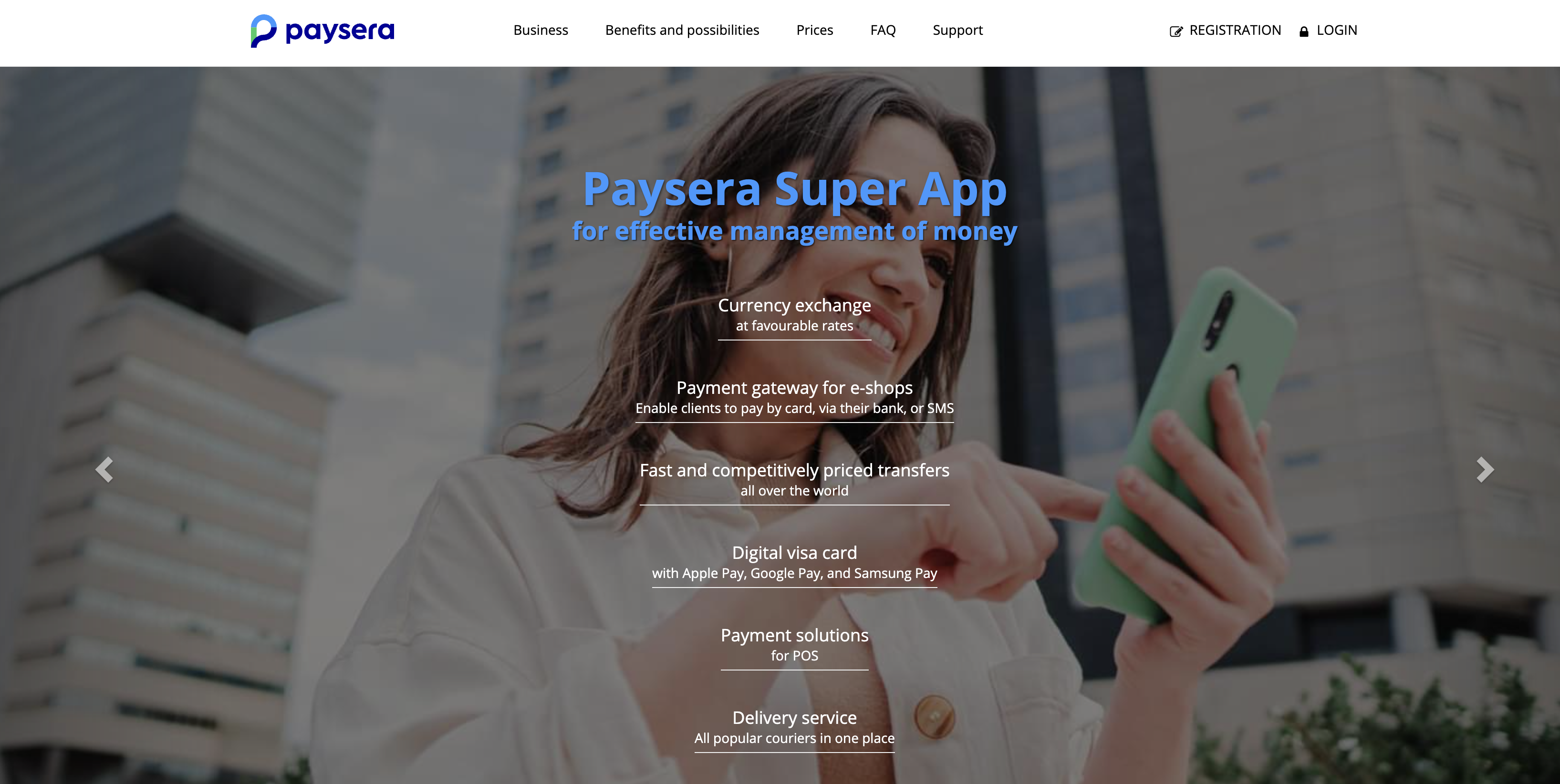
Paysera is a Lithuanian fintech company that has quietly built one of Europe's most comprehensive payment and banking platforms, serving millions of users across the continent. Rather than chasing hype, Paysera focuses on practical utility—combining payment processing, digital accounts, currency exchange, and invoicing tools into a single interface that works across borders and languages. The platform powers everything from freelancers managing invoices to SMEs handling payroll, while also offering consumer-facing services like multi-currency wallets and competitive exchange rates. What sets Paysera apart is its unglamorous pragmatism: it solves real friction in how Europeans move, spend, and manage money across different countries, without the startup theatrics. It's the kind of company that doesn't dominate headlines but has become indispensable infrastructure for a significant portion of the continent's digital economy. In the crowded European fintech landscape, where newer players chase consumer attention and legacy banks chase compliance, Paysera operates in the profitable middle—trusted by businesses and individuals who value reliability and cross-border simplicity over brand prestige.
Founded 2004
Paskolų Klubas
Paskolų Klubas
Lending
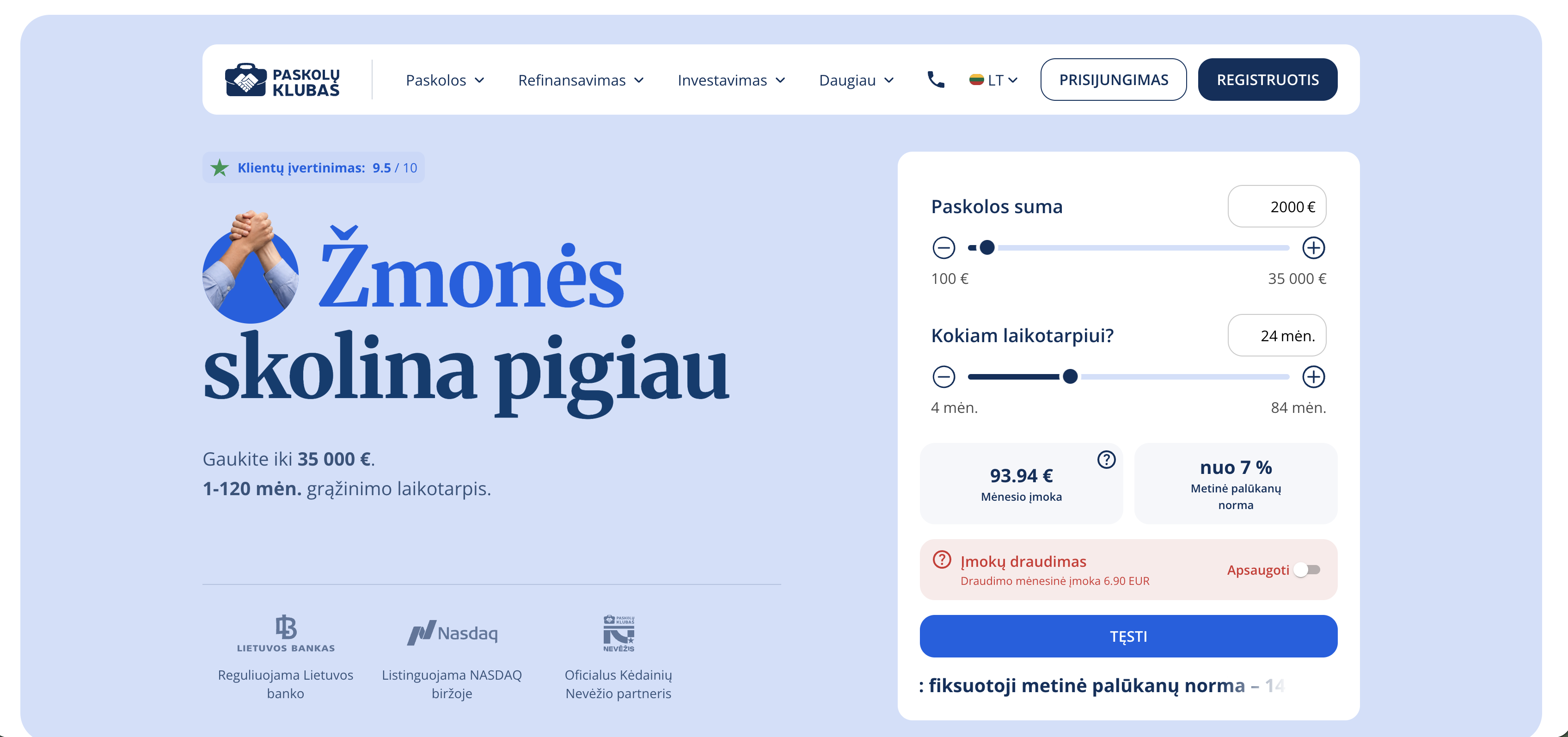
Paskolų Klubas is a Lithuanian peer-to-peer lending platform that connects individual borrowers with retail investors seeking returns. The company operates a marketplace where vetted borrowers can request loans and investors can fund loans of their choice, creating a direct lending relationship outside traditional banking channels. Since its inception, the platform has processed hundreds of millions in loan volume across the Baltic region, building a reputation for transparent pricing and straightforward underwriting. The platform democratizes lending by cutting out middlemen—borrowers get faster access to capital at competitive rates, while investors gain diversification and yield opportunities unavailable in traditional savings products. Paskolų Klubas stands apart in a crowded European P2P space by focusing on local market expertise and regulatory compliance, positioning itself as a trusted intermediary in a market where trust in non-bank lenders still requires earned credibility. The company represents a maturing segment of fintech where peer-to-peer lending has transitioned from novelty to established alternative finance, serving both borrowers priced out of traditional banking and investors tired of zero-interest savings accounts.
Founded 2011
Swaper
Swaper
Lending
Swaper is a peer-to-peer lending platform that connects individual borrowers with investors across Europe, operating since 2014. The platform cuts out traditional banks from the equation, letting regular people lend to and borrow from each other directly—think of it as crowdsourcing credit. It's a refreshingly transparent approach to lending where returns aren't hidden behind opaque fee structures, and borrowers get access to capital without the gatekeeping that conventional banks impose. The platform operates across multiple European markets, offering investors the chance to diversify their portfolios by backing loans at varying risk levels, while borrowers get competitive rates without the bureaucratic friction. Swaper essentially democratizes what was once a monopoly: the decision about who deserves credit and at what price. For investors looking beyond traditional savings accounts, it's a way to put capital to work. For borrowers, it's an alternative when bank doors close. In a market still dominated by legacy banking, Swaper represents a more distributed model of credit allocation. It hasn't disrupted traditional lending in the way some fintechs have, but it's quietly built a genuine two-sided marketplace where humans fund humans—no algorithms pretending to be wisdom, just real supply meeting real demand. It's the kind of service that feels more honest than what you'll find at your local bank branch.
Founded 2014
WhiteBIT
WhiteBIT
Crypto & Blockchain
WhiteBIT operates as one of the larger cryptocurrency exchanges with European operational presence, offering spot trading, margin trading, and a range of other crypto financial products to a substantial international user base. The exchange has built its position through the combination of competitive trading fees, broad asset coverage, and operational scale that allows it to compete in the same segment as larger international platforms. The European operational base reflects the broader pattern of crypto exchanges seeking jurisdictions with clearer regulatory frameworks and operational viability. WhiteBIT has navigated the evolving European regulatory environment for crypto asset service providers, including the MiCA framework that has reshaped expectations for crypto exchanges operating in or serving European users. The platform's product range covers spot trading, derivatives, staking, and other yield-bearing crypto products that constitute the core of contemporary crypto exchange offerings. In the European crypto exchange landscape, where the regulatory implementation under MiCA is creating new operational requirements and clearer competitive boundaries, exchanges with established operational scale have advantages relative to newer entrants but face the same compliance investment requirements as everyone else. The exchange category continues to consolidate around a smaller number of larger operators with the regulatory standing and operational scale to compete effectively under the formalising European framework.
Founded 2018
Ondato
Ondato
Fraud & Security
Ondato provides identity verification, compliance, and customer onboarding tools.
Founded 2016
NEO Finance
NEO Finance
Lending
NEO Finance operates a European peer-to-peer lending platform.
Founded 2014
CoinGate
CoinGate
Payments
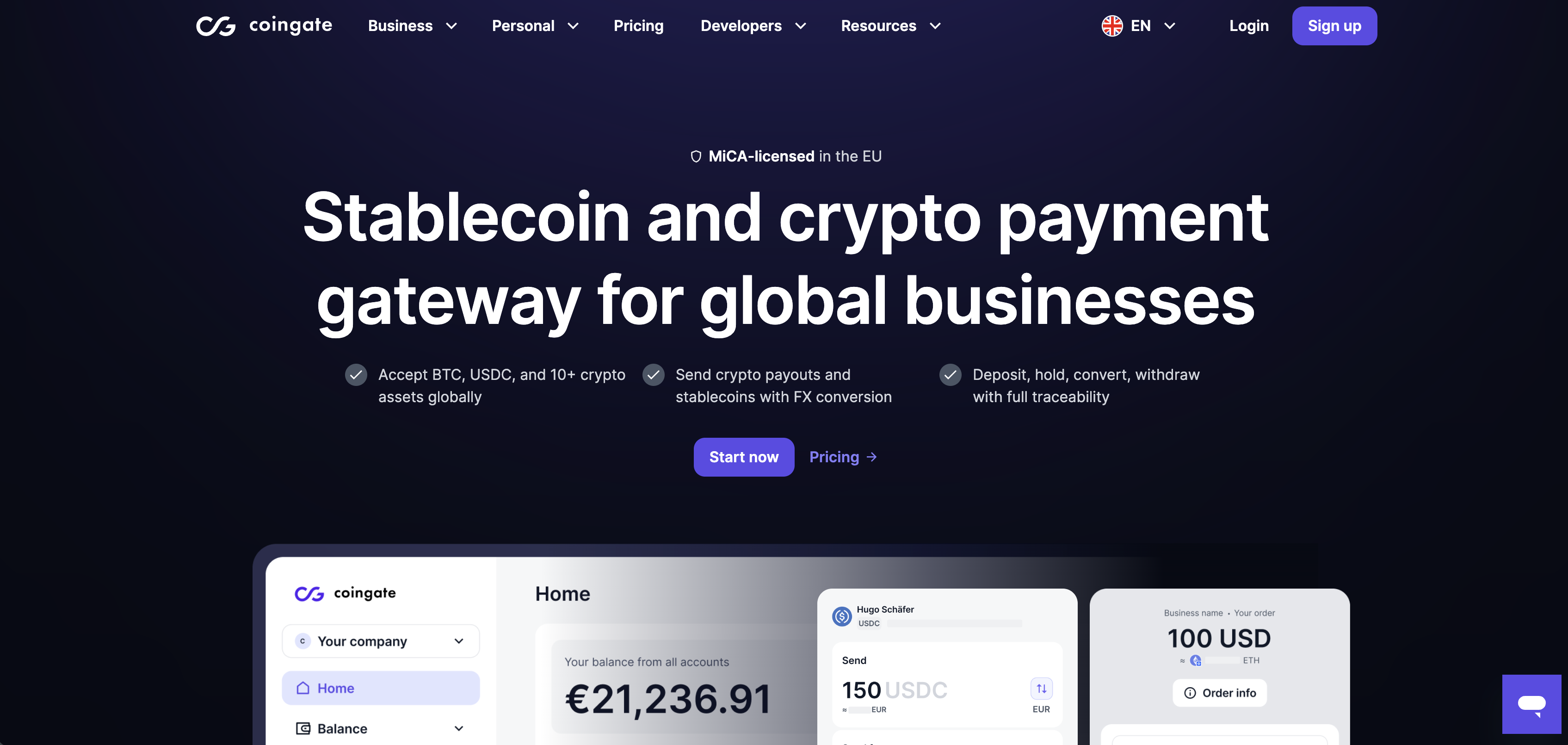
Accepting cryptocurrency payments as a merchant has always been technically possible and operationally difficult. The volatility of crypto assets, the complexity of wallets, and the absence of chargebacks — seen as a feature by some, a problem by merchants — made crypto payment acceptance a niche choice for most businesses. CoinGate was founded in Vilnius in 2014 to make crypto payment acceptance as straightforward as card payment acceptance, offering a payment gateway that handles the technical and commercial complexity of crypto transactions and settles merchants in euros. Its platform supports over 70 cryptocurrencies, integrates with major e-commerce platforms, and provides the invoicing, reporting, and settlement infrastructure that businesses need to treat crypto payments as a normal part of their payment stack. CoinGate has processed hundreds of millions in transactions and built a merchant network across Europe and beyond. In the Lithuanian fintech ecosystem — which has become disproportionately important in European crypto regulation thanks to the Bank of Lithuania's pragmatic licensing approach — CoinGate represents the merchant-facing end of the crypto payment stack, building the commercial infrastructure that turns cryptocurrency from a speculative asset into a practical payment method.
Founded 2014
SpectroCoin
SpectroCoin
Payments
The early years of European crypto were defined by a small number of platforms trying to build the full stack — exchange, wallet, card, and payment gateway — without the regulatory clarity or capital to do it properly. SpectroCoin was founded in Vilnius in 2013 as one of the more ambitious of those early attempts, offering a crypto exchange, a Bitcoin debit card, a payment gateway for merchants, and multi-currency wallet functionality under a single platform. Its early Visa and Mastercard Bitcoin debit card — one of the first in Europe — was a genuine innovation that let crypto holders spend their holdings at any card-accepting merchant without converting in advance. The company received an Electronic Money Institution licence from the Bank of Lithuania, giving it the regulatory standing to issue payment cards and hold electronic money — a licence that the Bank of Lithuania was granting to crypto-adjacent businesses at a time when most European regulators were more cautious. SpectroCoin operates as part of the Bankera ecosystem, which has expanded into banking and lending products. In the Baltic crypto infrastructure landscape, SpectroCoin represents the early-mover generation — platforms that built the first European crypto financial products before the regulatory frameworks existed and that have survived the subsequent decade of market cycles and regulatory evolution.
Founded 2013
SME Bank
SME Bank
Digital Banking
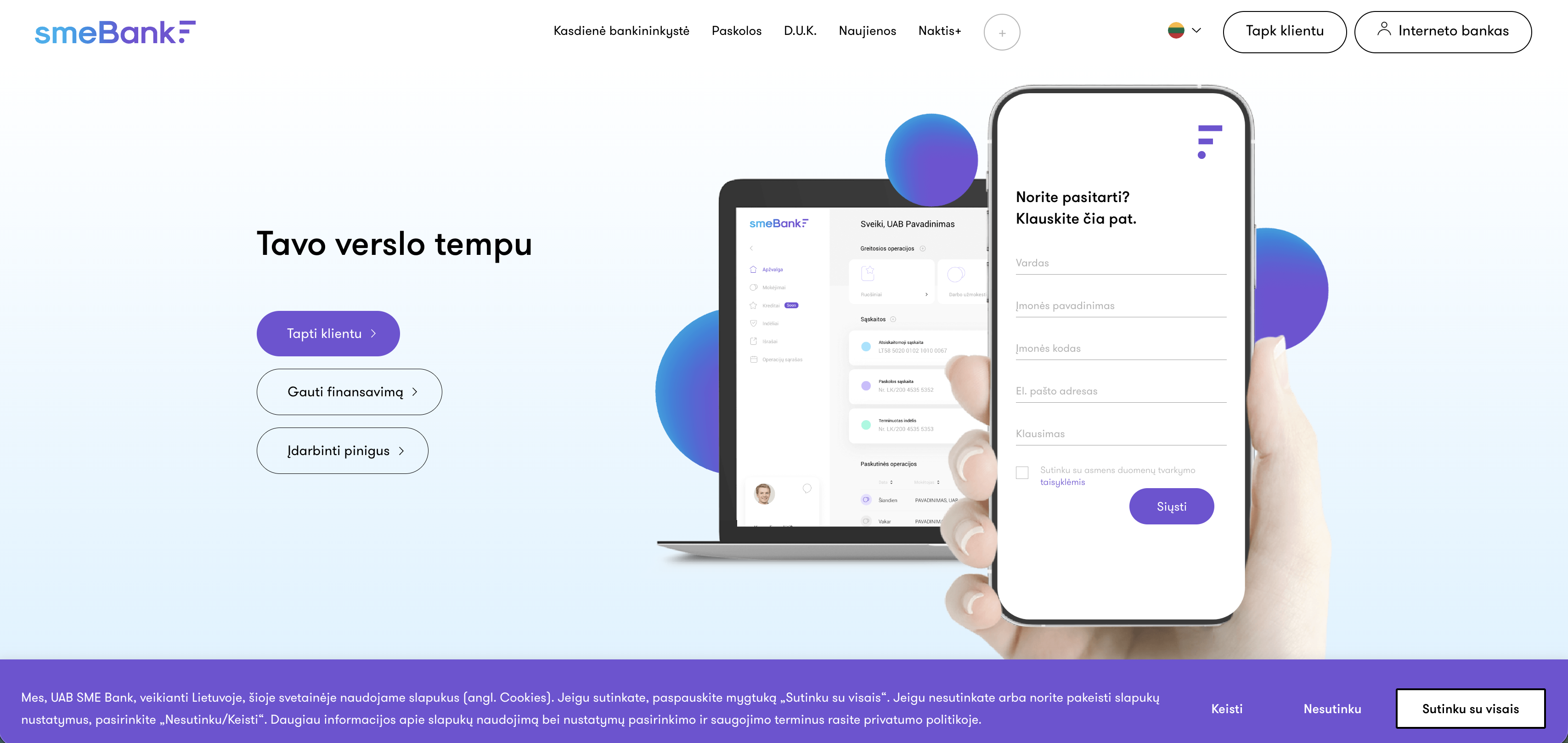
Small and medium-sized enterprises in the Baltic markets have historically been served by the same major banks that serve consumers, with products and processes designed primarily for retail customers and adapted clumsily to business needs. SME Bank was founded in Vilnius in 2018 specifically to serve small and medium-sized businesses with banking products designed around their actual operational requirements — multi-currency accounts, international payments, business lending, and the operational tools that businesses need to manage cash flow across multiple markets. The bank holds a specialised banking licence from the Bank of Lithuania and operates across the Baltic and broader European markets, focusing on businesses involved in international trade and cross-border commerce. The dedicated SME positioning is significant — most banks treat business customers as a secondary segment behind retail, and many fintechs treating SME banking as an extension of consumer products. SME Bank's premise is that small businesses warrant a dedicated institution rather than being absorbed into broader banking platforms. In the European SME banking landscape, where Tide, Qonto, and Holvi operate as digital-first specialists in Western European markets, SME Bank represents the equivalent positioning for the Baltic and Central European business banking segment — built specifically for small businesses rather than adapting consumer products to their needs.
Founded 2018
Bankera
Bankera
Payments
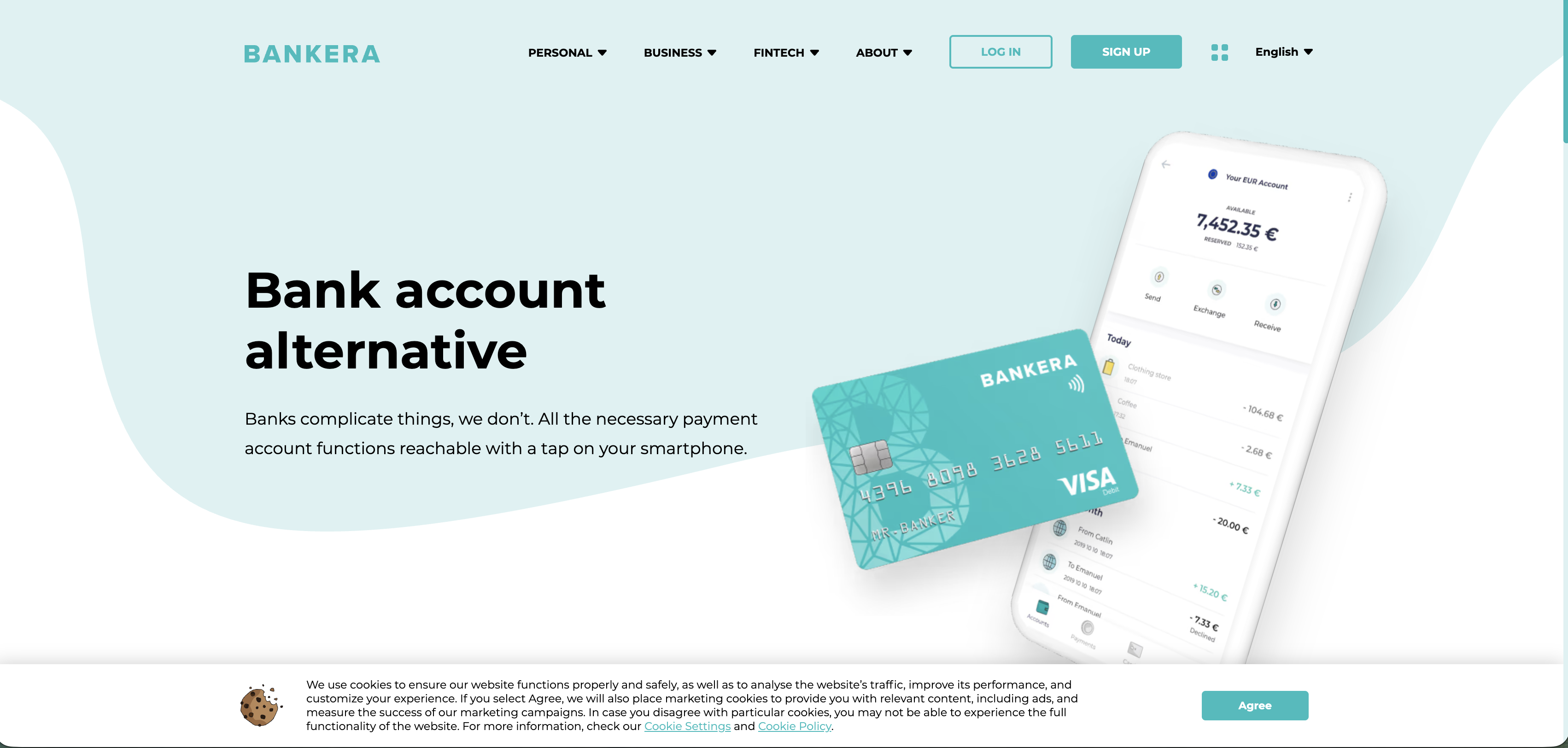
Bankera was founded in Vilnius in 2017 with the ambition to build a digital bank designed around crypto integration — a financial institution where holding, transacting, and earning yield on cryptocurrency would coexist with conventional banking products under a single regulated structure. The company emerged from the SpectroCoin ecosystem and has built its product around the combination of EMI-licensed payment services, IBAN accounts, payment cards, and crypto trading and custody functionality. The Lithuanian regulatory environment, with its accommodative approach to both EMI licensing and crypto-adjacent businesses, provided the framework that made the integrated model viable. Bankera serves retail and business customers across Europe with a product that aims to remove the artificial separation between traditional and crypto financial products — a positioning that has become more relevant as MiCA regulation provides clearer legal frameworks for crypto financial services within the European Union. In the European crypto banking landscape, Bankera represents the model that places crypto inside the regulated banking framework rather than alongside it, building the kind of integrated product that consumer crypto users have asked for since digital assets emerged but that regulatory and operational complexity has made difficult to deliver consistently.
Founded 2017
ConnectPay
ConnectPay
Embedded Finance
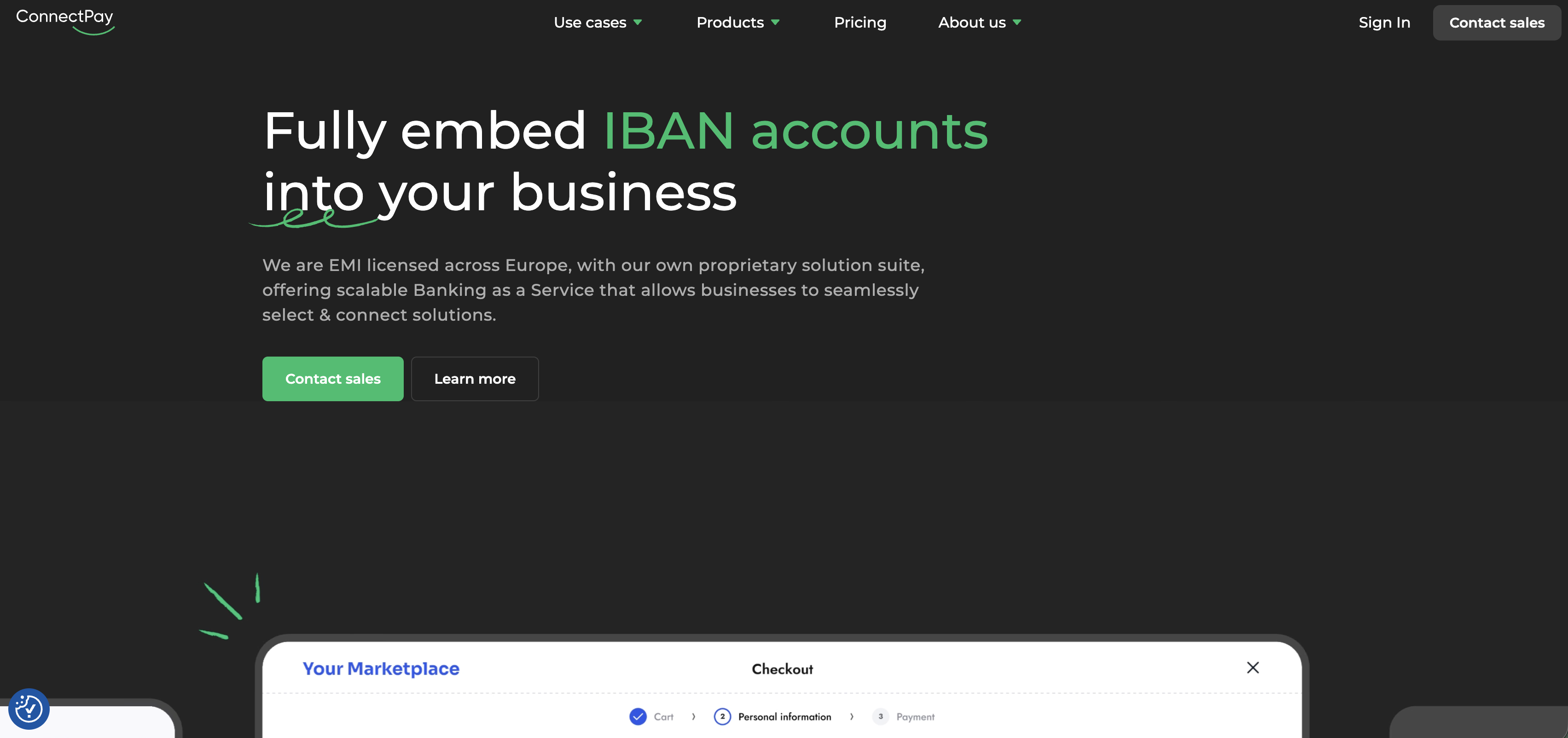
Banking-as-a-Service through Lithuanian EMI infrastructure has become a Pan-European pattern — fintech and platform companies needing payment accounts, IBANs, and card programmes increasingly partner with Lithuanian-licensed providers to offer those capabilities under their own brands. ConnectPay was founded in Vilnius in 2018 to provide that BaaS infrastructure to fintechs, payment platforms, and digital businesses across the EEA. Its platform offers IBAN accounts, payment processing, payment cards, and the regulatory infrastructure needed to operate financial products compliantly under partnership arrangements. The company received a full EMI licence from the Bank of Lithuania, giving it Pan-European passporting rights and the regulatory standing to support clients building consumer and business financial products across European markets. ConnectPay's position is in the wholesale layer of European fintech — invisible to consumers but essential to the products they use, with operational scale built on serving multiple platform clients rather than building a direct consumer brand. In the competitive Lithuanian EMI landscape, where dozens of operators target similar B2B clients, ConnectPay's growth reflects the underlying expansion of European embedded finance — every additional non-financial company adding payment or account capabilities to its product creates demand for the kind of infrastructure that ConnectPay provides.
Founded 2018
Contis
Financial Infrastructure
Issuing payment cards and operating account programmes is one of the most regulated and operationally complex areas of European fintech. Contis was founded in 2008 with operations across multiple European jurisdictions and built one of the more comprehensive Banking-as-a-Service platforms in Europe, providing card issuing, account services, and payment processing to fintechs, financial institutions, and enterprise clients. Its product range covered the full stack of capabilities needed to launch a financial product — BIN sponsorship across Visa and Mastercard, account infrastructure, transaction processing, and the compliance frameworks that allow client programmes to operate within EU regulations. Contis was acquired by Solaris (formerly solarisBank) in 2021, becoming part of one of Europe's largest BaaS groups in a deal that consolidated significant card issuing and banking infrastructure capacity under a single corporate structure. The acquisition reflects the broader consolidation pattern in European Banking-as-a-Service — the operational scale and regulatory infrastructure required to compete in this segment increasingly favour groups that can amortise compliance costs across larger client bases. In the European BaaS landscape, the integration of Contis into Solaris created one of the more capable card and account infrastructure providers, serving clients across multiple European markets with combined operational depth that neither company would have brought independently.
Founded 2008
HeavyFinance
Wealth
HeavyFinance connects investors with agricultural loans and climate-focused financing projects.
Founded 2020
Finbee
Finbee
Lending
Peer-to-peer business lending — connecting retail investors with creditworthy small businesses needing growth or working capital — represents a category within marketplace lending where the underwriting complexity is greater than consumer P2P but the credit characteristics are different. Finbee was founded in Vilnius in 2015 to build a Lithuanian platform offering both consumer and business P2P lending products, with an underwriting infrastructure designed to evaluate the specific risk characteristics of Lithuanian SMEs alongside individual borrowers. The platform has built a substantial domestic position in the Lithuanian marketplace lending segment, attracting both local and Pan-European investors looking for exposure to Lithuanian credit. Finbee's product range and operational depth reflect a decade of operating in a market that has been one of Europe's more active testbeds for P2P lending innovation — with multiple platforms, supportive regulation, and a retail investor base willing to engage with marketplace lending products. In the Baltic alternative lending landscape, Finbee represents the category of platform that has built durability through diversified product offerings and disciplined underwriting rather than aggressive growth — a positioning that has aged better than some of the more growth-focused models that dominated the early P2P era.
Founded 2015
Savy
Savy
Lending
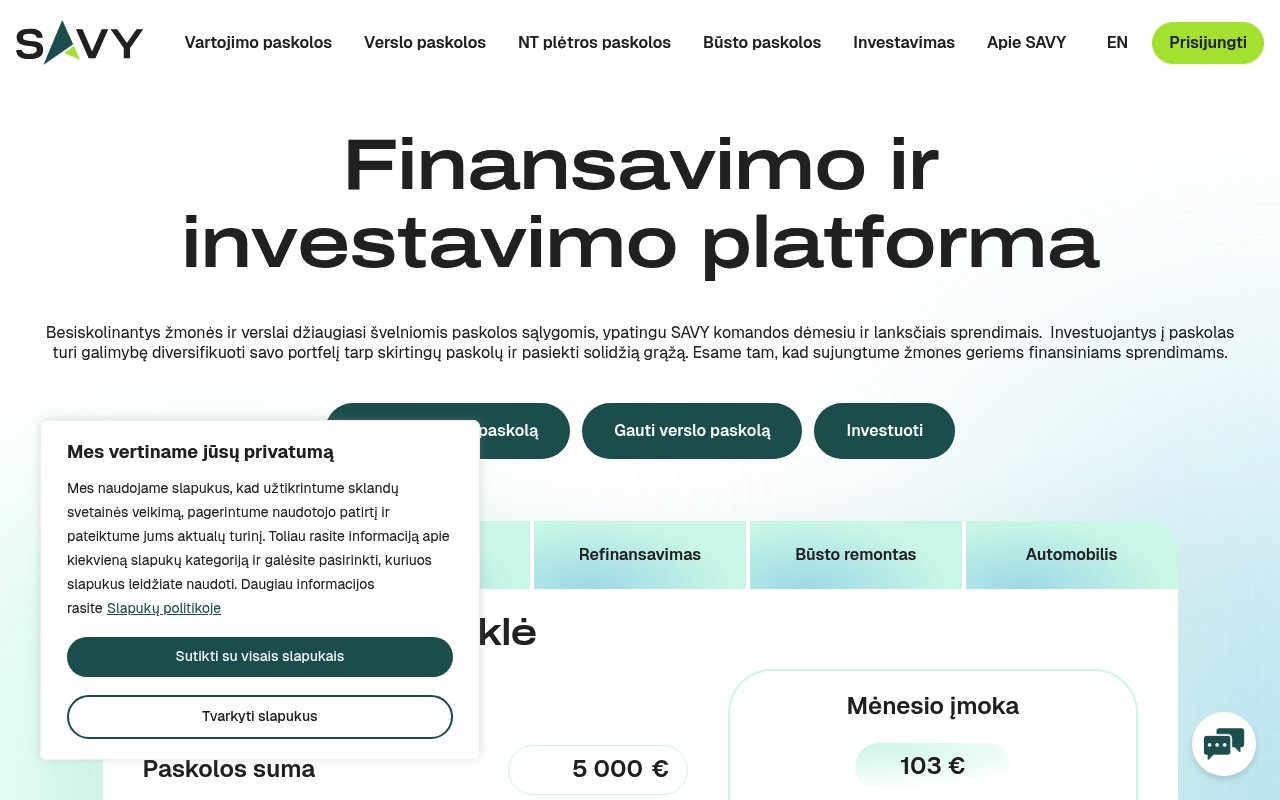
Lithuanian P2P lending in its 2014 vintage represented an ambitious attempt to build marketplace lending infrastructure in a Baltic market that was small in absolute terms but had high digital adoption and a regulatory framework that was unusually supportive of fintech experimentation. Savy was founded in Vilnius in 2014 as part of that early wave, building a P2P platform offering consumer loans funded by retail investors. The model has evolved over the decade since launch as the European P2P landscape has matured, regulations have tightened, and the operational complexity of managing both borrower underwriting and investor relationships at scale has become clearer. Savy has continued operating as one of the Lithuanian platforms that survived the consolidation of the broader European P2P sector, maintaining a Lithuanian borrower focus alongside a Pan-European investor base. In the Baltic marketplace lending ecosystem, where dozens of platforms launched and many subsequently closed or merged, the platforms that have remained operational represent a smaller, more disciplined category than the early enthusiasm suggested. Savy is part of that category — not one of the largest by funded volume but operationally durable across more than a decade of European P2P market evolution.
Founded 2014
kevin.
Financial Infrastructure
Kevin. is a payments infrastructure company that has taken the unglamorous work of bank connectivity and turned it into something actually worth using. Rather than forcing merchants and fintech platforms to wrangle with dozens of different banking systems across Europe, kevin. abstracts that complexity into a single API that just works. The company handles the technical plumbing between your application and European banks, whether you're building payment initiation flows, account aggregation, or direct bank connections. What makes kevin. different is that it focuses on solving real developer problems instead of adding another layer of marketing speak to the ecosystem. The platform supports open banking standards and proprietary bank connections alike, giving customers flexibility without forcing them to maintain separate integrations. For European fintechs and platforms built in the last five years, kevin. has become the backbone that lets them talk to traditional banking infrastructure without the bureaucratic headache. It's the kind of infrastructure play that rarely gets attention at conferences but quietly powers transactions and data flows across the continent.
Founded 2019
Neopay
Neopay
Financial Infrastructure
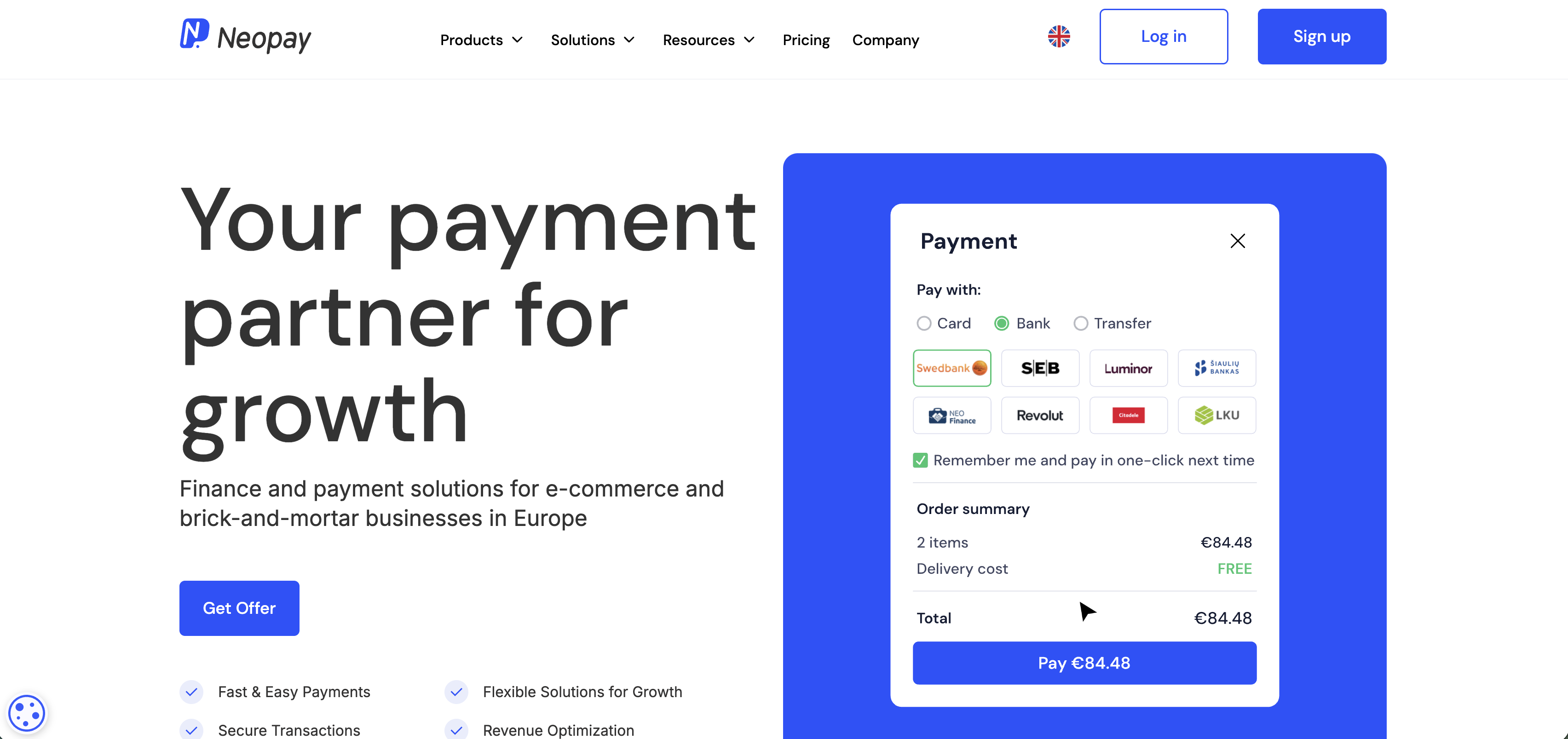
The Lithuanian Bank's pragmatic approach to fintech licensing has produced a concentration of electronic money institutions and payment service providers that is disproportionate to the country's economy. Neopay was founded in Vilnius in 2015 as one of the EMI-licensed operators serving the European fintech market, providing payment processing, IBAN account services, and card programme infrastructure to businesses and platforms across the EEA. The Lithuanian EMI passport gives Neopay the regulatory standing to offer payment services across all 30 EEA member states without needing additional national licences — the kind of cross-border efficiency that European regulators designed the EMI framework to enable. Neopay's product range serves merchants needing payment acceptance and platforms needing white-label financial infrastructure, operating in the layer of European fintech that exists primarily as B2B infrastructure rather than consumer-facing products. In the broader Lithuanian fintech ecosystem, where dozens of EMI operators compete for similar market segments, Neopay's positioning emphasises the operational reliability and regulatory standing that institutional clients require — a different competitive axis from the consumer-facing fintechs that dominate Lithuanian fintech press coverage but a meaningful one in the wholesale infrastructure layer.
Founded 2015
Mistertango
Mistertango
Payments
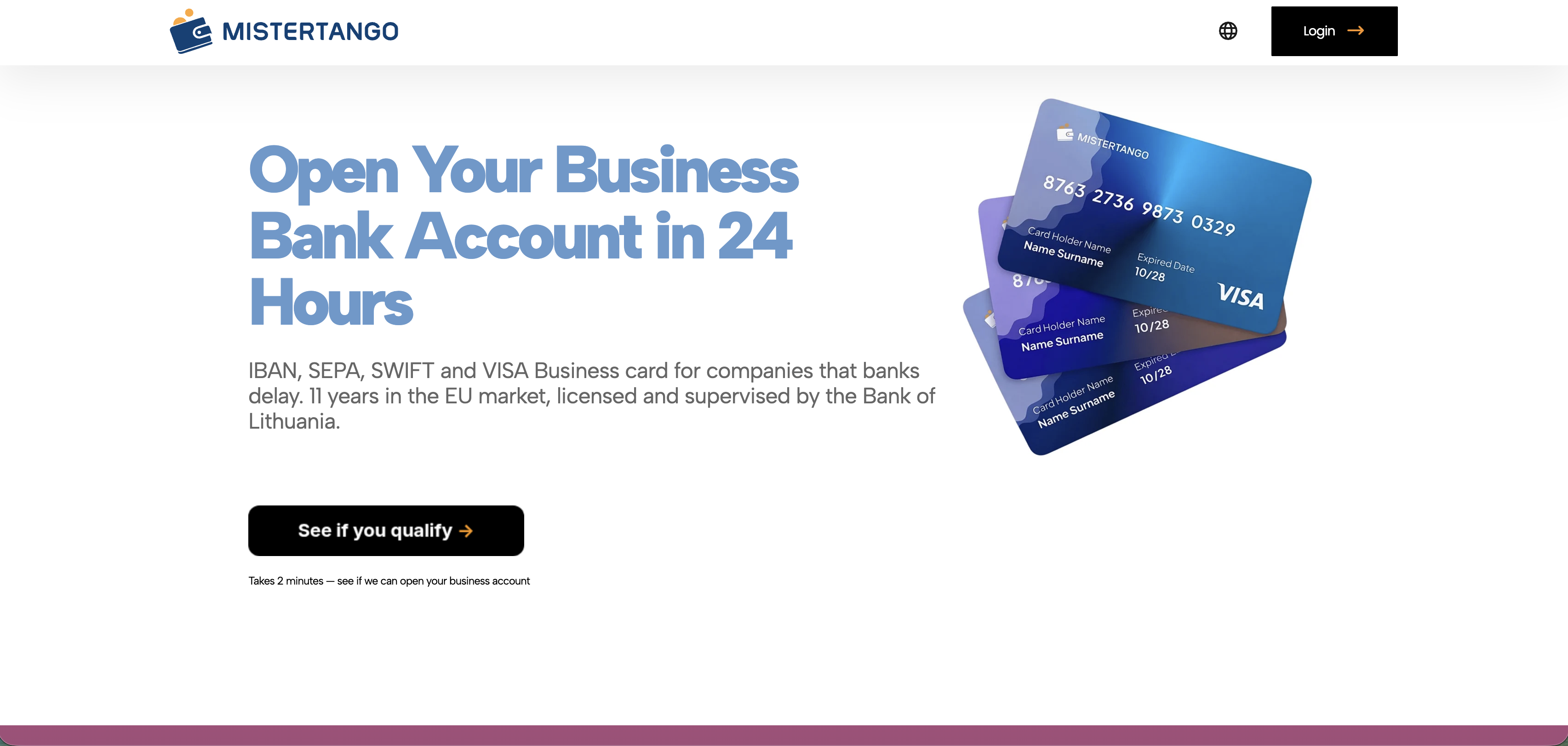
Multi-currency accounts for European businesses and individuals who operate across borders have moved from a specialist need to a mainstream expectation over the past decade. Mistertango was founded in Vilnius in 2016 to serve that market with a Lithuanian electronic money institution offering multi-currency IBAN accounts, payment cards, and digital banking services to retail and business customers across Europe. The Lithuanian regulatory base is significant — the Bank of Lithuania has built one of Europe's most accessible licensing regimes for fintechs, and Vilnius has emerged as a Pan-European fintech hub with disproportionate concentration of EMI licences relative to the country's size. Mistertango has built a customer base of consumers and small businesses needing multi-currency banking capability without the friction of opening accounts with multiple national banks. Its product range includes virtual cards, business accounts, and payment processing, with a particular focus on customers who would otherwise struggle to access banking services from incumbent institutions. In the Lithuanian fintech landscape, Mistertango represents the mid-tier of EMI-licensed operators — not the largest but with sufficient scale and product depth to maintain a sustainable position serving customer segments that fall between the venture-backed neobanks and the traditional banks.
Founded 2016